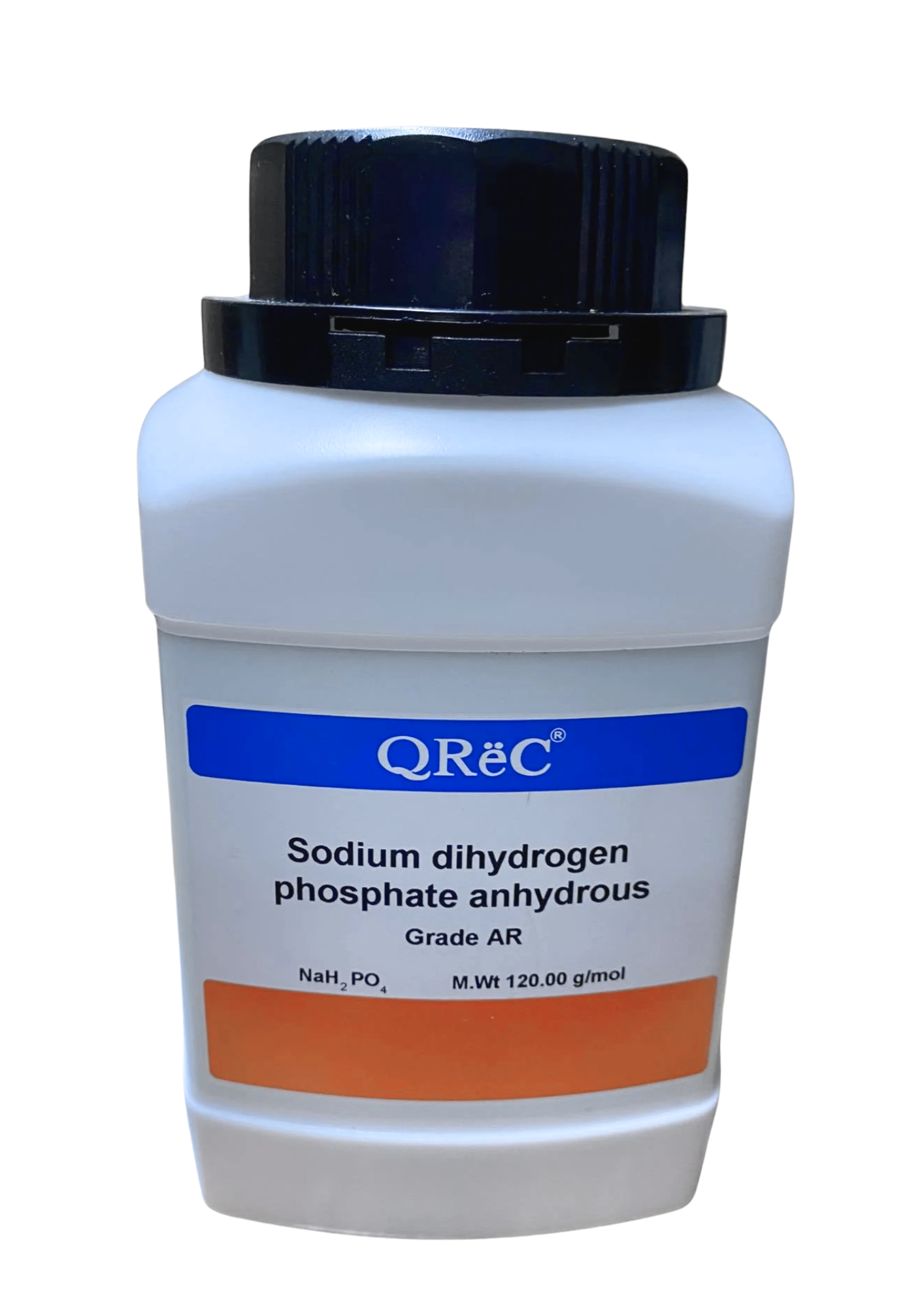
Sodium dihydrogen phosphate anhydrous or Monosodium phosphate
Product Overview & Quality
- Product Name: Sodium dihydrogen phosphate anhydrous or Monosodium phosphate or Sodium biphosphate
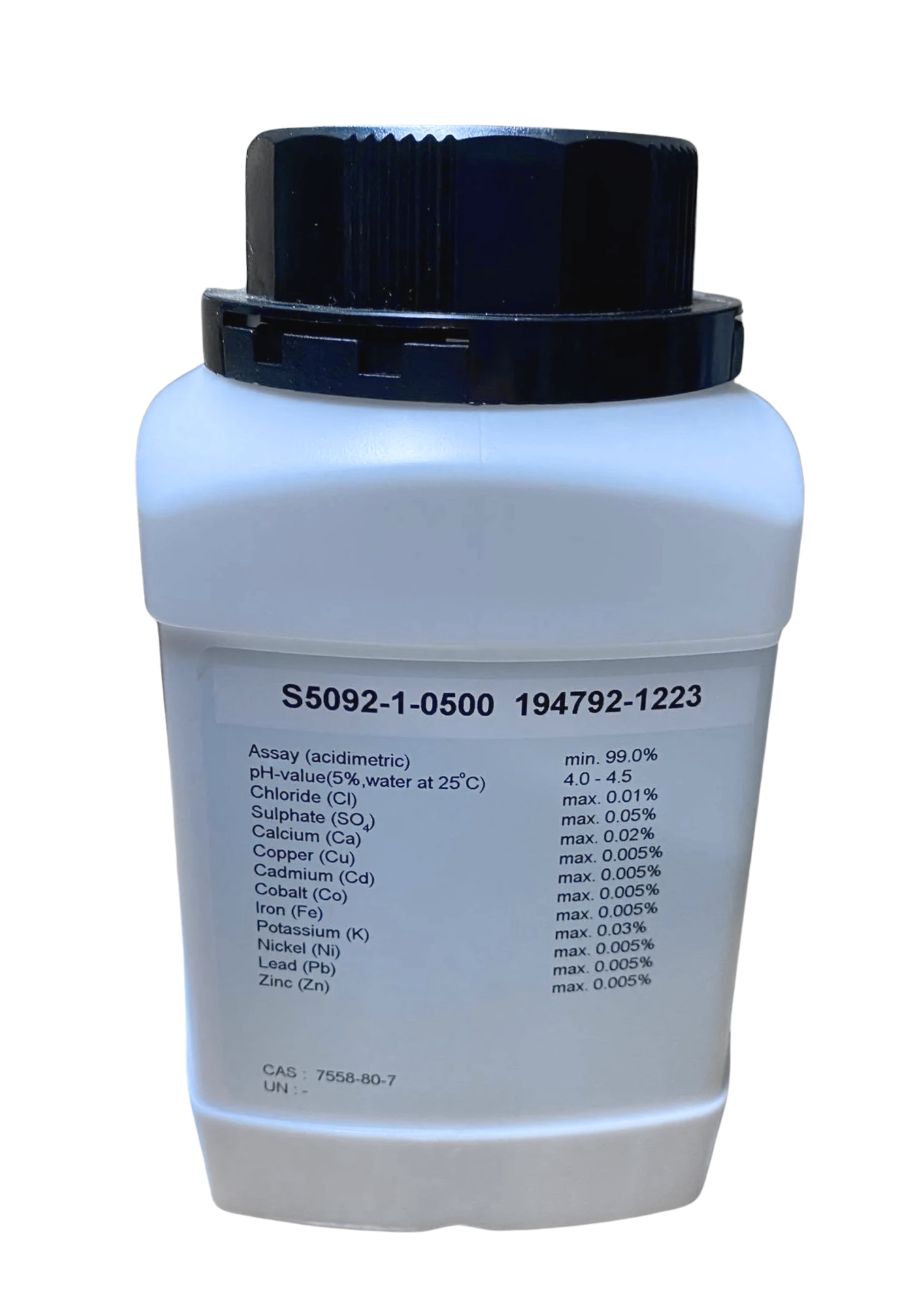
- Brand: QReC (Product Code: QR-S5092-1-0500)
- Grade: Analytical Reagent (AR Grade) featuring a high certified chemical purity of 99 percent or higher. Manufactured and quality-controlled under QReC strict global laboratory specifications. Prepared in an anhydrous crystalline formulation with rigorous limitations on trace impurities, including chlorides, sulfates, nitrogen compounds, insoluble matter, and heavy metals (such as iron, lead, and arsenic). Delivers excellent stoichiometric consistency, highly reproducible buffer capacity, and completely clear, precipitate-free aqueous solutions for sensitive quantitative analyses.
- Physical Properties: Odorless, white crystalline powder or white granules. Chemically stable at room temperature; distinctly hygroscopic upon open exposure to ambient air.
- Solubility: Readily and highly soluble in water, producing a mildly acidic aqueous solution (pH approximately 4.1 to 4.5 in a 5 percent solution); practically insoluble in ethanol.
- Key Use: Extensively used as a primary component in formulating standard phosphate buffer solutions (paired with disodium hydrogen phosphate) to maintain stable physiological pH levels between 5.8 and 8.0 in biochemistry, molecular biology, and cell culture workflows. Widely applied as a high-purity buffer constituent in HPLC and UHPLC mobile phases for the precision separation of proteins, peptides, and pharmaceutical active substances. Routinely utilized as an analytical reagent in clinical chemistry, enzymatic assays, and quality control procedures across food and cosmetic testing laboratories.
Safety & Hazards
- Classification: Non-hazardous substance under standard GHS criteria. Exhibits very low acute systemic toxicity, though concentrated particulate dust may induce mild mechanical or mucous membrane irritation.
- Health Risks: Direct eye contact may cause mild mechanical irritation, stinging, and redness. Prolonged dermal contact may induce slight localized dryness. Inhalation of airborne powder can cause transient irritation of the nasal passages and upper respiratory tract, resulting in coughing or sneezing. Ingestion of large quantities may lead to mild gastrointestinal discomfort, nausea, or osmotic diarrhea.
- First Aid Measures: Flush affected eyes or skin with plenty of flowing clean water for at least 15 minutes. In case of inhalation, move the individual to fresh air. If accidentally ingested in large amounts, rinse mouth and drink ample water. Seek medical attention if irritation or symptoms persist.
Handling & Storage
- Storage: Hygroscopic Solid. Anhydrous powder readily absorbs atmospheric moisture, which may lead to clumping or surface caking if improperly sealed. Must be stored in its original, tightly closed QReC chemical-grade container. Keep in a cool, dry, and well-ventilated storage area at stable room temperature (below 30 degrees Celsius), sheltered from direct sunlight and ambient humidity. Keep segregated from strong bases, strong oxidizing agents, and moisture sources.
- Precautions: Standard laboratory PPE is recommended, including protective gloves, safety glasses, a lab coat, and a dust mask during bulk handling or weighing. Securely replace and tighten the container cap immediately after each use.