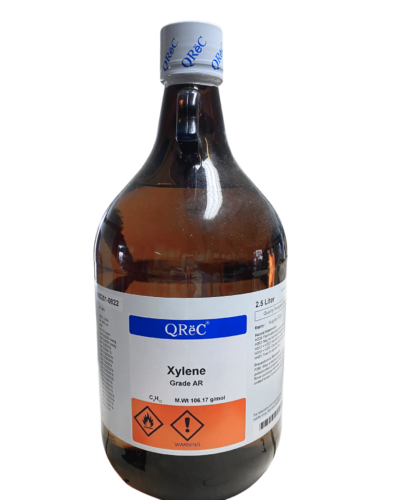
Xylene 99% or Xylol or Dimethylbenzene (Mixed isomers)
Product Overview & Quality
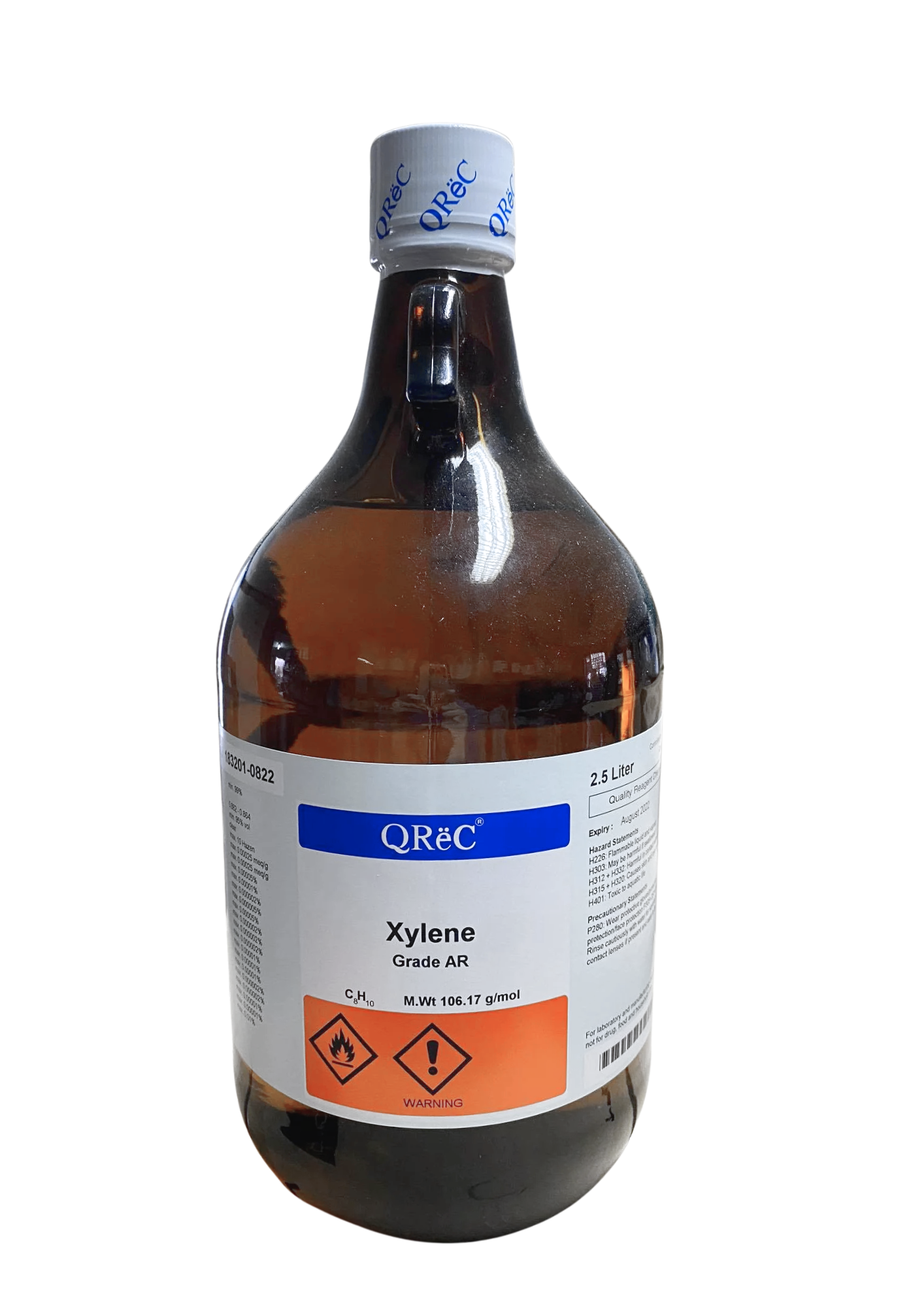
- Product Name: Xylene 99% or Xylol or Dimethylbenzene (Mixed isomers)
- Brand: QReC (Product Code: QR-X8001-1-2501)
- Grade: Analytical Reagent (AR Grade) featuring a certified total isomer assay of 99 percent or higher (composed of ortho-, meta-, and para-xylene isomers along with ethylbenzene). Meticulously manufactured and distilled under strict QReC global laboratory quality specifications. Strictly monitored to enforce minimal ppm levels of evaporation residue, sulfur compounds, free benzene, moisture content, and heavy metals. This high-purity profile delivers superior clearing transparency in tissue processing and eliminates background baseline interference in quantitative analytical assays. Packaged in a heavy-duty amber glass bottle for maximum chemical integrity and light protection.
- Physical Properties: Clear, colorless, highly mobile liquid with a characteristic sweetish, aromatic hydrocarbon odor. Volatile and flammable liquid and vapor; vapors are heavier than air and travel along surfaces.
- Solubility: Insoluble and immiscible with water (floats as a distinct upper layer due to lower density); completely miscible in all proportions with common organic solvents including absolute ethanol, diethyl ether, acetone, chloroform, and vegetable or mineral oils.
- Key Use: Heavily utilized as the definitive clearing agent and de-waxing solvent in histology and pathology laboratories, extracting alcohol from biological specimens prior to paraffin wax infiltration and subsequently dissolving paraffin wax off microtome slides before histological staining. Commonly used as a solvent matrix for slide mounting media (such as DPX mountant) for high-resolution microscopic examinations. Extensively applied as a primary non-polar solvent for extracting resins, fats, and organic compounds, and serves as a vital reaction medium in polymer, paint, and chemical coating research.
Safety & Hazards (Critical, Flammable & Harmful)
- Classification: Flammable liquid and vapor. May be fatal if swallowed and enters airways. Harmful in contact with skin. Harmful if inhaled. Causes skin irritation. Causes serious eye irritation. May cause respiratory irritation. May cause damage to organs (Central nervous system) through prolonged or repeated exposure.
- Health Risks: Direct eye contact triggers stinging irritation, conjunctival redness, and lacrimation. Prolonged or repeated skin exposure defats dermal tissues, resulting in dryness, redness, and occupational contact dermatitis. Inhalation of concentrated vapors depresses the central nervous system, inducing headaches, dizziness, nausea, loss of coordination, confusion, or loss of consciousness. Ingestion accompanied by subsequent chemical aspiration into the pulmonary tract triggers severe, life-threatening chemical pneumonitis and pulmonary edema.
- First Aid Measures: Immediately flush affected eyes or skin with plenty of continuous flowing clean water for at least 15 minutes while removing contaminated clothing. In case of vapor inhalation, rapidly transfer the victim to fresh air. If accidentally swallowed, do NOT induce vomiting due to critical lung aspiration hazards; seek immediate, urgent emergency medical attention.
Handling & Storage
- Storage: Flammable and Volatile Aromatic Solvent. Vapors can migrate significantly and ignite at remote ignition sources. Must be stored in its original, tightly sealed QReC amber glass bottle inside a dedicated flammable chemical storage cabinet. Keep in a cool, dry, and excellently ventilated zone at stable room temperature (below 30 degrees Celsius), sheltered from direct sunlight. Keep strictly isolated from open flames, sparks, hot surfaces, static electricity, and strong oxidizing agents.
- Precautions: Full personal protective equipment (PPE) is mandatory, including solvent-resistant chemical gloves (thick nitrile or specialty fluorocarbon), splash-proof safety goggles, and a protective lab coat. Handle exclusively and strictly within a properly certified laboratory fume hood to completely eliminate vapor inhalation risks.