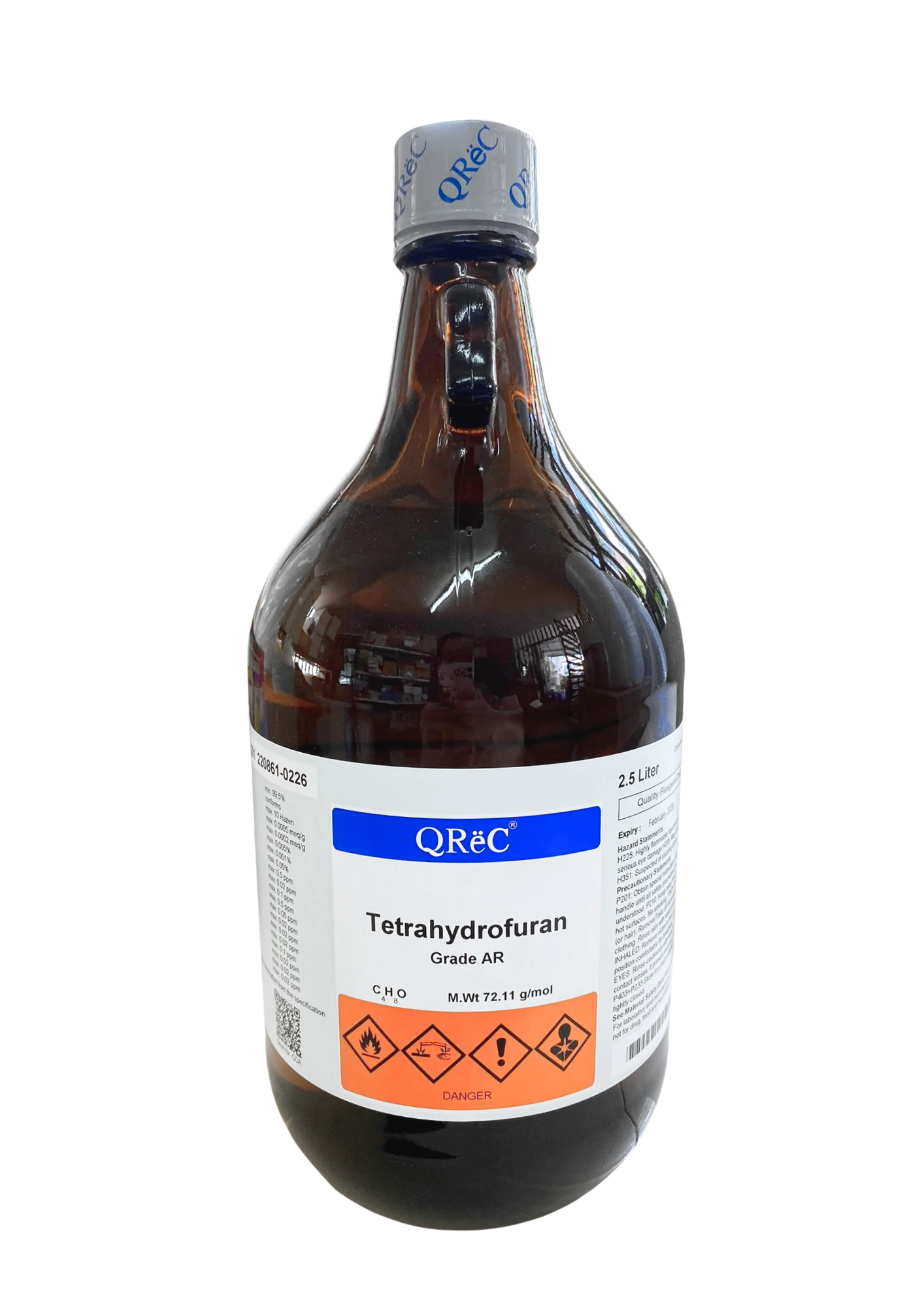
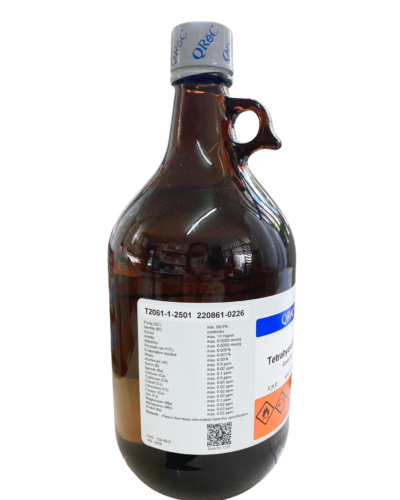
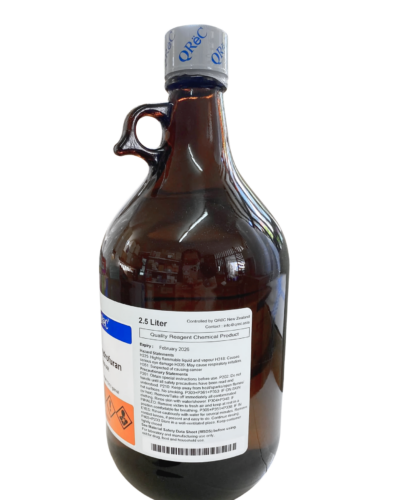
Tetrahydrofuran 99.5% or THF or Oxolane or Butylene oxide
Product Overview & Quality
- Product Name: Tetrahydrofuran 99.5% or THF or Oxolane or Butylene oxide
- Brand: QReC (Product Code: QR-T2061-1-2501)
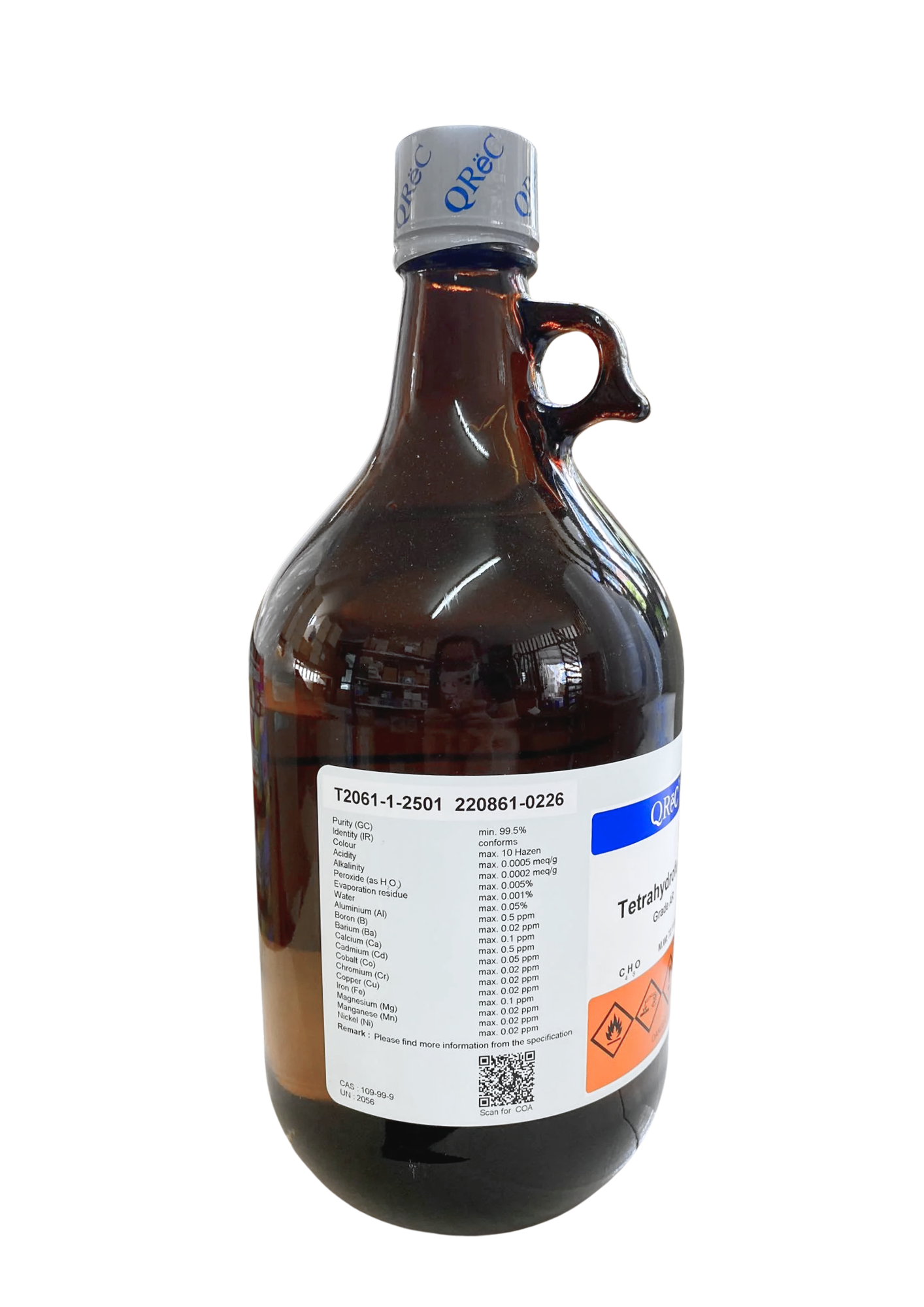
- Grade: Analytical Reagent (AR Grade) featuring a certified chemical purity of 99.5 percent or higher. Produced and distilled under strict QReC global laboratory specifications. Rigorously regulated to maintain exceptionally low ppm levels of non-volatile residue, moisture content, free acidity, organic peroxides, and trace heavy metals. Stabilized with a strictly controlled quantity of antioxidant inhibitor (such as BHT) to inhibit the formation of shock-sensitive, explosive organic peroxides during shelf life. This pure polar aprotic profile prevents chromatographic baseline drift and ensures optimal reaction reproducibility. Packaged in a heavy-duty amber glass bottle for maximum chemical integrity and light protection.
- Physical Properties: Clear, colorless, highly volatile, mobile liquid with a characteristic ethereal odor. Highly flammable liquid and vapor with a low flash point; vapors are denser than air and can migrate across floor surfaces to distant ignition points.
- Solubility: Completely miscible in all proportions with water and common organic solvents, including ethanol, methanol, acetone, diethyl ether, chloroform, dichloromethane, and toluene; demonstrates extraordinary solvency for high-molecular-weight polymers, resins, and elastomers.
- Key Use: Heavily utilized as an essential reaction medium in advanced organic and organometallic synthesis, specifically for Grignard reagents and metal hydride reductions (such as lithium aluminum hydride), where its unhindered ether oxygen efficiently coordinates and stabilizes reactive organometallic complexes. Serves as the authoritative mobile phase eluent in Gel Permeation Chromatography (GPC / SEC) for molecular weight distribution analysis of polymers. Widely applied as a primary solvent for dissolving, characterizing, and membrane-casting synthetic polymers including polyvinyl chloride (PVC), polyurethanes, and polystyrenes. Extensively used in electrochemical battery research and specialized non-aqueous extraction protocols.
Safety & Hazards (Critical, Highly Flammable, Peroxide Former & Carcinogen Suspect)
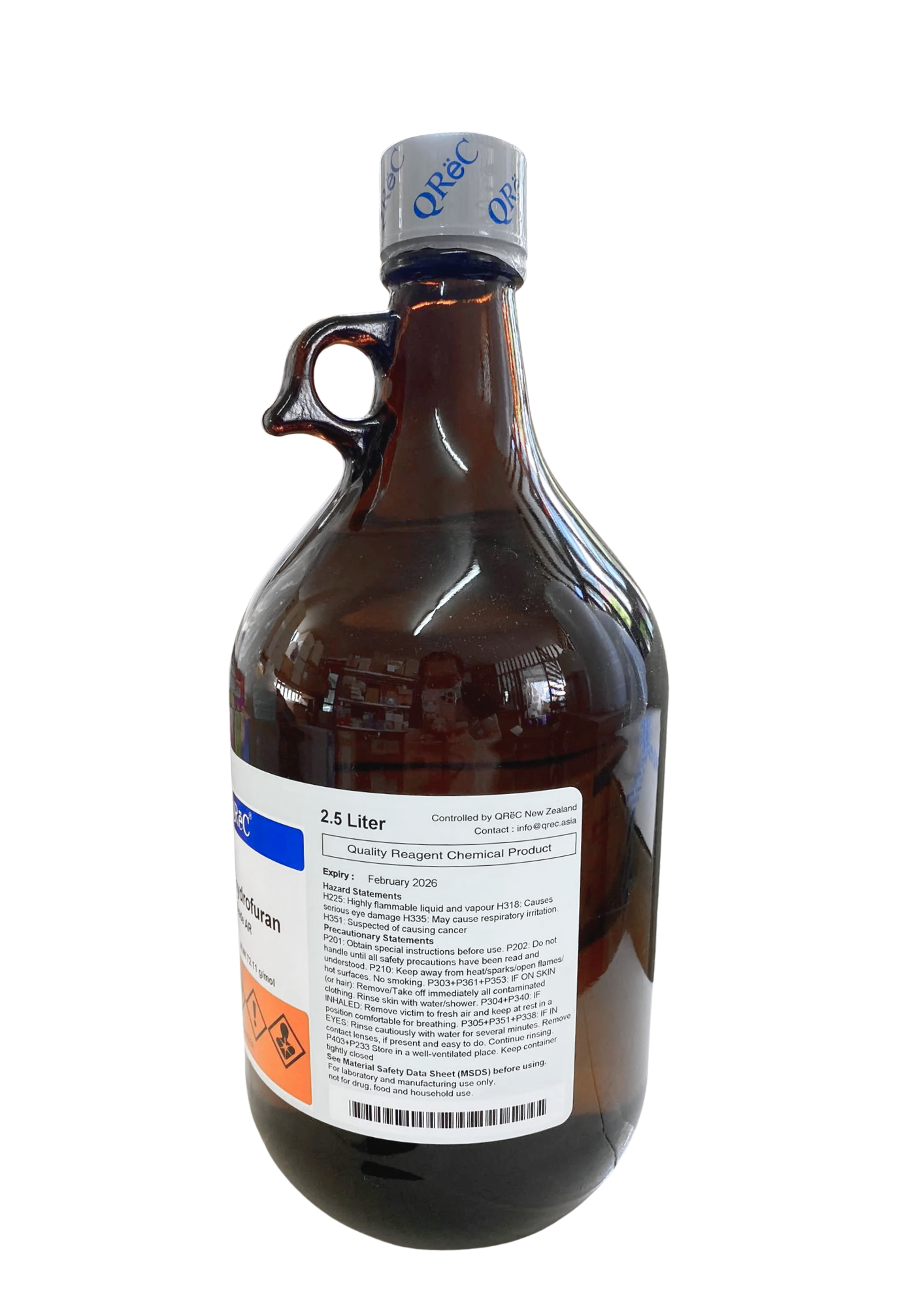
- Classification: Highly flammable liquid and vapor. May form explosive peroxides. Suspected of causing cancer. Causes serious eye irritation. May cause respiratory irritation. May cause drowsiness or dizziness. Repeated exposure may cause skin dryness or cracking.
- Health Risks: Direct eye contact triggers immediate stinging irritation, intense conjunctival redness, and lacrimation. Dermal exposure rapidly strips natural protective skin lipids, resulting in dryness, erythema, and localized contact dermatitis. Inhalation of concentrated vapors irritates the mucous membranes of the respiratory tract and depresses the central nervous system, inducing headaches, dizziness, nausea, lightheadedness, loss of coordination, or acute narcosis; prolonged exposure is under clinical suspicion for carcinogenic risks. Ingestion produces severe mucosal irritation, abdominal distress, and central nervous system suppression.
- Explosion Hazard: Upon contact with atmospheric air, oxygen, light, or thermal exposure, THF autoxidizes to form highly shock-sensitive, friction-sensitive organic peroxides. Heating, concentrating, or evaporating THF solutions to dryness presents extreme explosion hazards.
- First Aid Measures: Immediately flush affected eyes or skin with plenty of continuous flowing clean water for at least 15 minutes while stripping contaminated clothing. In case of inhalation, rapidly transfer the individual to fresh air. If accidentally swallowed, thoroughly rinse mouth, drink water, and seek immediate, urgent emergency medical attention.
Handling & Storage
- Storage: Highly Flammable and Explosive Peroxide-Forming Solvent. Low flash point creates severe fire hazards; vapors easily form explosive air mixtures. Must be preserved in its original, tightly sealed QReC amber glass bottle protected from air contact. Store in an approved flammable safety cabinet in a cool, dry, dark, and excellently ventilated chemical room at controlled temperatures (preferably below 25 degrees Celsius). Keep strictly segregated from open flames, sparks, hot surfaces, static electrical discharge, air/oxygen exposure, strong oxidizing agents, strong mineral acids, and strong bases. “Never evaporate or distill THF to complete dryness, and test routinely for peroxide concentration using indicator strips prior to thermal procedures.”
- Precautions: Standard specialized PPE is mandatory, including chemical-resistant gloves (fluorocarbon/Viton or multi-layer barrier films, as standard nitrile offers limited breakthrough time against ethers), splash-proof safety goggles, and a protective lab coat. Handle exclusively and strictly within a properly functioning laboratory fume hood to prevent vapor inhalation and flammable air accumulation. Ground and bond containers during volume transfers.