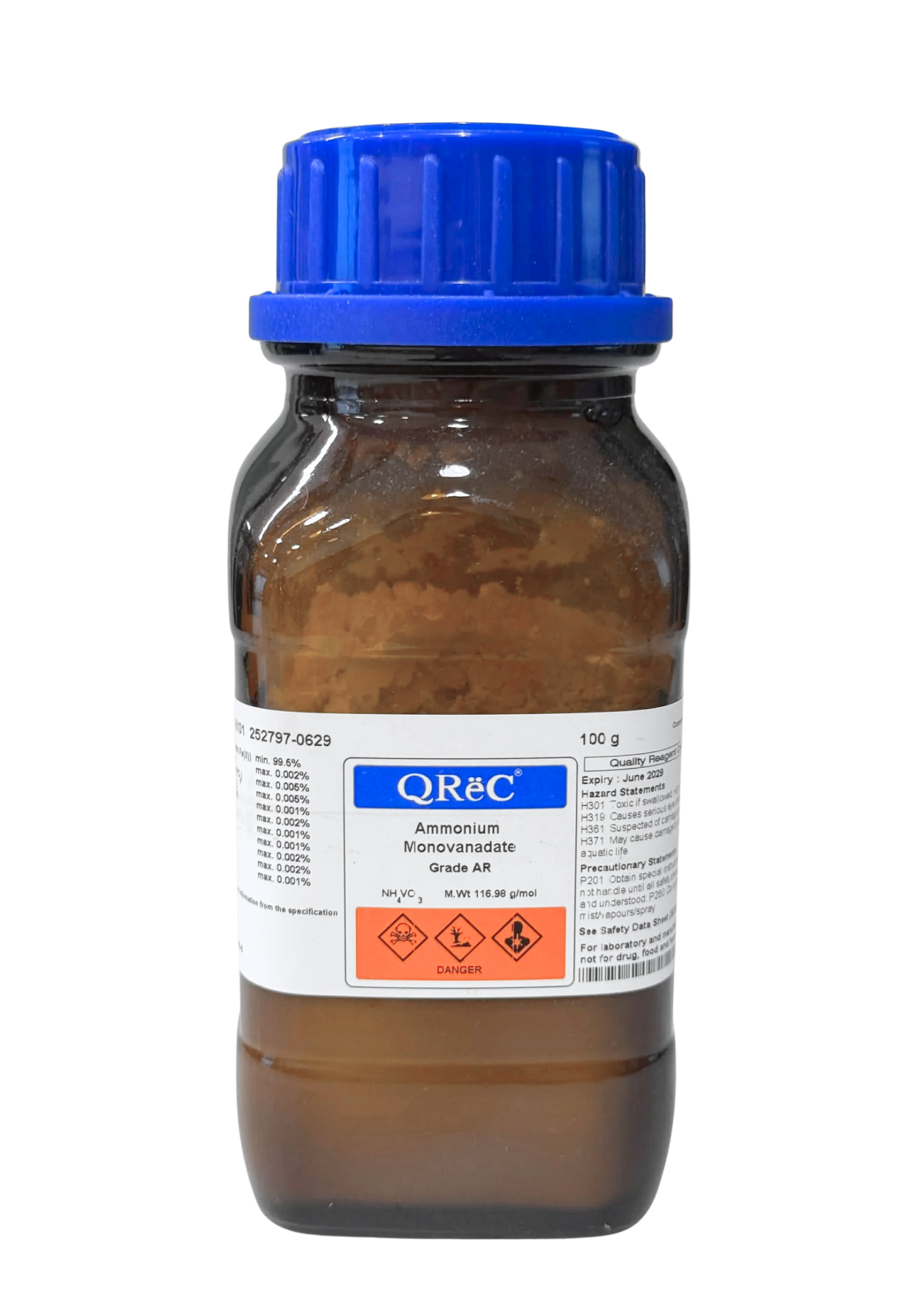
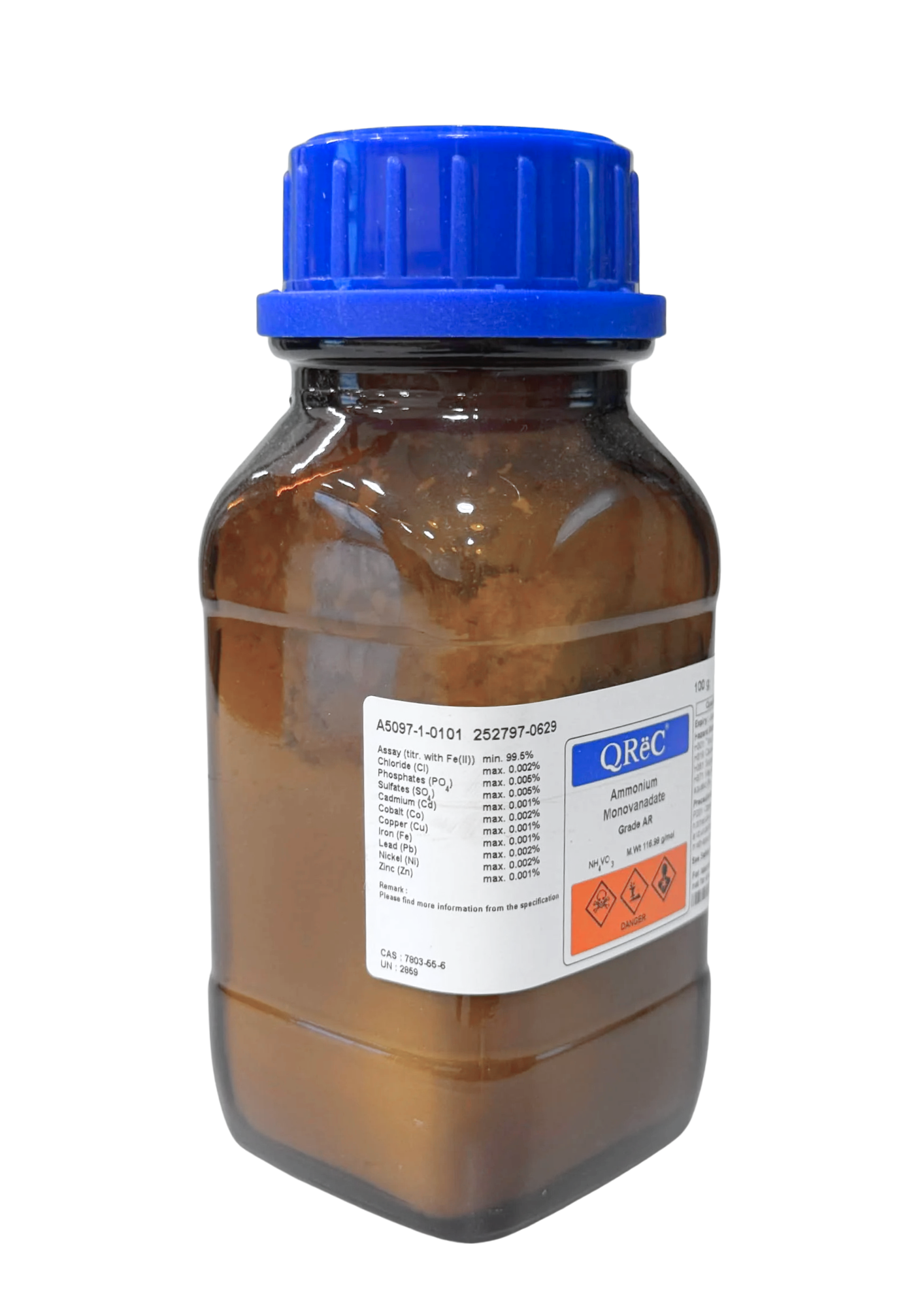
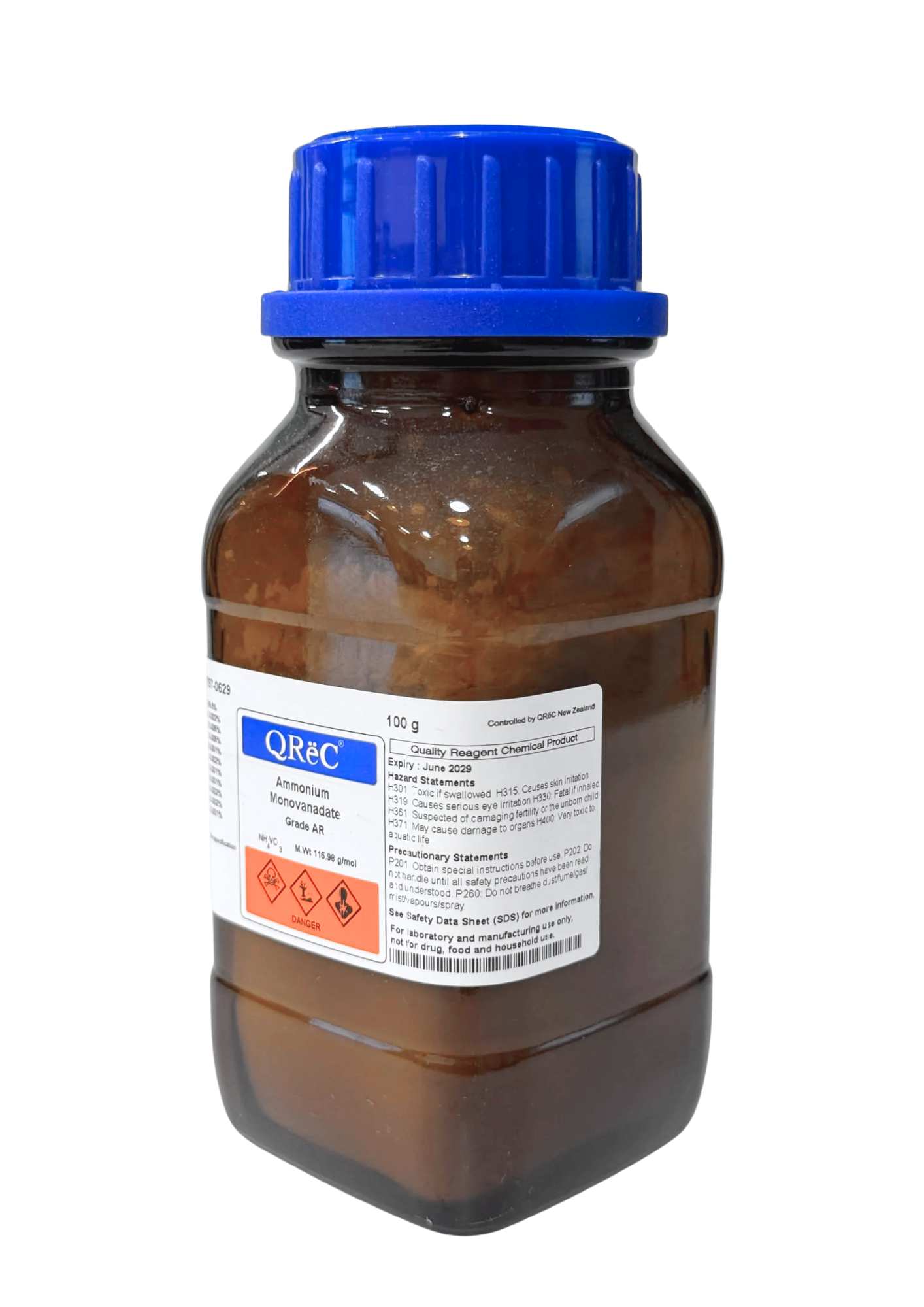
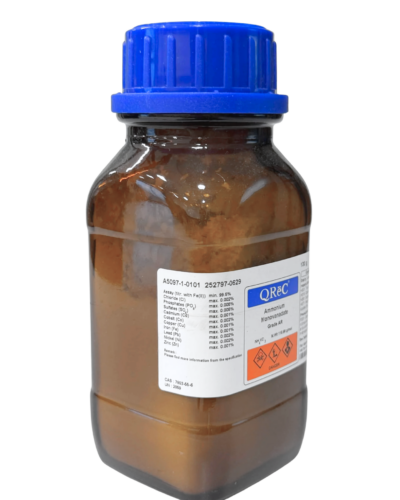
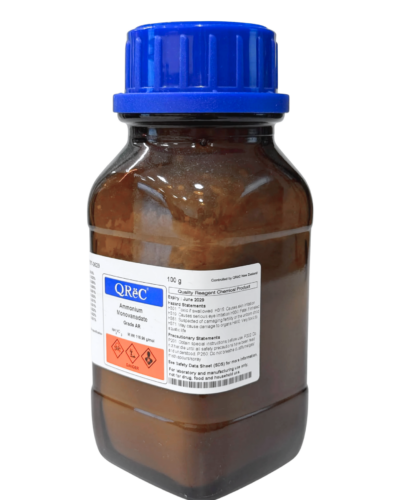
Ammonium metavanadate 99.5% or Ammonium vanadate (V) or Ammonium monovanadate
Product Overview & Quality
- Product Name: Ammonium metavanadate 99.5% or Ammonium vanadate (V) or Ammonium monovanadate
- Brand: QReC (Product Code: QR-A5097-1-0100)
- Grade: Analytical Reagent (AR Grade) featuring a high certified chemical purity of 99.5 percent or higher. Produced and multi-crystallized under strict QReC global laboratory specifications. Rigorously analyzed to enforce exceptionally low ppm thresholds of chloride, sulfate, phosphate, silica, matter insoluble in aqueous ammonia, and trace heavy metals (such as iron, lead, copper, aluminum, and zinc). Dry, uniform crystal profile yields clear, sediment-free solutions when dissolved in dilute aqueous ammonia or dilute mineral acids, providing superior quantitative fidelity in photometric testing. Packaged in a heavy-duty amber glass bottle for maximum chemical integrity and light protection.
- Physical Properties: White, off-white, to pale yellowish-white crystalline powder or fine granules. Odorless. Stable under normal atmospheric conditions; non-combustible alone, but extreme thermal decomposition liberates toxic ammonia gas and hazardous vanadium pentoxide fumes.
- Solubility: Sparingly soluble in cold water (approximately 0.5 grams per 100 milliliters at room temperature; solubility increases moderately in hot water); freely soluble in dilute aqueous ammonia, sodium hydroxide solutions, and dilute mineral acids; practically insoluble in ethanol and diethyl ether.
- Key Use: Heavily utilized as the definitive primary reagent in preparing Mandelin reagent (combined with concentrated sulfuric acid) for qualitative forensic screening and color spot tests to identify alkaloids, active pharmaceuticals, and regulated substances. Extensively applied in environmental and agricultural testing for spectrophotometric determination of orthophosphates in water, fertilizers, and soils using the Vanadomolybdophosphate yellow method. Serves as a high-purity inorganic precursor for synthesizing heterogeneous vanadium oxide catalysts in petrochemistry and organic oxidation reactions. Widely employed as a certified standard and analytical reagent in electrochemistry, metallurgical surface treatments, and specialty ceramic pigment formulations.
Safety & Hazards (Critical, Fatal Inhalation, Toxic & Mutagenic Suspect)
- Classification: Fatal if inhaled. Toxic if swallowed. Causes skin irritation. Causes serious eye irritation. May cause respiratory irritation. Suspected of causing genetic defects. Suspected of damaging fertility or the unborn child.
- Health Risks: Direct eye contact triggers intense stinging irritation, conjunctival redness, and lacrimation. Dermal contact may induce localized erythema, pruritus, and allergic sensitization. Inhalation of particulate dust represents an acute fatal hazard; even trace inhalation violently irritates the mucous membranes of the respiratory tract, causing dry coughing, chest tightness, dyspnea, chemical bronchitis, and acute pulmonary edema, often accompanied by a characteristic greenish-black tongue discoloration due to vanadium pigment deposition. Ingestion provokes severe systemic toxicity, accompanied by violent abdominal pain, vomiting, diarrhea, cardiovascular collapse, tremors, and acute renal failure.
- First Aid Measures: Immediately flush affected eyes or skin with plenty of continuous flowing water for at least 15 to 20 minutes while stripping contaminated clothing. In case of dust inhalation, rapidly relocate the victim to fresh air; apply artificial respiration if breathing has ceased. If accidentally swallowed, do NOT induce vomiting; thoroughly rinse mouth, administer water if conscious, and seek immediate, urgent emergency medical attention, alerting clinical staff to acute vanadium compound poisoning.
Handling & Storage
- Storage: Acutely Toxic Chemical and Health Hazard. Must be preserved in its original, tightly sealed QReC amber glass bottle. Store in a dedicated, securely locked toxic chemical cabinet with restricted access. Keep in a cool, dry, dark, and excellently ventilated chemical store at controlled temperatures (preferably below 25 to 30 degrees Celsius), sheltered from direct sunlight and humidity. Keep strictly segregated from strong oxidizing agents, strong mineral acids, reducing agents, and reactive metals.
- Precautions: Full specialized hazardous PPE is mandatory, including chemical-resistant nitrile gloves, splash-proof safety goggles, a high-efficiency particulate respirator (HEPA/P100 or N95 minimum), and a protective lab coat. All weighing, dispensing, and reagent preparation must be performed strictly and exclusively within a properly functioning laboratory fume hood to avoid airborne particulate exposure. Never discard vanadium residues into municipal drains; segregate into dedicated toxic chemical waste containers for certified disposal.