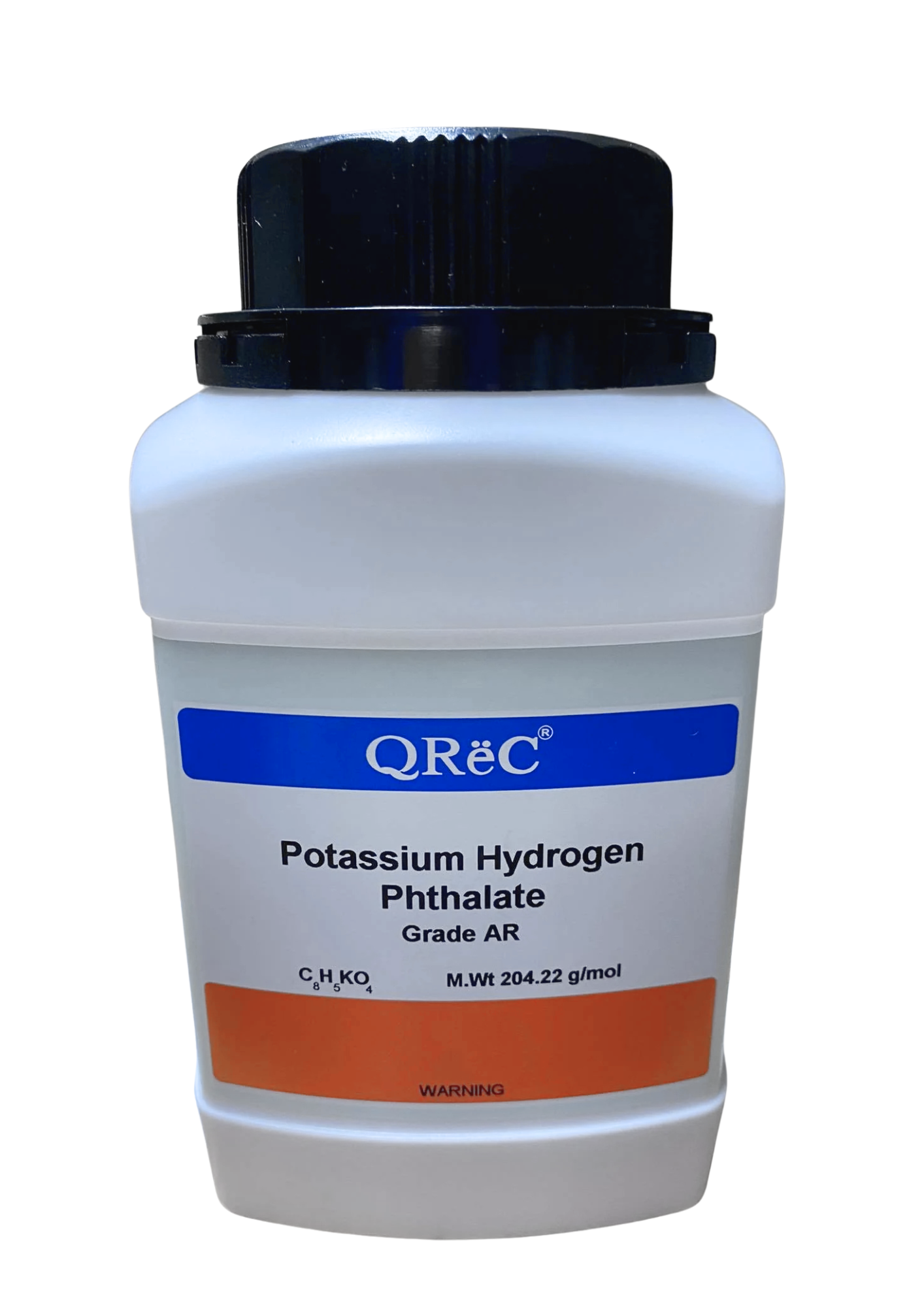
Potassium hydrogen phthalate 99.9% or KHP or Potassium biphthalate or Phthalic acid monopotassium salt
Product Overview & Quality
- Product Name: Potassium hydrogen phthalate 99.9% or KHP or Potassium biphthalate or Phthalic acid monopotassium salt
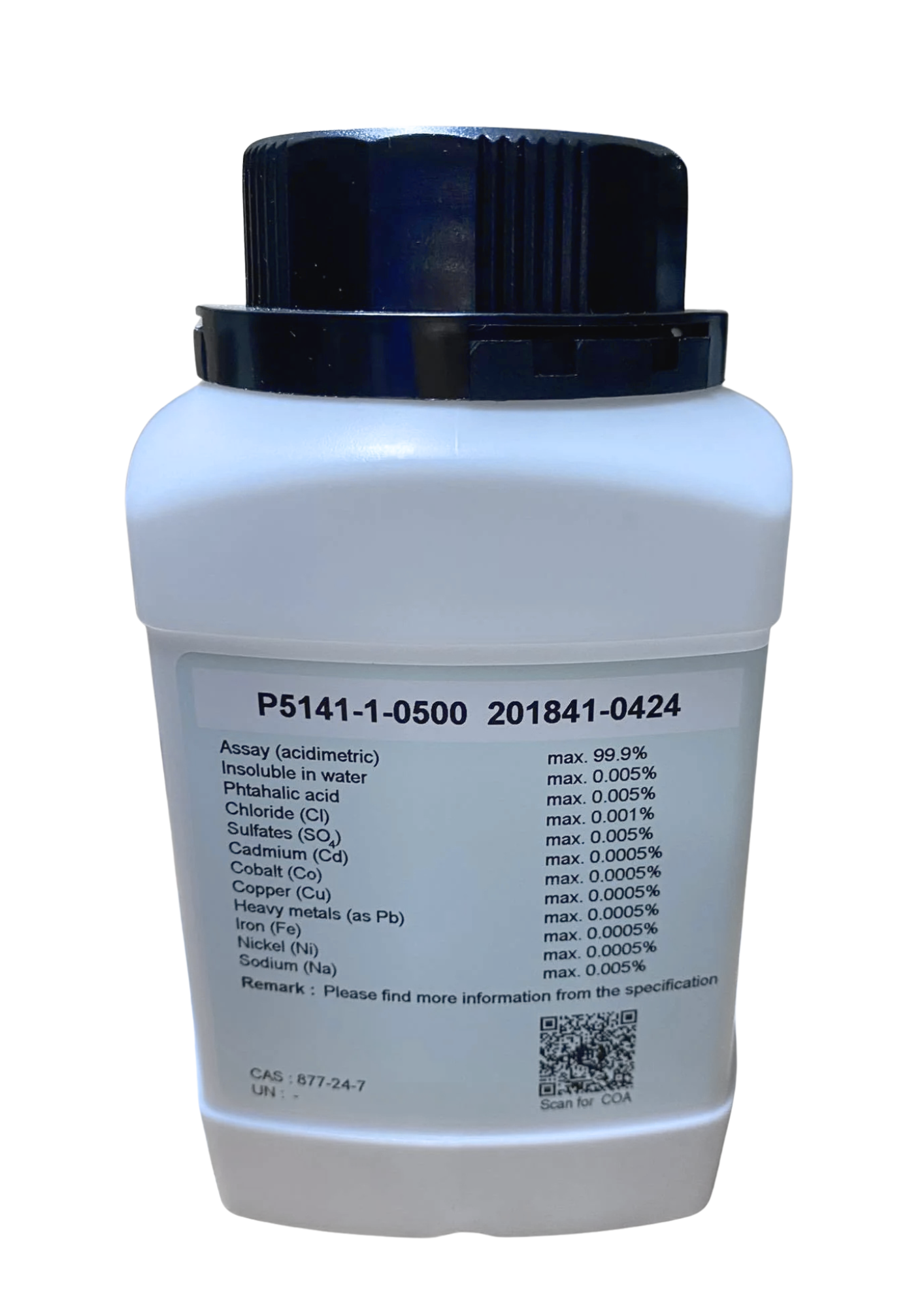
- Brand: QReC (Product Code: QR-P5141-1-0500)
- Grade: Certified Primary Standard Analytical Reagent (Primary Standard AR Grade) featuring an exceptional chemical purity assay of not less than 99.9 percent. Manufactured and multi-recrystallized under strict QReC global laboratory specifications. Rigorously tested to maintain ultra-low ppm thresholds of chloride, sulfate, total nitrogen, silica, and trace heavy metals (such as iron, lead, copper, and zinc). Non-hygroscopic crystalline matrix with an elevated equivalent molecular weight, effectively minimizing weighing errors and delivering authoritative stoichiometry. Directly usable as a primary volumetric standard without preliminary standardization. Packaged in a heavy-duty, chemically inert container with a high-integrity seal.
- Physical Properties: Colorless transparent crystals or white crystalline powder. Odorless. Highly stable in ambient air and light. Aqueous solutions are mildly acidic (pH approximately 4.008 at 25 degrees Celsius for a 0.05 mol/L solution). Non-combustible and non-corrosive.
- Solubility: Moderately soluble in water (approximately 8 grams per 100 milliliters at 20 degrees Celsius; solubility increases substantially in hot water); slightly soluble in ethanol; insoluble in diethyl ether.
- Key Use: Heavily utilized as the definitive international primary standard in quantitative analytical chemistry for the standardization of secondary alkaline volumetric solutions (including sodium hydroxide and potassium hydroxide titrants). Universally employed as the primary reference standard for formulating NIST-traceable buffer calibration standards for precision pH meter calibration at the certified nominal pH 4.00 / 4.01 reference point. Extensively applied as a primary organic carbon reference material for calibrating Total Organic Carbon (TOC) analyzers in pharmaceutical pure water and environmental testing. Widely used as a validation standard for method verification in quality control (QC) and testing laboratories, and functions as a stable phthalate buffer constituent in chemical research.
Safety & Hazards
- Classification: Non-hazardous substance under standard GHS classification criteria in typical laboratory usage. Exceptionally low acute toxicity profile; airborne dust may exert mild mechanical irritation to eyes, skin, and the respiratory tract.
- Health Risks: Direct eye contact may cause transient mechanical stinging, redness, and tearing. Prolonged dermal contact may produce mild superficial dryness or localized irritation. Inhalation of particulate dust can cause minor sneezing, coughing, or mucosal discomfort. Ingestion of large quantities may provoke mild gastrointestinal disturbance or nausea.
- First Aid Measures: Flush affected eyes thoroughly with clean flowing water for at least 10 to 15 minutes. Wash exposed skin with soap and water. In case of dust inhalation, transfer the victim to fresh air. If accidentally swallowed in substantial amounts, rinse mouth thoroughly, drink water, and seek medical advice if discomfort persists.
Handling & Storage
- Storage: Highly Stable Primary Reference Standard. Although non-hygroscopic, it should be preserved in its original, tightly closed QReC container to maintain maximum analytical integrity. Store in a clean, cool, dry, and well-ventilated chemical store at stable room temperature (below 25 to 30 degrees Celsius), sheltered from direct sunlight and excessive humidity. Keep strictly segregated from strong bases, strong oxidizing agents, and strong mineral acids.
- Precautions: Standard laboratory PPE is mandatory, including protective gloves, safety glasses, and a protective lab coat. “Analytical Standardization Protocol: Prior to high-precision volumetric weighing, dry the crystals in a laboratory oven at 110 to 120 degrees Celsius for 1 to 2 hours and cool to ambient temperature in a desiccator to eliminate any superficial moisture.”