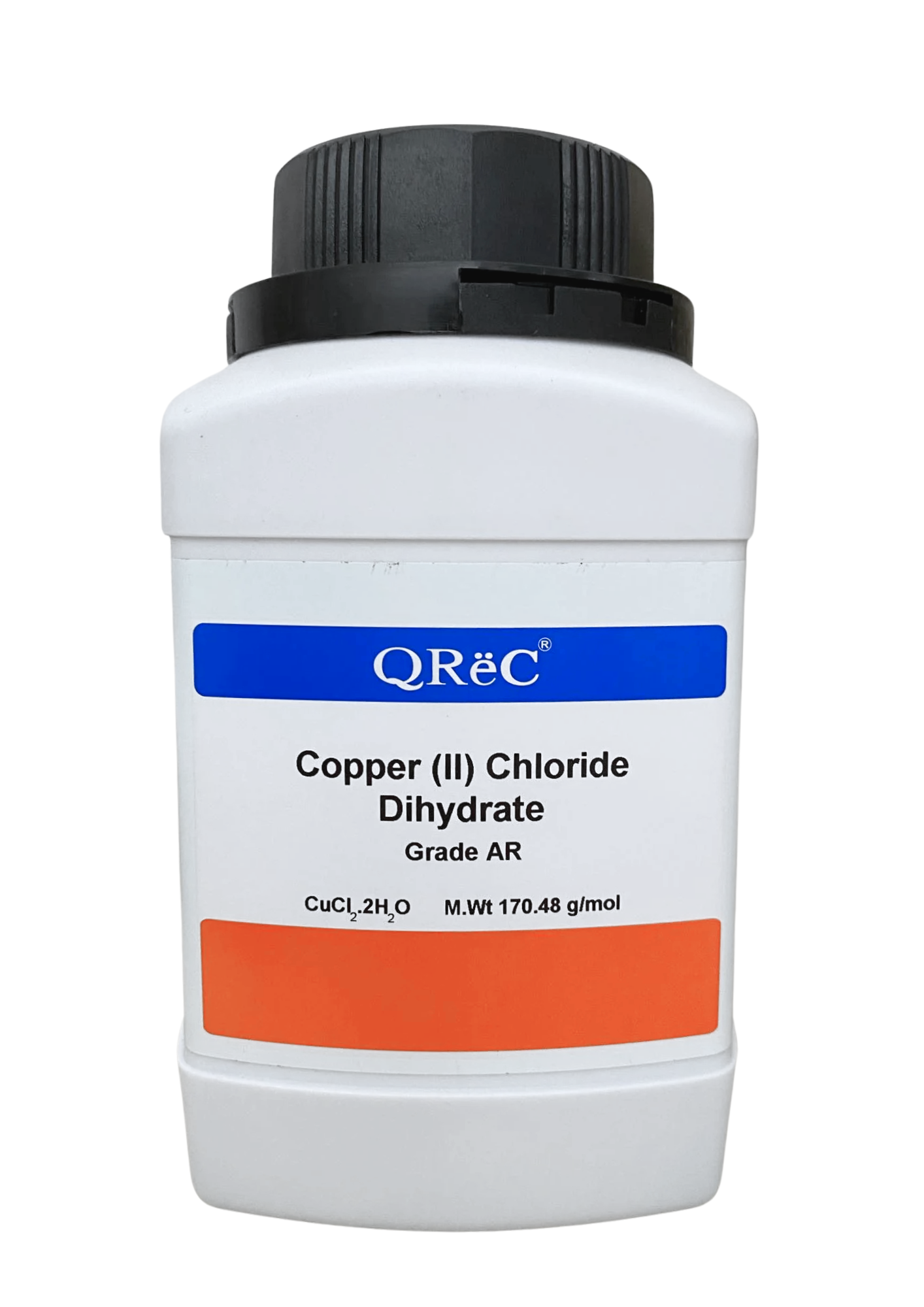
Copper (II) chloride dihydrate 99% or Cupric chloride dihydrate or Copper dichloride dihydrate
Product Overview & Quality
- Product Name: Copper (II) chloride dihydrate 99% or Cupric chloride dihydrate or Copper dichloride dihydrate
- Brand: QReC (Product Code: QR-C5057-1-0500)
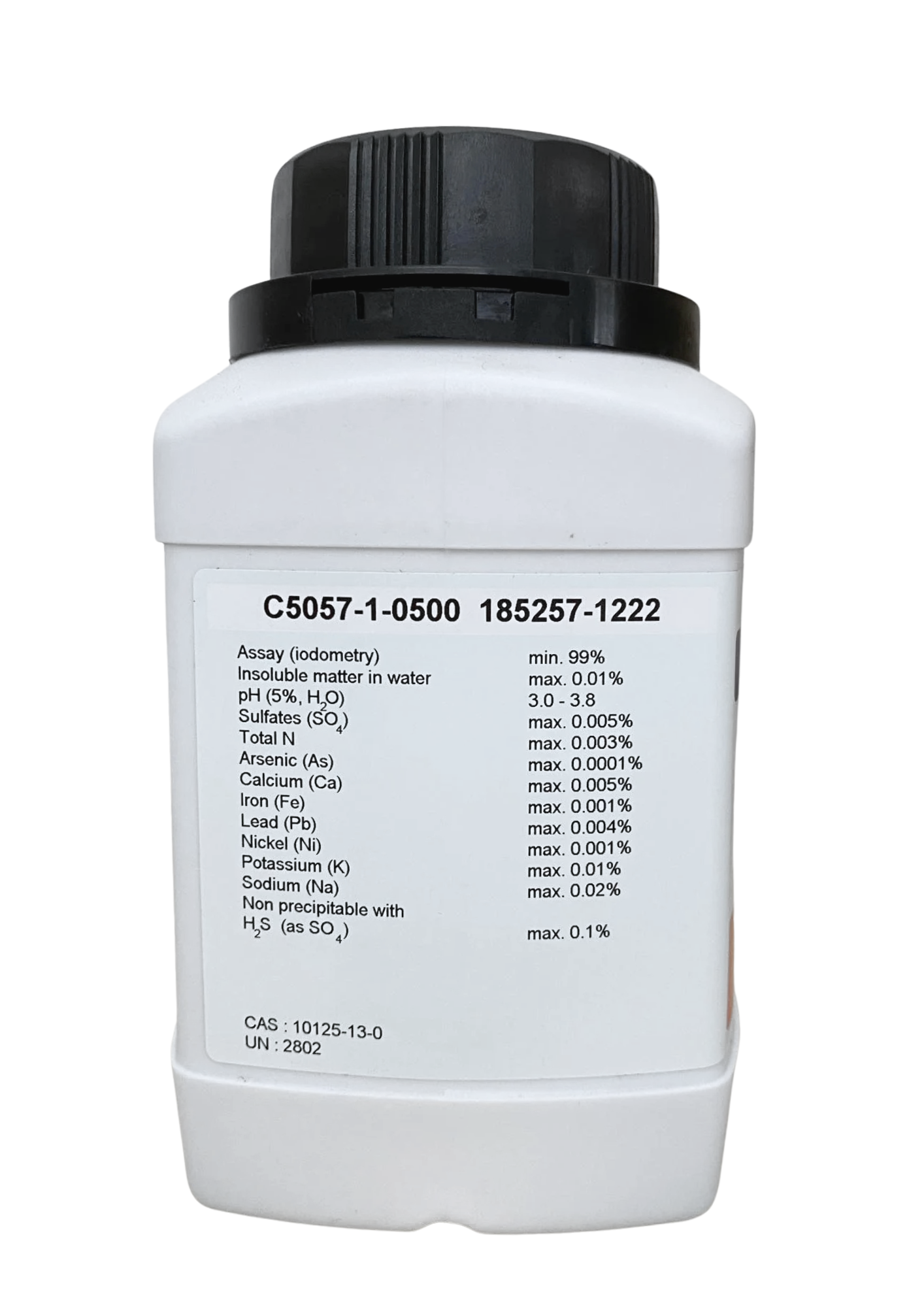
- Grade: Analytical Reagent (AR Grade) featuring a certified chemical assay of not less than 99 percent. Manufactured and refined under strict QReC global laboratory standards. Rigorously analyzed to enforce exceptionally low ppm thresholds of sulfate, nitrate, water-insoluble matter, total nitrogen, and trace heavy metals (such as iron, lead, nickel, zinc, arsenic, and calcium). Dry, uniform crystal matrix dissolves rapidly and cleanly in water and polar solvents, yielding brilliant blue-green solutions without turbidity or basic salt precipitates. Packaged in a heavy-duty, chemically resistant polymer container engineered with a secure hermetic seal for moisture exclusion.
- Physical Properties: Bluish-green rhombic crystals or crystalline powder. Odorless. Hygroscopic, absorbing moisture from ambient air to form a dense hydrated crust. Non-combustible solid under normal conditions; thermal decomposition releases toxic fumes of hydrogen chloride, chlorine gas, and copper oxide dusts.
- Solubility: Readily and highly soluble in water (approximately 76 grams per 100 milliliters at 20 degrees Celsius; escalates to over 100 grams in boiling water); freely soluble in ethanol, methanol, acetone, and aqueous ammonia; slightly soluble in diethyl ether.
- Key Use: Heavily utilized as an essential Lewis acid catalyst and co-catalyst in organic synthesis, notably in the Wacker oxidation process (paired with palladium chloride) for converting alkenes to aldehydes, and in diverse catalytic chlorination and coupling reactions. Universally applied as an analytical testing reagent for detecting organic amines and specialized functional groups. Serves as an inorganic copper precursor for synthesizing advanced coordination complexes, copper nanostructures, and magnetic materials. Extensively employed in metallurgical chemical etching, printed circuit board (PCB) etchant formulations, and electroplating baths. Routinely used as an analytical standard in quantitative electrochemistry and environmental analysis.
Safety & Hazards (Harmful, Severe Eye Damage & Aquatic Toxic)
- Classification: Harmful if swallowed. Causes skin irritation. Causes serious eye damage. May cause respiratory irritation. Very toxic to aquatic life with long lasting effects.
- Health Risks: Direct ocular contact triggers instantaneous, destructive chemical ulceration of the conjunctiva and cornea, resulting in excruciating pain, corneal opacification, and permanent blindness. Dermal exposure causes severe irritation, erythema, dermatitis, and potential allergic sensitization. Inhalation of particulate dust severely irritates mucous membranes of the respiratory tract, causing sneezing, coughing, chest tightness, and potential metal fume fever symptoms. Ingestion produces intense caustic gastrointestinal injury with a metallic taste, burning epigastric pain, nausea, characteristic greenish-blue vomitus, gastrointestinal hemorrhage, hemolysis, circulatory shock, and acute hepatic or renal tubular failure.
- First Aid Measures: Immediately flush affected eyes or skin with plenty of continuous flowing clean water for at least 15 to 20 minutes while stripping contaminated clothing. In case of dust inhalation, rapidly relocate the victim to fresh air. If accidentally swallowed, do NOT induce vomiting; thoroughly rinse mouth, administer water or milk immediately, and seek immediate, urgent emergency medical attention, alerting clinical staff to inorganic copper poisoning.
Handling & Storage
- Storage: Hygroscopic Heavy Metal Salt and Severe Environmental Pollutant. Readily cakes or dissolves in atmospheric humidity. Must be preserved in its original, tightly closed QReC container. Store in a clean, dry, cool, and well-ventilated dedicated chemical store at controlled room temperatures (below 25 to 30 degrees Celsius), sheltered from humidity and direct sunlight. Keep strictly segregated from strong oxidizing agents, strong mineral acids, strong bases, and active metals (such as aluminum, magnesium, and sodium).
- Precautions: Standard laboratory PPE is mandatory, including chemical-resistant nitrile gloves, splash-proof safety goggles, a dust mask, and a protective lab coat. Weigh and dispense carefully to prevent airborne dust dispersion. Never discharge copper-containing solutions or washings directly into municipal drains; collect exclusively in dedicated heavy-metal hazardous waste containers for certified environmental treatment.