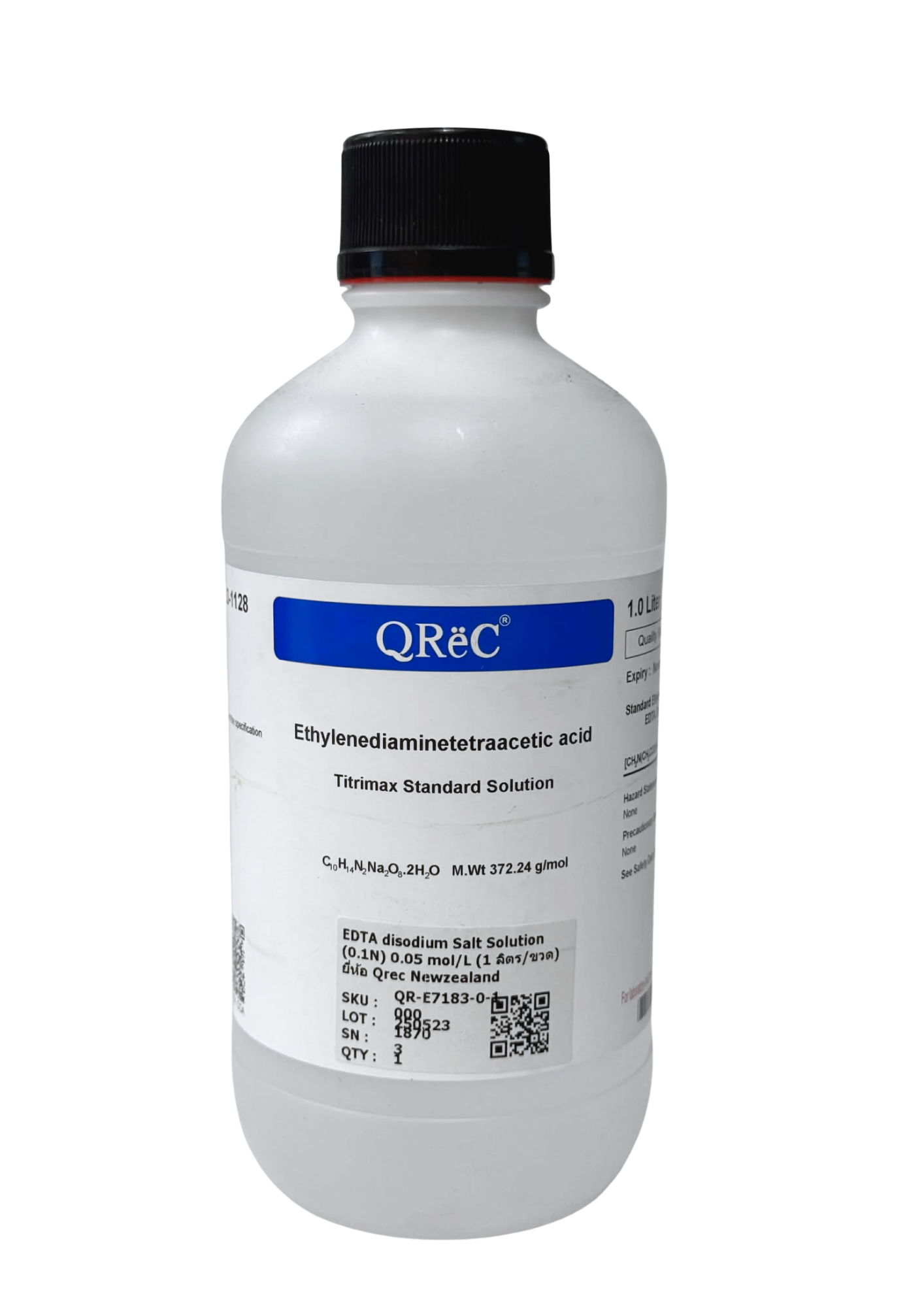
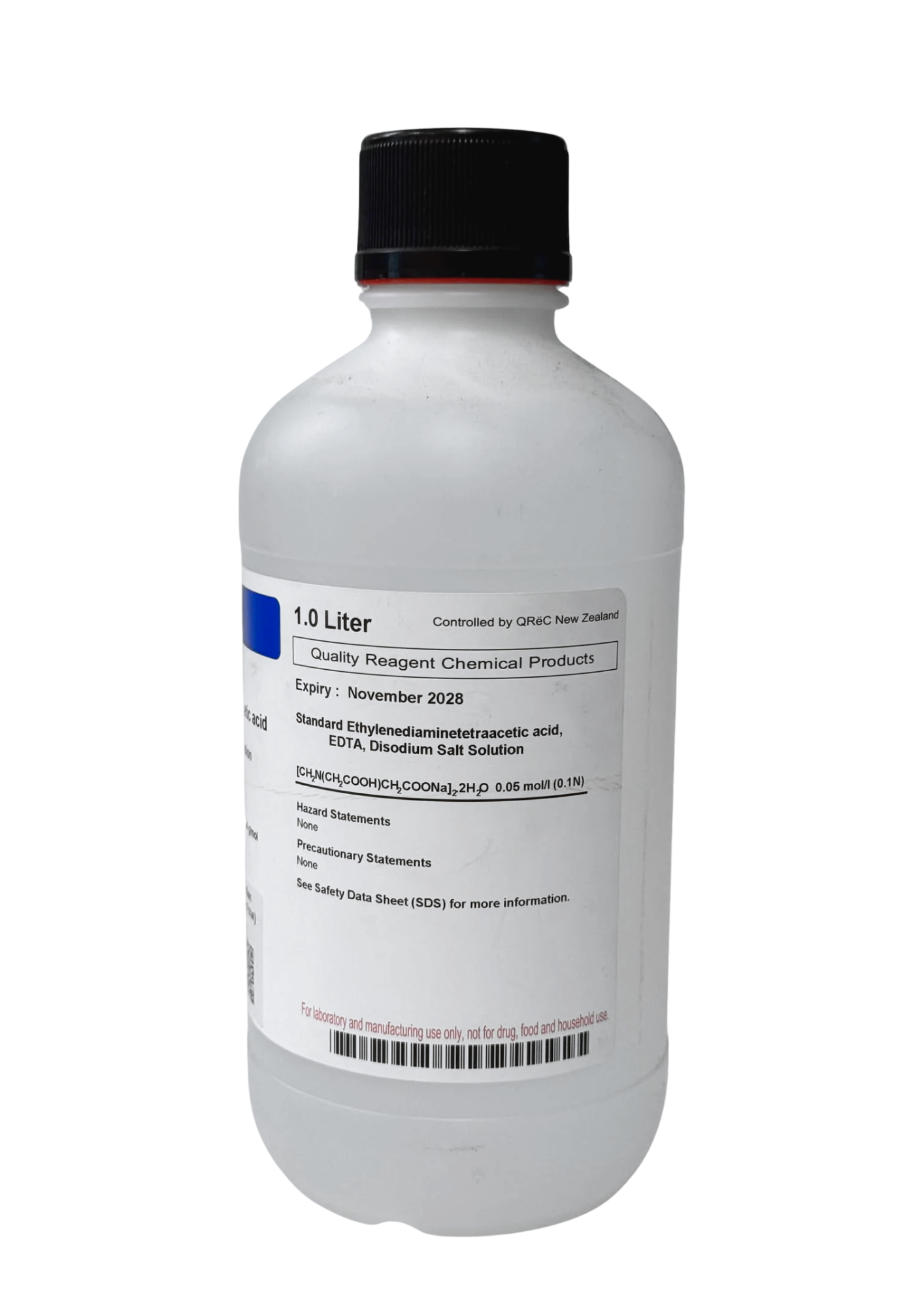
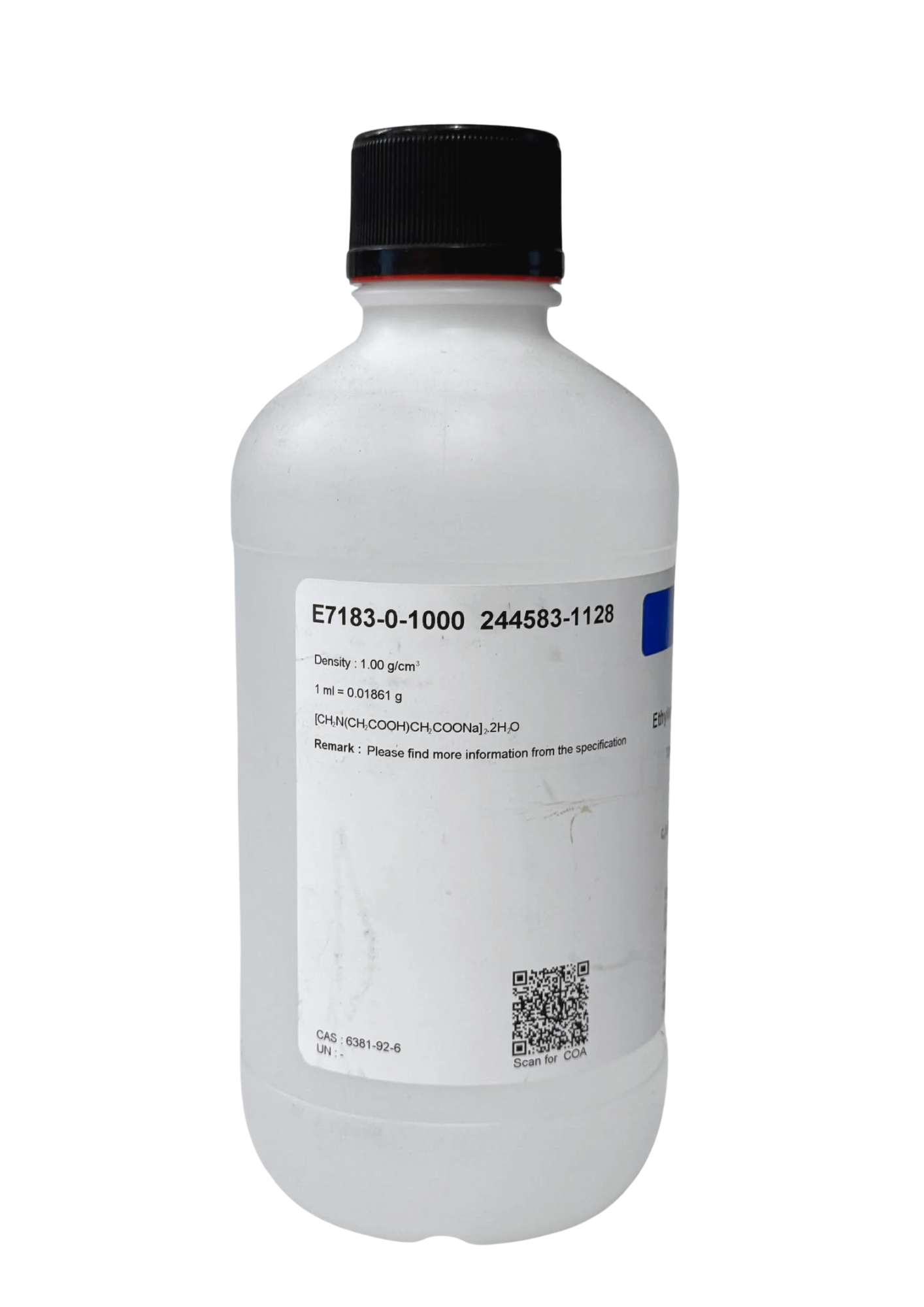
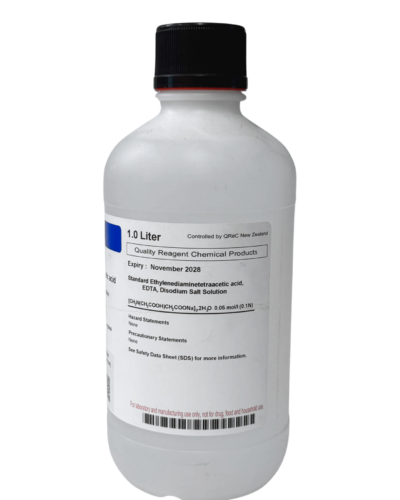
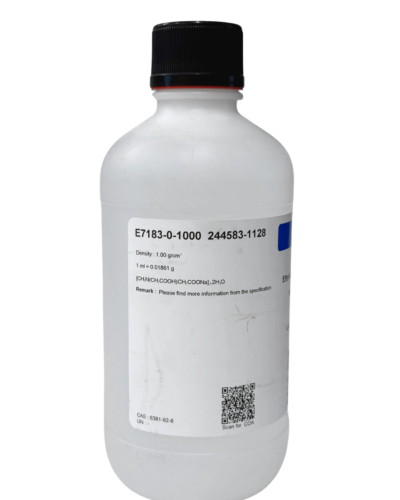
EDTA disodium salt solution 0.05 mol/L (0.1N) or Ethylenediaminetetraacetic acid disodium salt solution or Disodium edetate standard solution
Product Overview & Quality
- Product Name: EDTA disodium salt solution 0.05 mol/L (0.1N) or Ethylenediaminetetraacetic acid disodium salt solution or Disodium edetate standard solution
- Brand: QReC (Product Code: QR-E7183-0-1000)
- Grade: Certified Volumetric Standard Solution (AR Grade) prepared from high-purity analytical reagent grade EDTA disodium dihydrate and high-purity deionized water. Standardized and calibrated under strict QReC global laboratory specifications at a controlled reference temperature of 20 degrees Celsius. Directly traceable to certified Primary Standard Reference Materials from the National Institute of Standards and Technology (NIST Traceable). Features a certified molarity factor maintained within 0.999 to 1.001, printed on the batch certificate and label. Enforces ultra-low ppm thresholds of extraneous trace heavy metals, chloride, and sulfate. Delivers immediate, ready-to-use accuracy, eliminating preliminary dissolution, filtration, and restandardization steps. Packaged in a heavy-duty polymer container designed to prevent metal ion leaching associated with traditional glass containers.
- Physical Properties: Clear, colorless liquid. Odorless. Mildly acidic to near-neutral aqueous solution (pH approximately 4.5 to 5.5). Non-flammable and non-corrosive.
- Solubility: Completely miscible in all proportions with water.
- Key Use: Universally utilized as the standard titrant in complexometric titrations for determining Total Water Hardness (calcium and magnesium ion concentrations) in drinking water, municipal supplies, industrial boiler feed water, and environmental effluents (paired with Eriochrome Black T indicator at pH 10). Extensively applied for the selective quantification of Calcium Hardness at elevated alkaline pH using Murexide or Patton-Reeders indicator. Serves as a primary volumetric standard for quantifying multivalent metal cations, including zinc, copper, lead, nickel, iron, aluminum, and bismuth across metallurgical, environmental, and chemical quality control (QC). Routinely employed as a chelating buffer solution in biochemistry and molecular biology to sequester interfering divalent metal ions and inhibit metalloenzymes (such as nucleases). Widely used for calibrating automated potentiometric and photometric titrators.
Safety & Hazards
- Classification: Non-hazardous substance under standard GHS criteria at 0.05 mol/L concentration in routine laboratory usage. Exceptionally low acute toxicity profile; direct contact with liquid or mists may cause mild mechanical or transient irritation.
- Health Risks: Direct eye contact may cause minor transient stinging, conjunctival redness, or tearing. Prolonged dermal contact may cause mild dryness or superficial skin irritation. Inhalation of generated aerosols may produce minor sneezing or respiratory tickling. Ingestion of substantial quantities may provoke gastrointestinal distress, mild nausea, or diarrhea due to systemic chelation of dietary minerals.
- First Aid Measures: Flush affected eyes thoroughly with clean running water for at least 10 to 15 minutes. Wash exposed skin with soap and water. In case of mist inhalation, relocate to fresh air. If accidentally swallowed in substantial amounts, rinse mouth thoroughly, drink water, and seek medical advice if discomfort persists.
Handling & Storage
- Storage: Calibrated Standard Volumetric Solution. Must be preserved in its original, tightly closed QReC polyethylene container (polyethylene storage prevents extraction and leaching of trace divalent cations from glass matrixes). Store in a clean, cool, and well-ventilated dedicated chemical store at controlled temperatures (between 15 and 25 degrees Celsius), sheltered from direct sunlight and thermal sources. Keep strictly segregated from strong oxidizing agents and strong mineral acids.
- Precautions: Standard laboratory PPE is mandatory, including protective chemical gloves, safety glasses, and a protective lab coat. “Critical Volumetric Rule: Never pour unused portions of the solution from beakers or burettes back into the primary container to avoid cross-contamination and preserve the certified titer factor.” Re-seal container tightly immediately after sampling.