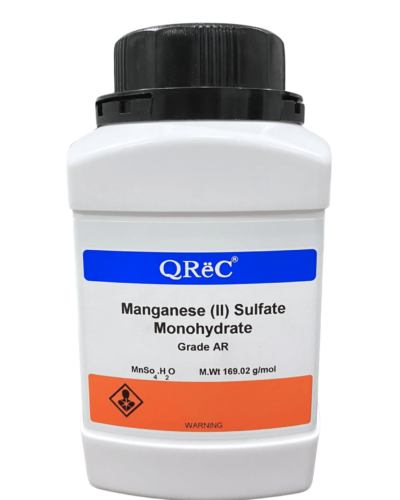
Manganese (II) sulfate monohydrate 99% or Manganous sulfate monohydrate or Manganese monosulfate monohydrate
Product Overview & Quality
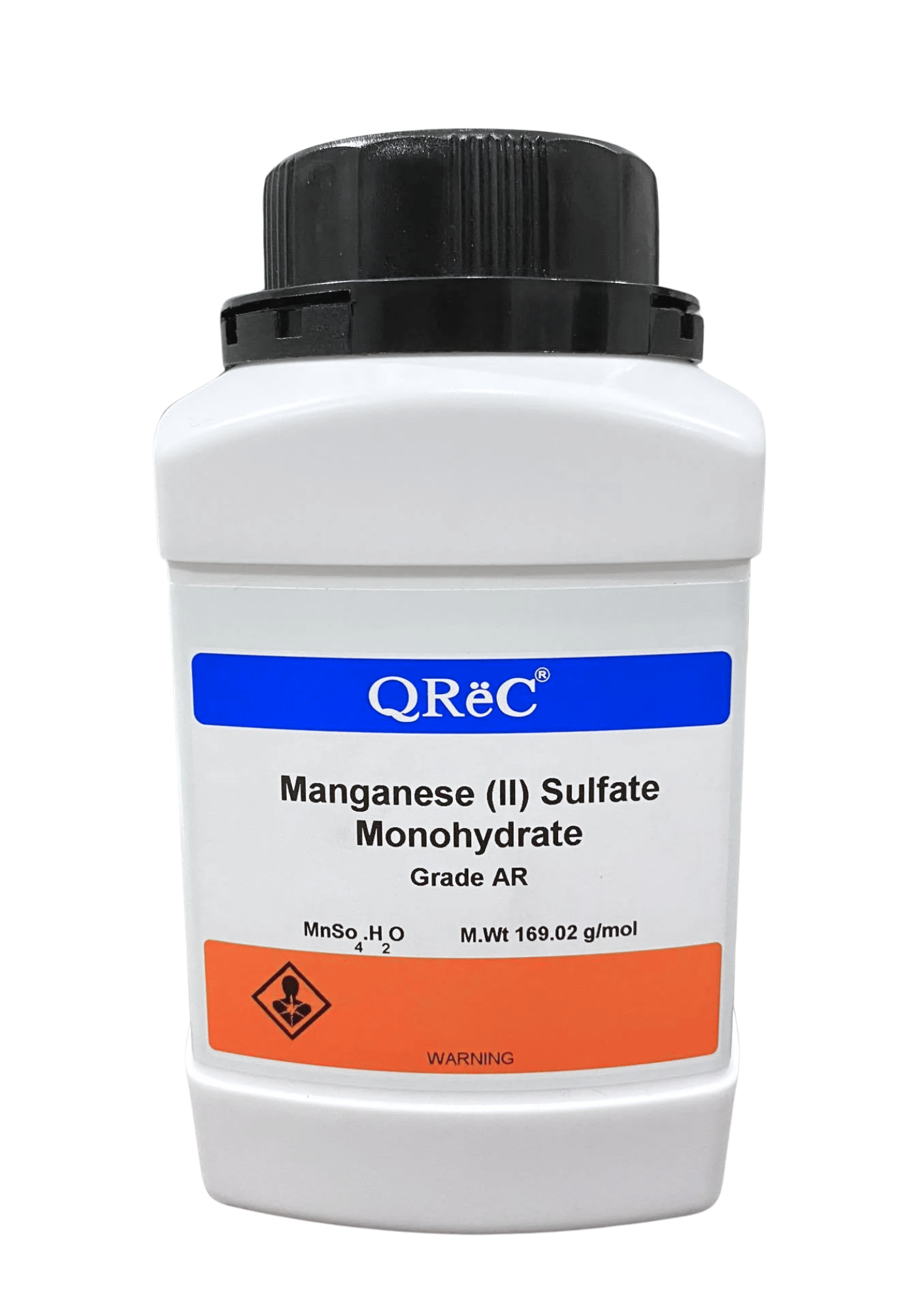
- Product Name: Manganese (II) sulfate monohydrate 99% or Manganous sulfate monohydrate or Manganese monosulfate monohydrate
- Brand: QReC (Product Code: QR-M1070-1-0500)
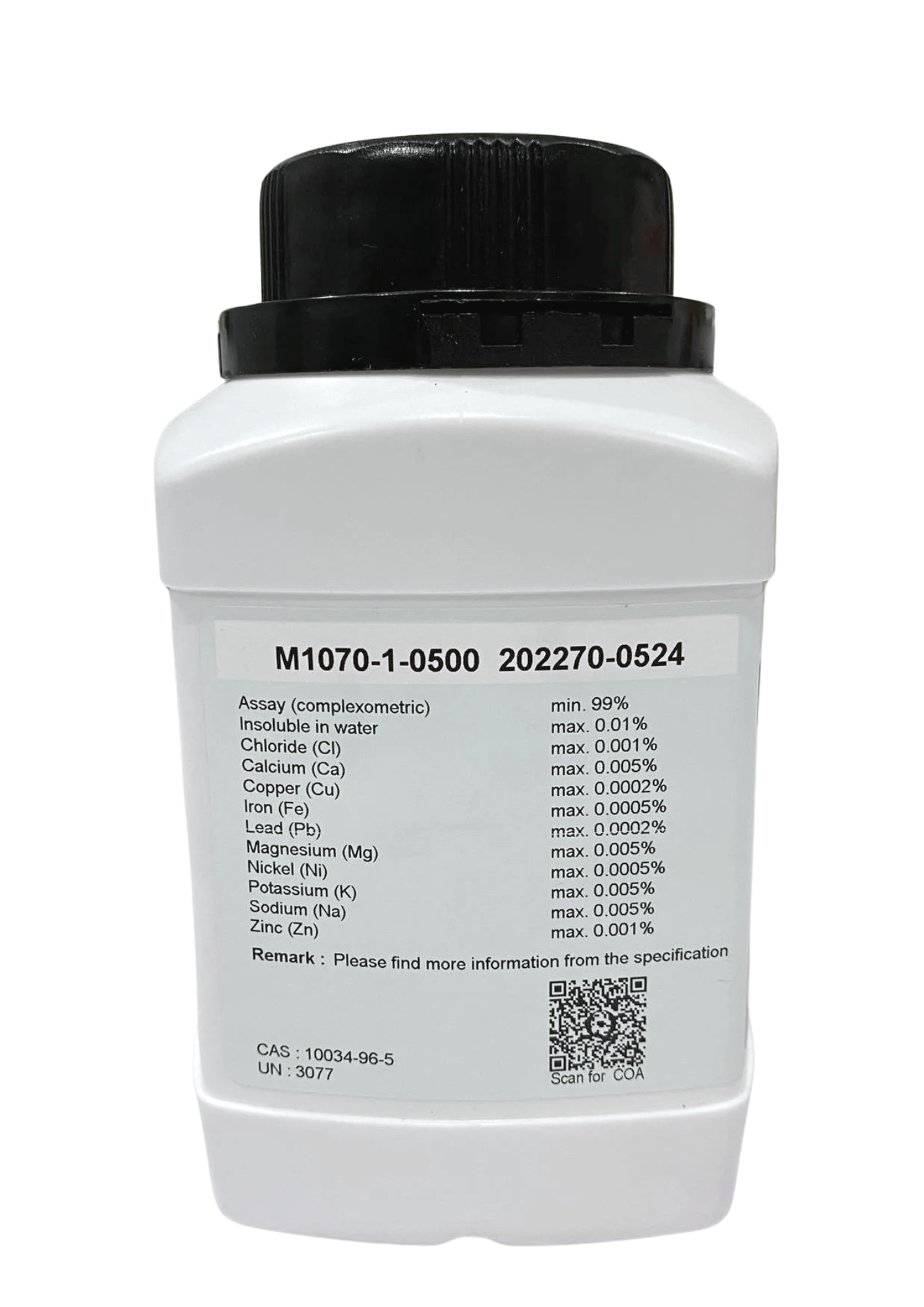
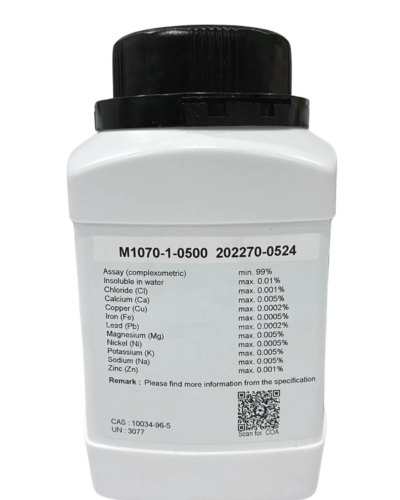
- Grade: Analytical Reagent (AR Grade) featuring a certified chemical assay of not less than 99.0 percent. Manufactured and crystallized under strict QReC global laboratory standards. Rigorously tested to enforce exceptionally low ppm thresholds of chloride, total nitrogen, water-insoluble matter, iron, zinc, nickel, copper, lead, and calcium. Displays uniform, dry crystals that dissolve cleanly and completely in water, producing a transparent, pale pink solution free from basic salt turbidity. Packaged in a heavy-duty, moisture-barrier polymer container equipped with an airtight hermetic seal
- Physical Properties: Pale pink translucent crystals or crystalline powder. Odorless. Thermodynamically stable in ambient air. Aqueous solutions are weakly acidic. Non-combustible inorganic salt.
- Solubility: Readily and freely soluble in water (approximately 50 to 60 grams per 100 milliliters at room temperature; increases in warm water); practically insoluble in ethanol and diethyl ether.
- Key Use: Heavily utilized as the primary divalent manganese reagent (Winkler Reagent 1) in the classic Winkler titration method for determining Dissolved Oxygen (DO) and Biochemical Oxygen Demand (BOD) in environmental water and wastewater analysis. Extensively applied as a core essential micronutrient in plant tissue culture media formulations, notably Murashige and Skoog (MS) medium, supporting plant enzymatic pathways, chlorophyll synthesis, and cellular growth. Serves as a homogeneous redox catalyst in organic oxidations, notably the liquid-phase oxidation of fatty acids. Frequently used as an inorganic precursor for synthesizing manganese oxide nanostructures, advanced battery cathode materials, and supercapacitor electrodes. Routinely employed as an analytical reference standard for spectrophotometric and atomic absorption (AAS) determination of manganese.
Safety & Hazards (Critical, Specific Target Organ Neurotoxin & Serious Eye Damage
- Classification: Causes serious eye damage. May cause damage to organs (Central nervous system and brain) through prolonged or repeated exposure. Toxic to aquatic life with long lasting effects. Harmful if swallowed in significant amounts.
- Health Risks: Direct ocular contact triggers intense burning pain, conjunctival redness, corneal irritation, and potential ocular tissue damage. Dermal contact may cause minor dryness or superficial irritation. Inhalation of particulate dust irritates the mucous membranes of the respiratory tract, causing sneezing, coughing, and dyspnea. Critical Chronic Risk: Chronic occupational inhalation or repeated absorption of manganese particulates leads to irreversible central nervous system toxicity known as Manganism, presenting Parkinson-like neurological syndromes including muscular rigidity, resting tremors, impaired speech, masked facies, and behavioral disturbances. Ingestion of large quantities produces gastrointestinal irritation, abdominal pain, nausea, and vomiting
- First Aid Measures: Immediately flush affected eyes with an abundant stream of clean flowing water for at least 15 minutes while stripping contaminated garments; remove contact lenses promptly. Wash exposed skin thoroughly with soap and water. In case of dust inhalation, rapidly relocate the victim to fresh air. If accidentally swallowed, rinse mouth thoroughly, administer water in moderate amounts, and seek medical attention.
Handling & Storage
- Storage: Specific Target Organ Neurotoxin and Aquatic Pollutant. Must be preserved in its original, tightly closed QReC container. Store in a clean, cool, dry, and well-ventilated dedicated chemical store at controlled room temperatures (below 25 to 30 degrees Celsius), sheltered from humidity and direct solar radiation. Keep strictly segregated from strong oxidizing agents and strong mineral acids.
- Precautions: Standard specialized PPE is mandatory, including chemical-resistant nitrile gloves, splash-proof safety goggles, a certified particulate dust mask, and a protective lab coat. Avoid airborne dust generation during weighing and dispensing; perform handling inside a certified laboratory fume hood to prevent chronic inhalation exposure. Never discharge manganese residues or washings into municipal wastewater systems; collect in dedicated hazardous waste containers for certified disposal.