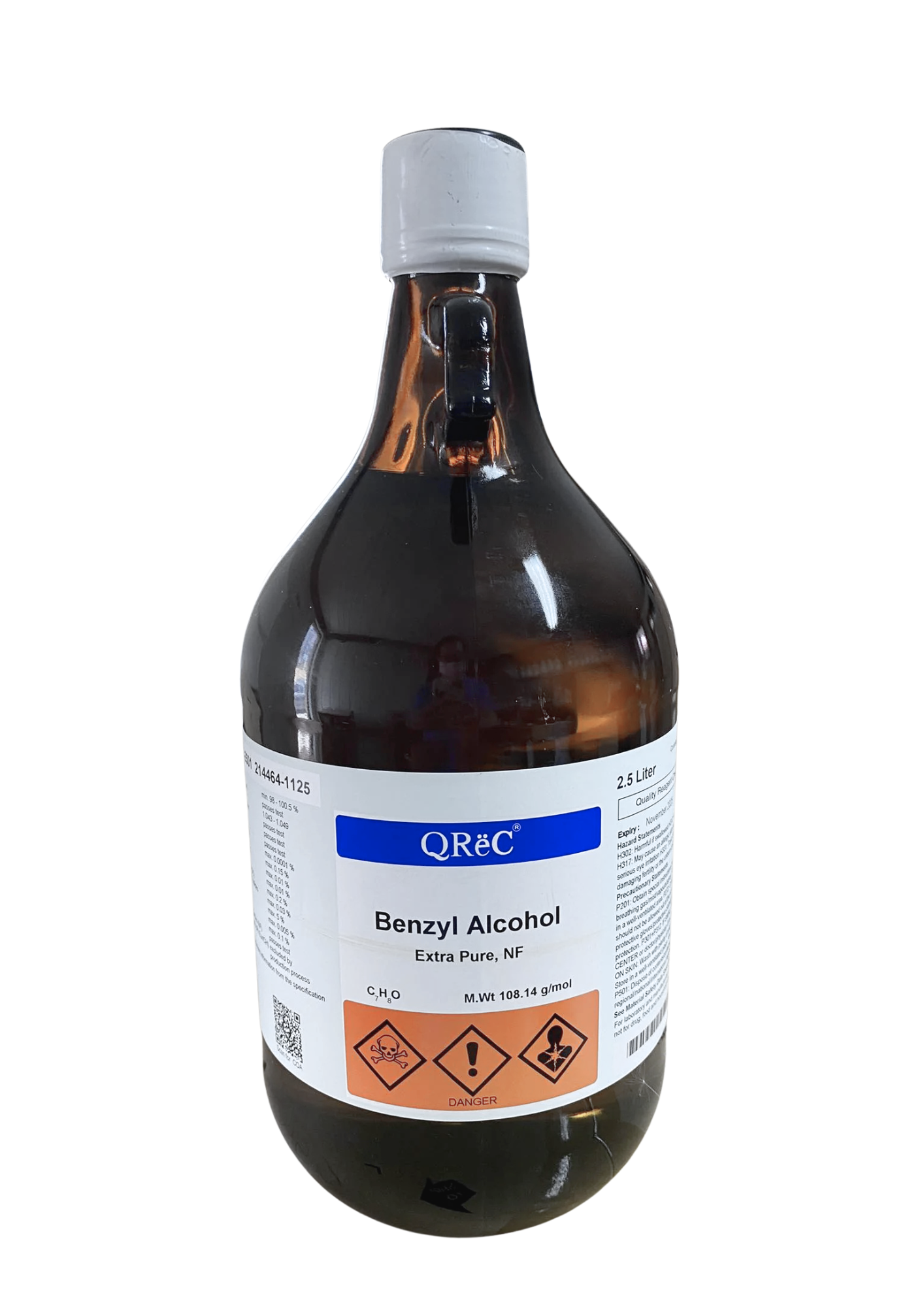
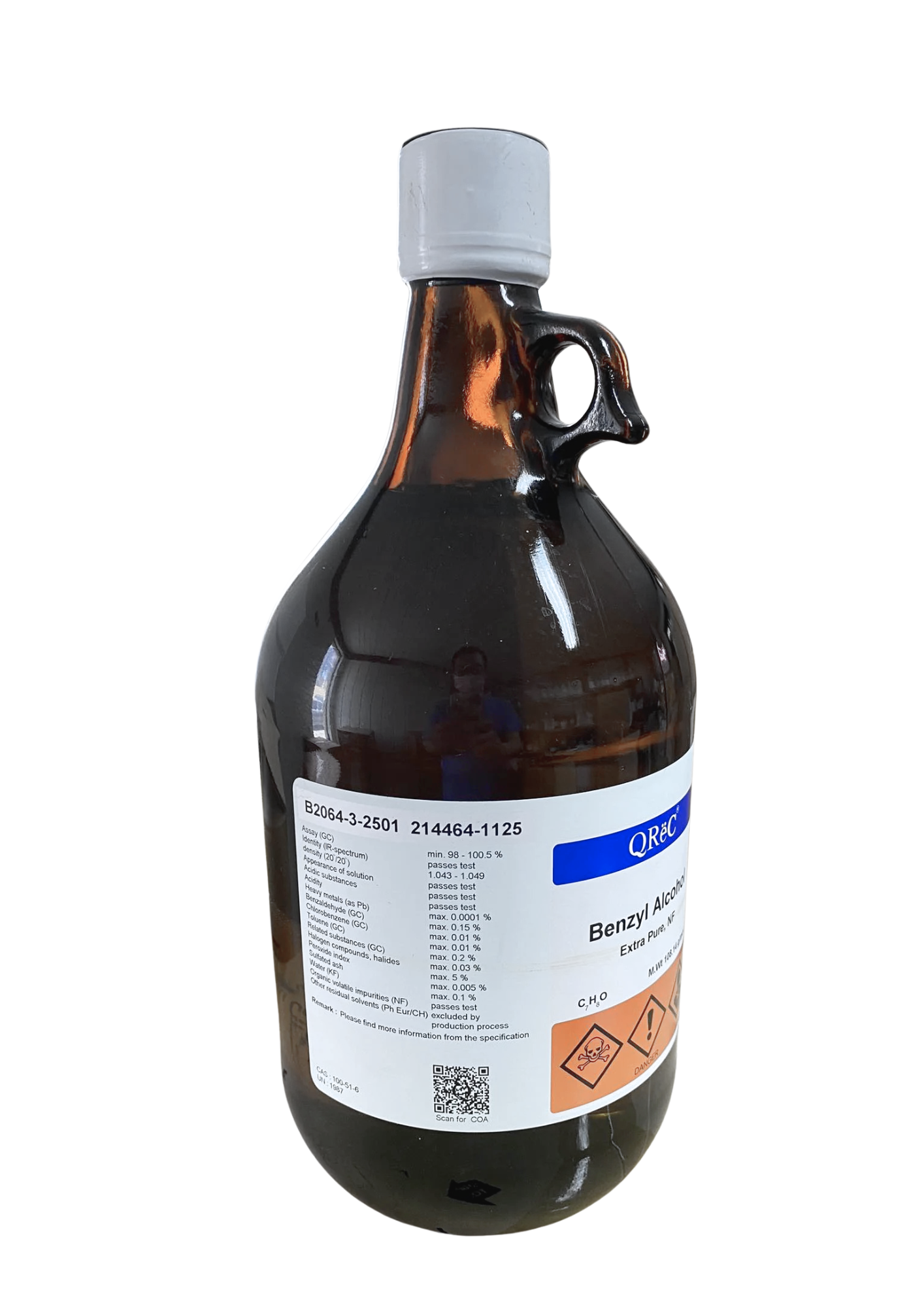
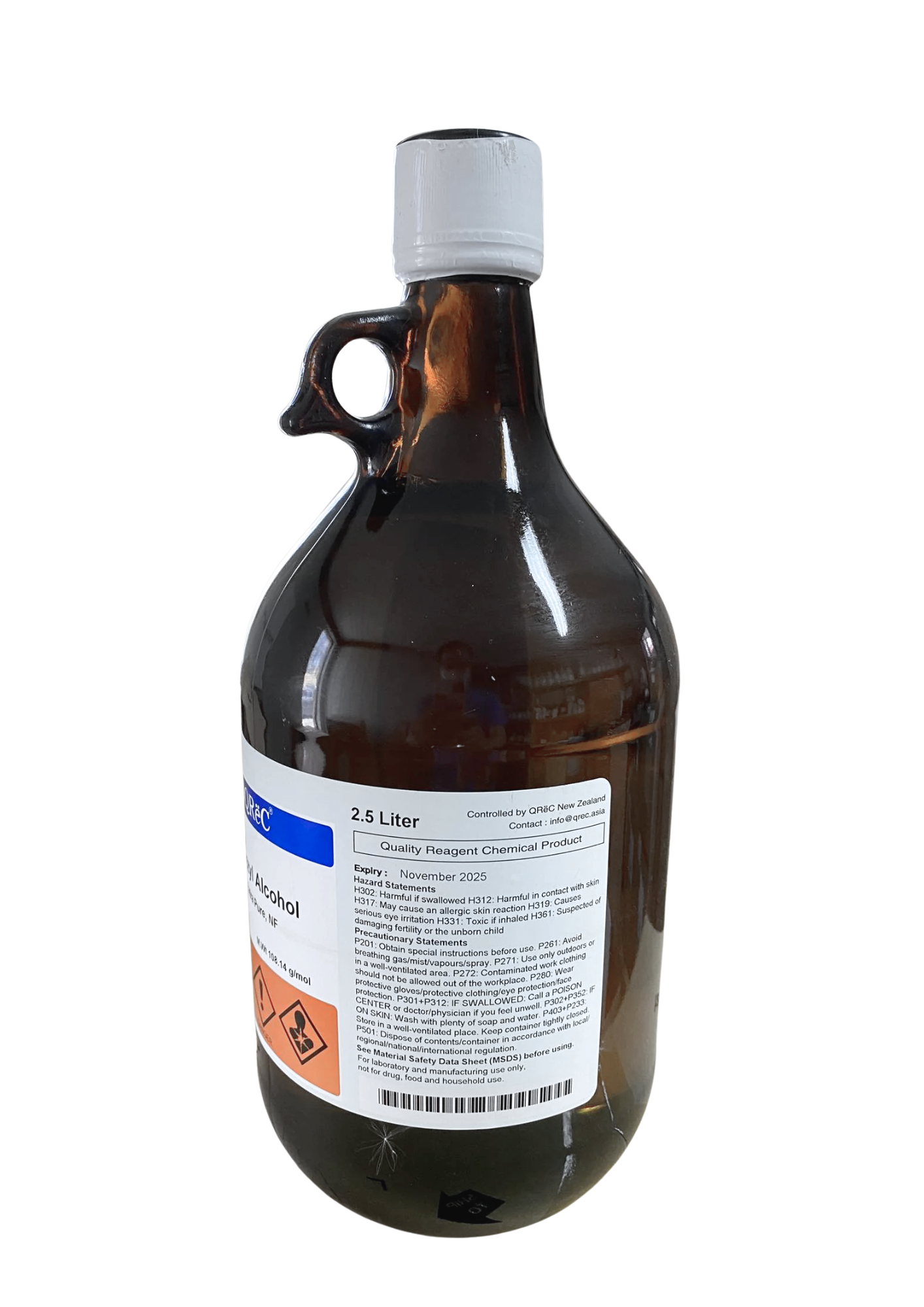
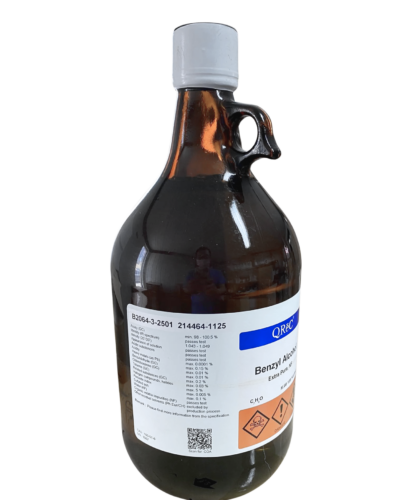
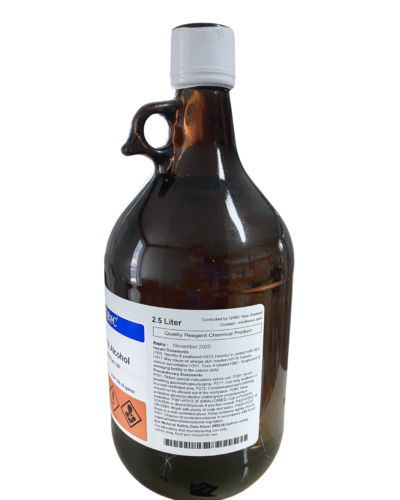
Benzyl alcohol 98% or Phenylmethanol or Phenylcarbinol or Benzenemethanol
Product Overview & Quality
- Product Name: Benzyl alcohol 98% or Phenylmethanol or Phenylcarbinol or Benzenemethanol
- Brand: QReC (Product Code: QR-B2064-3-2501)
- Grade: Extra Pure Grade featuring a certified chemical purity of not less than 98.0 percent. Manufactured, vacuum-distilled, and refined under strict QReC global laboratory specifications. Strictly regulated to enforce low levels of benzaldehyde, benzoic acid, free halogens, non-volatile residue, and moisture content. Enforces minimal ppm thresholds of trace heavy metals. Yields a crystal-clear, sediment-free aromatic liquid matrix. Packaged in a heavy-duty amber glass bottle to protect against light-induced photo-oxidation.
- Physical Properties: Clear, colorless, slightly viscous liquid with a faint, pleasant aromatic odor. High boiling point (approximately 205 degrees Celsius) and low volatility at room temperature. Combustible liquid with a flash point between 93 and 100 degrees Celsius (not classified as highly flammable, but combustible upon significant thermal exposure). Slowly oxidizes in the presence of air and light to yield benzaldehyde, generating a characteristic bitter almond odor.
- Solubility: Sparingly soluble in water (approximately 4 grams per 100 milliliters at room temperature); completely miscible in all proportions with common organic solvents including ethanol, methanol, diethyl ether, chloroform, acetone, and benzene; high solvency for oils, waxes, natural resins, and cellulose esters.
- Key Use: Heavily utilized as a bacteriostatic antimicrobial preservative and co-solvent in pharmaceutical formulations, injectable medications, and biological buffers to suppress bacterial and fungal proliferations. Extensively applied as a primary chemical intermediate in organic synthesis, notably for producing benzyl esters utilized in fragrance and flavoring chemistries. Serves as a high-boiling polar solvent for dissolving epoxy resins, lacquers, inks, and specialized coatings. Widely used as a refractive index matching fluid in optical microscopy and histology, and functions as a selective extraction solvent in analytical and phytochemistry workflows.
Safety & Hazards (Harmful Ingestion, Harmful Inhalation & Severe Eye Irritation)
- Classification: Harmful if swallowed. Harmful if inhaled. Causes serious eye irritation. May cause an allergic skin reaction.
- Health Risks: Direct ocular contact triggers intense burning pain, conjunctival erythema, lacrimation, and corneal irritation. Prolonged or repeated dermal exposure can strip skin moisture, leading to redness, scaling, localized dermatitis, or contact sensitization. Inhalation of vapors or aerosols generated at elevated temperatures irritates the respiratory mucosa, causing coughing, sneezing, sore throat, dyspnea, cephalalgia, and dizziness. Ingestion causes acute gastrointestinal irritation, epigastric pain, nausea, vomiting, diarrhea, and central nervous system depression at elevated doses.
- First Aid Measures: Immediately flush affected eyes with an abundant stream of clean flowing water for at least 15 minutes while stripping contaminated garments; remove contact lenses promptly. Wash exposed skin thoroughly with soap and water. In case of vapor inhalation, rapidly relocate the victim to fresh air. If accidentally swallowed, rinse mouth thoroughly, administer water in moderate amounts, and seek medical attention.
Handling & Storage
- Storage: Air and Light Sensitive Combustible Liquid. Atmospheric oxygen and light exposure catalyze slow auto-oxidation into benzaldehyde and benzoic acid. Must be preserved in its original, tightly closed QReC amber glass bottle. Store in a clean, cool, dry, and well-ventilated dedicated chemical store at controlled room temperatures (below 25 to 30 degrees Celsius), sheltered from humidity, thermal sources, and direct solar radiation. Keep strictly segregated from strong oxidizing agents (such as nitric acid, sulfuric acid, and permanganates), strong mineral acids, and open flames.
- Precautions: Standard laboratory PPE is mandatory, including chemical-resistant nitrile or butyl gloves, splash-proof safety goggles, and a protective lab coat. Handle and dispense within a certified laboratory fume hood when heating or handling large volumes to prevent vapor inhalation. Re-seal container tightly immediately after sampling.