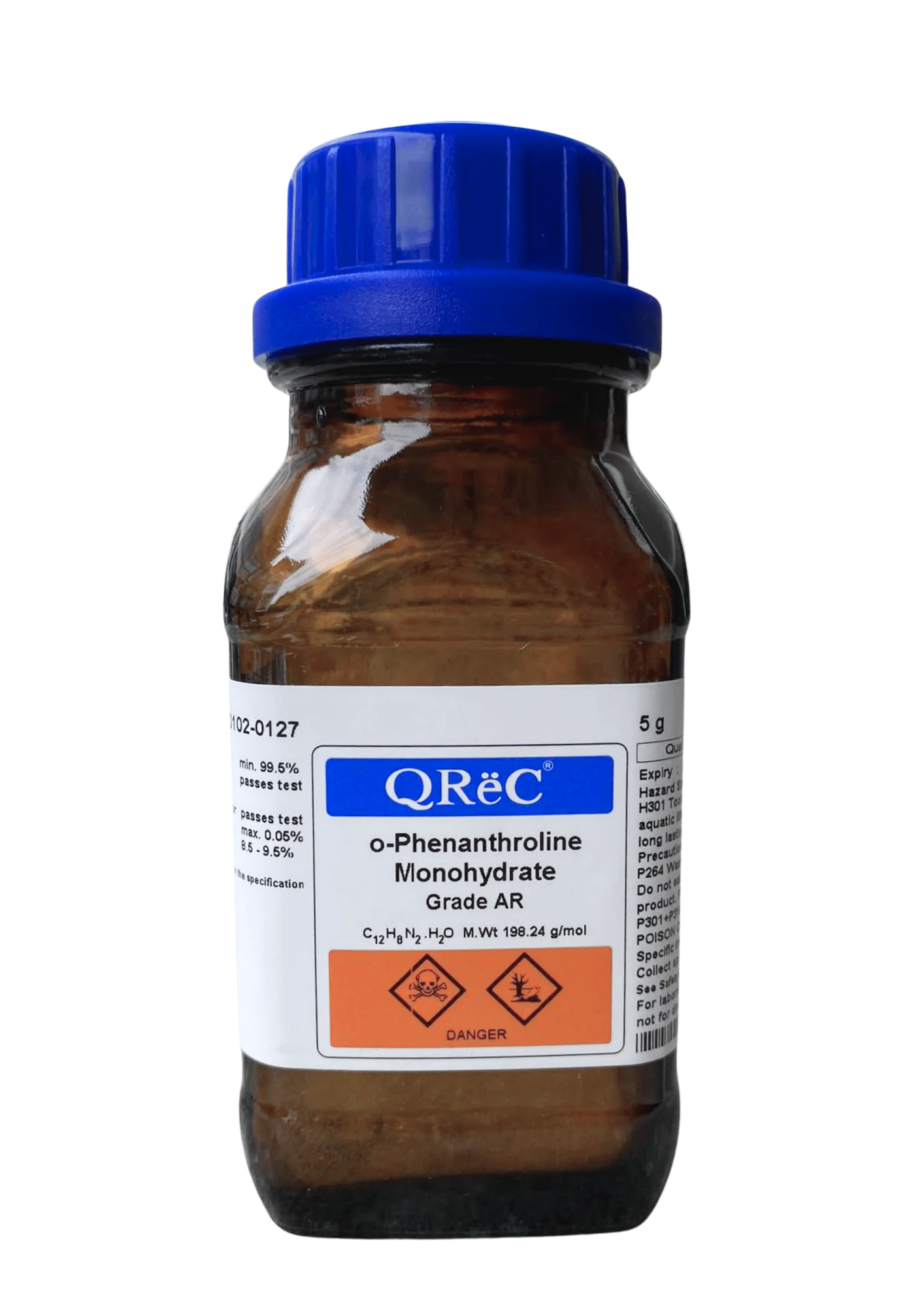
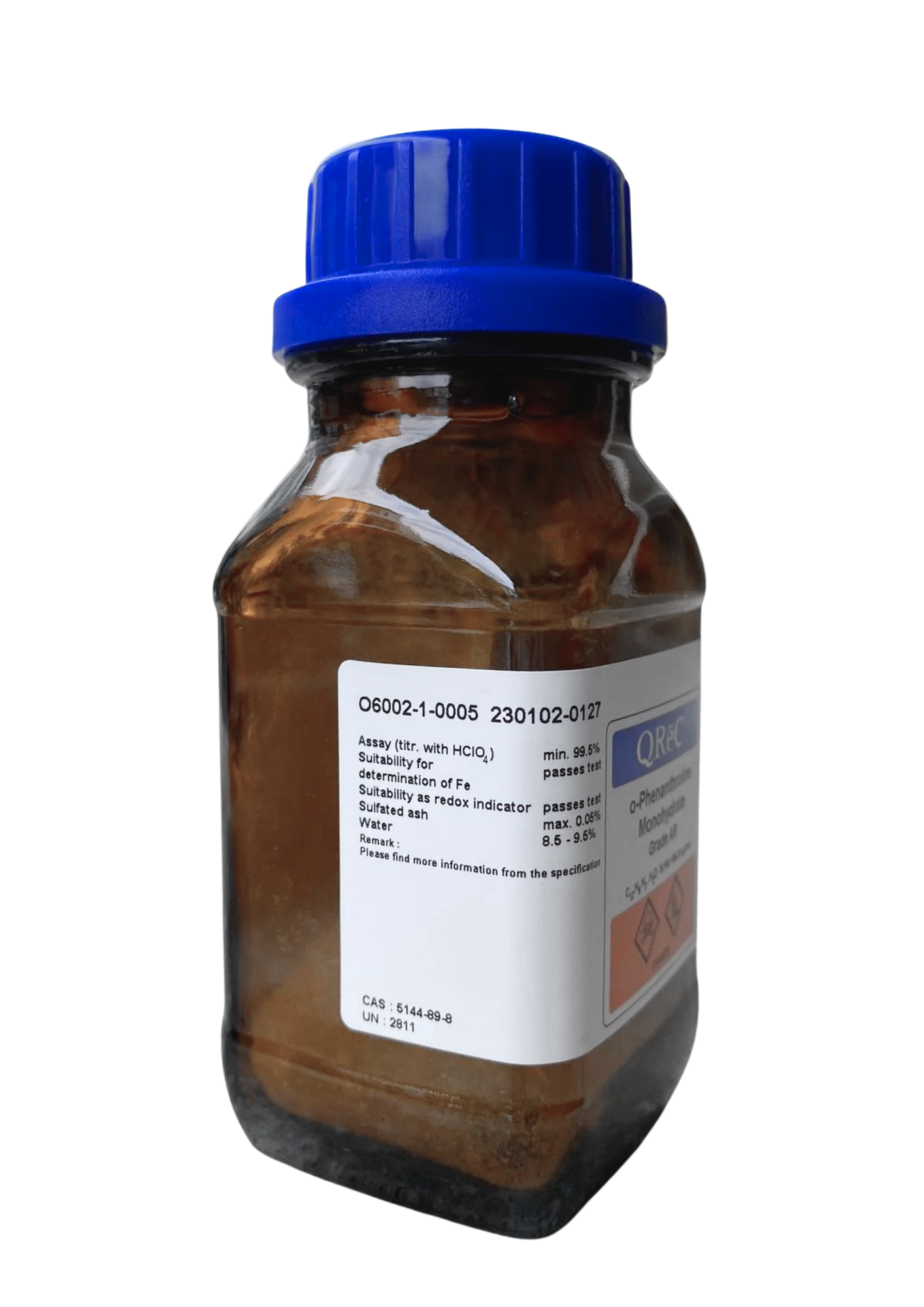
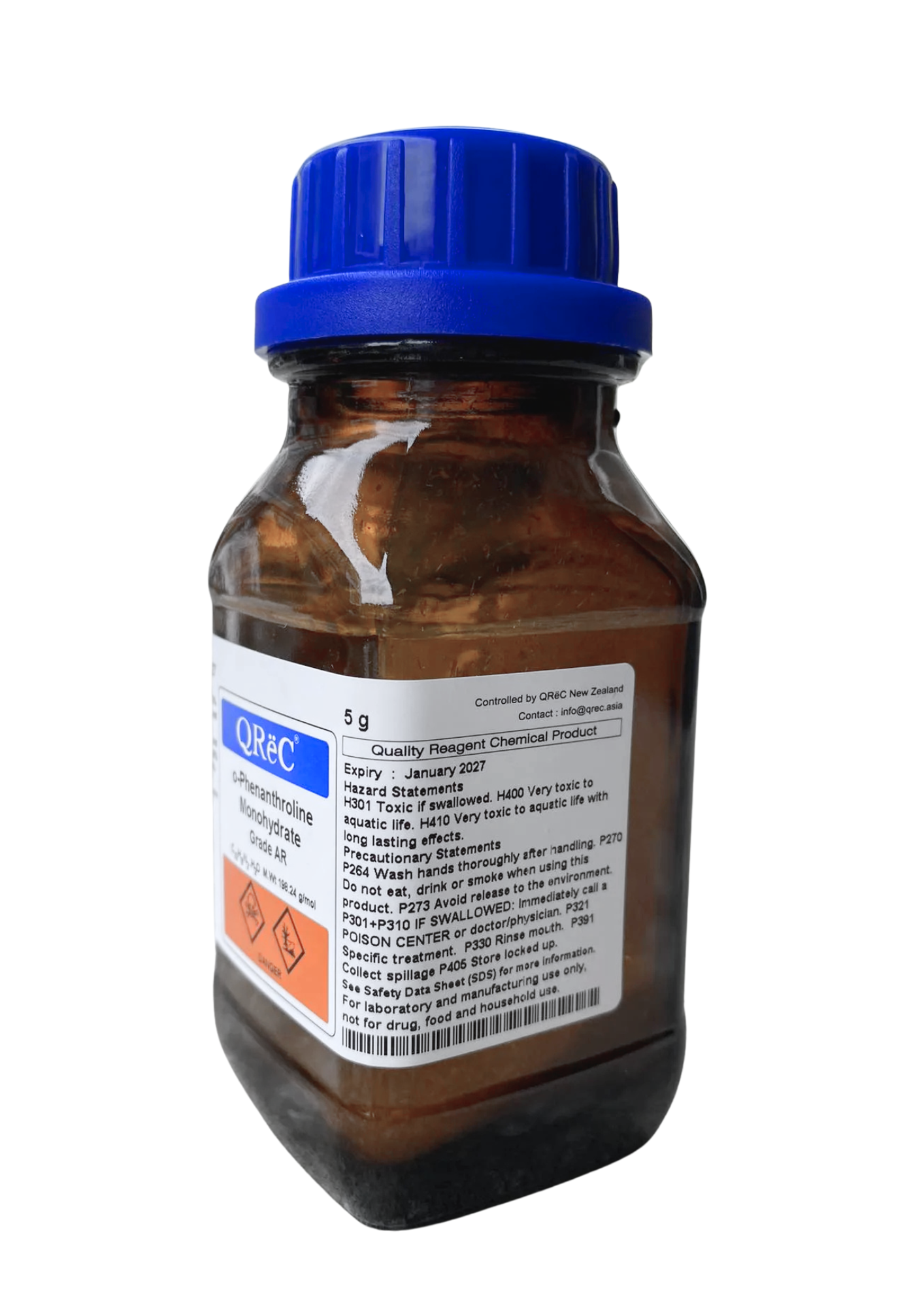
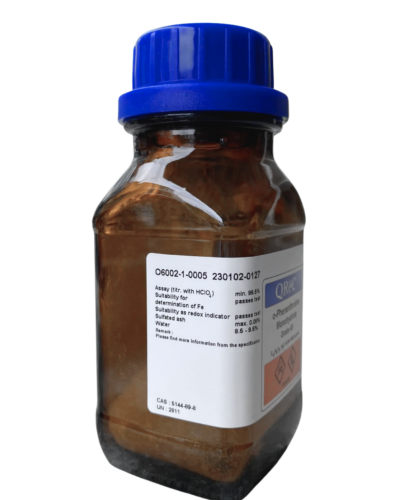
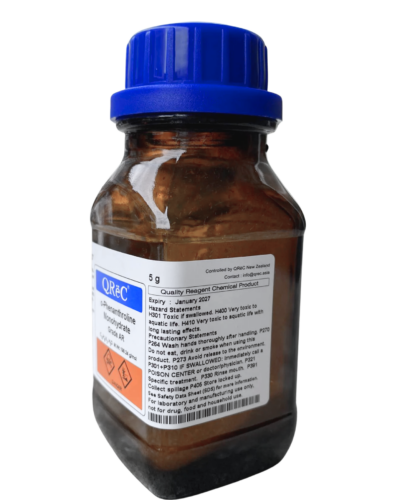
O-Phenanthroline monohydrate 99.5% or 1,10-Phenanthroline monohydrate or Orthophenanthroline hydrate
Product Overview & Quality
- Product Name: O-Phenanthroline monohydrate 99.5% or 1,10-Phenanthroline monohydrate or Orthophenanthroline hydrate
- Brand: QReC (Product Code: QR-O6002-1-0005)
- Grade: Analytical Reagent High Purity Grade (AR Grade) featuring an exceptional certified chemical assay of not less than 99.5 percent. Manufactured and multi-recrystallized under strict QReC global laboratory specifications, maintaining stoichiometric monohydrate hydration. Validated via specialized iron-sensitivity suitability testing to guarantee instantaneous, stoichiometric chromogenic complexation with ferrous iron (Fe2+). Rigorously tested to enforce ultra-low limits of residue on ignition (strictly below 0.05 percent), ethanol-insoluble matter, sulfate, chloride, and trace heavy metals. Exhibits dry, uniform microcrystalline powder dissolving cleanly in ethanol and warm water without insoluble residues. Packaged in a compact, light-protective amber glass bottle equipped with a secure hermetic seal to exclude light and humidity.
- Physical Properties: White to off-white or pale beige crystalline powder or fine needles. Odorless. Photosensitive solid (gradually discolors to pale pink or buff upon prolonged ambient light exposure). Melting point ranges between 98 and 102 degrees Celsius (for the monohydrate form). Non-combustible solid. Aqueous solutions are very weakly alkaline.
- Solubility: Sparingly soluble in water at room temperature (approximately 0.3 grams per 100 milliliters at 20 degrees Celsius; solubility escalates significantly in boiling or warm water); freely and rapidly soluble in ethanol, methanol, acetone, dichloromethane, and benzene; yields colorless solutions that turn intensely orange-red immediately upon coordination with ferrous iron cations.
- Key Use: Heavily utilized as the definitive primary reagent for compounding Ferroin Indicator Solution (tris(1,10-phenanthroline)iron(II) sulfate) for the standardized determination of Chemical Oxygen Demand (COD) in wastewater and environmental testing, providing an unmistakable, razor-sharp redox endpoint color shift from pale greenish-blue to vivid orange-red. Extensively applied as a high-precision chromogenic spectrophotometric reagent for trace iron and ferrous ion quantification across water, food, metallurgical, and pharmaceutical matrices at approximately 510 nanometers. Universally used as a reversible redox indicator in cerimetric titrations using cerium(IV) sulfate. Serves as a specific metalloprotease inhibitor in biochemical and cell biology research by chelating catalytic zinc and iron active-site ions. Routinely employed as a classic bidentate ligand in inorganic coordination chemistry, organometallic catalysis, and optoelectronic luminescent materials research.
Safety & Hazards (Critical, Toxic Ingestion & Severe Aquatic Hazard)
- Classification: Toxic if swallowed (Acute Toxicity Oral Category 3). Very toxic to aquatic life with long lasting effects. May cause mild skin, eye, and respiratory irritation.
- Health Risks: Direct ocular contact causes transient stinging, conjunctival redness, and lacrimation. Dermal contact may induce localized dryness, irritation, or mild dermatitis. Inhalation of particulate dust irritates the mucous membranes of the respiratory tract, causing coughing, sneezing, and throat tickling. Critical Toxicological Risk: High acute oral toxicity. Ingestion of small amounts triggers acute gastrointestinal toxicity, severe epigastric distress, vomiting, diarrhea, dizziness, hypotension, and systemic toxicity through internal trace metal depletion and enzyme inhibition.
- First Aid Measures: Immediately flush affected eyes with an abundant stream of clean flowing water for at least 15 minutes while stripping contaminated clothing; remove contact lenses promptly. Wash exposed skin thoroughly with soap and water. In case of dust inhalation, rapidly relocate the victim to fresh air. If accidentally swallowed, do NOT induce vomiting; thoroughly rinse mouth, administer water in moderate amounts if conscious, and seek immediate, urgent emergency medical attention.
Handling & Storage
- Storage: Toxic Substance, Photosensitive Reagent, and Severe Aquatic Pollutant. Photochemical decomposition can compromise assay purity and baseline absorbance. Must be preserved in its original, tightly closed QReC amber glass bottle inside a dedicated, locked chemical storage cabinet. Store in a clean, strictly dry, cool, and well-ventilated dedicated chemical store at controlled temperatures (preferably below 20 to 25 degrees Celsius), sheltered from atmospheric humidity and direct light. Keep strictly segregated from strong oxidizing agents, strong mineral acids, and heavy metal solutions.
- Precautions: Full specialized PPE is mandatory, including protective nitrile gloves, splash-proof safety goggles, a certified particulate dust respirator, and a protective lab coat. Perform weighing and stock solution compounding inside a certified laboratory fume hood to avoid dust inhalation and oral ingestion. Re-seal container cap tightly immediately after sampling. Never discharge phenanthroline-containing rinsates or wastewater into municipal sewers; collect in dedicated toxic organic waste streams for regulated hazardous disposal.