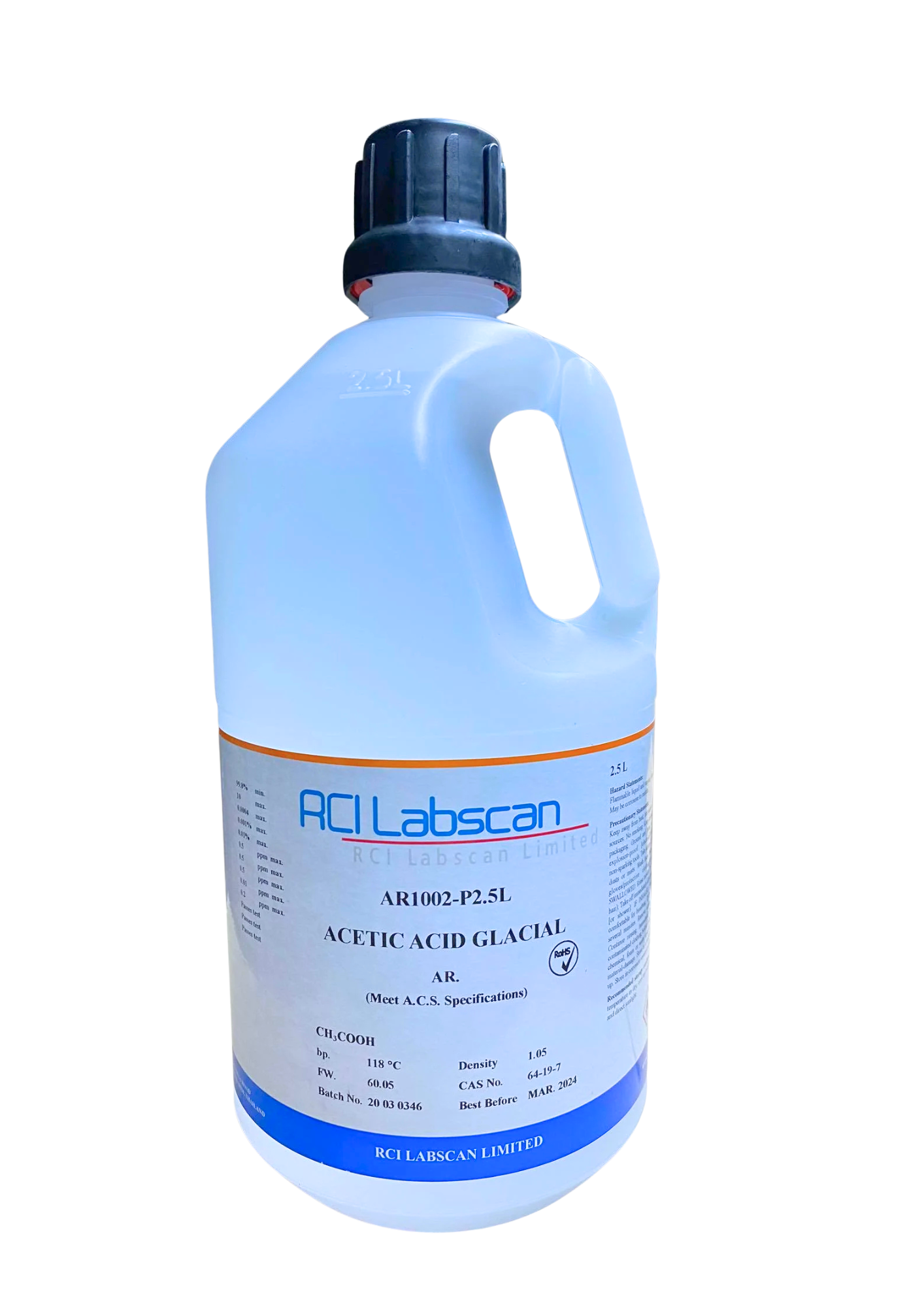
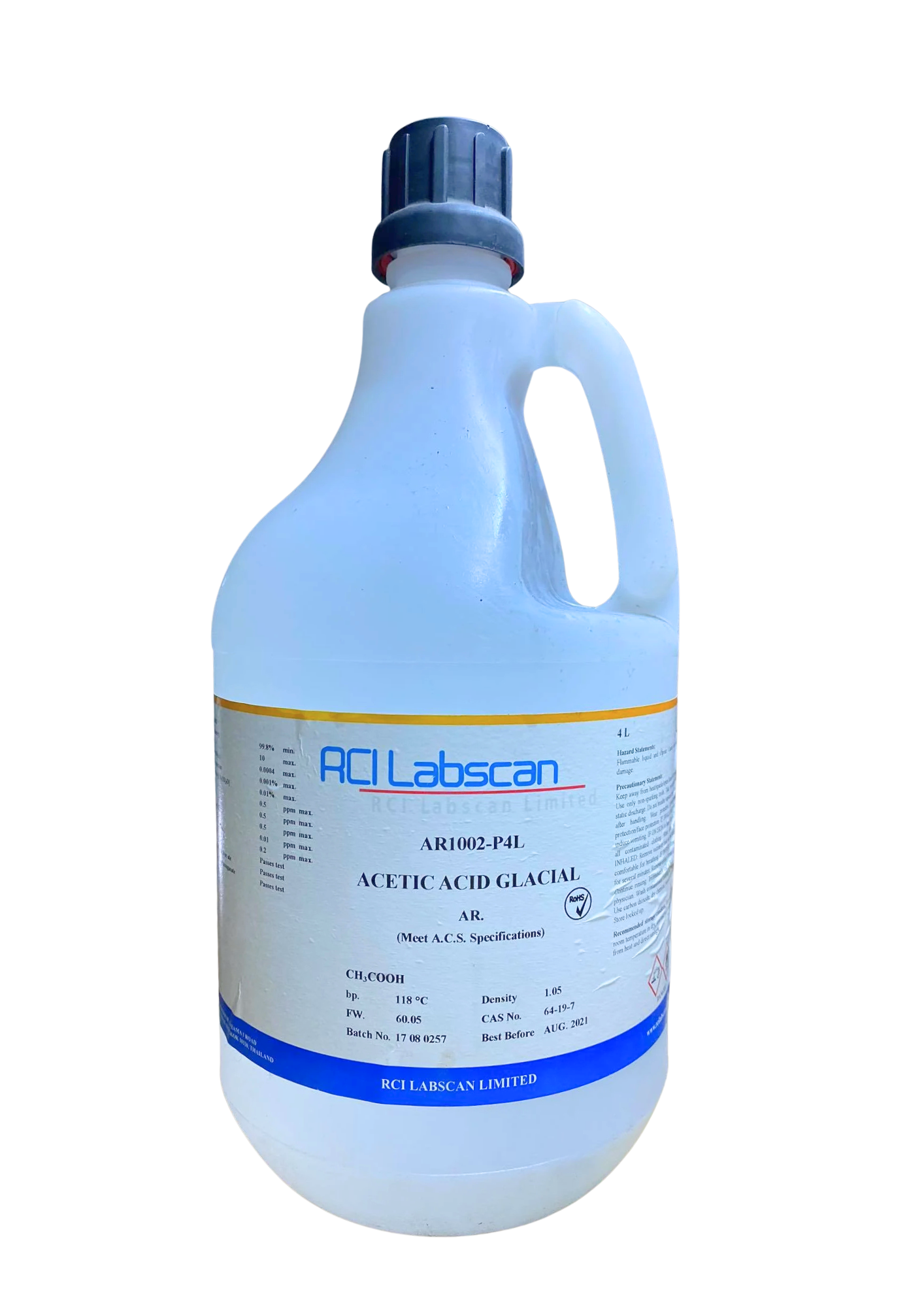
Acetic acid glacial or Ethanoic acid
Product Overview & Quality
- Product Name: Acetic acid glacial or Ethanoic acid
- Brand: RCI LABSCAN (Product Code: LA-AR1002-P2.5L)
- Grade: Analytical Reagent (AR Grade) featuring an exceptionally high certified purity of 99.8 percent. Processed and quality-verified under RCI LABSCAN strict global laboratory parameters to ensure ultra-low ppm levels of non-volatile matter, water content, heavy metals, iron, sulfates, and chlorides. Packaged in a specialized, heavy-duty chemical plastic bottle to prevent breakage, ensure user safety, and preserve premium matrix purity for high-precision analytical testing.
- Physical Properties: Clear, colorless, non-viscous liquid with a sharp, intensely pungent vinegar-like odor. It acts as a flammable corrosive medium and freezes into ice-like crystals at temperatures below approximately 16.6 degrees Celsius.
- Solubility: Completely miscible in all proportions with water, alcohol, ether, and glycerin, liberating exothermic thermal energy upon aqueous dilution.
- Key Use: Heavily utilized as a primary compound to formulate acetate buffer solutions for pH regulation in biochemical and analytical assays. Commonly applied as an acidic solvent medium in non-aqueous titrations to quantify specialized organic targets. Used extensively as a core reagent in histology staining formulations, tissue fixation setups, and nucleic acid precipitation protocols in molecular biology, and functions as a vital reactant or solvent in advanced organic chemical synthesis.
Safety & Hazards (Critical & Corrosive)
- Classification: Flammable liquid and vapor. May be corrosive to metals. Causes severe skin burns and eye damage. Causes serious eye damage.
- Health Risks: Direct tissue or ocular contact triggers immediate severe stinging irritation, painful chemical burns, deep tissue necrosis, and permanent blindness. Inhalation of concentrated volatile vapors aggressively irritates the upper respiratory tract, inducing coughing, throat soreness, or localized chest distress. Ingestion causes immediate, destructive corrosive injury to gastrointestinal membranes.
- First Aid Measures: In case of contact, immediately flush affected eyes or skin with a continuous stream of flowing water for at least 15 minutes while removing contaminated garments. If vapors are inhaled, promptly move the victim to fresh air. Seek immediate medical emergency evaluation.
Handling & Storage
- Storage: Corrosive, Flammable, and Hygroscopic Liquid. Vapors can migrate and easily ignite near open thermal sources. Must be stored in its original, chemical-resistant, tightly sealed RCI LABSCAN bottle inside a dedicated safety cabinet for corrosives or flammable chemicals. Keep in a dry, cool, and well-ventilated storage zone at stable room temperature (ideally between 18 to 30 degrees Celsius to prevent accidental freezing solidification). Keep completely isolated from strong bases, strong oxidizing agents, nitric acid, chromic acid, and open flames.
- Precautions: Comprehensive specialized PPE is mandatory, including chemical-resistant gloves, splash-proof safety goggles, a protective lab coat, and an organic vapor/acid gas respirator mask. Handle exclusively and strictly within a properly functioning laboratory fume hood to avoid vapor exposure or inhalation.