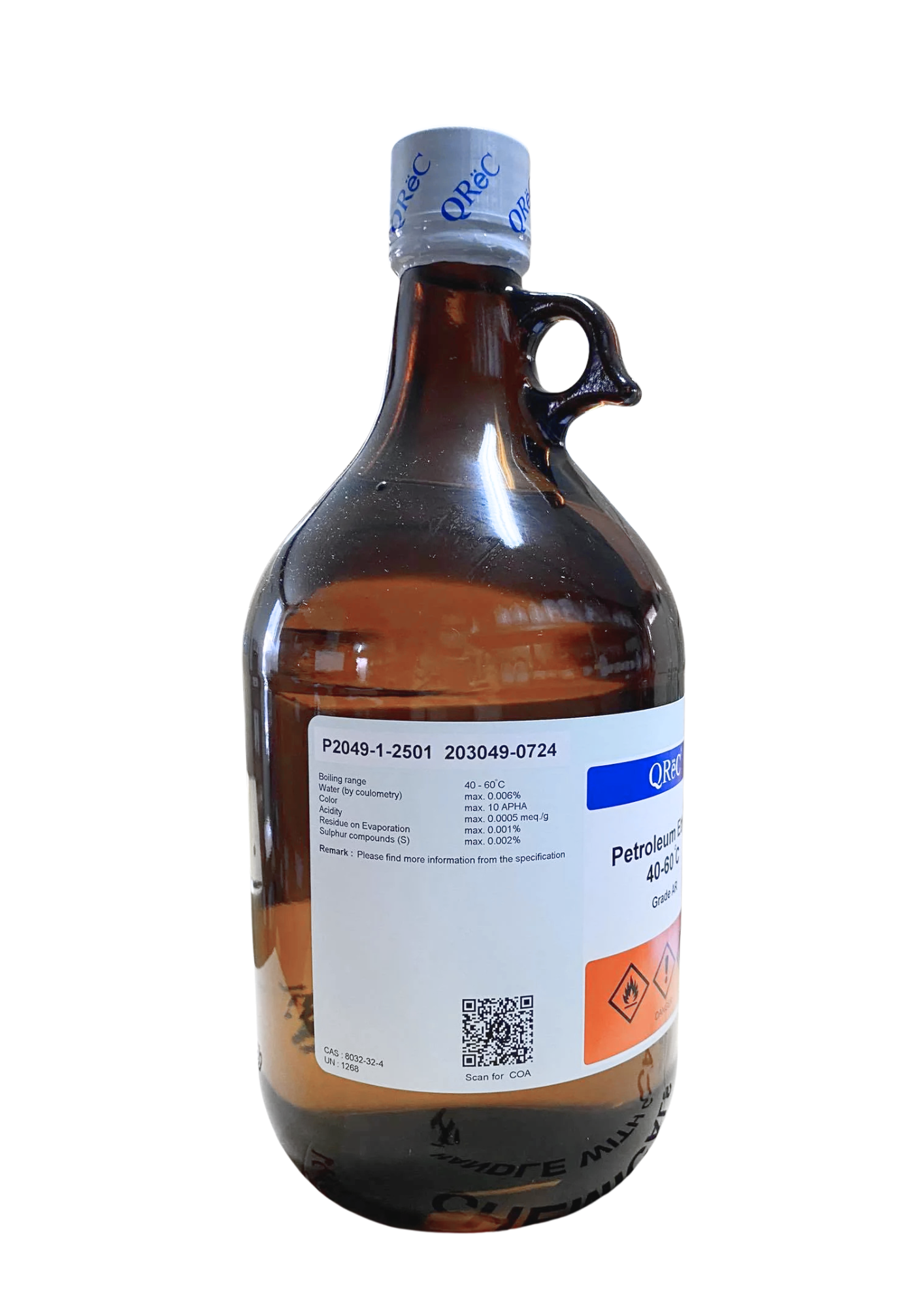
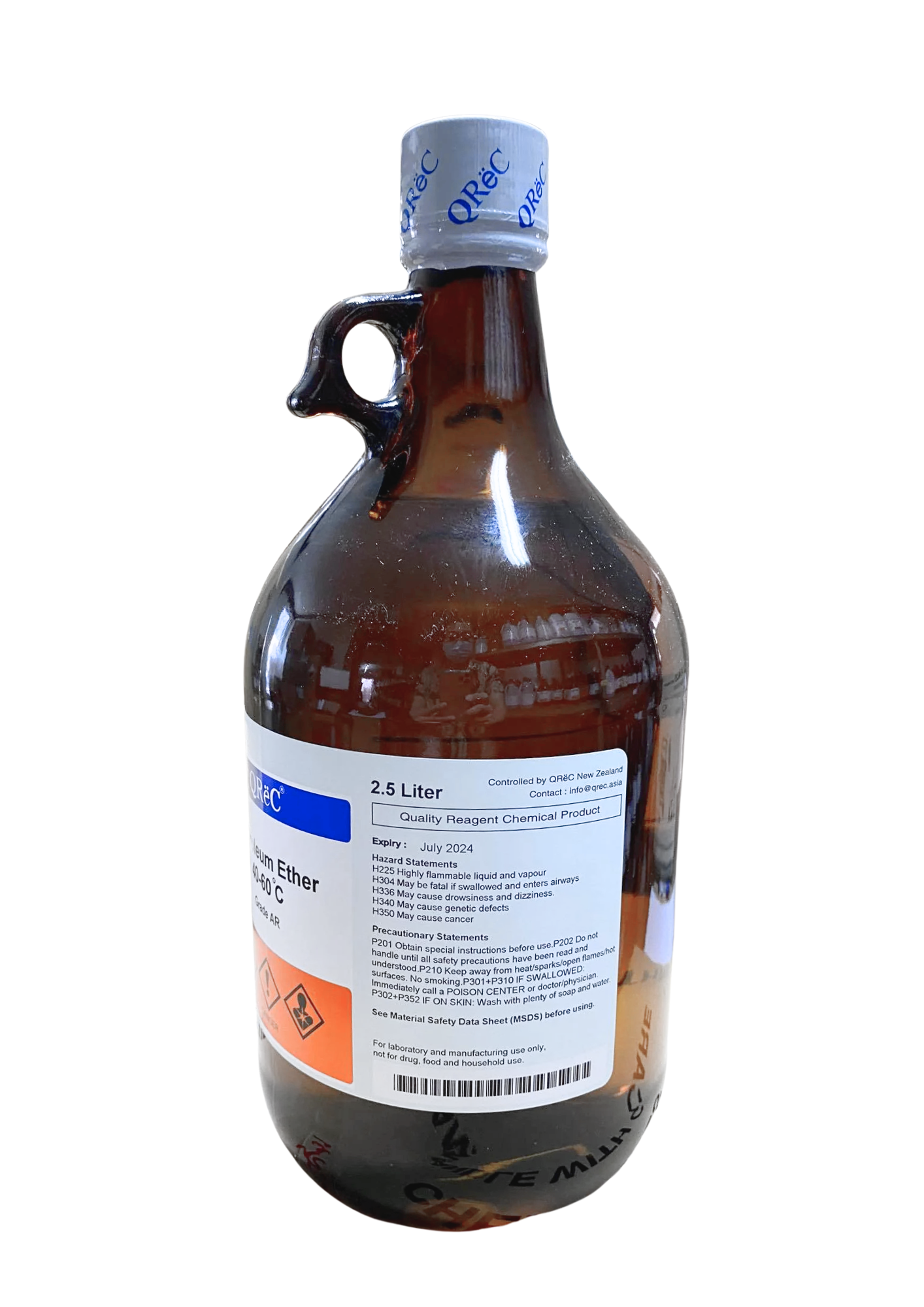
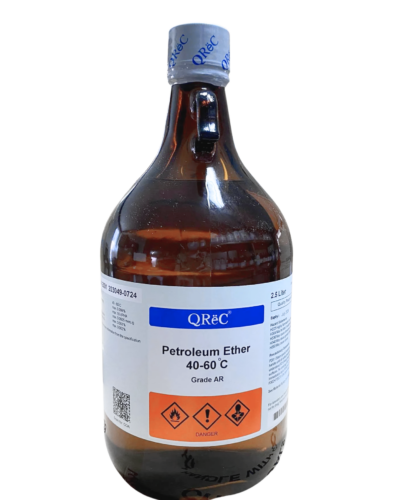
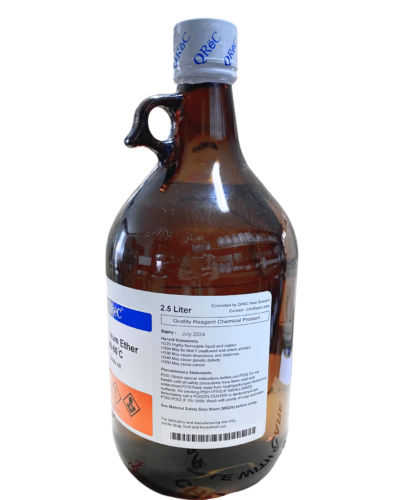
Petroleum Ether 40-60 °C or Petroleum Benzin or Ligroin
Product Overview & Quality
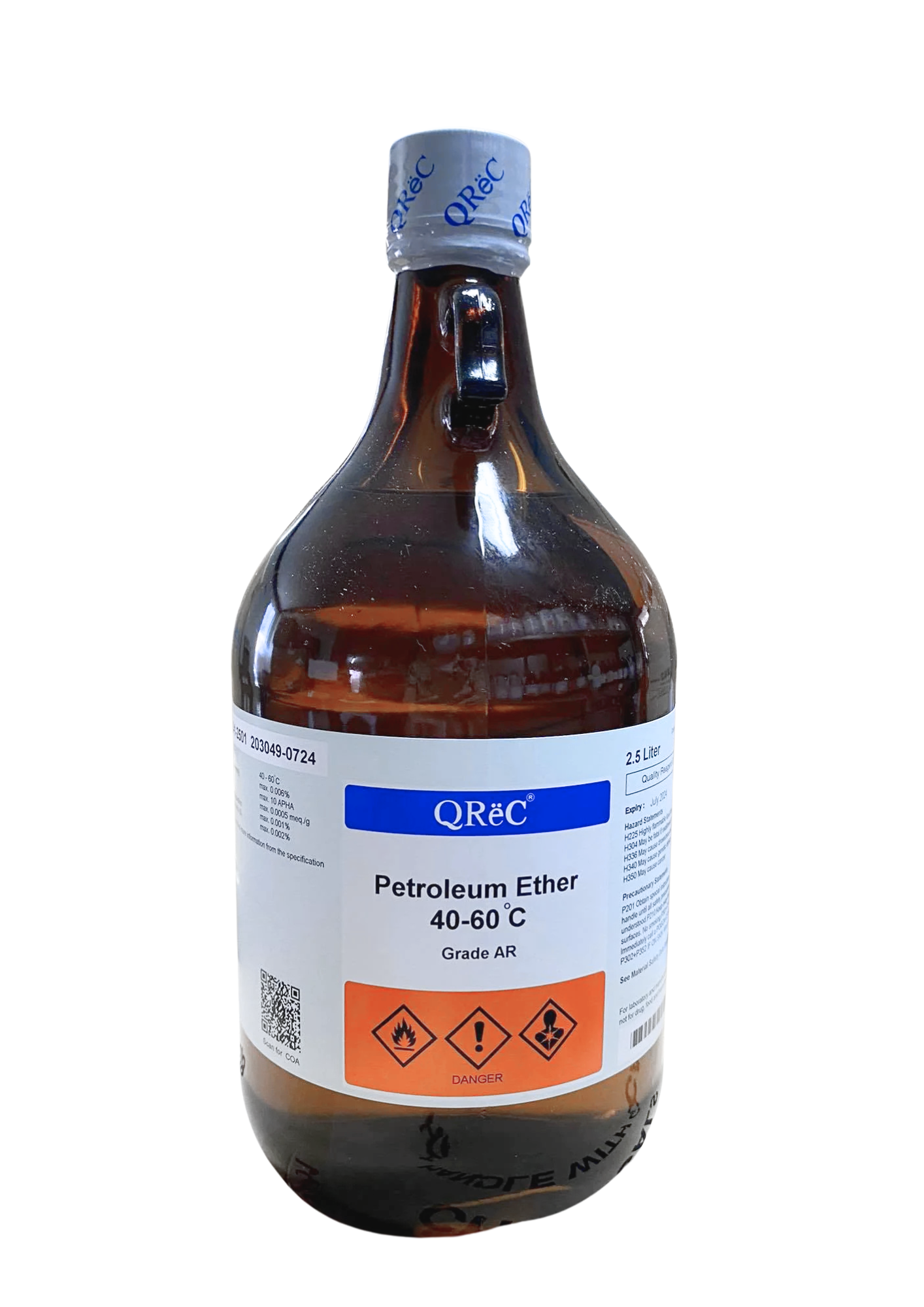
- Product Name: Petroleum Ether 40-60 °C or Petroleum Benzin or Ligroin
- Brand: QReC (Product Code: QR-P2049-1-2501)
- Grade: Analytical Reagent (AR Grade) featuring a tightly controlled boiling range strictly between 40 and 60 degrees Celsius. Meticulously manufactured and distilled under strict QReC global laboratory standards. Tightly monitored to maintain exceptionally low thresholds of non-volatile matter, ensuring zero fatty residue upon solvent dry-down. Strictly controlled for minimal ppm levels of sulfur, moisture content, free benzene, aromatic hydrocarbons, and trace heavy metals. Packaged in a heavy-duty amber glass bottle for maximum chemical integrity and light protection.
- Physical Properties: Clear, colorless, highly mobile liquid with a characteristic light petroleum or gasoline-like odor. Extremely volatile at room temperature. Extremely flammable liquid and vapor with an exceedingly low flash point; vapors are denser than air and can travel considerable distances along ground surfaces to distant ignition points.
- Solubility: Insoluble and immiscible with water (floats as a distinct separate layer due to low specific gravity); completely miscible in all proportions with common organic solvents including ethanol, acetone, diethyl ether, and chloroform; excellent solvency for non-polar fats and oils.
- Key Use: Heavily utilized as the primary non-polar solvent for extracting crude fats and lipids in food, agricultural crops, and animal feed analysis, specifically using automated or conventional Soxhlet extraction apparatus. Extensively applied for isolating non-polar botanical extracts, essential oils, and carotenoid compounds. Widely used as a non-polar mobile phase component or eluent modifier in thin-layer chromatography (TLC) and flash column chromatography. Frequently applied for degreasing, residue-free solvent cleaning of laboratory apparatus, and serves as an effective medium for recrystallizing organic compounds.
Safety & Hazards (Critical, Extremely Flammable & Harmful)
- Classification: Extremely flammable liquid and vapor. May be fatal if swallowed and enters airways. Causes skin irritation. May cause drowsiness or dizziness. Toxic to aquatic life with long lasting effects.
- Health Risks: Direct eye contact triggers stinging irritation, mild conjunctival redness, and tearing. Dermal exposure rapidly extracts natural protective skin oils, resulting in skin dryness, erythema, and localized contact dermatitis. Inhalation of concentrated vapors suppresses the central nervous system, producing headaches, lightheadedness, nausea, mental confusion, or loss of consciousness. Ingestion followed by chemical aspiration into the pulmonary system causes severe, life-threatening chemical pneumonitis and acute pulmonary edema.
- First Aid Measures: Immediately flush affected eyes or skin with plenty of continuous flowing water for at least 15 minutes while stripping contaminated garments. In case of inhalation, rapidly relocate the victim to fresh air. If accidentally swallowed, do NOT induce vomiting due to critical pulmonary aspiration hazards; seek immediate, urgent emergency medical attention.
Handling & Storage
- Storage: Extremely Flammable and Highly Volatile Solvent. Low-temperature flash point creates severe fire risks; vapors can easily form explosive mixtures with ambient air. Must be preserved in its original, tightly closed QReC amber glass container inside an approved safety cabinet for flammable liquids. Store in a cool, dry, and excellently ventilated chemical warehouse or room at stable room temperature (below 30 degrees Celsius), sheltered from direct sunlight. Keep strictly isolated from open flames, sparks, hot surfaces, static electrical discharge, and strong oxidizing agents.
- Precautions: Standard laboratory PPE is mandatory, including solvent-resistant gloves, splash-proof safety goggles, and a protective lab coat. Handle exclusively and strictly within a properly functioning laboratory fume hood to prevent vapor accumulation and accidental ignition risks. Ground and bond containers during volume transfers.