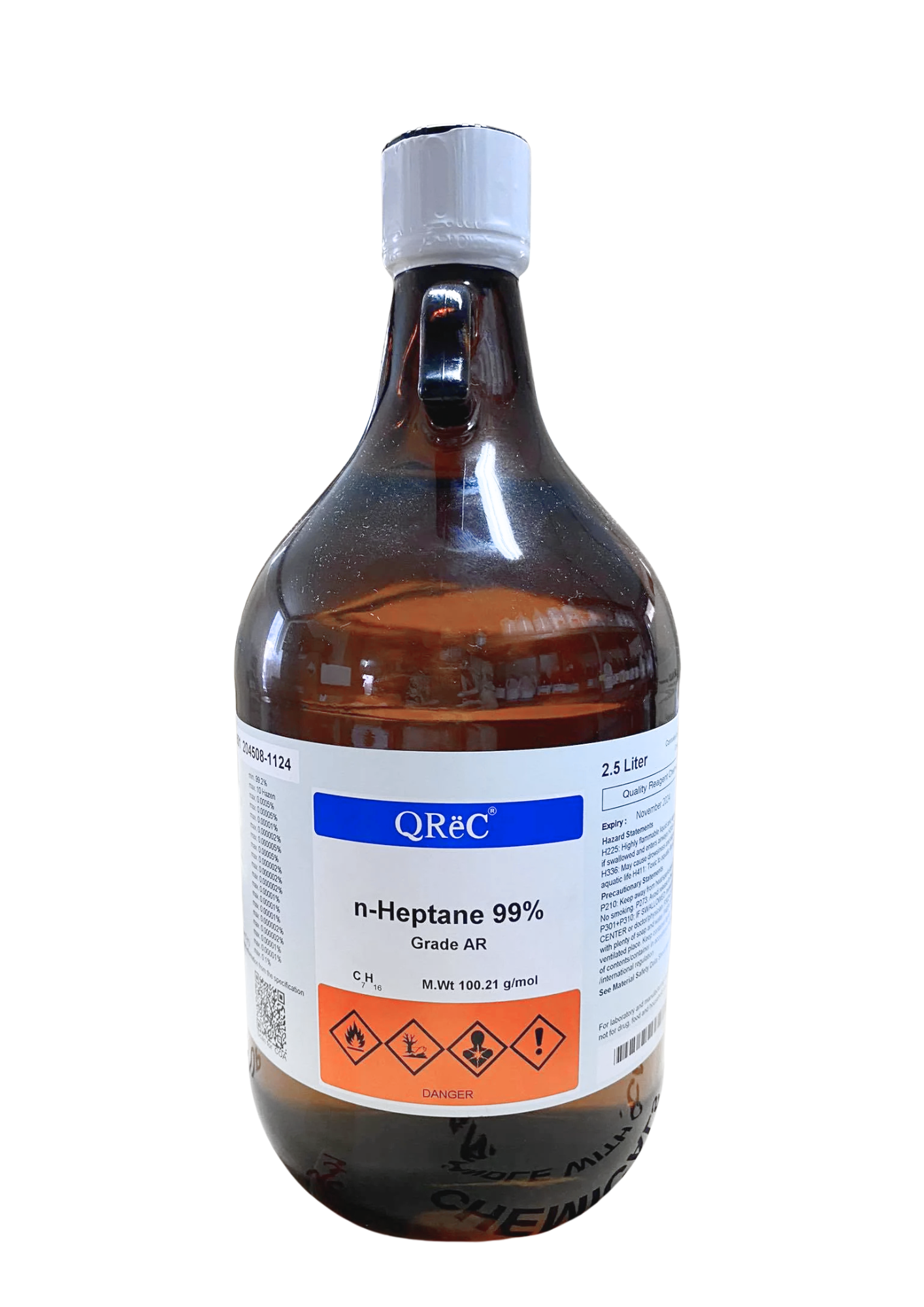
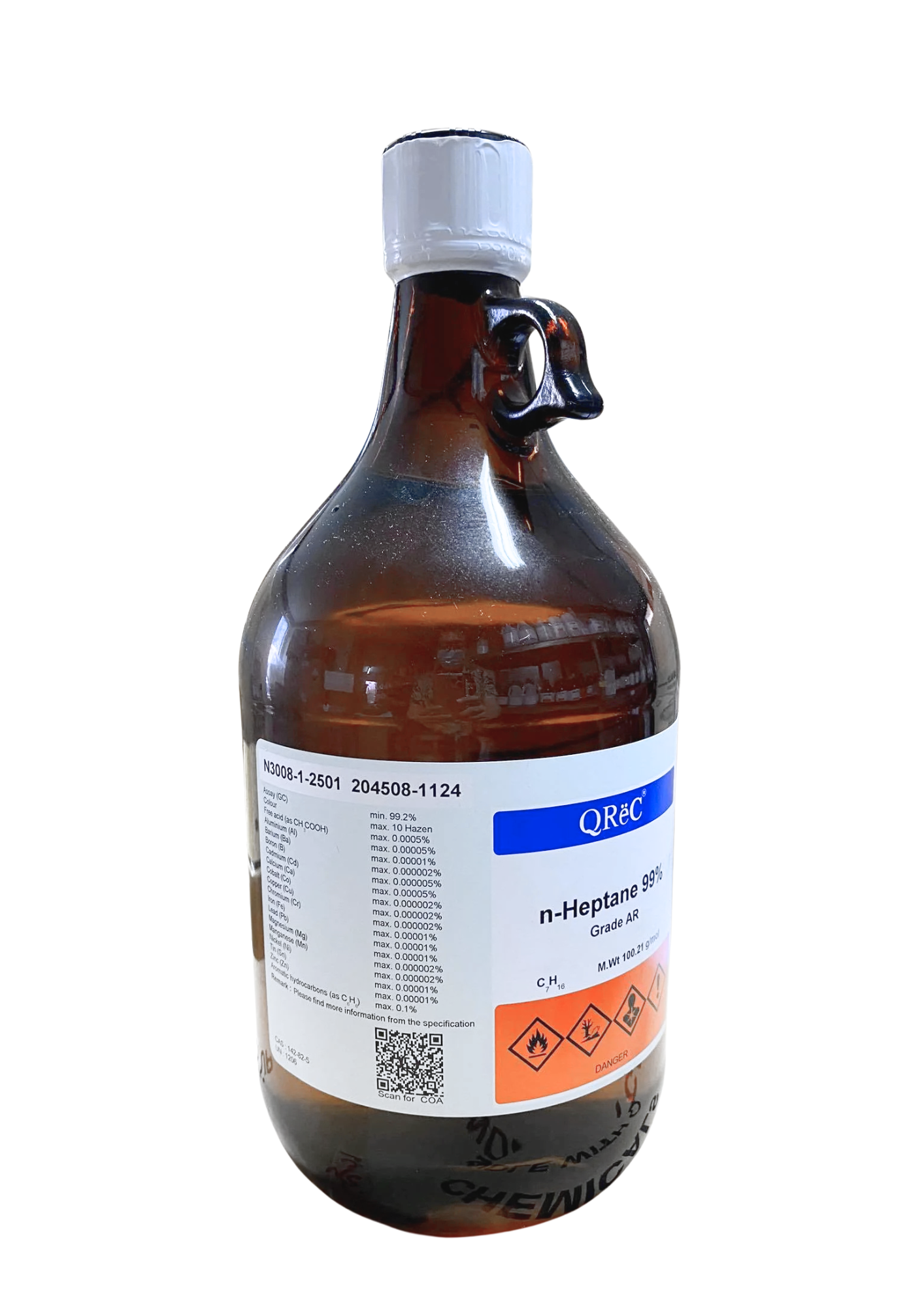
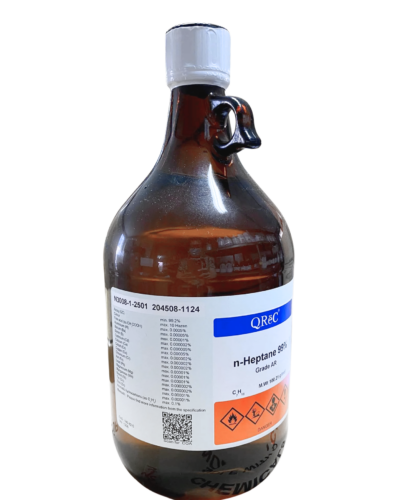
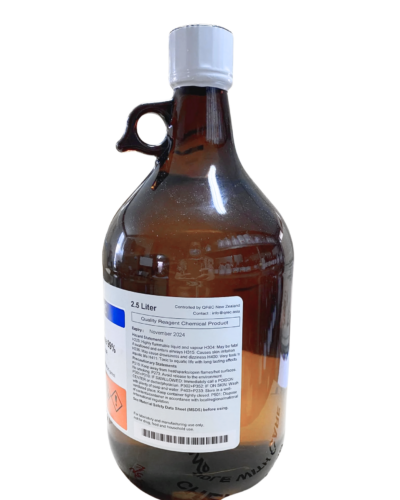
n-Heptane or Normal Heptane or Heptane
Product Overview & Quality
- Product Name: n-Heptane or Normal Heptane or Heptane
- Brand: QReC (Product Code: QR-N3008-1-2501)
- Grade: Analytical Reagent (AR Grade) featuring a high chemical purity of 99 percent or higher. Manufactured and distilled under strict QReC global laboratory quality specifications. Strictly monitored to enforce exceptionally low ppm thresholds of non-volatile residue, ensuring zero oily residue upon complete solvent evaporation. Controlled for minimal levels of moisture content, sulfur compounds, free benzene, aromatic hydrocarbons, and trace heavy metals. Packaged in a heavy-duty amber glass bottle for maximum chemical integrity and light protection.
- Physical Properties: Clear, colorless, highly mobile liquid with a characteristic mild gasoline or petroleum-like odor. Highly volatile at ambient conditions. Highly flammable liquid and vapor with a low flash point; vapors are denser than air and can migrate along surfaces to distant ignition points.
- Solubility: Insoluble and immiscible with water (floats as a distinct upper layer due to low density); completely miscible in all proportions with common organic solvents including absolute ethanol, acetone, diethyl ether, and chloroform; high solvency for non-polar fats and oils.
- Key Use: Heavily utilized as a primary non-polar solvent for extracting and isolating non-polar organic compounds, active botanical constituents, lipids, and oils in chemical and food analytical laboratories. Serves as the international primary reference standard defined as zero on the octane rating scale in petroleum fuel testing. Widely applied as a non-polar eluent or mobile phase component in thin-layer chromatography (TLC) and column chromatography. Commonly used as a solvent medium in organic synthesis and recrystallization procedures, and functions as an effective residue-free degreaser and cleaning agent for precision parts and laboratory apparatus.
Safety & Hazards (Critical, Highly Flammable & Harmful)
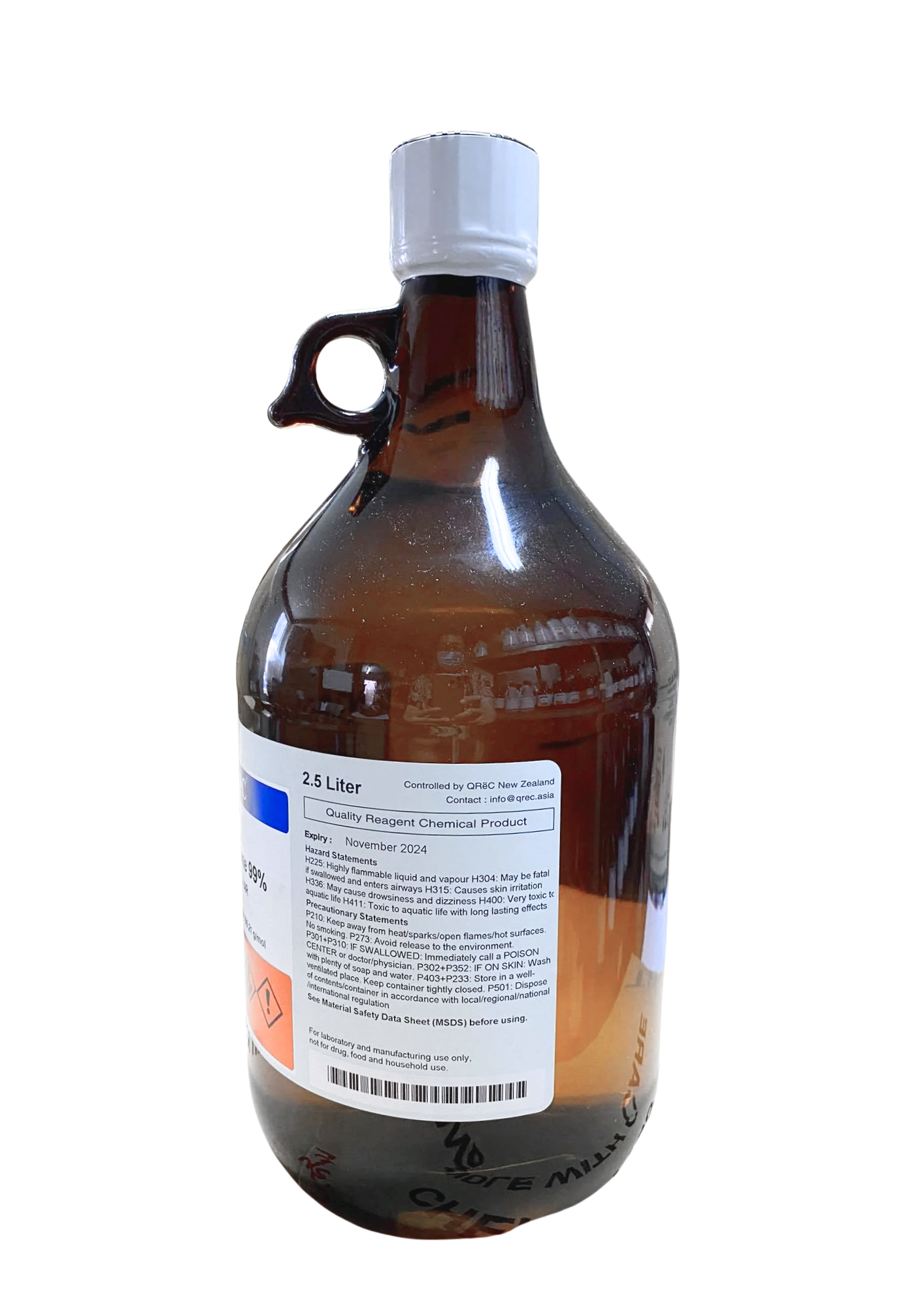
- Classification: Highly flammable liquid and vapor. May be fatal if swallowed and enters airways. Causes skin irritation. May cause drowsiness or dizziness. Very toxic to aquatic life with long lasting effects.
- Health Risks: Direct eye contact triggers transient stinging irritation, redness, and lacrimation. Dermal exposure rapidly strips natural skin lipids, leading to erythema, dryness, and contact dermatitis. Inhalation of concentrated vapors depresses the central nervous system, inducing headaches, dizziness, nausea, lightheadedness, or loss of consciousness. Ingestion accompanied by chemical aspiration into the respiratory tract induces severe, potentially fatal chemical pneumonitis and pulmonary edema.
- First Aid Measures: Immediately flush affected eyes or skin with plenty of continuous flowing water for at least 15 minutes while stripping contaminated clothing. In case of inhalation, rapidly transfer the victim to fresh air. If accidentally swallowed, do NOT induce vomiting due to critical pulmonary aspiration hazards; seek immediate, urgent emergency medical attention.
Handling & Storage
- Storage: Highly Flammable and Volatile Solvent. Low flash point creates severe fire hazards; vapors easily form explosive air mixtures. Must be stored in its original, tightly sealed QReC amber glass bottle inside an approved safety cabinet for flammable liquids. Store in a cool, dry, and excellently ventilated chemical store at stable room temperature (below 30 degrees Celsius), sheltered from direct sunlight. Keep strictly segregated from open flames, sparks, hot surfaces, static electricity, and strong oxidizing agents.
- Precautions: Standard laboratory PPE is mandatory, including solvent-resistant nitrile gloves, splash-proof safety goggles, and a protective lab coat. Handle exclusively and strictly within a properly functioning laboratory fume hood to eliminate vapor accumulation and prevent inhalation exposure. Ground and bond containers during volume transfers.