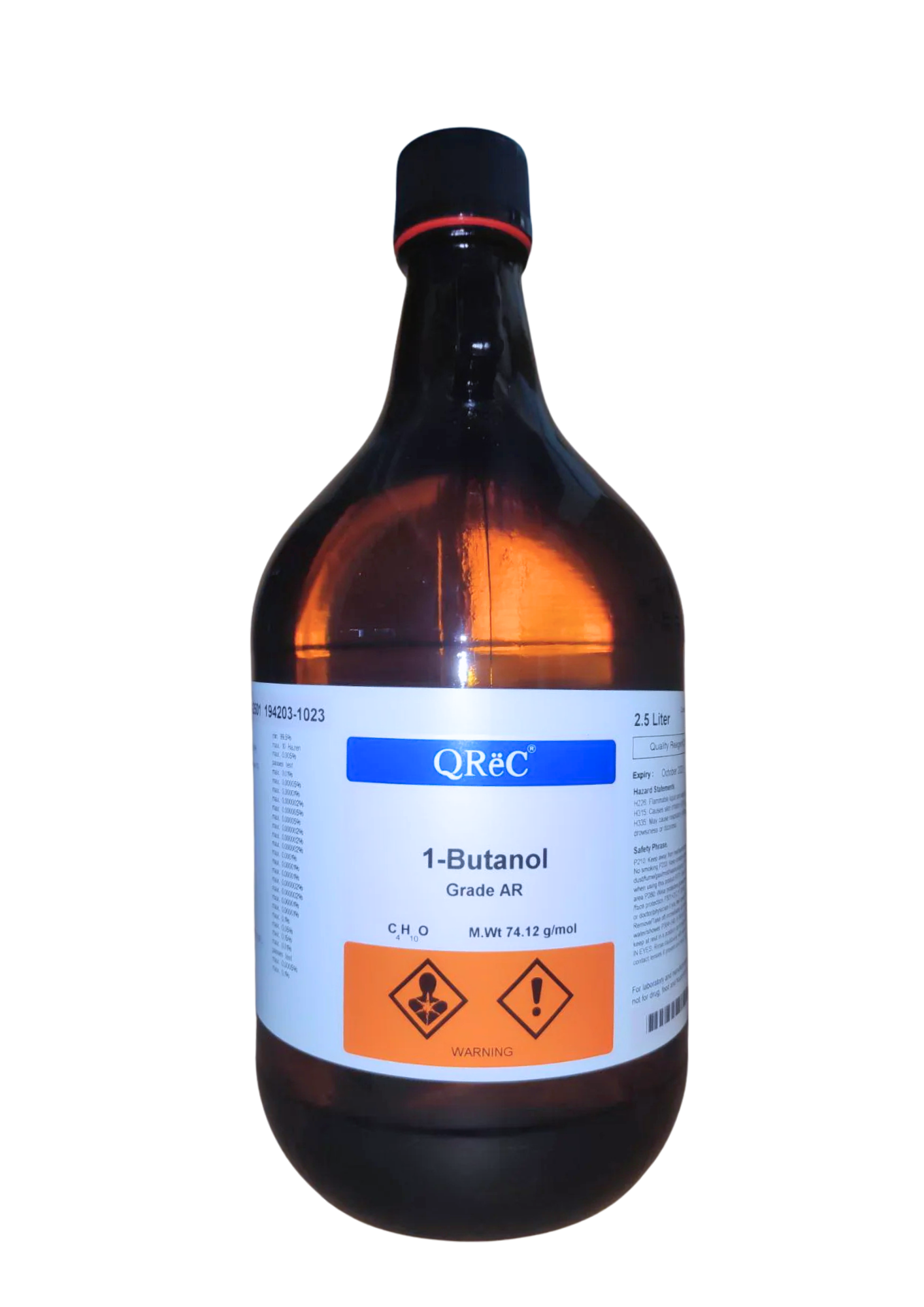
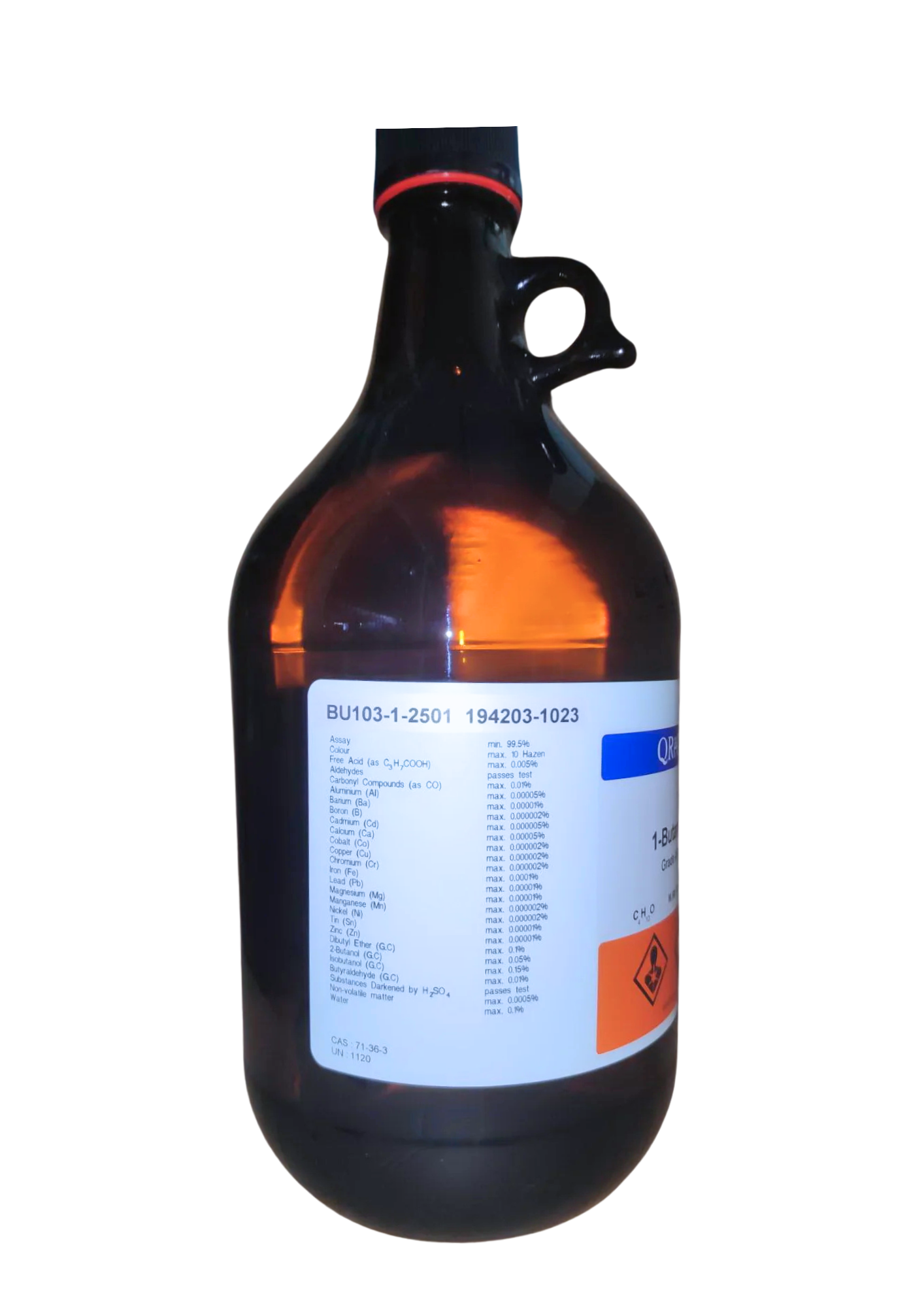
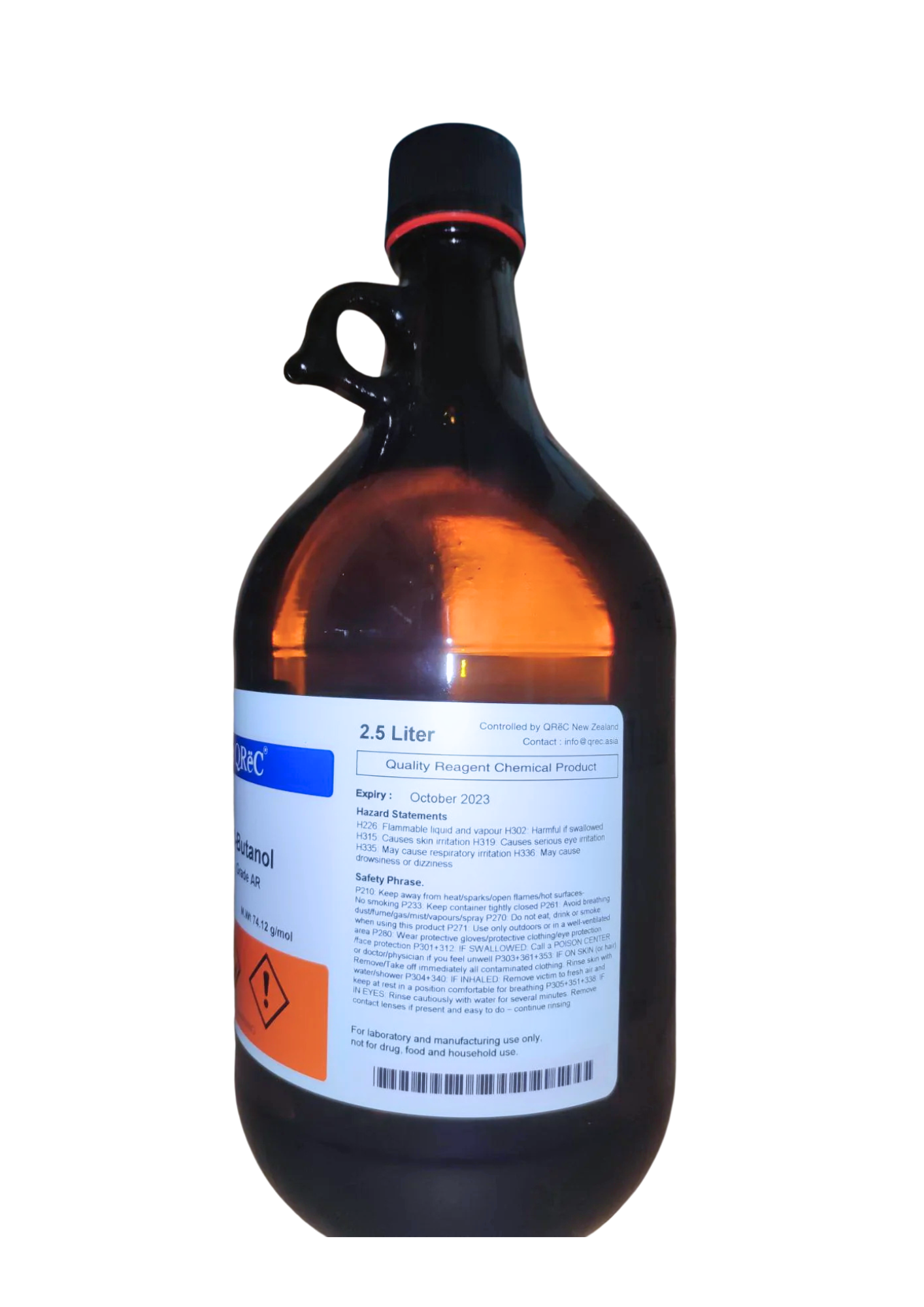
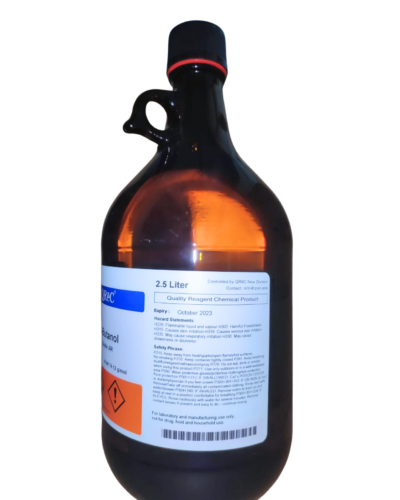
n-Butanol 99.5% or 1-Butanol or n-Butyl alcohol or Propylcarbinol
Product Overview & Quality
- Product Name: n-Butanol 99.5% or 1-Butanol or n-Butyl alcohol or Propylcarbinol
- Brand: QReC (Product Code: QR-BU103-1-2501)
- Grade: Analytical Reagent (AR Grade) featuring a certified chemical purity of 99.5 percent or higher. Produced and fractionally distilled under strict QReC global laboratory specifications. Rigorously monitored to maintain exceptionally low ppm levels of non-volatile residue, moisture content (strictly below 0.1 percent), free acidity, carbonyl compounds (butyraldehyde), and trace heavy metals (such as iron, lead, and copper). Delivers an optically clear solvent profile with low ultraviolet background interference, ensuring baseline stability in chromatographic workflows. Packaged in a heavy-duty amber glass bottle for maximum chemical integrity and light protection.
- Physical Properties: Clear, colorless, mobile liquid with a characteristic sharp, vinous, fusel-like alcoholic odor. Moderate boiling point (approximately 117.7 degrees Celsius) with lower ambient volatility compared to lower alcohols. Flammable liquid and vapor with a flash point of approximately 35 degrees Celsius; vapors are denser than air.
- Solubility: Moderately soluble in water (approximately 7 to 8 grams per 100 milliliters at room temperature; forms a sharp, distinct two-phase separation); completely miscible in all proportions with common organic solvents including ethanol, methanol, acetone, diethyl ether, chloroform, and benzene; high solvency for natural resins, fats, oils, waxes, and alkaloids.
- Key Use: Heavily utilized as the primary organic solvent in liquid-liquid extraction workflows to partition, extract, and isolate antibiotics, hormones, plant alkaloids, and vitamins from aqueous biological broths due to its immiscibility and clean phase separation. Extensively applied as an eluent component in mobile phases for High-Performance Liquid Chromatography (HPLC) and Thin-Layer Chromatography (TLC), particularly for separating amino acids, peptides, and organic acids. Widely used as an essential synthetic reagent and alkylating precursor in organic synthesis, notably in esterification reactions to produce butyl esters (such as butyl acetate). Serves as an analytical carrier and solvent in gas chromatography (GC) and spectroscopy, and functions across polymer, lacquer, and coating formulation testing.
Safety & Hazards (Critical, Flammable & Serious Eye Damage)
- Classification: Flammable liquid and vapor. Causes serious eye damage. Harmful if swallowed. Causes skin irritation. May cause respiratory irritation. May cause drowsiness or dizziness.
- Health Risks: Direct ocular contact triggers instantaneous, severe caustic ulceration of the conjunctiva and cornea, accompanied by intense pain, corneal opacification, and permanent vision impairment. Dermal exposure dissolves natural protective skin lipids, resulting in erythema, cracking, and localized dermatitis. Inhalation of concentrated vapors violently irritates the mucous membranes of the respiratory tract, causing coughing, choking, dyspnea, headaches, dizziness, nausea, and central nervous system depression. Ingestion causes severe gastrointestinal irritation, abdominal distress, vomiting, diarrhea, and systemic narcotic intoxication.
- First Aid Measures: Immediately flush affected eyes or skin with an abundant stream of clean flowing water for at least 15 to 20 minutes while stripping contaminated clothing. In case of inhalation, rapidly relocate the victim to fresh air. If accidentally swallowed, thoroughly rinse mouth, administer water in moderate amounts if conscious, and seek immediate, urgent emergency medical attention.
Handling & Storage
- Storage: Flammable Liquid and Severe Eye Irritant. Moderate flash point (around 35 degrees Celsius) creates significant fire hazards under elevated ambient conditions. Must be preserved in its original, tightly sealed QReC amber glass bottle inside an approved flammable safety cabinet. Store in a cool, dry, and well-ventilated dedicated chemical store at stable room temperature (below 25 to 30 degrees Celsius), sheltered from direct sunlight and thermal sources. Keep strictly segregated from open flames, sparks, hot surfaces, static discharge, strong oxidizing agents, strong mineral acids, and alkali metals.
- Precautions: Standard specialized PPE is mandatory, including chemical-resistant nitrile gloves, splash-proof safety goggles, and a protective lab coat. Handle, dispense, and extract exclusively and strictly within a certified, properly functioning laboratory fume hood to eliminate vapor inhalation and prevent flammable vapor accumulation.