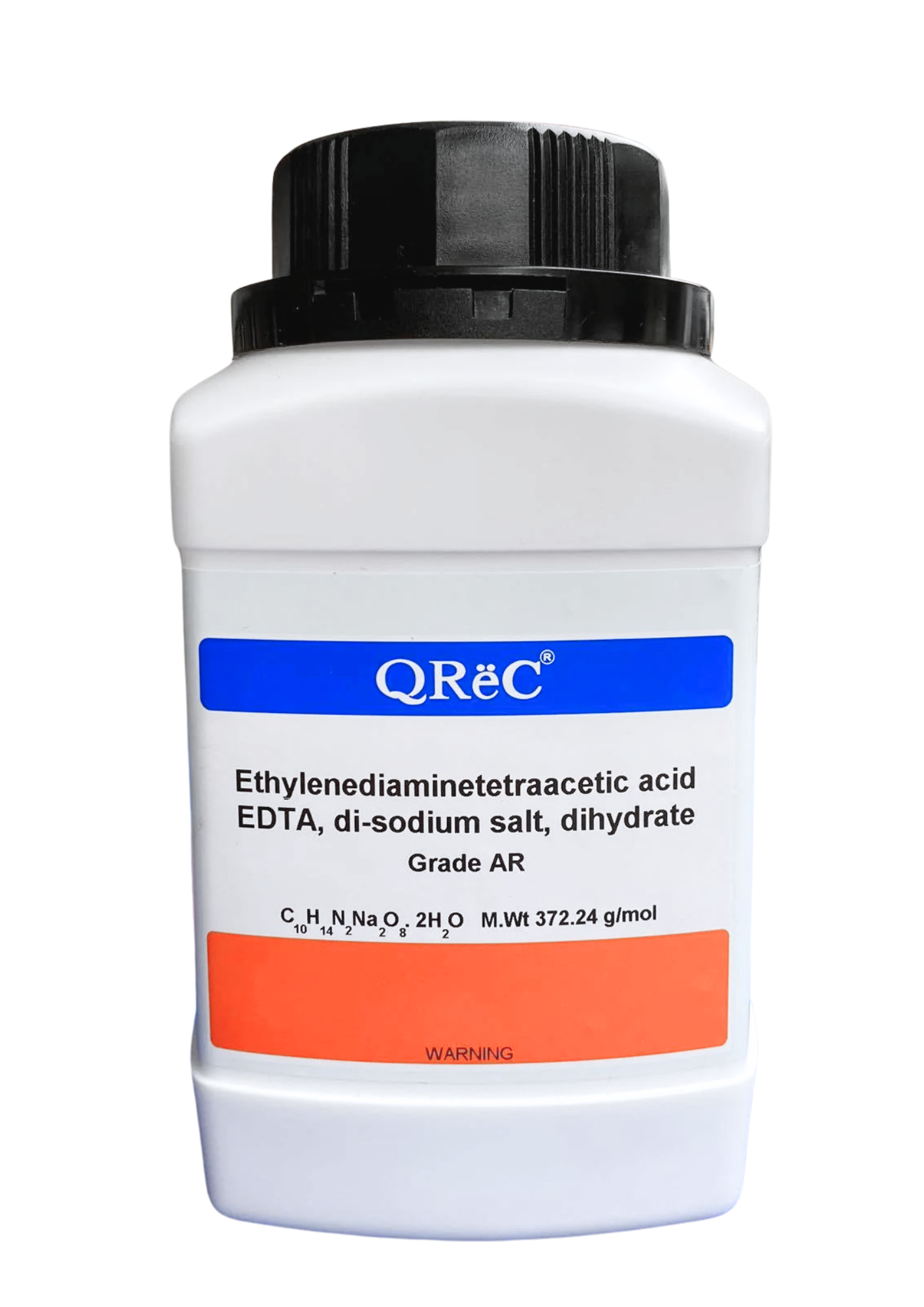
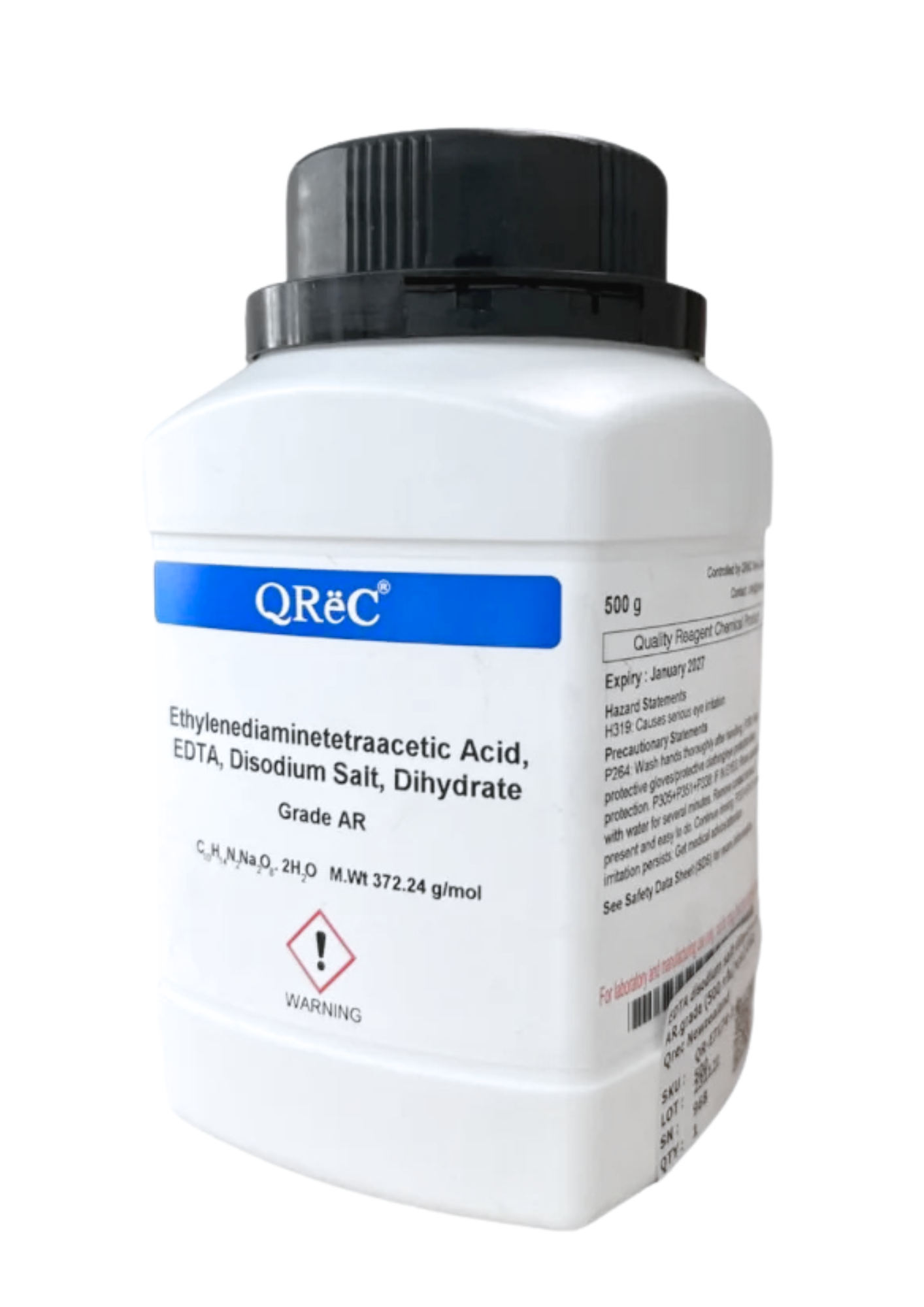
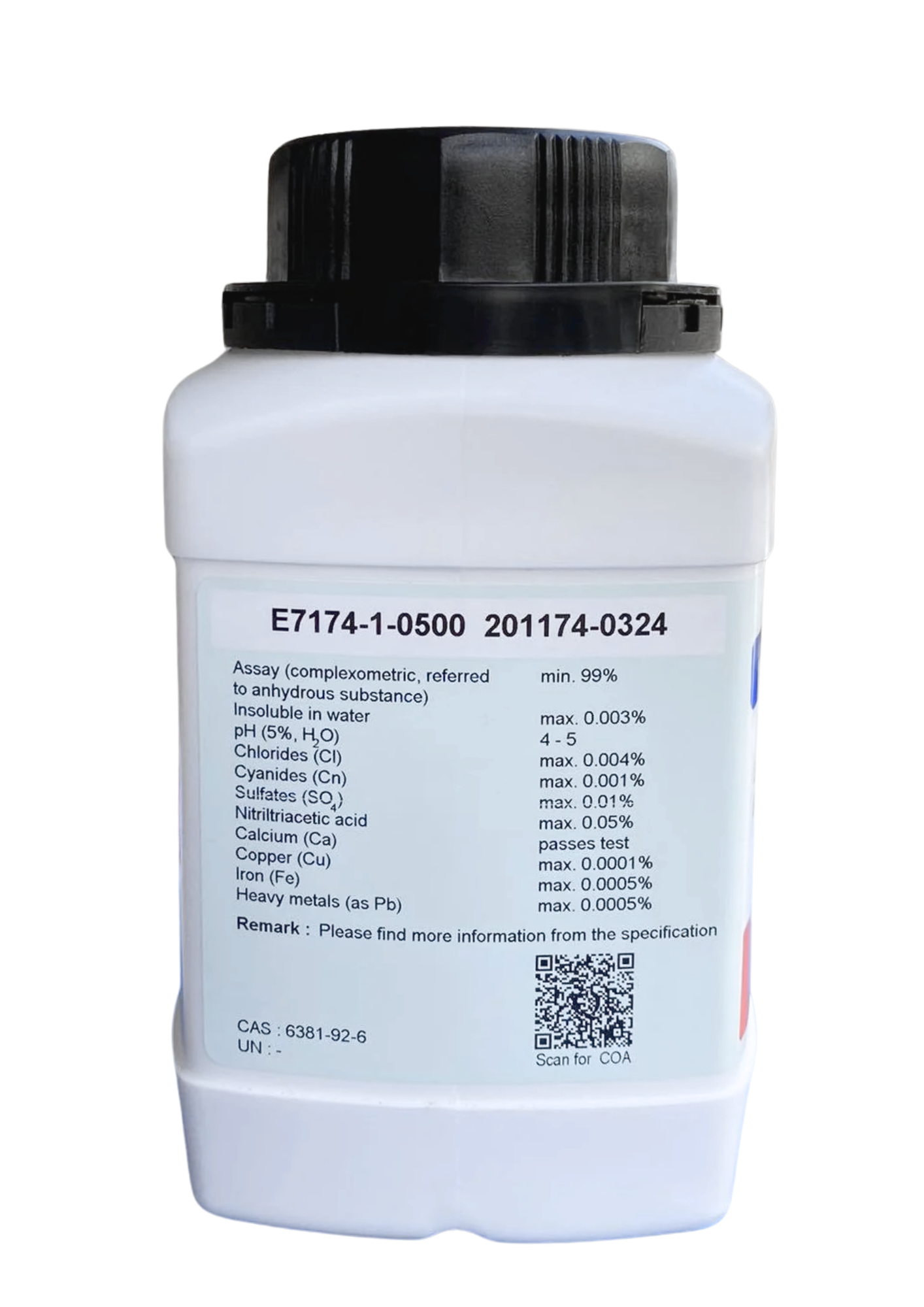
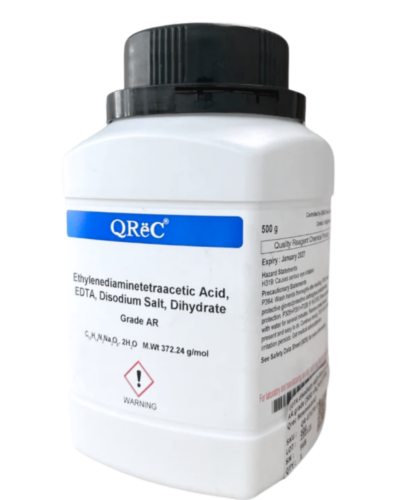
EDTA disodium salt dihydrate 99% or Ethylenediaminetetraacetic acid disodium salt dihydrate or Disodium edetate dihydrate
Product Overview & Quality
- Product Name: EDTA disodium salt dihydrate 99% or Ethylenediaminetetraacetic acid disodium salt dihydrate or Disodium edetate dihydrate
- Brand: QReC (Product Code: QR-E7174-1-0500)
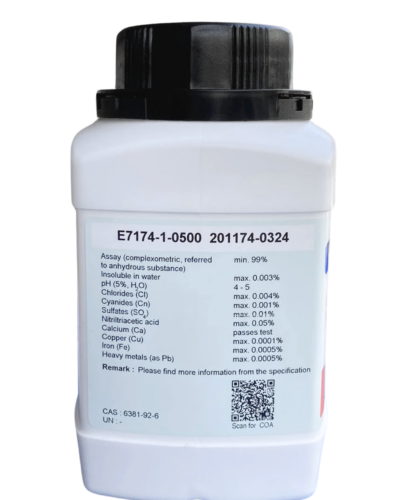
- Grade: Analytical Reagent (AR Grade) featuring a certified chemical assay of not less than 99.0 percent. Manufactured and multi-recrystallized under strict QReC global laboratory specifications, maintaining precise dihydrate stoichiometric hydration. Rigorously analyzed to enforce minimal ppm limits of chloride, sulfate, water-insoluble matter, nitrilotriacetic acid (NTA), and trace heavy metals (such as iron, lead, copper, arsenic, zinc, calcium, and magnesium). Conforms to certified DNase, RNase, and Protease-free specifications, ensuring biological inertness in nucleic acid manipulation and enzymatic protocols. Exhibits minimal background ultraviolet absorbance across critical wavelengths, dissolving completely to yield transparent, particulate-free solutions. Packaged in a heavy-duty, moisture-barrier polymer container equipped with a secure hermetic seal.
- Physical Properties: White crystalline powder or crystalline granules. Odorless. Thermodynamically stable in ambient air with minimal hygroscopicity. Aqueous solutions are mildly acidic (pH approximately 4.0 to 5.0 at room temperature). Non-combustible and non-corrosive solid.
- Solubility: Moderately soluble in water (approximately 10 to 11 grams per 100 milliliters at 20 degrees Celsius; solubility escalates dramatically upon raising the solution pH to approximately 8.0 via sodium hydroxide addition); sparingly soluble in ethanol; insoluble in diethyl ether.
- Key Use: Heavily utilized as the primary reagent for formulating foundational molecular biology buffers, including Tris-EDTA (TE), Tris-Acetate-EDTA (TAE), and Tris-Borate-EDTA (TBE) for agarose gel electrophoresis and nucleic acid extraction, where it acts as a hexadentate chelator sequestering divalent magnesium cations to inhibit DNase activity. Universally applied as a primary analytical standard and precursor for complexometric titrations to quantify Total Water Hardness, dissolved calcium, magnesium, and polyvalent heavy metals across environmental and quality control workflows. Extensively used as a stabilizing chelator to inhibit trace-metal-catalyzed oxidation in biochemical reagents, clinical diagnostic assays, and enzyme preparations. Routinely applied as an anticoagulant in clinical hematology specimen tubes by sequestering free plasma calcium ions, preventing fibrin clot formation.
Safety & Hazards (Critical, Specific Target Organ Inhalation & Serious Eye Irritation)
- Classification: Causes serious eye irritation. Harmful if inhaled. May cause damage to organs (Respiratory system) through prolonged or repeated exposure.
- Health Risks: Direct ocular contact triggers intense burning irritation, conjunctival redness, lacrimation, and corneal discomfort. Prolonged dermal contact may induce mild dryness or superficial irritation. Inhalation of particulate dust irritates the mucous membranes of the respiratory tract, causing sneezing, coughing, chest tightness, and dyspnea. Repeated or prolonged occupational inhalation of fine particulates is linked to long-term respiratory inflammation. Ingestion of excessive quantities produces gastrointestinal distress, abdominal cramps, nausea, vomiting, and diarrhea due to internal mineral chelation.
- First Aid Measures: Immediately flush affected eyes with an abundant stream of clean flowing water for at least 15 minutes while stripping contaminated garments; remove contact lenses promptly. Wash exposed skin thoroughly with soap and water. In case of dust inhalation, rapidly relocate the victim to fresh air. If accidentally swallowed in substantial amounts, rinse mouth thoroughly, administer water in moderate amounts, and seek medical advice.
Handling & Storage
- Storage: Chelating Agent and Respiratory Irritant. Must be preserved in its original, tightly closed QReC container. Store in a clean, cool, dry, and well-ventilated dedicated chemical store at controlled temperatures (below 25 to 30 degrees Celsius), sheltered from excessive humidity and direct solar radiation. Keep strictly segregated from strong oxidizing agents, strong mineral acids, and concentrated alkalis.
- Precautions: Standard laboratory PPE is mandatory, including chemical-resistant gloves, splash-proof safety goggles, a certified particulate dust mask, and a protective lab coat. “Technical Dissolution Rule: When preparing concentrated aqueous stocks (such as 0.5 mol/L at pH 8.0), solid EDTA disodium salt will not dissolve fully until the pH is incrementally adjusted to approximately 8.0 using solid sodium hydroxide pellets or concentrated sodium hydroxide solution.” Re-seal container tightly immediately after sampling.