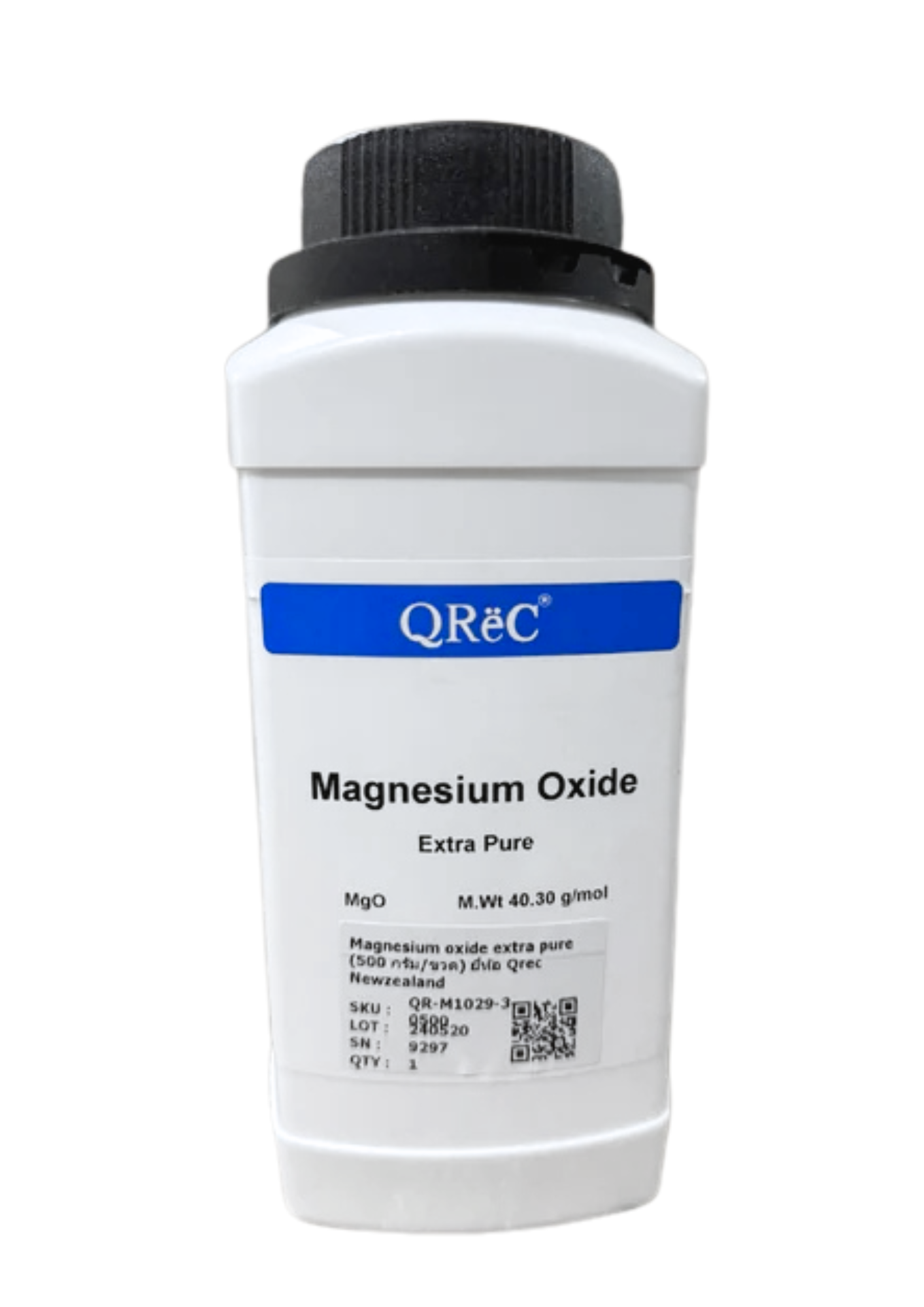
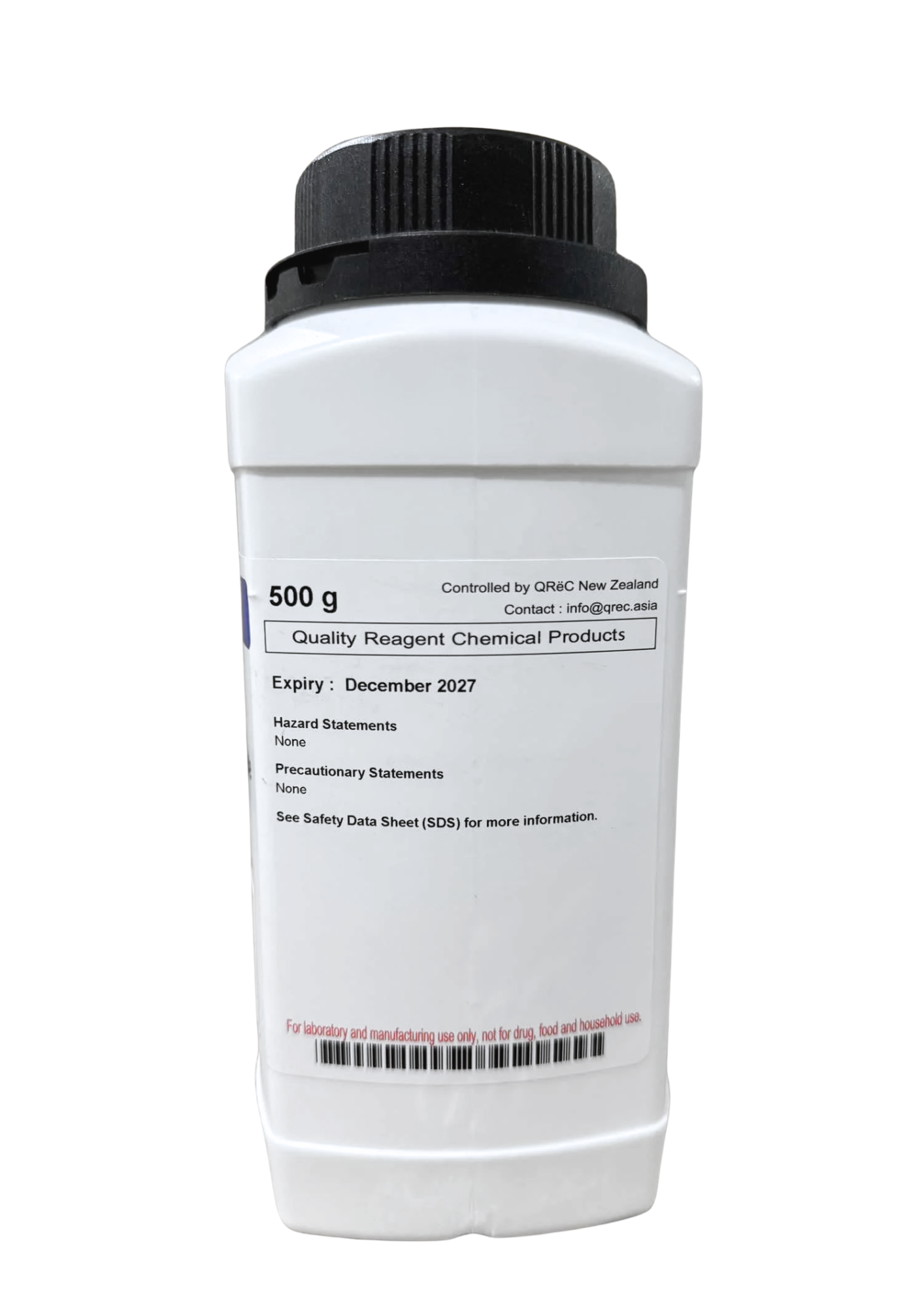
Magnesium oxide Extra pure 98% or Magnesia or Calcined magnesite or Magnesium monoxide
Product Overview & Quality
- Product Name: Magnesium oxide Extra pure 98% or Magnesia or Calcined magnesite or Magnesium monoxide
- Brand: QReC (Product Code: QR-M1029-3-0500)
- Grade: Extra Pure Grade featuring a high certified chemical assay of not less than 98.0 percent. Manufactured and calcined under strict QReC global laboratory specifications to maintain consistent loss on ignition parameters. Rigorously tested to enforce minimal ppm limits of chloride, sulfate, hydrochloric acid-insoluble matter, carbonate, calcium, iron, and trace heavy metals (such as lead, zinc, and arsenic). Soft, fine, uniform powder matrix dissolves completely in dilute acids without leaving insoluble silicates or gritty residues. Packaged in a heavy-duty, moisture-barrier polymer container equipped with a hermetic seal to exclude atmospheric moisture and carbon dioxide.
- Physical Properties: Very fine, light or heavy white powder. Odorless. Slowly absorbs atmospheric moisture and carbon dioxide to convert into magnesium hydroxide and basic carbonates. Refractory solid exhibiting an exceptionally high melting point (exceeding 2,800 degrees Celsius). Non-combustible and non-corrosive. Aqueous suspensions exhibit mild to moderate basicity (pH approximately 10.0 to 10.5 at room temperature).
- Solubility: Practically insoluble in water (less than 0.009 grams per 100 milliliters at room temperature; forms an opaque basic suspension); insoluble in ethanol and methanol; readily and rapidly soluble in dilute mineral acids (undergoing exothermic neutralization to form clear, colorless magnesium salt solutions).
- Key Use: Heavily utilized as an effective inorganic acid acceptor, scavenger, and neutralizing agent in organic synthesis, condensation pathways, and specialized polymer vulcanization protocols. Extensively applied as a primary chemical precursor for synthesizing ultra-pure magnesium salts (such as magnesium chloride, nitrate, and sulfate) in inorganic preparative chemistry. Universally recognized as an optical primary white reflectance standard for calibrating spectrophotometers, colorimeters, and optical sensors across the visible light spectrum. Functions as a superior high-temperature refractory and dielectric electrical insulator in advanced ceramics and metallurgy crucible formulations. Widely used as an anti-caking agent, tablet diluent, adsorbent, and viscosity stabilizer in pharmaceutical compounding, cosmetic formulations, and elastomer processing.
Safety & Hazards
- Classification: Non-hazardous substance under standard GHS classification criteria in routine laboratory usage. Exceptionally low acute toxicity profile; particulate dust may exert mild mechanical irritation to ocular, dermal, and respiratory surfaces.
- Health Risks: Direct eye contact may cause transient mechanical stinging, minor conjunctival redness, or tearing. Prolonged dermal contact can absorb skin oils, causing mild dryness or slight superficial irritation. Inhalation of excessive airborne particulate dust may provoke sneezing, coughing, or minor upper respiratory tickling (inhalation of freshly generated metal oxide fumes from extreme heating can produce metal fume fever symptoms). Ingestion of typical amounts is biologically inert, exerting mild antacid effects; excessive oral intake may induce mild osmotic diarrhea or laxative effects characteristic of magnesium ions.
- First Aid Measures: Flush affected eyes thoroughly with clean running water for at least 10 to 15 minutes. Wash exposed skin with soap and water. In case of dust inhalation, relocate the individual to fresh air. If accidentally swallowed in substantial amounts, rinse mouth, drink water, and seek medical advice if gastrointestinal distress develops.
Handling & Storage
- Storage: Atmospheric Moisture and Carbon Dioxide Sensitive Solid. Unsealed ambient exposure compromises chemical stoichiometry and assay purity through hydration and carbonation. Must be preserved in its original, tightly closed QReC container. Store in a clean, strictly dry, cool, and well-ventilated dedicated chemical store at controlled temperatures (below 25 to 30 degrees Celsius), sheltered from humidity and direct sunlight. Keep strictly segregated from strong mineral acids (which produce exothermic neutralization reactions) and strong oxidizing agents.
- Precautions: Standard laboratory PPE is mandatory, including protective gloves, safety glasses, a certified particulate dust mask, and a protective lab coat. Re-seal container cap tightly immediately after sampling to prevent atmospheric moisture uptake. Minimize dust generation during weighing and dispensing.