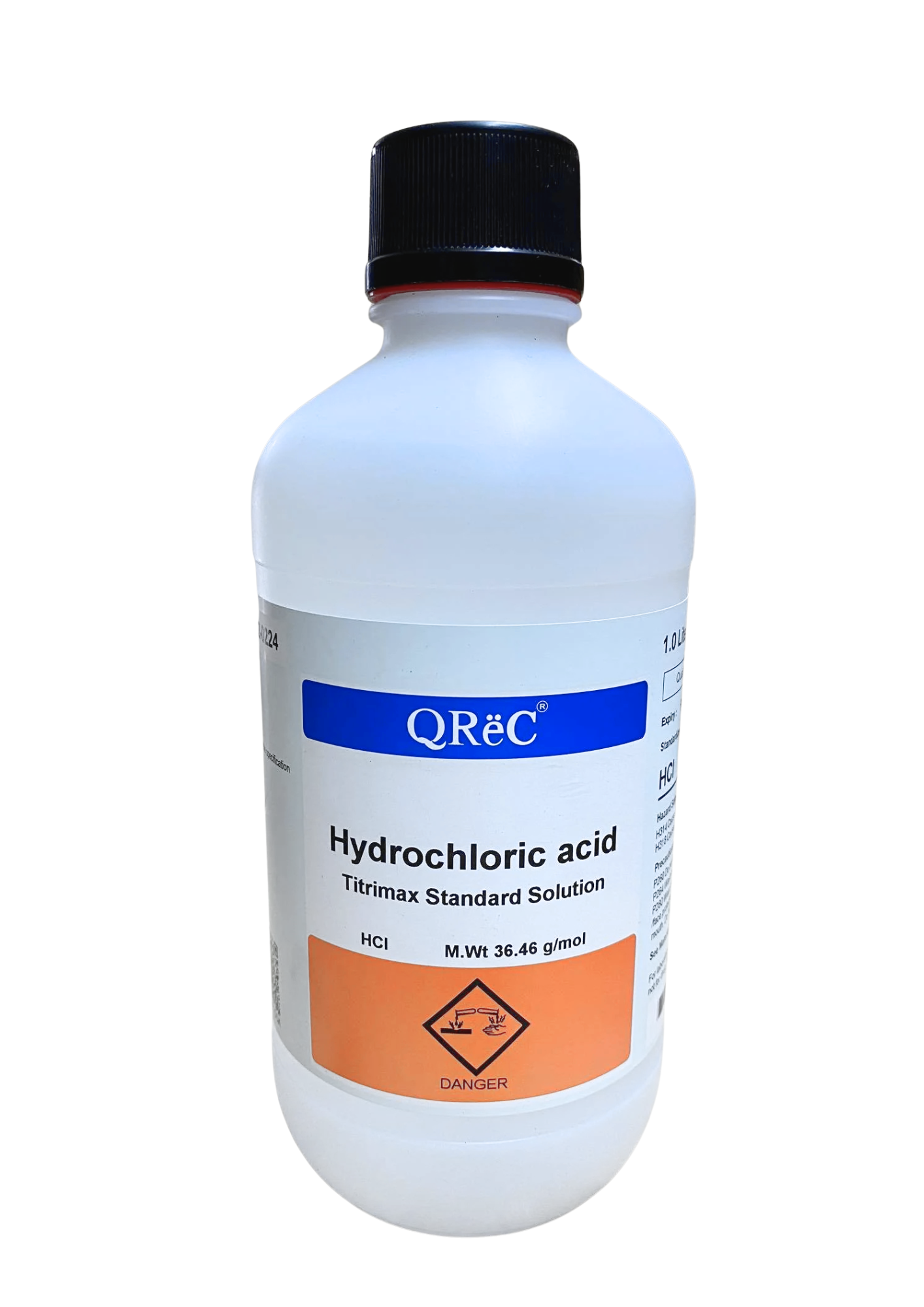
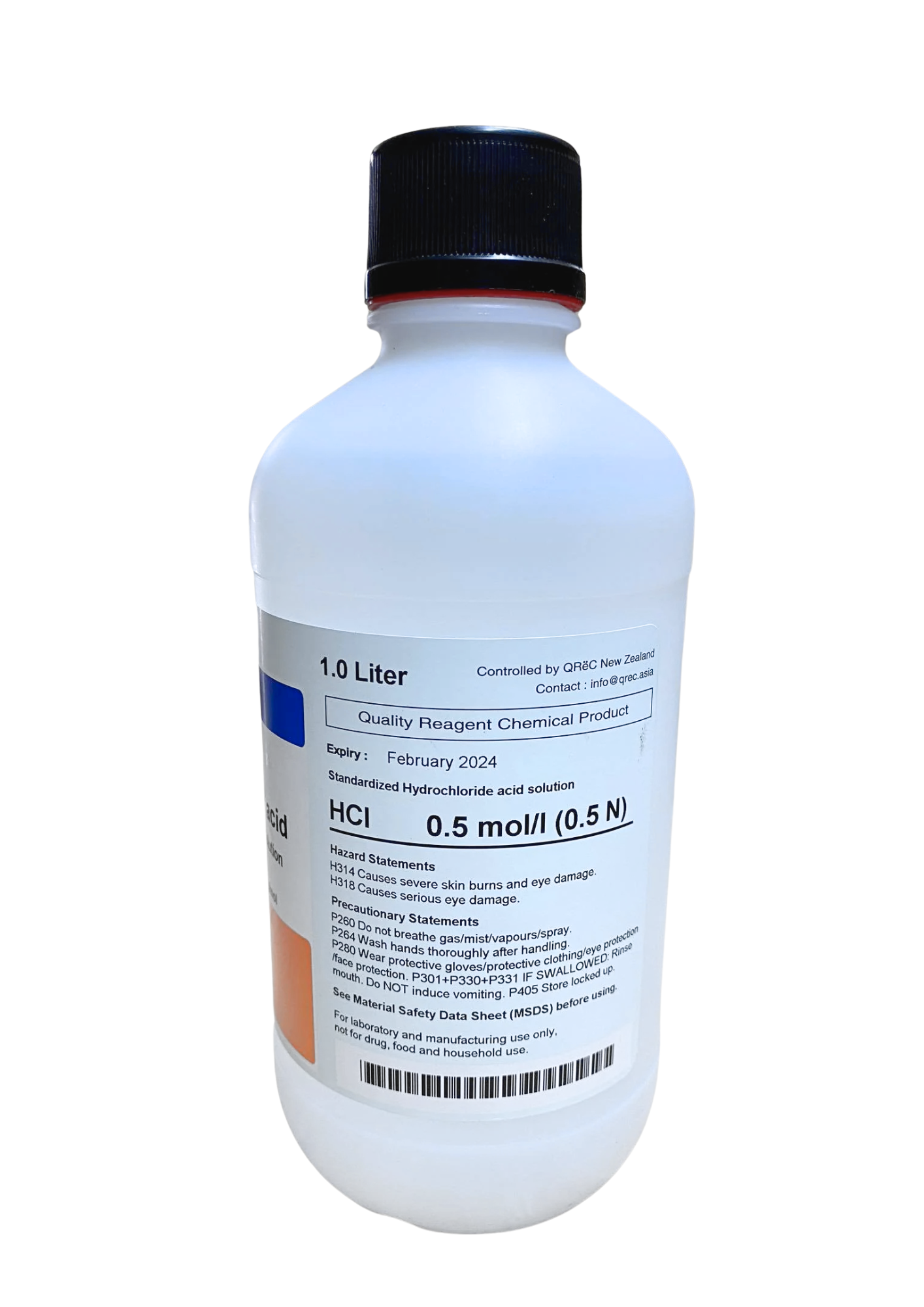
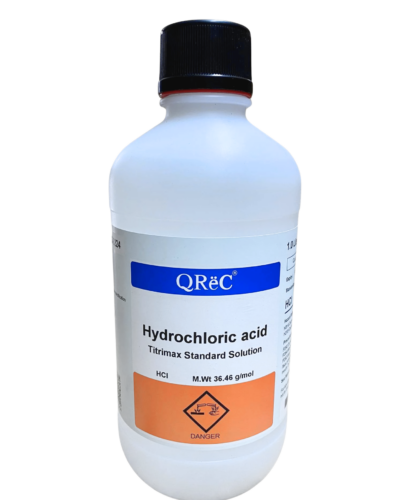
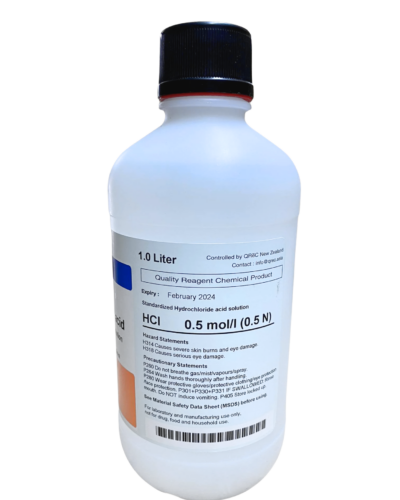
Hydrochloric acid 0.5N (0.5 mol/L) or Standard volumetric hydrochloric acid solution
Product Overview & Quality
- Product Name: Hydrochloric acid 0.5N (0.5 mol/L) or Standard volumetric hydrochloric acid solution
- Brand: QReC (Product Code: QR-H8062-0-1000)
- Grade: Certified Volumetric Standard Solution (AR Grade) prepared from high-purity analytical reagent hydrochloric acid and high-purity deionized water. Standardized and calibrated under strict QReC global laboratory specifications at a controlled reference temperature of 20 degrees Celsius. Directly traceable to certified Primary Standard Reference Materials from the National Institute of Standards and Technology (NIST Traceable). Features a certified normality factor strictly maintained within 0.999 to 1.001, printed on the batch certificate and label. Enforces ultra-low ppm limits of trace heavy metals, sulfate, ammonium compounds, and arsenic. Delivers immediate, ready-to-use volumetric accuracy, eliminating hazardous dilutions of fuming concentrated acid and secondary restandardization steps. Packaged in a heavy-duty, corrosion-resistant polymer container.
- Physical Properties: Clear, colorless liquid. Faint, characteristic acidic odor. Non-flammable. Strongly acidic aqueous solution (pH approximately 0.3). Corrosive to metals and irritating to tissues
- Solubility: Completely miscible in all proportions with water.
- Key Use: Universally utilized as the standard acid titrant in burettes for acid-base neutralization titrations to accurately quantify strong and weak bases, carbonates, and bicarbonates across environmental, industrial, and chemical quality control (QC). Widely applied in water testing laboratories to measure Total Alkalinity (M-alkalinity and P-alkalinity) in potable water, groundwater, industrial effluent, and boiler feed water. Serves as a standard titrant in the distillation-titration stage of the Kjeldahl method for determining crude protein and total nitrogen. Routinely employed for evaluating acid-neutralizing capacity in pharmaceutical antacid assays, raw material testing, and for calibrating automated potentiometric titrators.
Safety & Hazards
- Classification: May be corrosive to metals. Causes skin irritation. Causes serious eye irritation. May cause respiratory irritation.
- Health Risks: Direct ocular contact triggers burning pain, conjunctival redness, lacrimation, and corneal irritation. Dermal exposure may cause skin irritation, dryness, erythema, or mild chemical burns upon prolonged contact. Inhalation of mists or acid vapors irritates the respiratory tract, causing coughing, sneezing, and throat irritation. Ingestion causes irritation of the oral cavity, esophagus, and gastrointestinal tract, accompanied by abdominal pain, nausea, and vomiting
- First Aid Measures: Immediately flush affected eyes with an abundant stream of clean flowing water for at least 15 minutes while stripping contaminated garments; remove contact lenses promptly. Wash exposed skin with soap and water. In case of mist inhalation, rapidly relocate the victim to fresh air. If accidentally swallowed, do NOT induce vomiting; thoroughly rinse mouth, drink water in moderate amounts, and seek medical attention.
Handling & Storag
- Storage: Calibrated Standard Volumetric Acid Solution. Corrosive to metals. Must be preserved in its original, tightly closed corrosion-resistant QReC container. Store in a clean, cool, and well-ventilated dedicated chemical store at controlled temperatures (between 15 and 25 degrees Celsius), sheltered from direct sunlight and thermal sources. Keep strictly segregated from strong alkalis (which cause violent exothermic neutralization), reactive metals (which liberate flammable hydrogen gas), strong oxidizing agents, and hypochlorites (which liberate toxic chlorine gas).
- Precautions: Standard laboratory PPE is mandatory, including protective chemical-resistant gloves, safety glasses, and a protective lab coat. “Critical Volumetric Rule: Never pour unused portions of the solution from beakers or burettes back into the primary container to avoid cross-contamination and preserve the certified titer factor.” Re-seal container cap tightly immediately after dispensing.