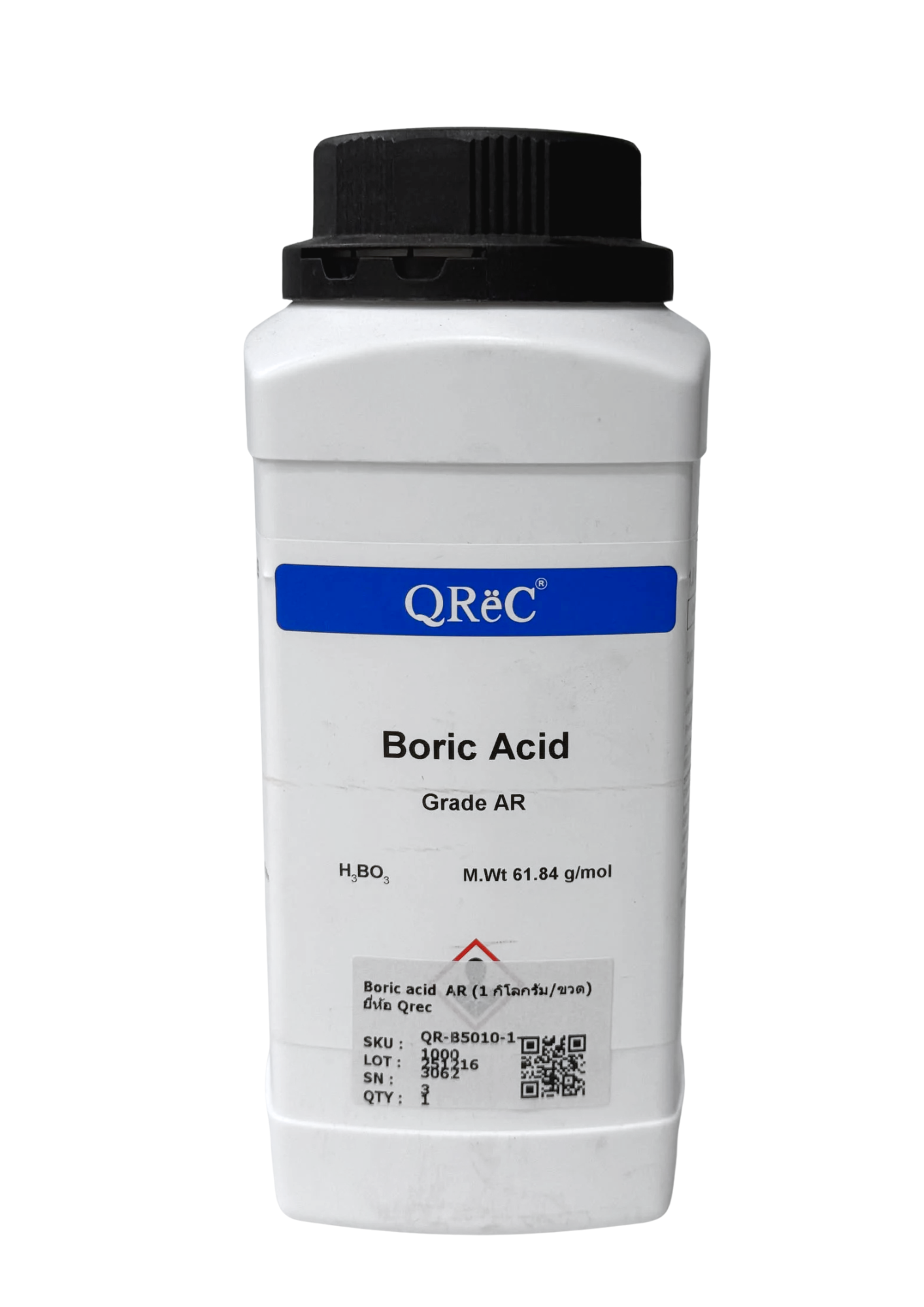
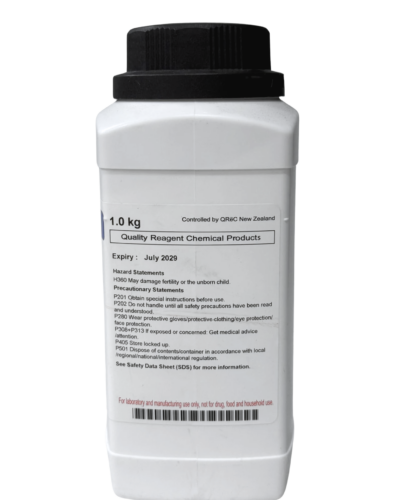
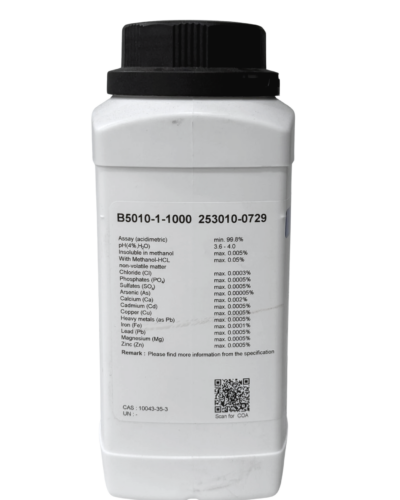
Boric acid 99.8% or Orthoboric acid or Boracic acid or Hydrogen borate
Product Overview & Quality
- Product Name: Boric acid 99.8% or Orthoboric acid or Boracic acid or Hydrogen borate
- Brand: QReC (Product Code: QR-B5010-1-1000)
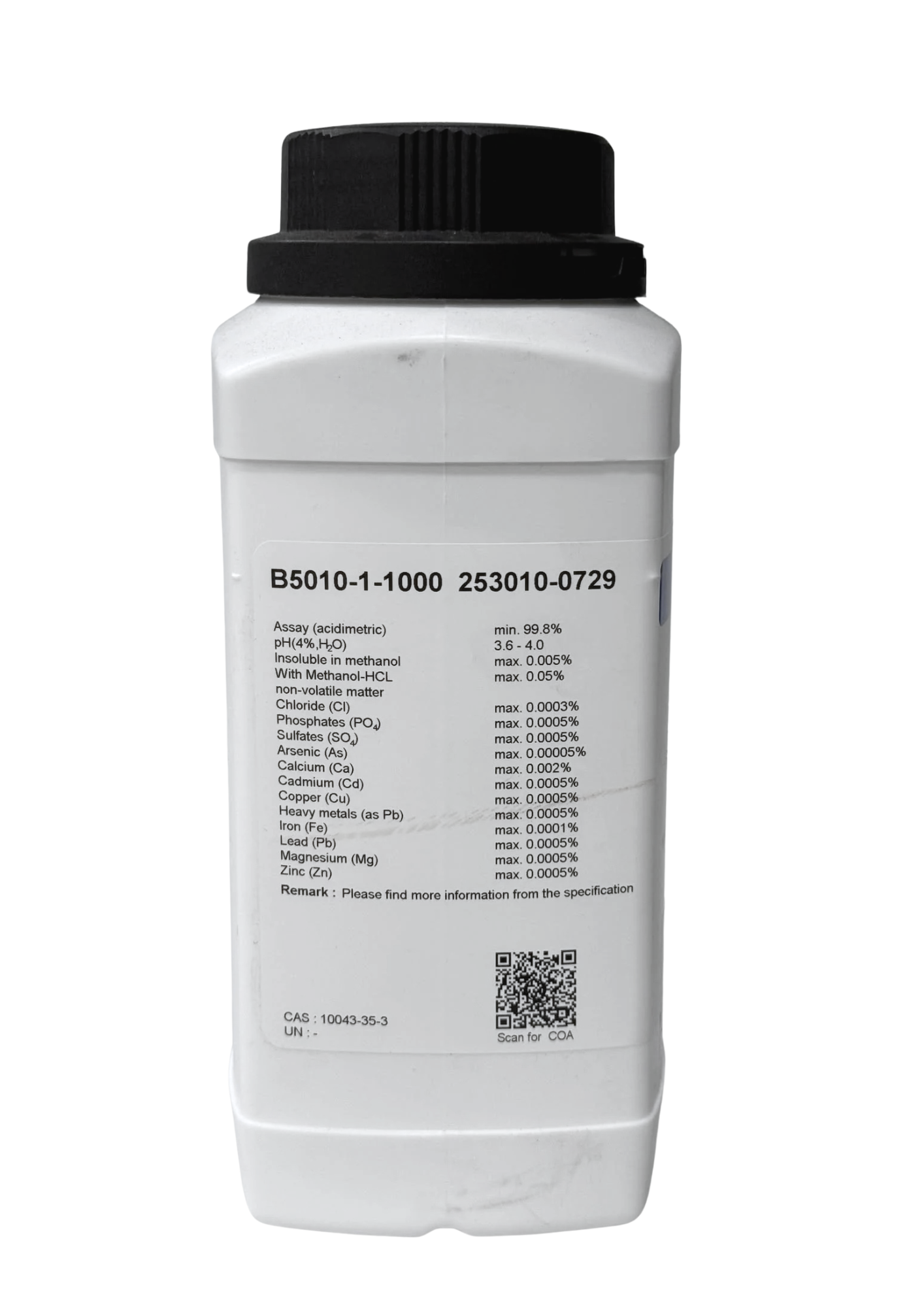
- Grade: Analytical Reagent High Purity Grade (AR Grade) featuring a certified chemical assay of not less than 99.8 percent. Manufactured and multi-recrystallized under strict QReC global laboratory specifications. Rigorously tested to maintain ultra-low ppm limits of ethanol-insoluble matter, chloride, sulfate, phosphate, total nitrogen, silicate, and trace heavy metals (such as iron, lead, copper, arsenic, zinc, calcium, and magnesium). Conforms to certified DNase, RNase, and Protease-free specifications, ensuring non-degrading integrity in nucleic acid analysis. Displays a dry, uniform crystal matrix with low background ultraviolet absorbance, dissolving cleanly in warm water to produce transparent, residue-free solutions. Packaged in a heavy-duty, moisture-barrier polymer container equipped with a secure hermetic seal.
- Physical Properties: White crystalline scales, lustrous plates, or fine crystalline powder. Unctuous and smooth to the touch. Odorless. Thermodynamically stable in ambient air. Aqueous solutions are weakly acidic (pH approximately 3.8 to 4.8 for typical concentrations); functions chemically as a monobasic Lewis acid accepting hydroxide ions rather than donating protons. Non-combustible inorganic solid.
- Solubility: Moderately soluble in water at ambient temperature (approximately 4.7 to 5.0 grams per 100 milliliters at 20 degrees Celsius; solubility escalates dramatically with temperature, exceeding 27 grams per 100 milliliters in boiling water); freely soluble in glycerol; soluble in boiling ethanol and methanol; practically insoluble in diethyl ether.
- Key Use: Heavily utilized as the foundational acid component paired with Tris base and EDTA to prepare Tris-Borate-EDTA (TBE) buffer for agarose and polyacrylamide gel electrophoresis, delivering superior resolution for resolving small DNA and RNA fragments. Universally employed as the primary boric acid absorbing solution (receiver solution) in the distillation stage of the Kjeldahl method for total nitrogen and crude protein quantification in food, feed, fertilizer, and agricultural matrices. Extensively applied to formulate borate buffer systems (pH 8.0 to 10.0) for biochemical assays and capillary electrophoresis. Functions as a complexing agent with polyols, carbohydrates, and sugar nucleotides in bio-analytical separations. Routinely used as a flux modifier, polymer cross-linker, and flame retardant in materials research and advanced glass development.
Safety & Hazards (Critical, Reproductive Toxicity & Eye Irritation)
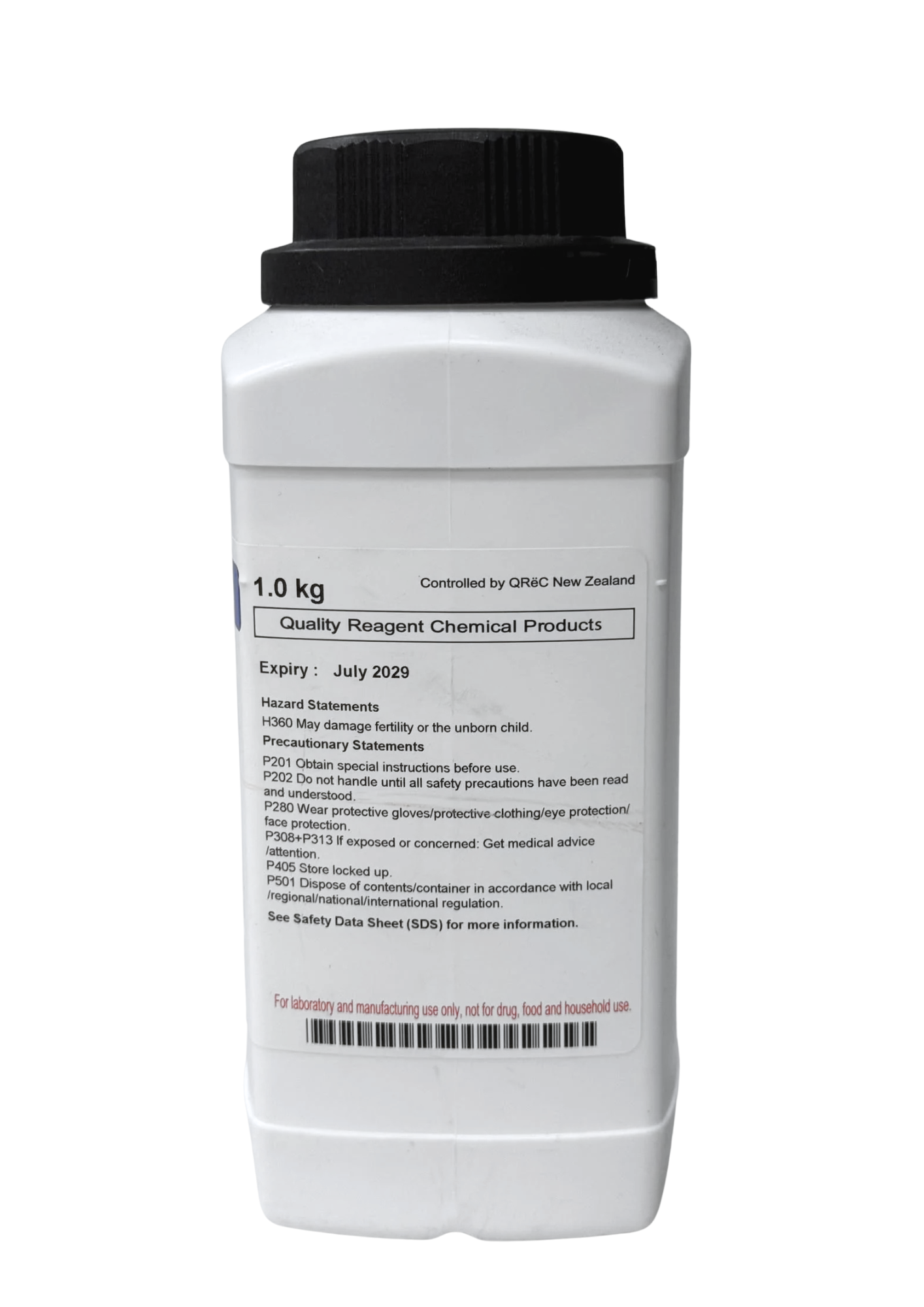
- Classification: May damage fertility or the unborn child (Reproductive Toxicity Category 1B). May cause mild eye, skin, and respiratory irritation.
- Health Risks: Primary Toxicological Concern: Boric acid is a regulated human reproductive toxicant; prolonged occupational exposure or systemic absorption may impair male fertility (testicular effects, impaired spermatogenesis) and cause developmental toxicity or congenital malformations in the unborn fetus. Direct ocular exposure causes transient stinging, conjunctival erythema, and tearing. Contact with intact skin exhibits low acute toxicity, but significant systemic absorption can occur through abraded, burnt, or inflamed skin. Inhalation of particulate dust irritates the mucous membranes of the respiratory tract, causing sneezing, coughing, and throat dryness. Ingestion of large quantities produces gastrointestinal distress, epigastric pain, nausea, vomiting, diarrhea, lethargy, and potential renal or central nervous system impairment.
- First Aid Measures: Flush affected eyes thoroughly with clean running water for at least 15 minutes while holding eyelids apart; remove contact lenses promptly. Wash exposed skin with soap and water. In case of dust inhalation, relocate the individual to fresh air. If accidentally swallowed, rinse mouth thoroughly, administer water in moderate amounts, and seek immediate medical attention (pregnant personnel must notify medical professionals immediately upon accidental exposure).
Handling & Storage
- Storage: Reproductive Toxicant and Bio-analytical Reagent. Must be preserved in its original, tightly closed QReC polymer container. Store in a clean, strictly dry, cool, and well-ventilated dedicated chemical store at controlled room temperatures (below 25 to 30 degrees Celsius), sheltered from humidity and direct sunlight. Keep strictly segregated from strong alkalis (which trigger exothermic neutralization), strong oxidizing agents, potassium, and acetic anhydride.
- Precautions: Full specialized PPE is mandatory, including chemical-resistant nitrile gloves, splash-proof safety goggles, a certified particulate dust respirator, and a protective lab coat. Weigh and dispense inside a certified laboratory fume hood to avoid airborne particulate inhalation. Pregnant or nursing personnel should avoid direct handling of this substance. Re-seal container cap tightly immediately after sampling.