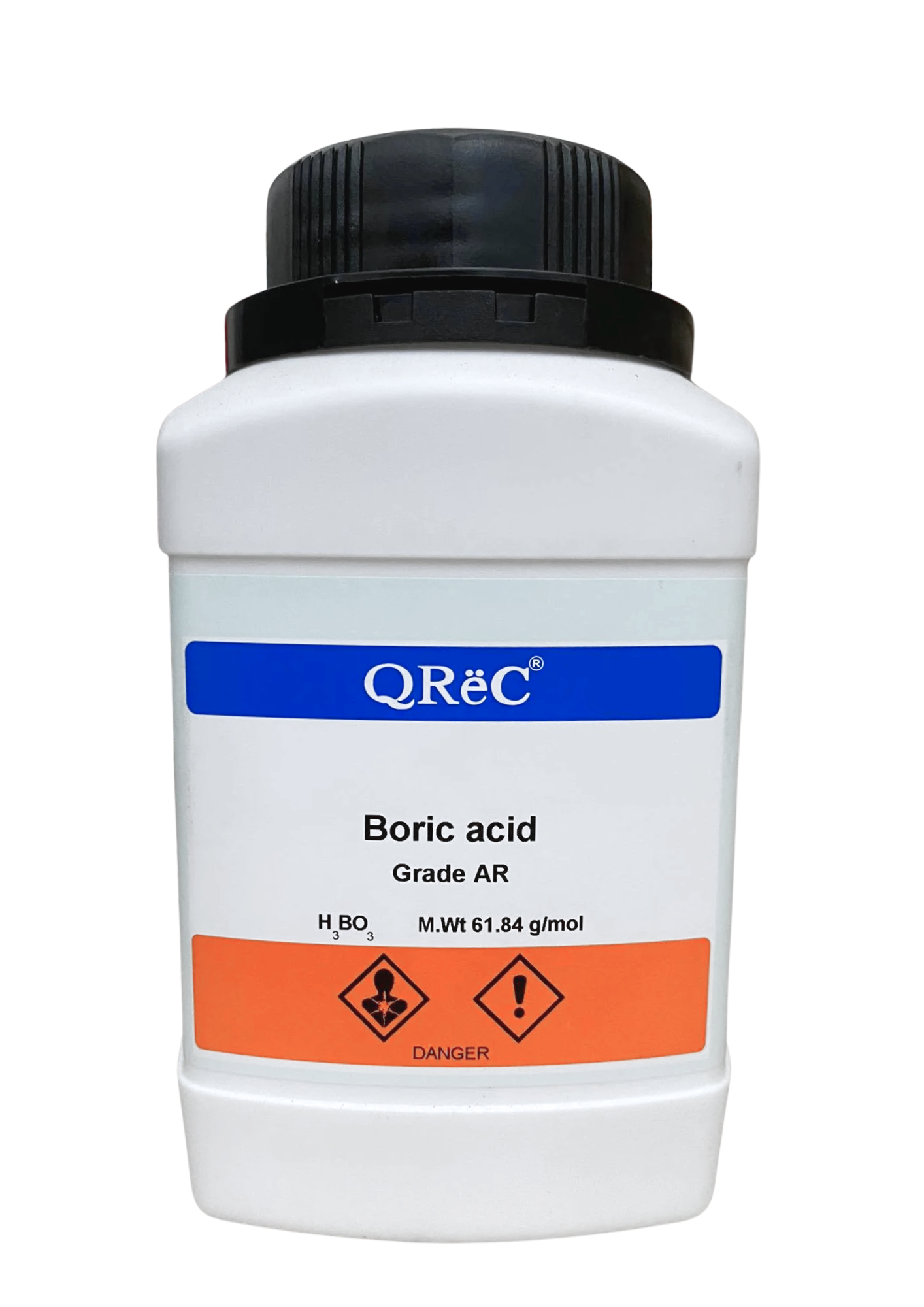
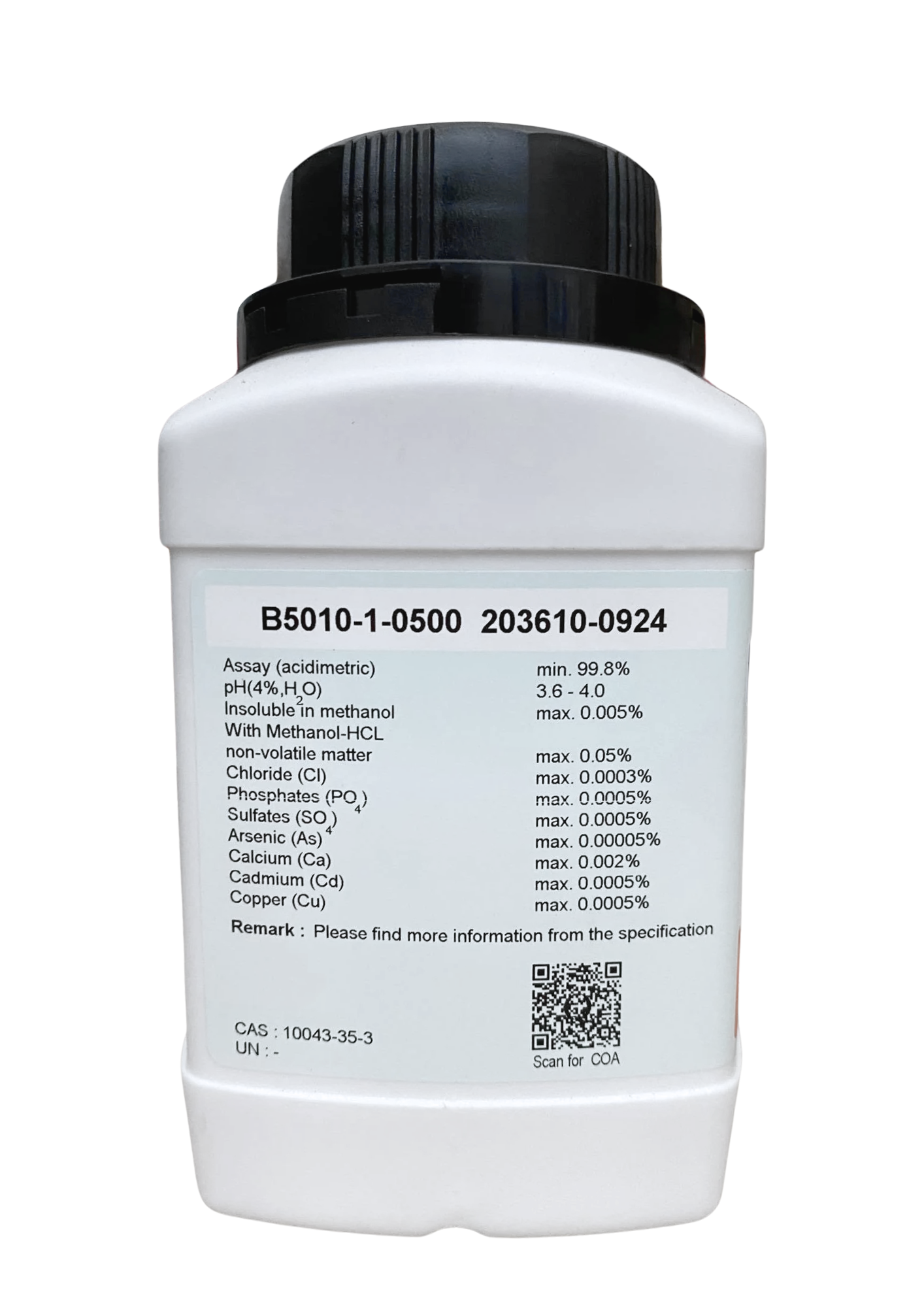
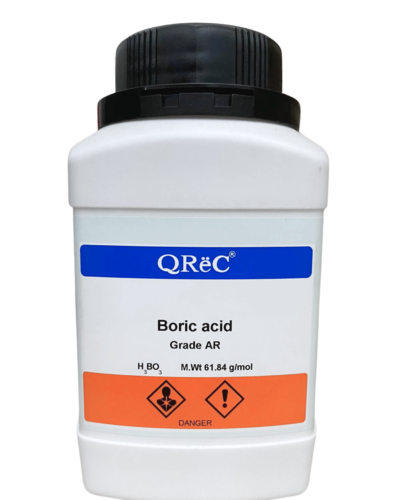
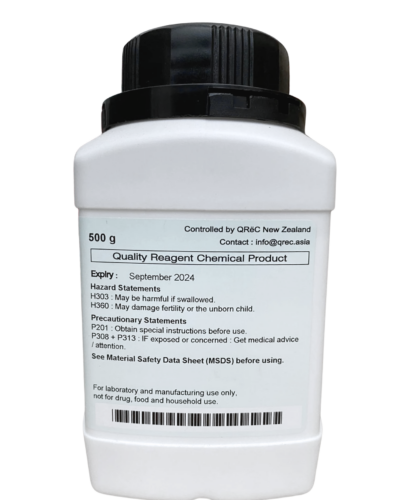
Boric acid 99.8% or Orthoboric acid or Boracic acid
Product Overview & Quality
- Product Name: Boric acid 99.8% or Orthoboric acid or Boracic acid
- Brand: QReC (Product Code: QR-B5010-1-0500)
- Grade: Analytical Reagent (AR Grade) featuring a high certified chemical purity of 99.8 percent or higher. Manufactured and multi-refined under strict QReC global laboratory specifications. Rigorously monitored to maintain ultra-low ppm thresholds of chloride, sulfate, phosphate, water-insoluble matter, calcium, magnesium, and trace heavy metals (such as iron, lead, copper, and arsenic). Conforms to certified DNase and RNase-free criteria, ensuring enzyme-free analytical stability in nucleic acid research. Dry, uniform crystals dissolve cleanly in water, producing clear, precipitate-free solutions. Packaged in a heavy-duty, moisture-barrier polymer container with a secure hermetic seal.
- Physical Properties: White crystalline granules, scaly plates, or fine white crystalline powder. Unctuous or slightly greasy to the touch. Odorless. Stable under atmospheric conditions. Aqueous solutions are weakly acidic (pH approximately 3.8 to 4.8 for a 3.3 percent aqueous solution). Non-combustible and non-corrosive.
- Solubility: Moderately soluble in water at ambient temperature (approximately 4.7 grams per 100 milliliters at 20 degrees Celsius; solubility escalates substantially in boiling water up to approximately 27 grams); freely soluble in ethanol, glycerol, and glycols; insoluble in diethyl ether.
- Key Use: Heavily utilized as the standard absorbing receiver solution (paired with a mixed indicator) in the Kjeldahl distillation stage for total nitrogen and crude protein determination, binding volatile ammonia into ammonium borate prior to standard acid titration. Extensively applied as a primary buffer component in formulating Tris-Borate-EDTA (TBE buffer) for high-resolution agarose and polyacrylamide gel electrophoresis (PAGE) of DNA and RNA in molecular biology. Widely used to prepare alkaline borate buffer solutions (pH 8.0 to 10.0) for biochemical, chromatographic, and clinical diagnostics. Frequently applied in carbohydrate and polyol analysis due to its specific complexation with cis-diol configurations, and serves as an inorganic neutron absorber and flame retardant in material science research.
Safety & Hazards (Reproductive Toxin & Irritant)
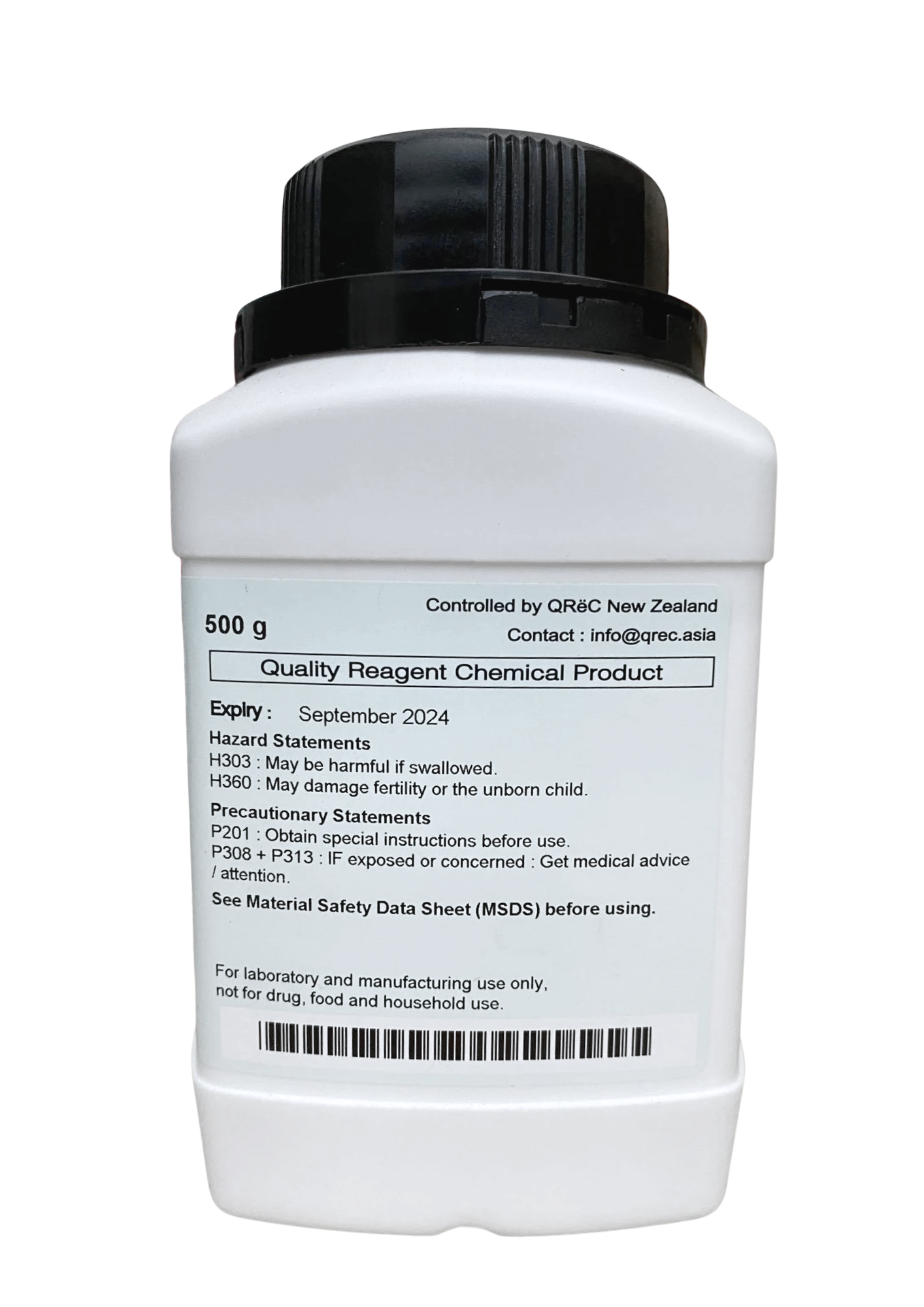
- Classification: May damage fertility or the unborn child. Causes serious eye irritation. Harmful if swallowed in large quantities.
- Health Risks: Direct ocular contact triggers stinging irritation, conjunctival redness, and tearing. Intact skin demonstrates minimal dermal absorption, but damaged, abraded, or burned skin permits rapid, hazardous systemic uptake. Inhalation of particulate dust irritates the mucous membranes of the respiratory tract, causing sneezing, coughing, and dryness. Ingestion of significant amounts produces acute systemic toxicity, manifested by abdominal cramps, nausea, vomiting, diarrhea, characteristic erythematous desquamating skin eruptions (boiled lobster syndrome), lethargy, circulatory collapse, and acute renal failure. Chronic exposure poses serious reproductive toxicity hazards, including impaired fertility and embryonic developmental damage.
- First Aid Measures: Immediately flush affected eyes with abundant running water for at least 15 minutes. Wash exposed skin thoroughly with soap and water. In case of dust inhalation, relocate the individual to fresh air. If accidentally swallowed, thoroughly rinse mouth, drink water, and seek immediate medical attention.
Handling & Storage
- Storage: Regulated Reproductive Toxic Hazard. Must be preserved in its original, tightly closed QReC container. Store in a clean, cool, dry, and well-ventilated dedicated chemical store at controlled temperatures (below 30 degrees Celsius), sheltered from excessive humidity and direct solar radiation. Keep strictly segregated from strong alkalis, strong oxidizing agents, and active metals (such as potassium).
- Precautions: Standard specialized PPE is mandatory, including chemical-resistant nitrile gloves, splash-proof safety goggles, a particulate dust mask, and a protective lab coat. Pregnant or breastfeeding personnel should strictly avoid handling or exposure to this compound. Minimize airborne dust generation during weighing and dispensing.