Calcium dichloride dihydrate or Hydrochloric acid calcium salt dihydrate
Product Overview & Quality
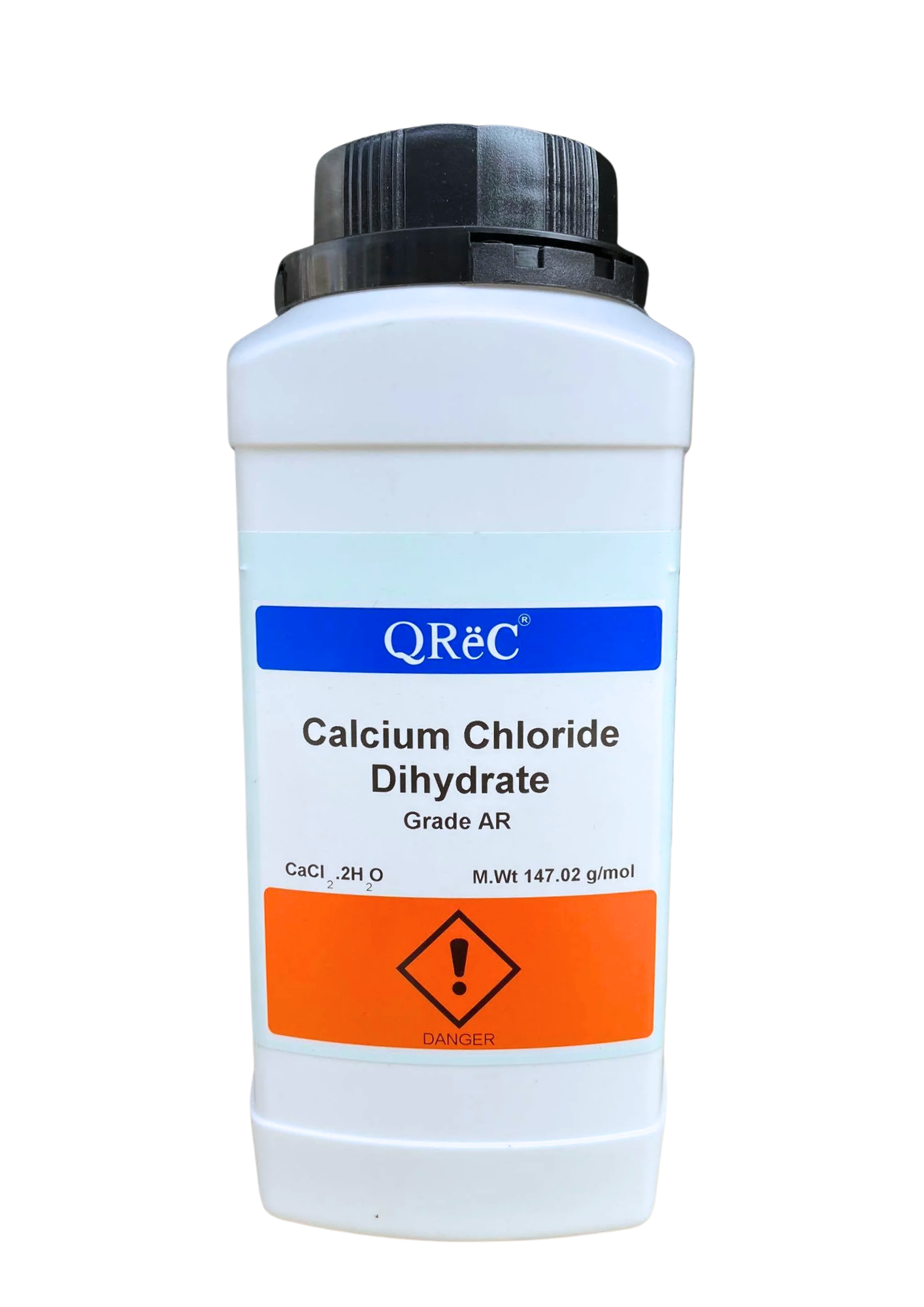
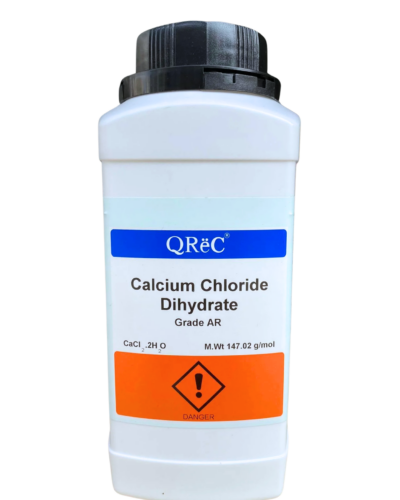
- Product Name: Calcium chloride dihydrate or Calcium dichloride dihydrate or Hydrochloric acid calcium salt dihydrate
- Brand: QReC (Product Code: QR-C1060-1-1000)
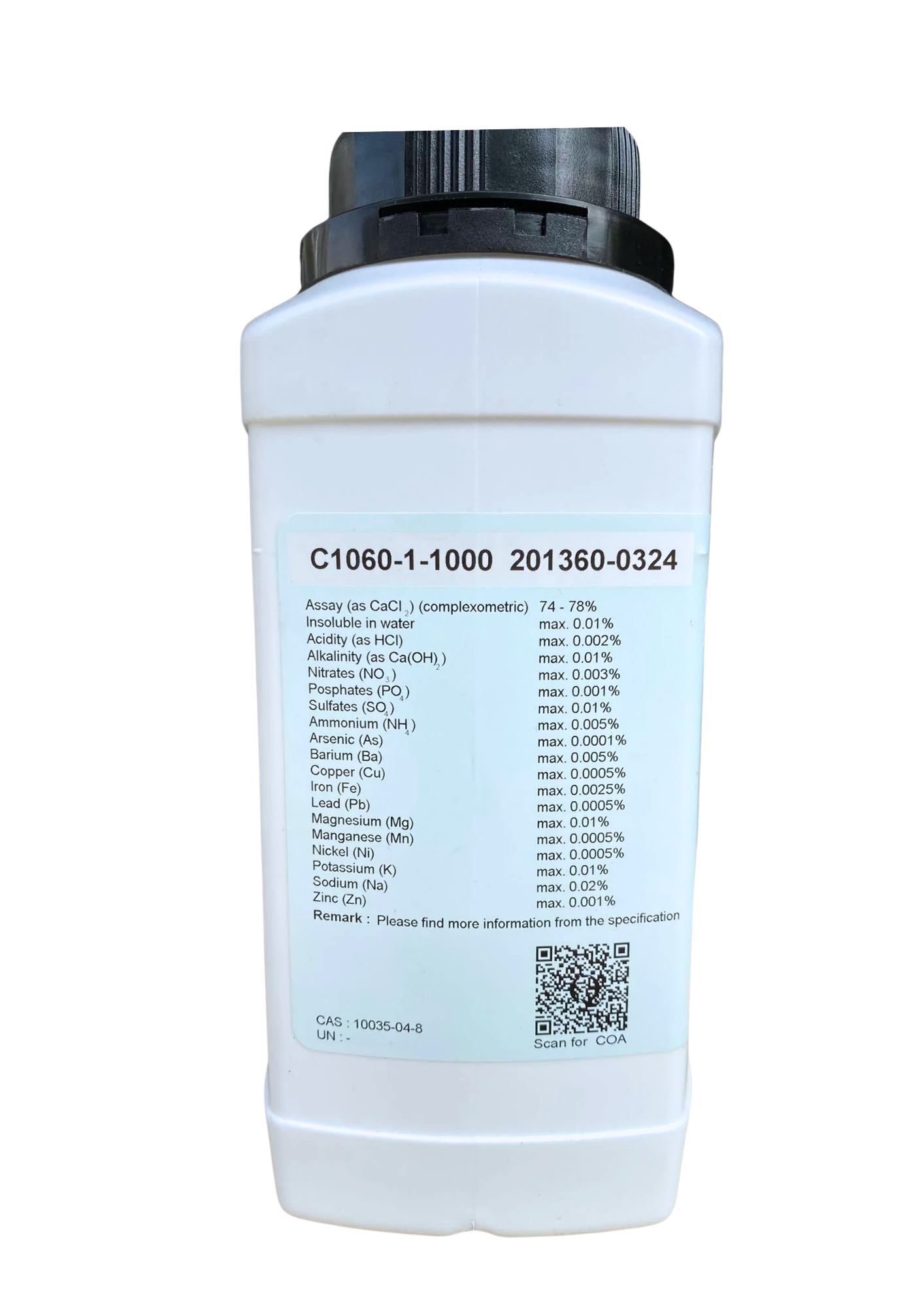
- Grade: Analytical Reagent High Purity Grade (AR Grade) featuring a certified chemical assay of not less than 99.0 percent in a 1,000 g (1 kg) container. Manufactured and multi-crystallized under strict QReC global laboratory specifications without anti-caking conditioning agents, maintaining stoichiometric dihydrate crystalline hydration. Strictly analyzed to enforce minimal water-insoluble matter (strictly below 0.005 percent), alongside ultra-low ppm limits of sulfate, nitrate, phosphate, ammonium, magnesium and alkali metals, and trace heavy metals (such as iron, lead, copper, zinc, barium, and arsenic). Conforms to certified DNase and RNase-free specifications, ensuring biological purity. Dry, uniform white crystals dissolve completely in water to yield crystal-clear, sediment-free solutions. Packaged in a heavy-duty, moisture-barrier polymer container equipped with an airtight hermetic seal to prevent deliquescence.
- Physical Properties: White crystalline granules, flakes, or fine white crystalline powder. Odorless with an astringent, salty-bitter taste. Highly deliquescent under ambient atmospheric conditions, rapidly absorbing moisture from the air to liquefy. Non-combustible inorganic solid. Aqueous solutions are practically neutral to slightly alkaline (pH approximately 4.5 to 8.5 for a 5 percent aqueous solution at room temperature).
- Solubility: Readily and highly soluble in water (approximately 95 to 100 grams per 100 milliliters at 20 degrees Celsius; dissolution in water is an exothermic process that liberates substantial heat); freely soluble in ethanol, methanol, and glycerol; practically insoluble in diethyl ether.
- Key Use: Universally utilized as an indispensable reagent in molecular biology for preparing chemically competent bacterial cells (such as competent Escherichia coli via the standard calcium chloride heat-shock transformation method) to optimize cell wall permeability and plasmid DNA uptake. Heavily applied as a vital, bioavailable source of calcium micronutrient in plant tissue culture media (such as Murashige and Skoog media) and animal cell culture broths to maintain cell membrane integrity and signal transduction. Extensively employed as an ionic crosslinking agent in biotechnology for forming calcium alginate hydrogel beads for cell, enzyme, and drug encapsulation. Serves as an analytical reference standard and hardness calibrant in environmental water quality testing and complexometric titrations. Routinely used as a laboratory desiccant in drying tubes and desiccators.
Safety & Hazards (Serious Eye Irritation & Exothermic Dissolution)
- Classification: Causes serious eye irritation (Eye Irritation Category 2). May cause mild mechanical skin and respiratory tract irritation.
- Health Risks: Direct ocular contact triggers acute burning pain, conjunctival redness, corneal irritation, and profuse lacrimation. Prolonged or repeated dermal contact can cause localized dryness, stinging, or superficial irritation resulting from its hygroscopic and exothermic properties. Inhalation of particulate dust irritates the mucous membranes of the respiratory tract, inducing coughing, sneezing, and throat dryness. Ingestion of substantial quantities provokes acute gastrointestinal irritation, burning oral and epigastric discomfort, abdominal pain, nausea, vomiting, and intense thirst
- First Aid Measures: Immediately flush affected eyes with an abundant stream of clean flowing water for at least 15 minutes while stripping contaminated clothing; remove contact lenses promptly and seek medical attention if irritation persists. Wash exposed skin thoroughly with soap and water. In case of dust inhalation, relocate the individual to fresh air. If accidentally swallowed in substantial amounts, rinse mouth thoroughly, administer water in moderate amounts, and seek prompt medical advice.
Handling & Storage
- Storage: Highly Deliquescent Inorganic Salt. Exposure to ambient humidity induces rapid liquefaction and caking. Must be preserved in its original, tightly closed QReC container. Store in a clean, strictly dry, cool, and well-ventilated dedicated chemical store at controlled temperatures (below 25 to 30 degrees Celsius), sheltered from atmospheric moisture and direct sunlight. Keep strictly segregated from concentrated sulfuric acid (which precipitates insoluble calcium sulfate and releases hydrogen chloride gas), carbonates, phosphates, and bromine trifluoride.
- Precautions: Standard laboratory PPE is mandatory, including protective nitrile gloves, splash-proof safety goggles, and a protective lab coat. “Technical Precaution: Because dissolution is exothermic, add calcium chloride slowly to water with continuous stirring to control thermal buildup.” Re-seal container cap tightly immediately after sampling to prevent atmospheric moisture uptake and degradation. Minimize dust generation during weighing and dispensing.