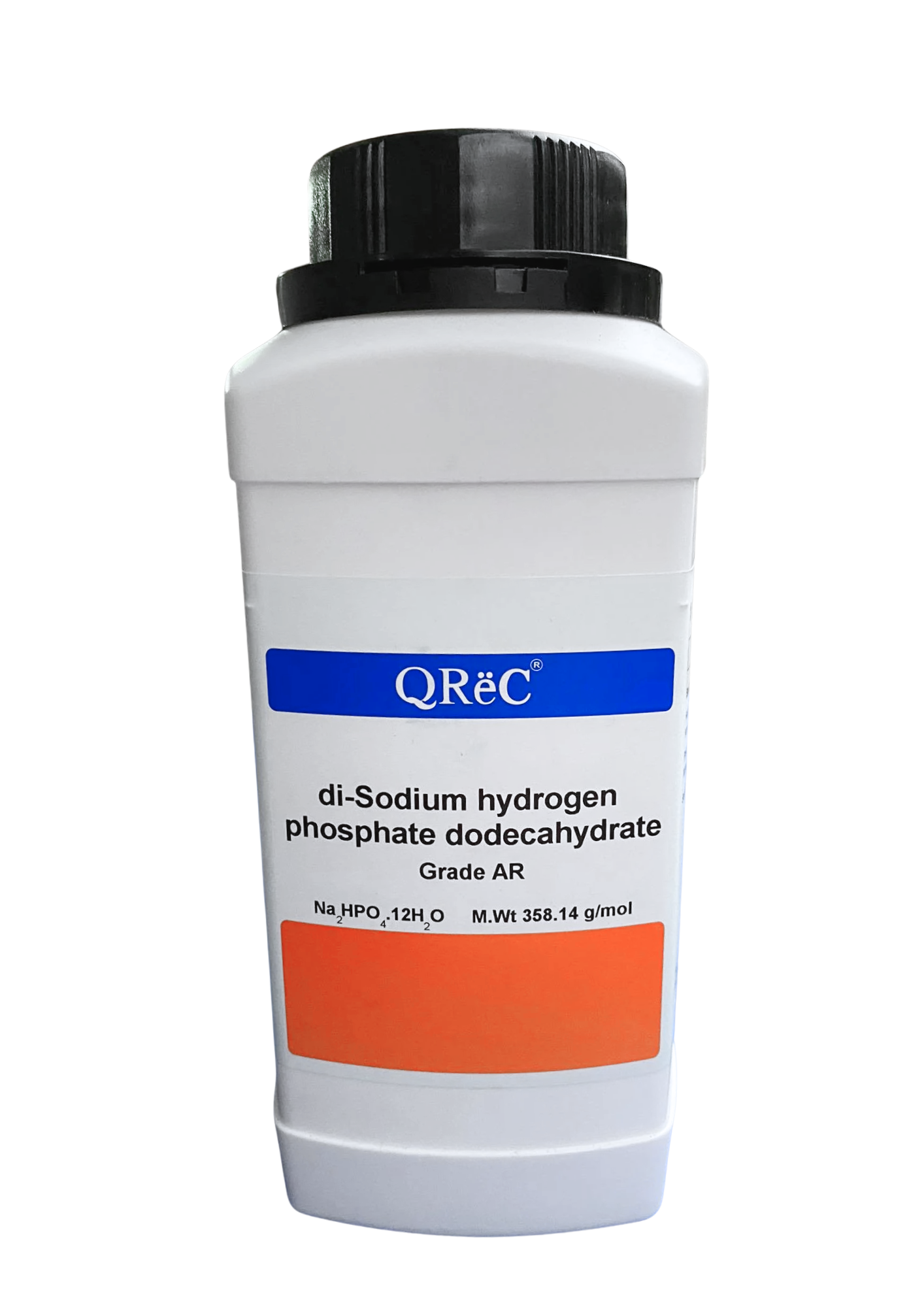

di-Sodium hydrogen phosphate dodecahydrate
Product Overview & Quality
- Product Name: di-Sodium hydrogen phosphate dodecahydrate 99% or Disodium phosphate dodecahydrate (DSP) or Sodium phosphate dibasic dodecahydrate or Disodium hydrogen orthophosphate 12-hydrate
- Brand: QReC (Product Code: QR-D3244-1-1000)
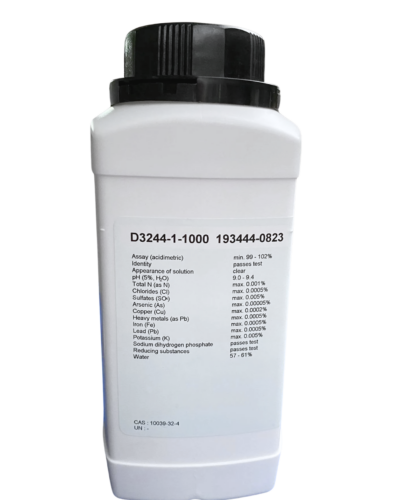
- Grade: Analytical Reagent High Purity Grade (AR Grade) featuring an exceptional certified chemical assay of not less than 99.0 percent in a 1,000 g (1 kg) container. Manufactured and multi-recrystallized under strict QReC global laboratory specifications without anti-caking additives, strictly maintaining stoichiometric dodecahydrate crystalline hydration. Strictly tested to enforce minimal water-insoluble matter (strictly below 0.005 percent), along with ultra-low ppm limits of chloride, sulfate, nitrate, silicate, and trace heavy metals (such as iron, lead, copper, arsenic, zinc, calcium, magnesium, and potassium). Conforms to certified DNase and RNase-free specifications, ensuring biological inertness in nucleic acid and protein biochemistry. Exhibits uniform, dry crystals with low background ultraviolet absorbance at 260 and 280 nanometers, dissolving completely in water to yield crystal-clear, sediment-free, mildly basic solutions. Packaged in a heavy-duty, moisture-barrier polymer container equipped with a hermetic seal.
- Physical Properties: Colorless translucent crystals, crystalline aggregates, or fine white crystalline powder. Odorless with a cooling, saline-alkaline taste. Efflorescent in dry ambient air, readily losing water of crystallization to develop a white surface crust. Low melting point (approximately 34 to 35 degrees Celsius, readily liquefying in its own water of crystallization in warm ambient environments). Non-combustible and non-corrosive solid. Aqueous solutions are mildly basic (pH approximately 9.0 to 9.3 for a 5 percent aqueous solution at room temperature).
- Solubility: Readily and highly soluble in water (approximately 21 to 22 grams per 100 milliliters at 20 degrees Celsius; solubility escalates dramatically with temperature, exceeding 100 grams per 100 milliliters in hot water above 80 degrees Celsius); practically insoluble in ethanol.
- Key Use: Universally utilized as the primary alkaline buffer component paired with sodium dihydrogen phosphate to prepare physiological Phosphate Buffered Saline (PBS) and sodium phosphate buffer systems (pH 6.8 to 7.4) for cell culture, molecular biology, immunology, and protein extraction workflows. Extensively applied as a mobile phase buffer modifier in High-Performance Liquid Chromatography (HPLC) to stabilize solute ionization, optimize retention times, and enhance chromatographic peak symmetry. Heavily employed in protein and enzyme purification protocols, crystallographic studies, and diagnostic reagent compounding. Widely used in formulating primary standard buffer solutions for laboratory pH meter calibration and clinical biochemical testing.
Safety & Hazard
- Classification: Non-hazardous substance under standard GHS criteria in routine laboratory usage. Exceptionally low acute toxicity profile; particulate dust may exert mild mechanical irritation to ocular, dermal, and respiratory surfaces.
- Health Risks: Direct eye contact may cause transient mechanical stinging, conjunctival redness, or lacrimation. Prolonged dermal contact may produce mild dryness or superficial irritation. Inhalation of particulate dust can cause minor sneezing, coughing, or upper respiratory discomfort. Ingestion of excessive quantities may provoke transient gastrointestinal upset, abdominal cramps, nausea, vomiting, or osmotic laxative effects characteristic of concentrated sodium and phosphate salts.
- First Aid Measures: Flush affected eyes thoroughly with clean running water for at least 10 to 15 minutes. Wash exposed skin with soap and water. In case of dust inhalation, relocate the individual to fresh air. If accidentally swallowed in substantial amounts, rinse mouth thoroughly, drink water, and seek medical advice if discomfort persists.
Handling & Storage
- Storage: Efflorescent, Highly Hydrated, and Low-Melting Salt. Ambient storage temperatures exceeding 30 degrees Celsius induce liquefaction within the container, while desiccated environments cause loss of crystalline water. Must be preserved in its original, tightly closed QReC container. Store in a clean, strictly dry, cool, and well-ventilated dedicated chemical store at controlled temperatures (preferably between 15 and 20 degrees Celsius, strictly below 25 degrees Celsius), sheltered from atmospheric humidity and direct sunlight. Keep strictly segregated from concentrated mineral acids (which induce exothermic neutralization) and strong oxidizing agents.
- Precautions: Standard laboratory PPE is mandatory, including protective gloves, safety glasses, and a protective lab coat. Re-seal container cap tightly immediately after sampling to prevent efflorescent dehydration or moisture uptake. Minimize dust generation during weighing and dispensing.