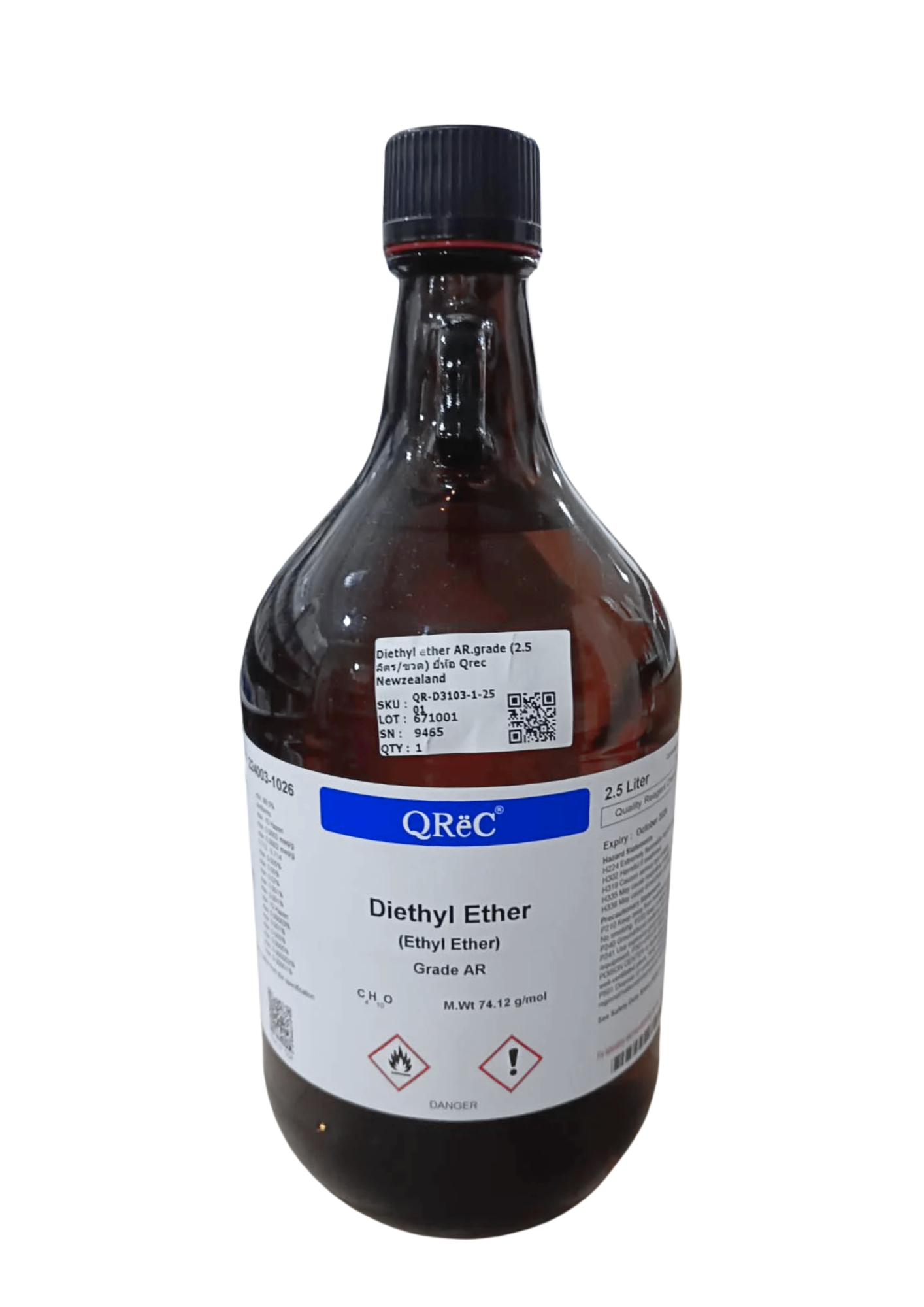
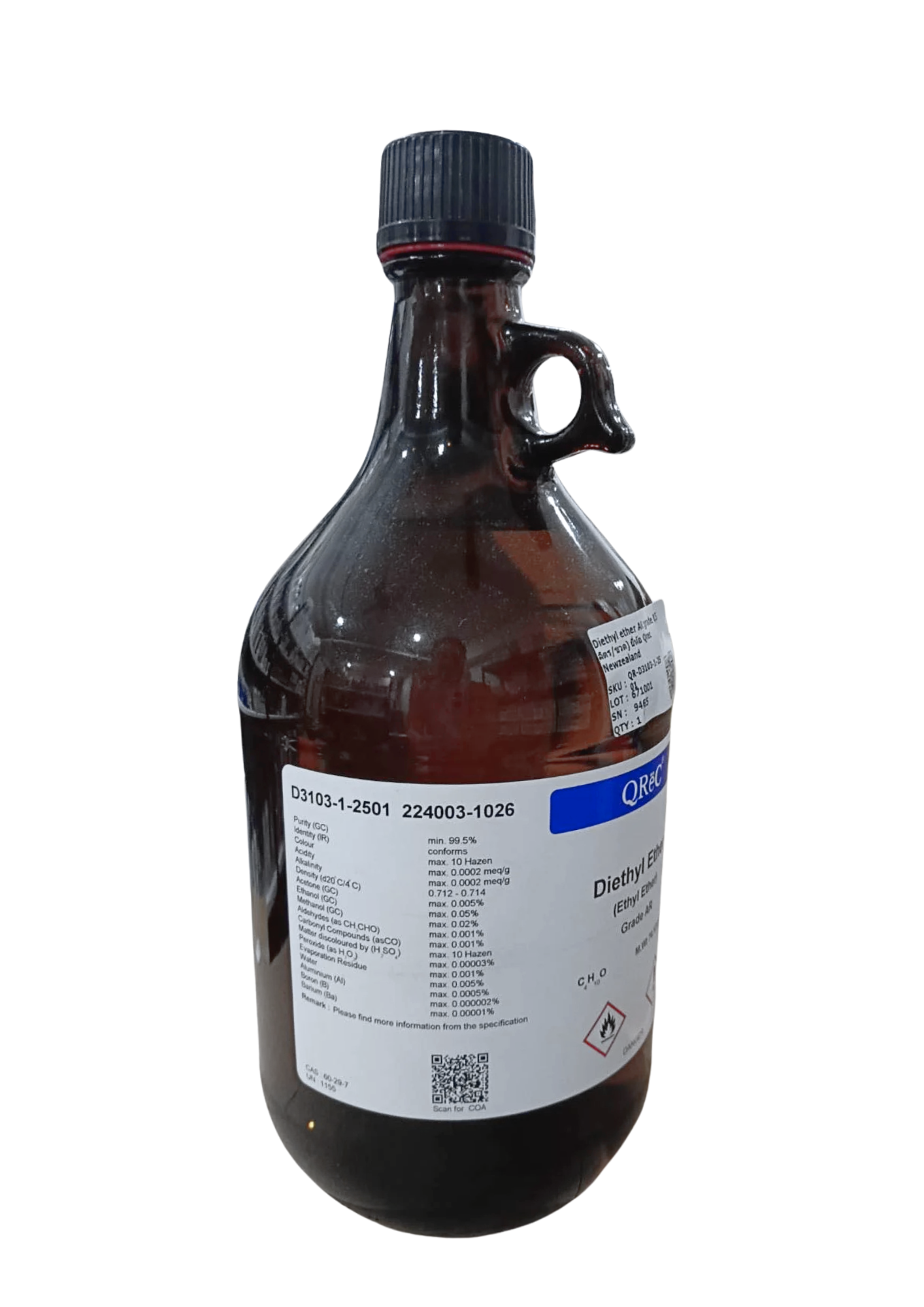
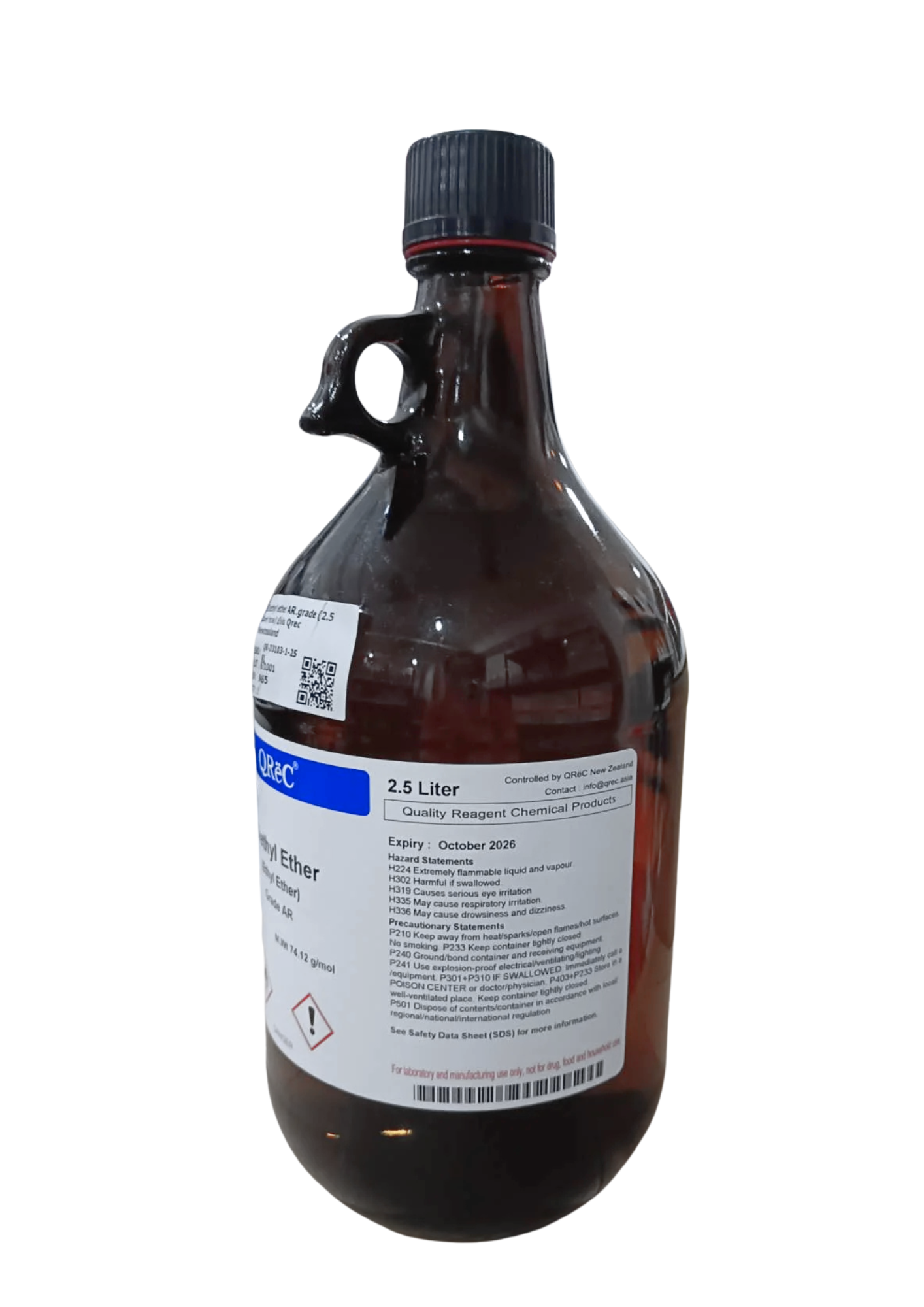
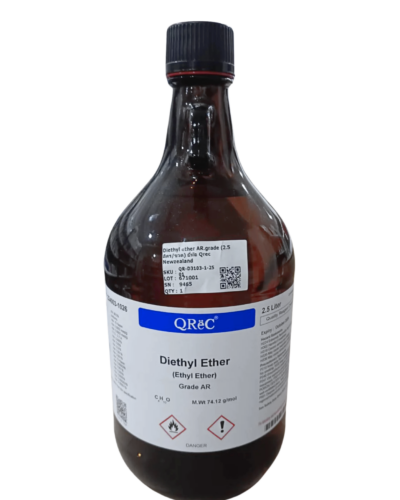
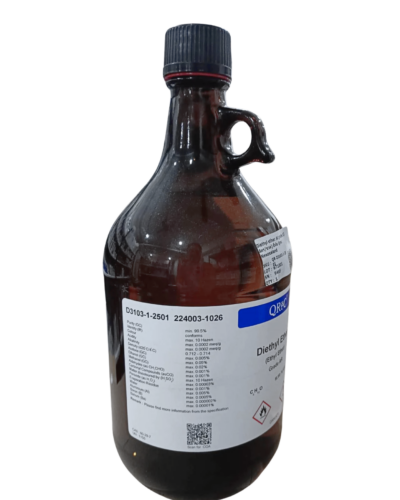
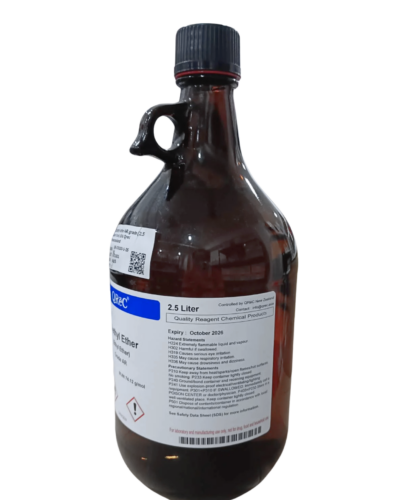
Diethyl ether 99.5% or Ethyl ether or Ether or Ethoxyethane
Product Overview & Quality
- Product Name: Diethyl ether 99.5% or Ethyl ether or Ether or Ethoxyethane
- Brand: QReC (Product Code: QR-D3103-1-2501)
- Grade: Analytical Reagent (AR Grade) featuring an exceptional certified chemical purity of 99.5 percent or higher. Produced and distilled under strict QReC global laboratory specifications. Rigorously analyzed to enforce ultra-low ppm thresholds of non-volatile residue (strictly within 0.001 to 0.002 percent), moisture content, free acidity, ethanol, carbonyl compounds (aldehydes), and trace heavy metals. Stabilized with a tightly measured quantity of antioxidant inhibitor (such as BHT) to inhibit the autoxidation pathway that generates shock-sensitive explosive peroxides. This pure ether profile prevents analytical interference and leaves zero greasy film upon solvent evaporation. Packaged in a heavy-duty amber glass bottle for maximum chemical integrity, static mitigation, and light protection.
- Physical Properties: Clear, colorless, highly mobile, volatile liquid with a characteristic sweet, pungent, anesthetic odor. Exhibits a very low boiling point (approximately 34.6 degrees Celsius). Extremely flammable liquid and vapor with an exceedingly low flash point (down to minus 45 degrees Celsius); vapors are approximately 2.5 times denser than air, flowing across workbenches and floor levels toward distant ignition points.
- Solubility: Moderately soluble in water (approximately 6 to 7 grams per 100 milliliters at ambient temperature); completely miscible in all proportions with common organic solvents including ethanol, methanol, benzene, toluene, chloroform, and petroleum ether; extraordinary solvency for non-polar lipids, oils, resins, waxes, and alkaloids.
- Key Use: Heavily utilized as the classic primary solvent in liquid-liquid extractions for isolating organic natural products, volatile plant metabolites, fatty acids, and active pharmaceutical residues from aqueous matrices. Universally employed as the extraction solvent of choice in Soxhlet apparatus systems for crude fat determination in food, grain, and animal feed analysis. Extensively applied as an anhydrous reaction medium for organometallic transformations, notably the preparation and reactions of Grignard reagents and lithium aluminum hydride reductions, where the ether oxygen stabilizes the intermediate magnesium or metal centers. Widely used for low-temperature recrystallization of sensitive organic compounds and serves as a humane anesthetic agent in biological animal models.
Safety & Hazards (Critical, Extremely Flammable, Explosive Peroxides & Narcotic)
- Classification: Extremely flammable liquid and vapor. May form explosive peroxides. Harmful if swallowed. May cause drowsiness or dizziness. Repeated exposure may cause skin dryness or cracking.
- Health Risks: Direct eye contact triggers sharp stinging irritation, conjunctival erythema, and lacrimation. Dermal exposure aggressively defats the epidermis, producing dryness, cracking, and contact dermatitis. Inhalation of concentrated vapors depresses the central nervous system, inducing headaches, dizziness, nausea, intoxication, loss of consciousness, or respiratory arrest due to profound anesthesia. Ingestion produces burning sensations in the mouth, pharynx, and esophagus, severe gastric distress, and acute central nervous system depression.
- Explosion Hazard: Prolonged exposure to atmospheric oxygen and ambient light initiates autoxidation to form highly explosive, shock– and friction-sensitive diethyl ether peroxides. Evaporating, concentrating, or distilling diethyl ether to dryness creates immediate, catastrophic explosion hazards.
- First Aid Measures: Immediately flush affected eyes or skin with an abundant stream of clean flowing water for at least 15 minutes while stripping contaminated clothing. In case of inhalation, rapidly relocate the victim to fresh air; provide artificial respiration if breathing is compromised. If accidentally swallowed, thoroughly rinse mouth, drink water, and seek immediate, urgent emergency medical attention.
Handling & Storage
- Storage: Extremely Flammable, Low-Boiling, and Peroxide-Forming Solvent. Low boiling point (around 34.6 degrees Celsius) generates significant internal vapor pressure under warm room conditions. Must be preserved in its original, tightly sealed QReC amber glass bottle inside an approved flammable liquid safety cabinet. Store in a cool, dry, dark, and excellently ventilated dedicated storage area at controlled temperatures (preferably between 15 and 20 degrees Celsius, strictly not exceeding 25 degrees Celsius). Keep strictly segregated from open flames, sparks, hot surfaces, static electricity, direct sunlight, strong mineral acids, and strong oxidizing agents. “Never distill to complete dryness; routinely verify peroxide concentrations using analytical peroxide test strips before applying heat.”
- Precautions: Standard specialized PPE is mandatory, including solvent-resistant gloves (fluorocarbon/Viton or multi-layer barrier laminates, as standard thin nitrile offers very short breakthrough times), splash-proof safety goggles, and an anti-static protective lab coat. Handle, dispense, and extract exclusively and strictly within a certified, properly functioning laboratory fume hood. Ground and bond apparatus during transfers to eliminate static discharge risks.