Methanoic acid or Formic acid (ant acid) or Hydrogencarboxylic acid
Product Overview & Quality
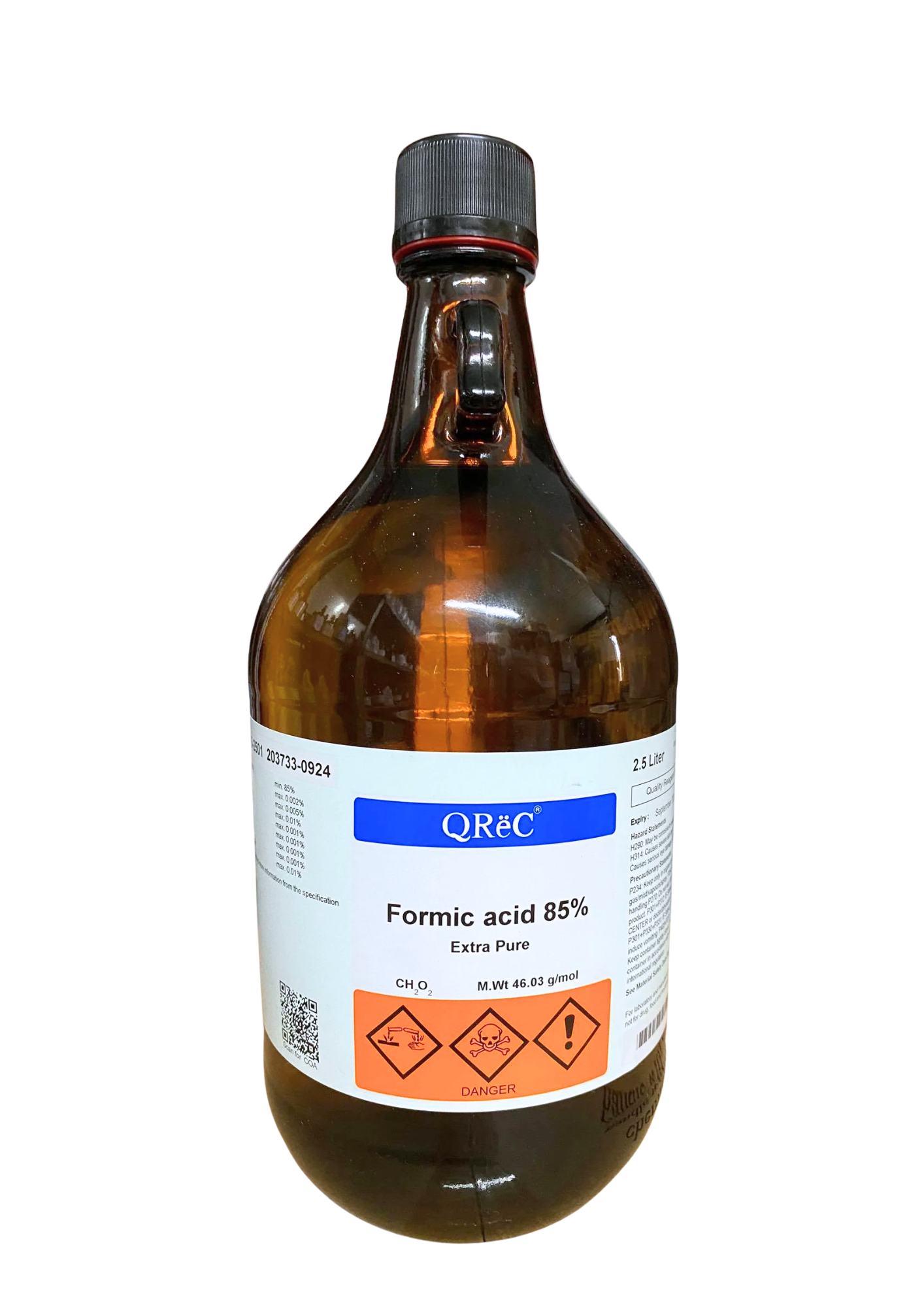
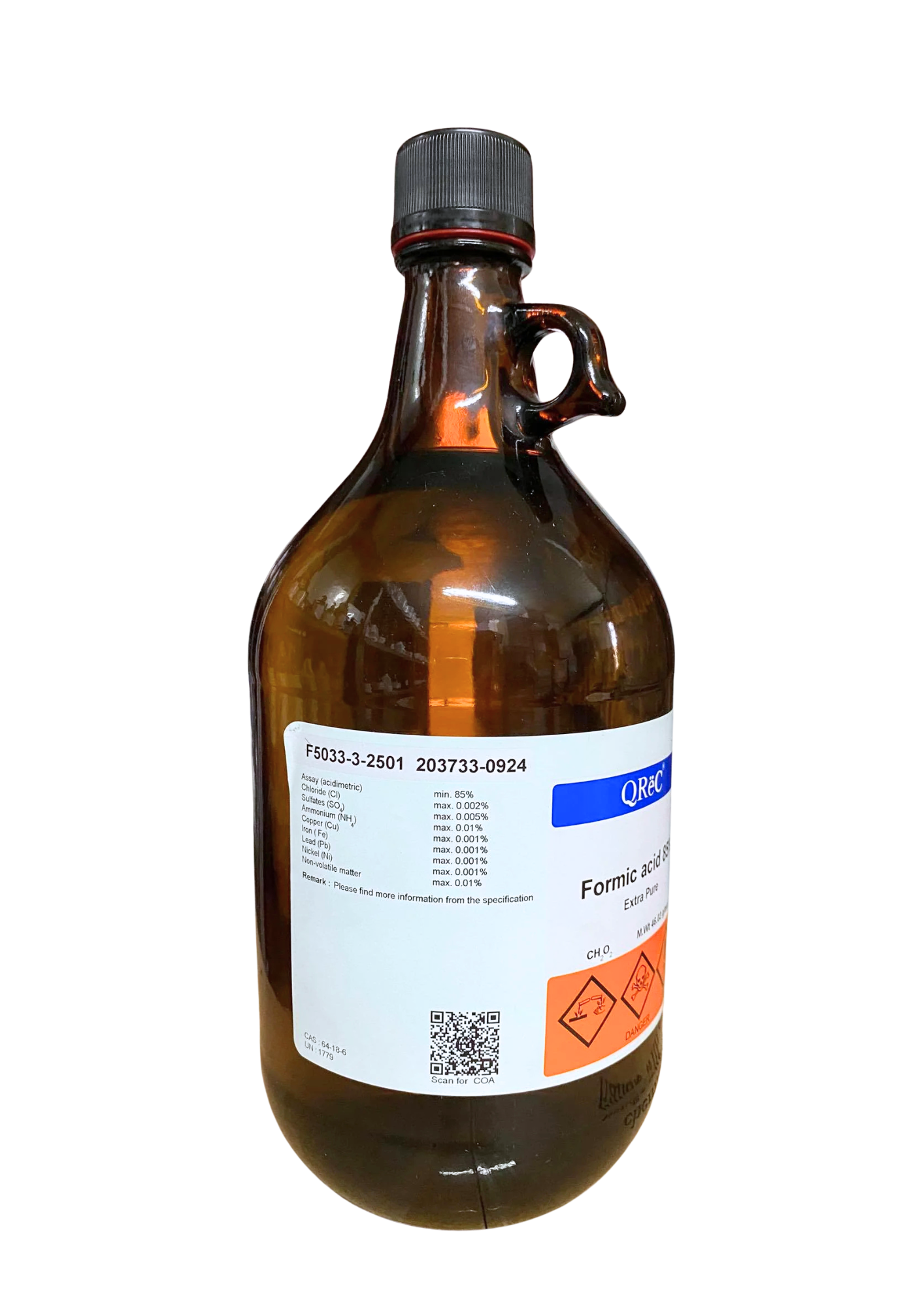
- Product Name: Formic acid 85% extra pure or Methanoic acid or Formylic acid or Hydrogen carboxylic acid or Aminic acid
- Brand: QReC (Product Code: QR-F5033-3-2501)
- Grade: Extra Pure Grade featuring a certified active assay of not less than 85.0 percent w/w in a 2,500 mL (2.5 L) Winchester amber glass container. Distilled, purified, and stabilized under strict QReC global laboratory specifications to ensure low trace contamination and batch uniformity. Non-volatile evaporation residue is strictly maintained below 0.005 percent, alongside minimal limits for chloride, sulfate, and iron. Trace heavy metals (such as lead, copper, zinc, and arsenic) are controlled at parts-per-million levels. Clear, colorless, particulate-free acidic liquid packaged in a heavy-duty, acid-resistant amber glass bottle fitted with a vented safety closure designed to prevent internal pressure accumulation.
- Physical Properties: Clear, colorless, fuming, volatile liquid. Pungent, penetrating, suffocating acidic odor characteristic of stinging ants. Boiling point is approximately 100 to 101 degrees Celsius. Freezing point is approximately minus 5 to minus 1 degrees Celsius. Flash point is approximately 65 degrees Celsius. Classified as a combustible and severely corrosive liquid (Skin Corrosion Category 1B). Strongly acidic in aqueous solution (pH below 2.0). Exhibits unique reducing properties among simple carboxylic acids due to the terminal formyl hydrogen atom.
- Solubility: Fully miscible with water in all proportions with liberation of heat; completely miscible with polar organic solvents, including ethanol, methanol, diethyl ether, glycerol, and acetone.
- Key Use: Universally utilized as an essential mobile phase modifier and volatile pH regulator in High-Performance Liquid Chromatography (HPLC) and liquid chromatography-mass spectrometry (LC-MS) workflows, where it suppresses peak tailing and optimizes ionization efficiency for basic peptides, small molecules, and biomacromolecules. Extensively applied as a selective chemical cleavage reagent in proteomics and biochemistry for hydrolyzing specific peptide bonds (such as aspartyl-prolyl linkages). Heavily employed as an acidic catalyst and formylating reagent in synthetic organic transformations, esterifications, and pharmaceutical synthesis. Serves as a standard coagulating agent for natural rubber latex processing and biological protein precipitation assays. Widely used as a descaling and de-rusting cleaning agent in specialized industrial and analytical research systems.
Safety & Hazards (Severe Skin Burns, Serious Eye Damage, Toxic if Inhaled & Combustible)
- Classification: Causes severe skin burns and eye damage (Skin Corrosion Category 1B / Serious Eye Damage Category 1). Toxic if inhaled (Acute Toxicity Inhalation Category 3). Harmful if swallowed (Acute Toxicity Oral Category 4). Flammable/combustible liquid (Category 3/4).
- Health Risks: Direct ocular contact causes instantaneous and catastrophic chemical burns, severe corneal opacity, ulceration, and irreversible blindness. Dermal contact rapidly induces severe full-thickness chemical burns, painful blistering, necrotic eschars, and deep tissue ulceration. Inhalation of concentrated vapors aggressively attacks the mucous membranes of the respiratory tract, causing intense burning of the nose and throat, coughing, choking, laryngeal spasms, chemical bronchitis, and potentially life-threatening pulmonary edema. Ingestion causes acute necrotic destruction and perforation of the oral cavity, pharynx, esophagus, and stomach, accompanied by violent epigastric pain, hematemesis, hypovolemic shock, and metabolic acidosis.
- First Aid Measures: Immediately flush affected eyes with an abundant stream of clean flowing water for at least 15 to 20 minutes while stripping contaminated clothing; remove contact lenses promptly and seek immediate emergency ophthalmological care. Wash exposed skin with copious amounts of running water for at least 15 minutes; treat chemical burns promptly. In case of vapor inhalation, rapidly relocate the victim to fresh air; maintain rest and warmth, and transport to an emergency medical facility immediately. If accidentally swallowed, do NOT induce vomiting due to perforation hazard; thoroughly rinse mouth with water, administer small amounts of fresh water to dilute, and transport to an emergency medical facility immediately.
Handling & Storage
- Storage: Severe Corrosive Liquid with Carbon Monoxide Pressure Hazard. Formic acid slowly undergoes spontaneous room-temperature decomposition into carbon monoxide gas and water, which can build hazardous pressure inside sealed bottles. Must be preserved in its original, tightly closed QReC amber glass bottle fitted with a pressure-relief safety cap. Store in an approved dedicated acid/corrosives safety cabinet within a clean, cool, dry, and well-ventilated dedicated chemical store at controlled temperatures (below 20 to 25 degrees Celsius), sheltered from direct sunlight and heat sources. Keep strictly segregated from strong oxidizing agents (such as nitric acid, perchlorates, and hydrogen peroxide), concentrated sulfuric acid (which violently catalyses dehydration into toxic carbon monoxide gas), strong alkalis, and active metal powders.
- Precautions: Full specialized chemical PPE is mandatory, including heavy acid-resistant gloves (neoprene or butyl rubber), splash-proof safety goggles combined with a full-face shield, an acid-gas respirator, and a chemical apron. “Mandatory Protocol: Transfer, dispense, and handle concentrated formic acid exclusively and strictly within a certified, properly functioning laboratory fume hood. Always loosen the bottle cap slowly to vent any accumulated carbon monoxide pressure before completely removing the closure.” Always add acid to water, never water to acid. Collect and neutralize acidic waste streams prior to hazardous chemical disposal.