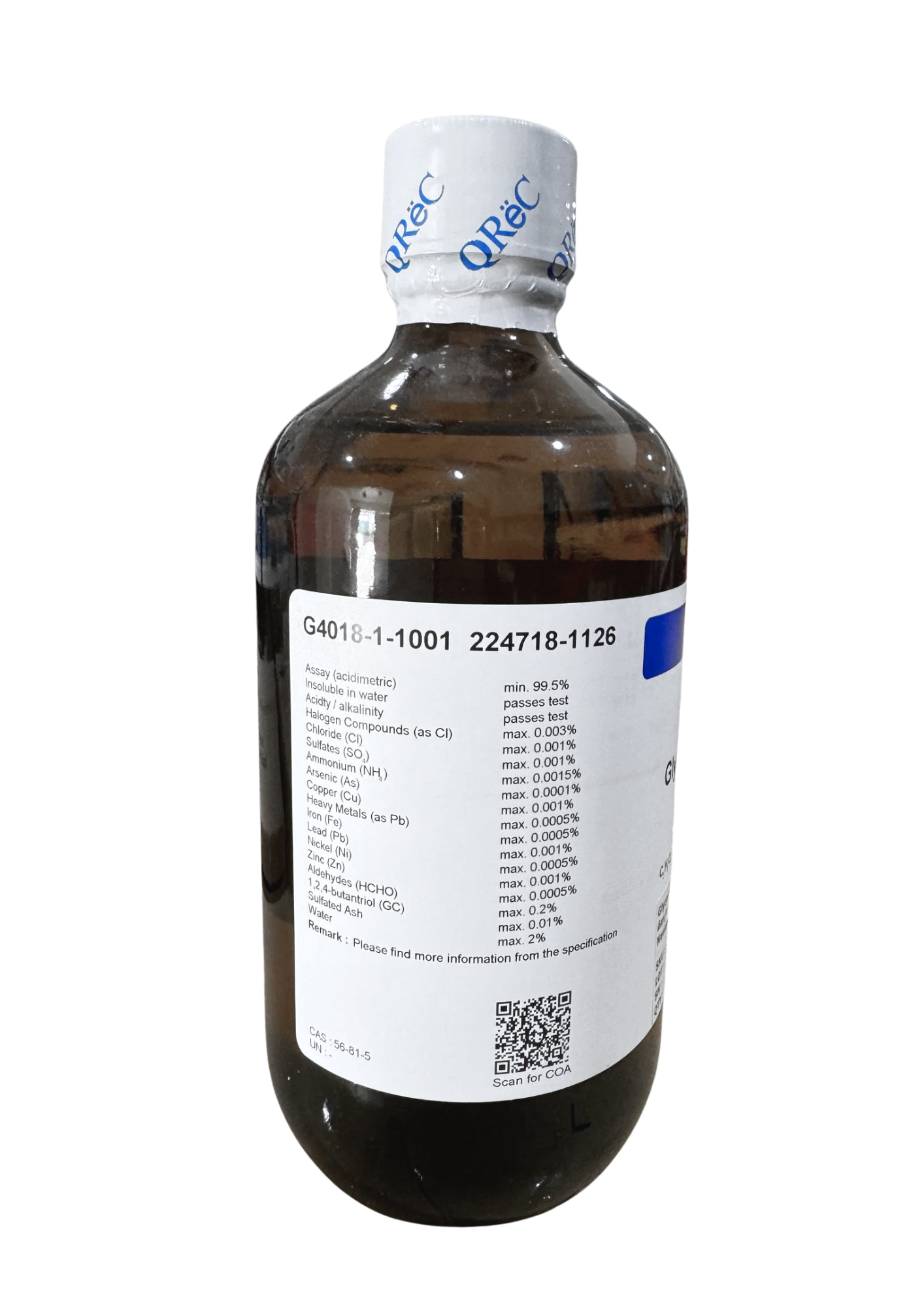
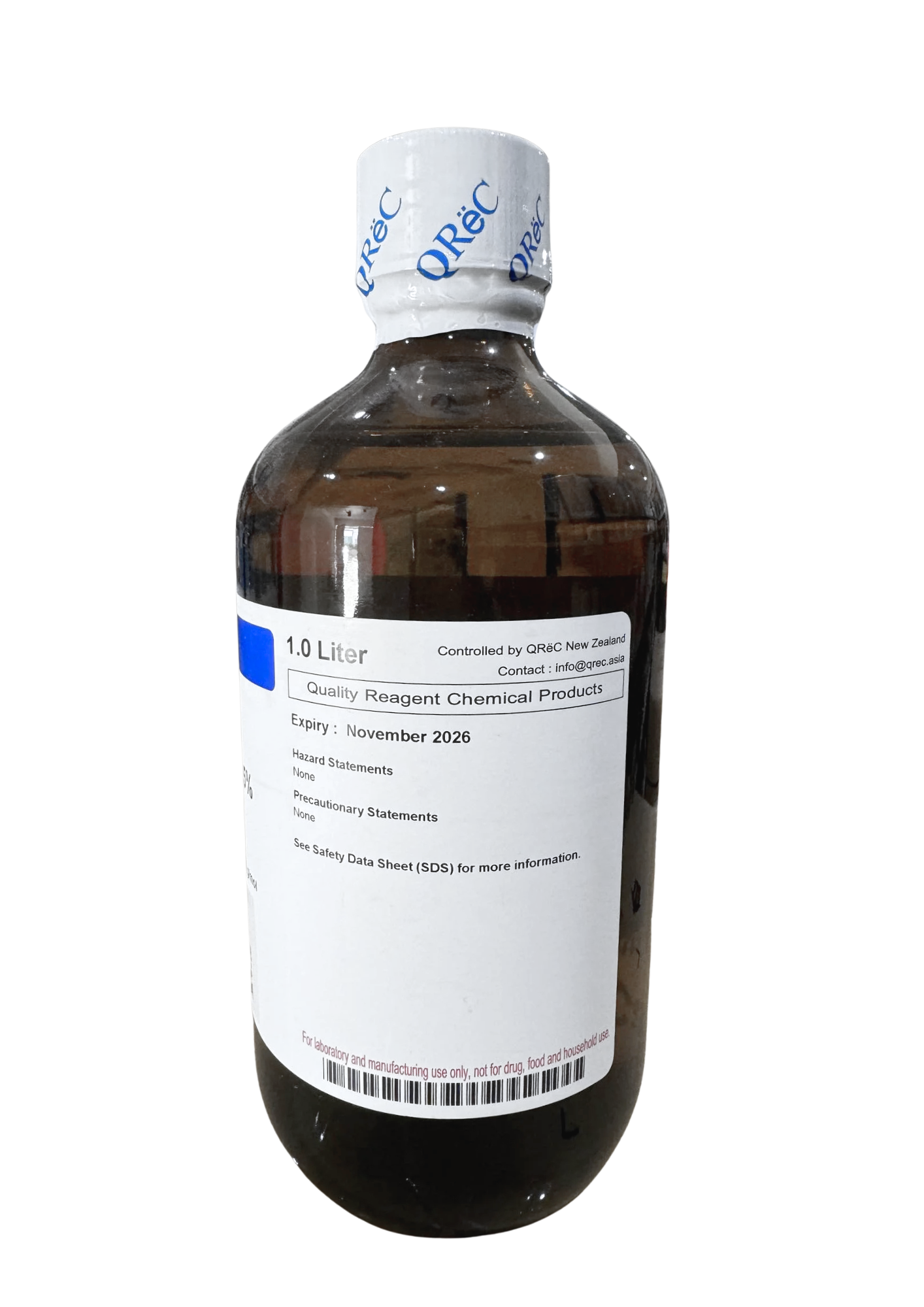
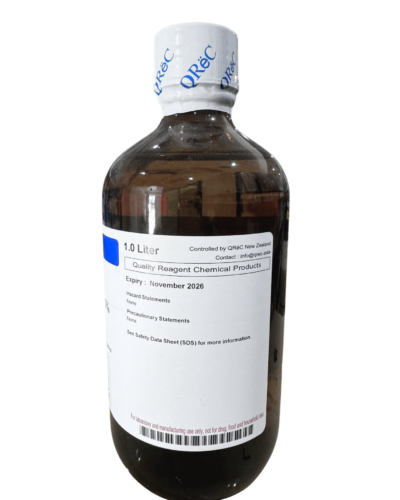
Glycerol 99.5% or Glycerin or Glycerine or Propane-1,2,3-triol
Product Overview & Quality
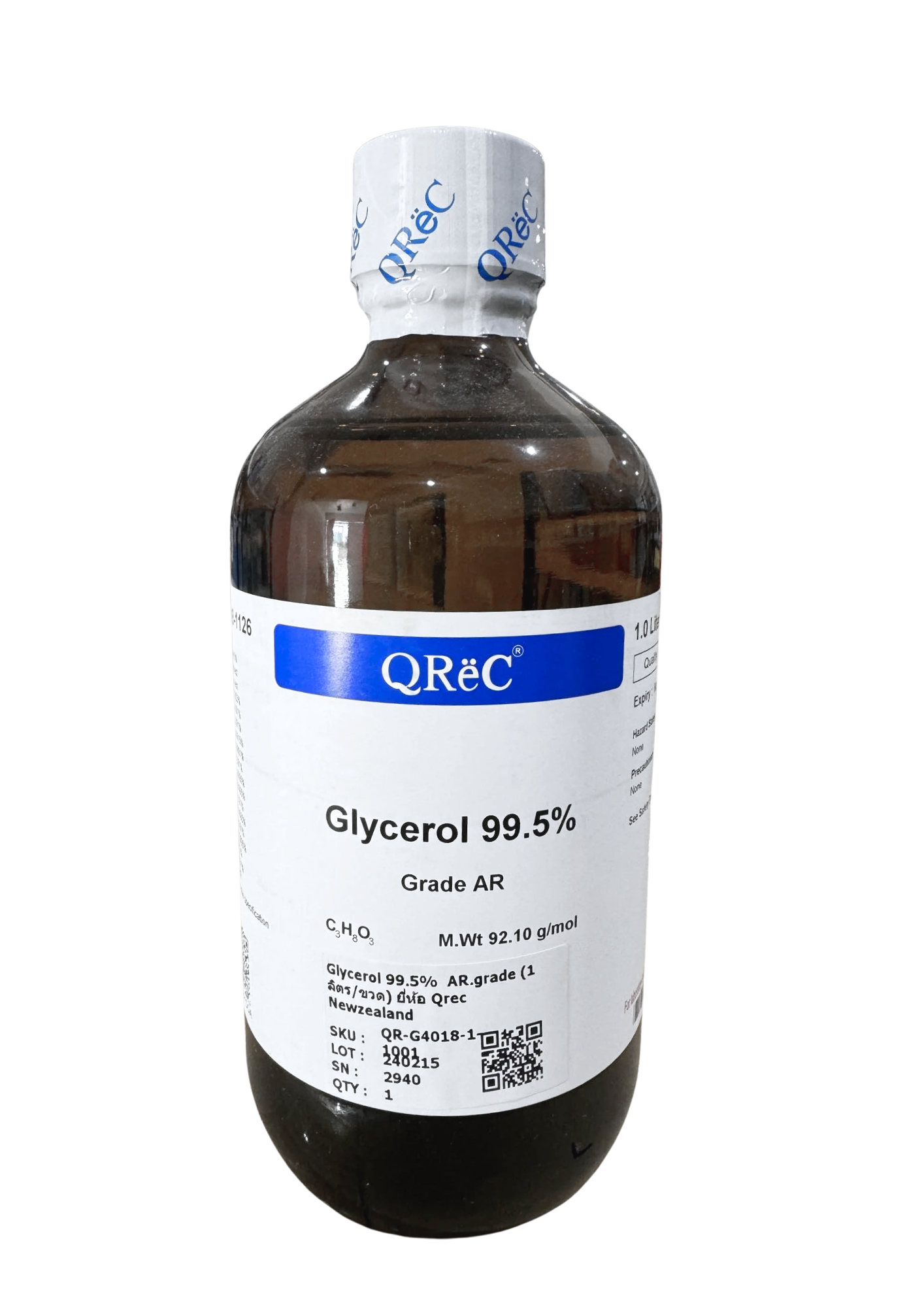
- Product Name: Glycerol 99.5% or Glycerin or Glycerine or Propane-1,2,3-triol
- Brand: QReC (Product Code: QR-G4018-1-1001)
- Grade: Analytical Reagent (AR Grade) featuring an exceptional certified chemical purity of 99.5 percent or higher. Produced and quality-verified under strict QReC global laboratory standards. Rigorously controlled to maintain ultra-low ppm thresholds of water content, sulfated ash, free acids, free alkalis, chlorinated compounds, reducing sugars, and heavy metals (such as lead, iron, and arsenic). Certified free from DNase, RNase, and protease contaminants, making it exceptionally reliable for maintaining biomolecular integrity. Packaged in a heavy-duty amber glass bottle for light protection, container durability, and prevention of atmospheric moisture absorption.
- Physical Properties: Clear, colorless, highly viscous, syrupy liquid. Odorless with a mild, characteristic sweet taste. Highly hygroscopic under ambient atmospheric exposure; high boiling and flash points, non-flammable at room temperature.
- Solubility: Completely miscible in all proportions with water and lower alcohols (including ethanol and methanol); insoluble in diethyl ether, benzene, chloroform, petroleum ether, and fixed or volatile oils.
- Key Use: Extensively used as a primary cryoprotectant agent in molecular biology and microbiology for long-term frozen cell storage (bacterial, yeast, and mammalian glycerol stocks at minus 20 and minus 80 degrees Celsius), preventing fatal intracellular ice crystal puncture. Heavily applied as a dense weighting agent in sample loading buffers for agarose and SDS-PAGE gel electrophoresis, ensuring samples sink cleanly into gel wells. Serves as a vital enzyme stabilizer for storing restriction enzymes, polymerases, and sensitive proteins. Widely used as a humectant, viscosity modifier, and solvent matrix in pharmaceutical, cosmetic, and food formulations, and functions as a stable thermal transfer fluid in laboratory heating baths.
Safety & Hazards
- Classification: Non-hazardous substance under standard GHS criteria. Exhibits extremely low systemic acute toxicity and represents a safe chemical profile under normal laboratory handling conditions.
- Health Risks: Direct eye contact may cause mild transient stinging, redness, and mechanical irritation. Dermal exposure causes a sticky film sensation and may induce localized skin dryness in low-humidity environments due to strong water-binding properties. Inhalation of mists or thermal degradation fumes causes mild respiratory tract discomfort. Ingestion of very large quantities may produce mild gastrointestinal distress, headaches, nausea, or osmotic diarrhea.
- First Aid Measures: Rinse eyes or affected skin with ample running water for several minutes. If accidental ingestion of large amounts occurs, rinse mouth and drink water. Seek medical advice if irritation or discomfort persists.
Handling & Storage
- Storage: Highly Hygroscopic Liquid Formulation. Readily absorbs atmospheric moisture upon open air contact, resulting in decreased nominal assay concentration and reduced solution viscosity. Must be preserved in its original, tightly closed QReC amber glass container. Store in a clean, cool, strictly dry, and well-ventilated dedicated chemical area at stable room temperature (below 30 degrees Celsius), protected from direct solar radiation and excessive humidity. Keep strictly segregated from strong oxidizing agents (such as potassium permanganate, concentrated nitric acid, and chromium trioxide) as violent exothermic reactions or spontaneous combustion can occur upon contact.
- Precautions: Standard laboratory PPE is recommended, including chemical-resistant disposable gloves, protective safety glasses, and a lab coat. Wipe up spills immediately, as viscous residues present severe physical slip and fall hazards. Replace and tighten container caps securely immediately after dispensing.