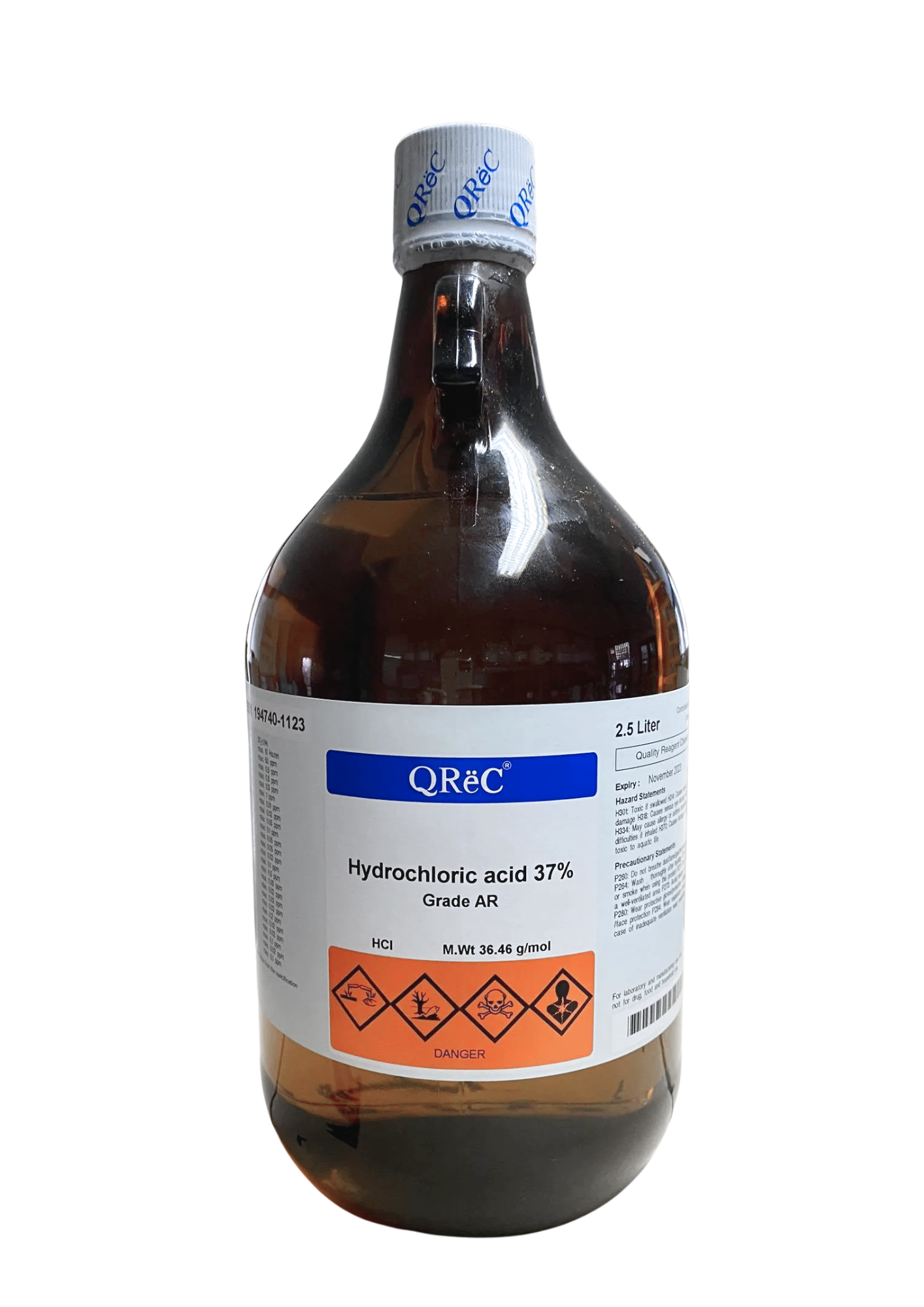
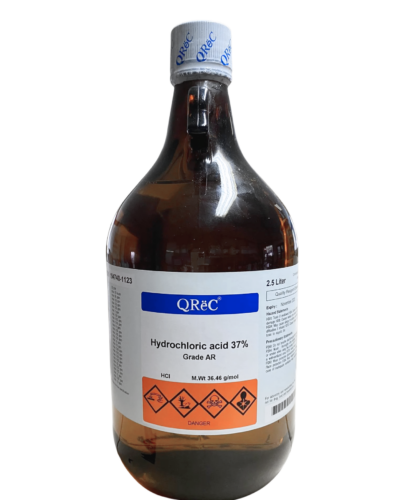
Hydrochloric acid 37% AR.grade or Concentrated hydrochloric acid or Muriatic acid or Aqueous hydrogen chloride
Product Overview & Quality
- Product Name: Hydrochloric acid 37% AR.grade or Concentrated hydrochloric acid or Muriatic acid or Aqueous hydrogen chloride
- Brand: QReC (Product Code: QR-H8040-1-2501)
- Grade: Analytical Reagent (AR Grade) featuring a certified hydrogen chloride assay strictly between 36.5 and 38.0 percent (nominal 37 percent concentration). Manufactured, purified, and absorption-refined under strict QReC global laboratory standards. Rigorously tested to maintain ultra-low ppm limits of free chlorine, residue on evaporation, sulfate, sulfite, bromide, phosphate, and trace heavy metals (such as iron, lead, copper, arsenic, zinc, nickel, and mercury). Exhibits extraordinarily low iron concentrations, guaranteeing an optically water-white, non-yellowing acidic matrix essential for trace elemental spectroscopy. Packaged in a heavy-duty amber glass bottle for maximum corrosive resistance, chemical integrity, and light protection.
- Physical Properties: Clear, colorless, fuming liquid with a suffocating, pungent, sharp, irritating acidic odor. Emits dense, white hydrochloric acid vapors immediately upon atmospheric contact with ambient moisture. Non-combustible liquid; strongly acidic and destructive to biological tissue and reactive structural metals.
- Solubility: Completely miscible in all proportions with water and alcohol (dilution with water generates moderate exothermic heat).
- Key Use: Heavily utilized as the primary stock mineral acid for preparing secondary volumetric standard titrants (such as 1N, 0.5N, and 0.1N solutions) for quantitative acid-base titrations across pharmaceutical, environmental, and chemical quality control (QC). Universally applied in wet acid digestion and sample dissolution protocols for minerals, soils, biological tissues, and foodstuffs prior to elemental analysis via Atomic Absorption Spectroscopy (AAS) and Inductively Coupled Plasma (ICP-OES / ICP-MS). Essential for preparing aqua regia (three parts concentrated hydrochloric acid to one part concentrated nitric acid) to dissolve noble metals, including gold and platinum. Widely used for rigorous pH control in chemical synthesis and buffer formulations, metal surface pickling, and aggressive cleaning of inorganic residues and heavy scale from laboratory glassware.
Safety & Hazards (Critical, Severe Corrosive & Fuming Acid)
- Classification: Causes severe skin burns and eye damage. Causes serious eye damage. May be corrosive to metals. May cause respiratory irritation. Harmful if swallowed or inhaled.
- Health Risks: Direct ocular contact causes instantaneous chemical burns, severe conjunctival ulceration, corneal opacification, and permanent vision loss. Dermal exposure produces deep, penetrating coagulative chemical burns, severe blistering, skin necrosis, and intractable pain. Inhalation of fuming vapors aggressively attacks the mucous membranes of the respiratory tract, inducing choking, coughing, chest tightness, dyspnea, chemical bronchitis, and life-threatening pulmonary edema. Chronic occupational inhalation causes irreversible enamel erosion on teeth and chronic bronchitis. Ingestion causes catastrophic caustic erosion of the oral cavity, pharynx, esophagus, and stomach, accompanied by violent abdominal pain, internal hemorrhaging, perforation, and cardiovascular collapse.
- First Aid Measures: Immediately flush affected eyes or skin with an abundant stream of clean flowing water for at least 15 to 20 minutes while stripping contaminated clothing. In case of vapor inhalation, rapidly relocate the victim to fresh air. If accidentally swallowed, do NOT induce vomiting and do NOT attempt alkaline neutralization; thoroughly rinse mouth, administer water in moderate amounts if conscious, and seek immediate, urgent emergency medical attention.
Handling & Storage
- Storage: Aggressive Corrosive and Fuming Mineral Acid. Emitted acid vapors aggressively corrode metallic shelving and fixtures. Must be preserved in its original, tightly closed QReC amber glass bottle placed inside secondary acid-resistant containment. Store in a dedicated corrosive/acid safety cabinet in a cool, dry, and well-ventilated chemical store at controlled temperatures (below 25 to 30 degrees Celsius), sheltered from direct solar radiation. Keep strictly segregated from strong bases, strong oxidizing agents (such as permanganates, chlorates, and hydrogen peroxide), concentrated nitric and sulfuric acids, cyanides, sulfides, and active metals (contact with metals liberates highly flammable hydrogen gas).
- Precautions: Comprehensive specialized PPE is mandatory, including heavy acid-resistant gloves (neoprene, butyl, or heavy-duty nitrile), splash-proof safety goggles paired with a full-face shield, and an acid-resistant protective lab coat. “Critical Operational Mandate: Always open, dispense, and handle concentrated hydrochloric acid exclusively within a certified, properly functioning laboratory fume hood to eliminate vapor inhalation hazards. In dilution protocols, ALWAYS add concentrated acid slowly to water with continuous stirring; NEVER add water to acid.”