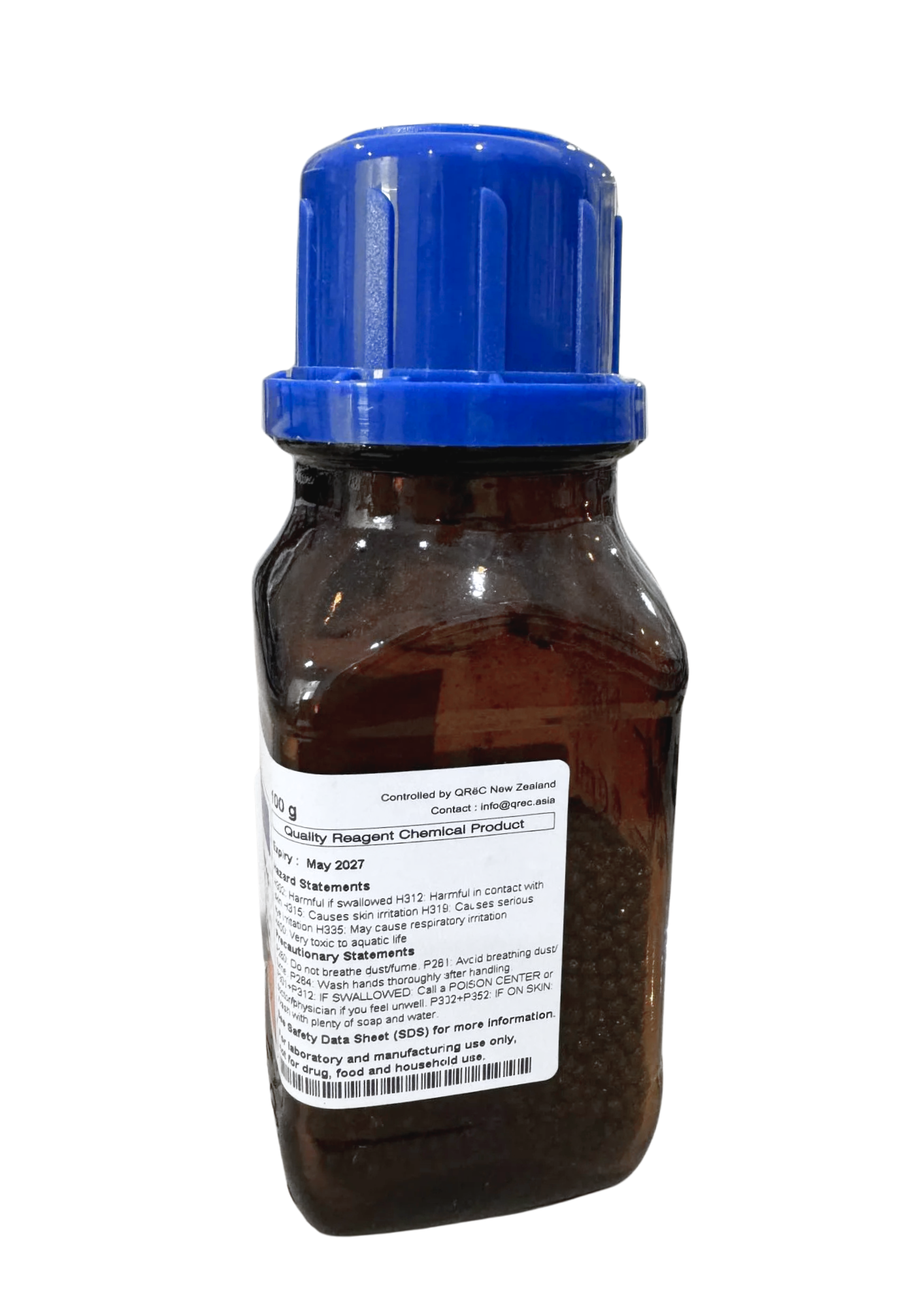
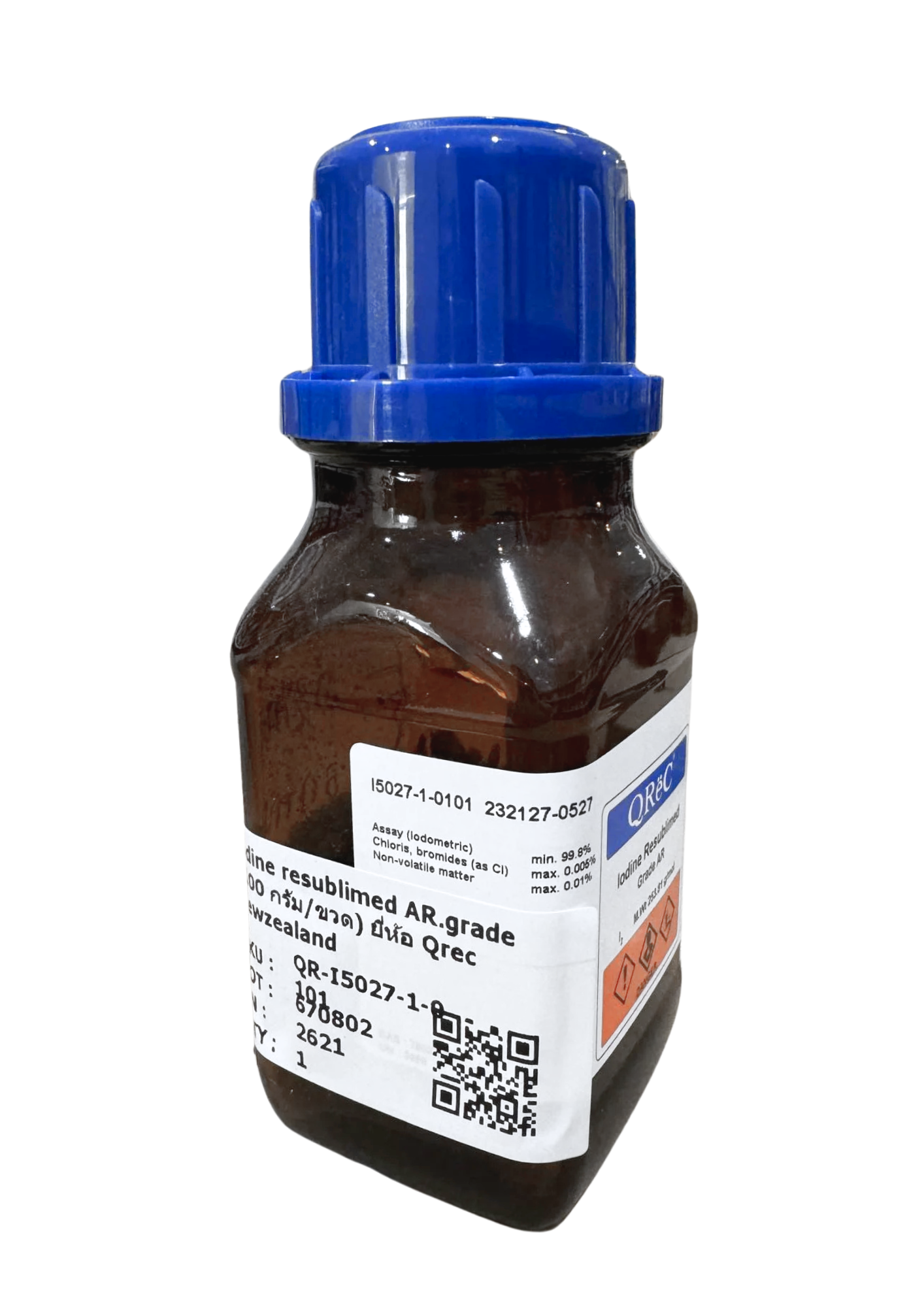
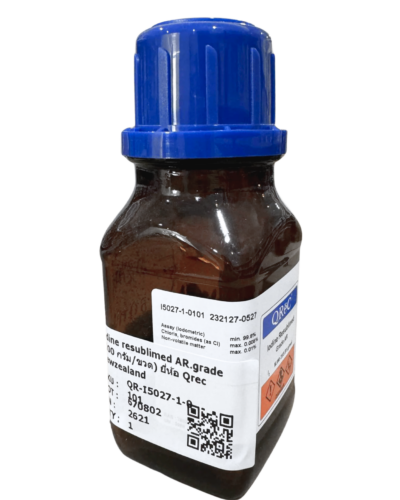
iodine resublimed 99.8% or Resublimed iodine crystals or Diiodine
Product Overview & Quality
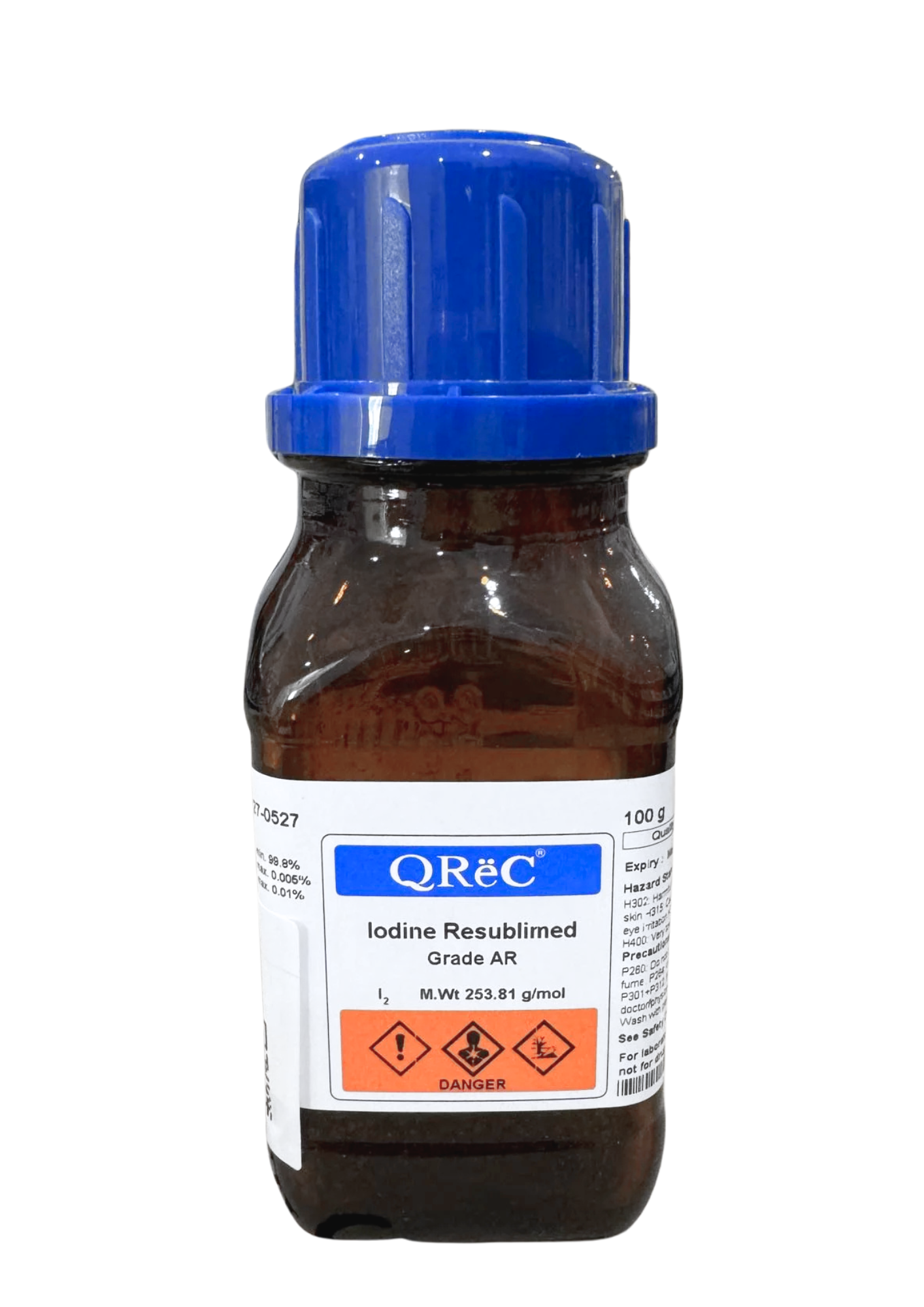
- Product Name: iodine resublimed 99.8% or Resublimed iodine crystals or Diiodine
- Brand: QReC (Product Code: QR-i5027-1-0101)
- Grade: Analytical Reagent High Purity Grade (AR Grade) featuring an exceptional certified chemical assay of not less than 99.8 percent. Purified via multi-stage resublimation under strict QReC global laboratory specifications. Rigorously analyzed to enforce minimal non-volatile residue on sublimation (strictly below 0.005 percent), along with ultra-low ppm limits of chlorine, bromine, sulfate, and trace heavy metals. Exhibits dry, uniform metallic-lustre crystals that dissolve cleanly and completely in aqueous potassium iodide solutions without insoluble particulate matter. Packaged in a heavy-duty amber glass bottle equipped with a chemical-resistant double hermetic closure to prevent fugitive vapor leaks.
- Physical Properties: Dark violet-gray to bluish-black lustrous crystalline scales or granules with a metallic sheen. Characteristic sharp, irritating odor. Readily sublimes at ambient temperature directly into dense violet vapors without passing through a liquid phase. Vapors are significantly denser than air. Non-combustible, but acts as a mild oxidizer; corrosive to metals and biological tissues.
- Solubility: Sparingly soluble in pure water at room temperature (approximately 0.03 grams per 100 milliliters, forming a pale yellow-brown solution); freely and rapidly soluble in aqueous potassium iodide solutions (forming soluble dark brown triiodide complexes); highly soluble in ethanol (tincture solution), diethyl ether, chloroform, carbon tetrachloride (yielding vivid purple solutions), and benzene.
- Key Use: Universally utilized as a primary analytical standard and reagent in redox iodometric and iodimetric titrations for quantifying reducing agents, ascorbic acid (vitamin C), residual chlorine, dissolved oxygen (Winkler method), and copper. Heavily employed in preparing Lugol’s Iodine Solution and starch indicator solutions for qualitative starch detection, producing an intense dark blue-black inclusion complex. Serves as a vital mordant in the Gram Staining protocol in microbiology, stabilizing crystal violet complexes within Gram-positive bacterial cell walls. Extensively applied as a visualization visualization reagent in Thin-Layer Chromatography (TLC iodine staining chambers) for reversibly staining unsaturated lipids and organic compounds. Functions as a catalyst and halogenation reagent in synthetic organic chemistry.
Safety & Hazards (Specific Target Organ Toxicity, Corrosive & Aquatic Hazard)
- Classification: Causes damage to organs (Thyroid gland) through prolonged or repeated exposure. Harmful if inhaled. Harmful in contact with skin. Harmful if swallowed. Causes skin irritation. Causes serious eye irritation. May cause respiratory irritation. Very toxic to aquatic life.
- Health Risks: Direct ocular contact or concentrated vapor exposure triggers intense burning, conjunctival redness, corneal ulceration, and lacrimation. Dermal contact produces caustic chemical burns, peeling, localized dermatitis, and characteristic persistent dark brown stains. Inhalation of violet sublimed vapors aggressively attacks the upper respiratory tract, causing nasal irritation, coughing, chest tightness, dyspnea, and pulmonary edema. Chronic systemic absorption disrupts thyroid gland function, potentially causing iodine-induced hypothyroidism or thyrotoxicosis. Ingestion induces severe caustic gastrointestinal irritation, metallic taste, burning epigastric pain, vomiting of brown or blue vomitus (in the presence of dietary starch), circulatory depression, and metabolic shock.
- First Aid Measures: Immediately flush affected eyes with an abundant stream of clean flowing water for at least 15 to 20 minutes while stripping contaminated clothing; remove contact lenses promptly and seek immediate medical care. Wash exposed skin thoroughly with soap and water (dilute sodium thiosulfate solution can aid in decolorizing persistent iodine stains). In case of vapor inhalation, rapidly relocate the victim to fresh air. If accidentally swallowed, rinse mouth, administer water containing starch or cornstarch to neutralize free iodine, and seek immediate, urgent emergency medical attention.
Handling & Storage
- Storage: Volatile Subliming Solid, Specific Thyroid Toxin, and Corrosive. Sublimed vapors readily escape poorly sealed containers and aggressively corrode surrounding metallic fixtures. Must be preserved in its original, tightly closed QReC amber glass bottle inside non-metallic corrosion-resistant secondary containment. Store in a clean, dry, cool, and well-ventilated dedicated chemical store at controlled temperatures (below 20 to 25 degrees Celsius), sheltered from thermal sources and direct sunlight. Keep strictly segregated from ammonia and aqueous ammonia solutions (contact forms nitrogen triiodide, a contact explosive that detonate violently upon dry touch), reactive metal powders, reducing agents, and flammable organics.
- Precautions: Full specialized PPE is mandatory, including protective nitrile gloves, splash-proof safety goggles, and a protective lab coat. “Mandatory Handling Mandate: Dispense, weigh, and handle iodine exclusively and strictly within a certified, properly functioning laboratory fume hood to contain fugitive purple vapors.” Decontaminate and reduce all iodine rinsates with sodium thiosulfate prior to disposal; never discharge directly into municipal wastewater systems.