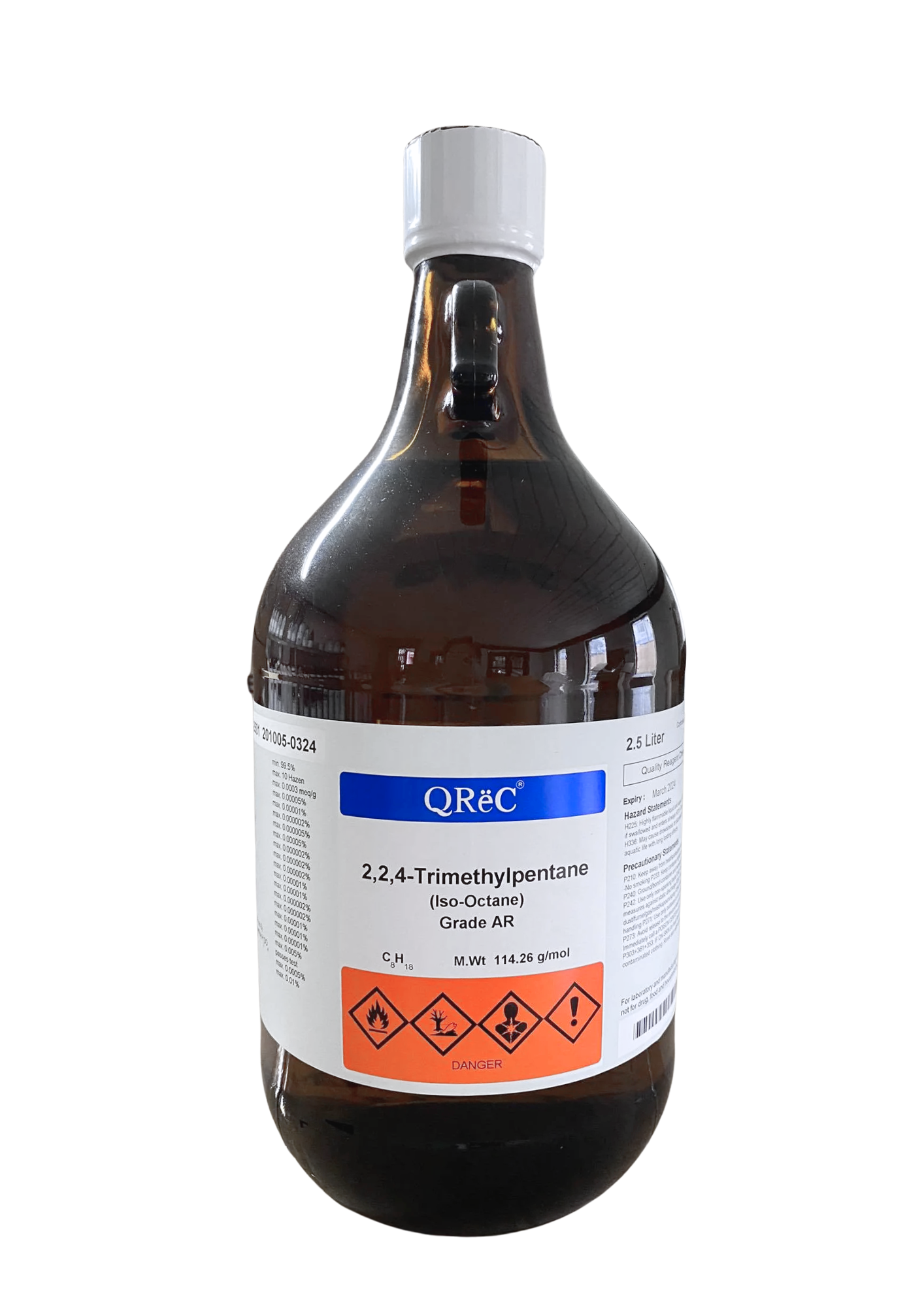
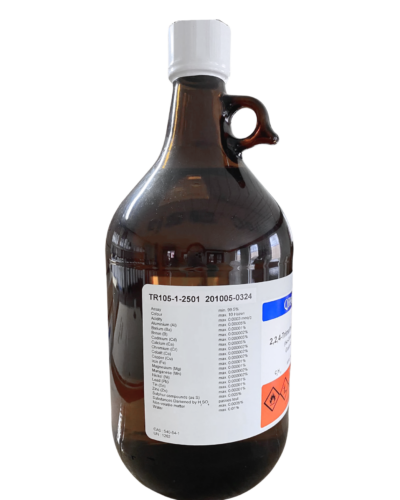
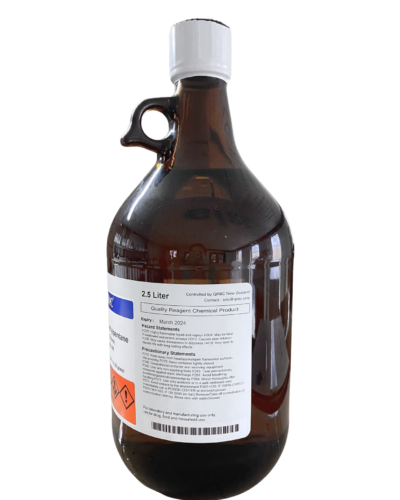
iso-Octane 99.5% or 2,2,4-Trimethylpentane or Isobutyltrimethylmethane
Product Overview & Quality
- Product Name: iso-Octane 99.5% or 2,2,4-Trimethylpentane or Isobutyltrimethylmethane
- Brand: QReC (Product Code: QR-TR105-1-2501)
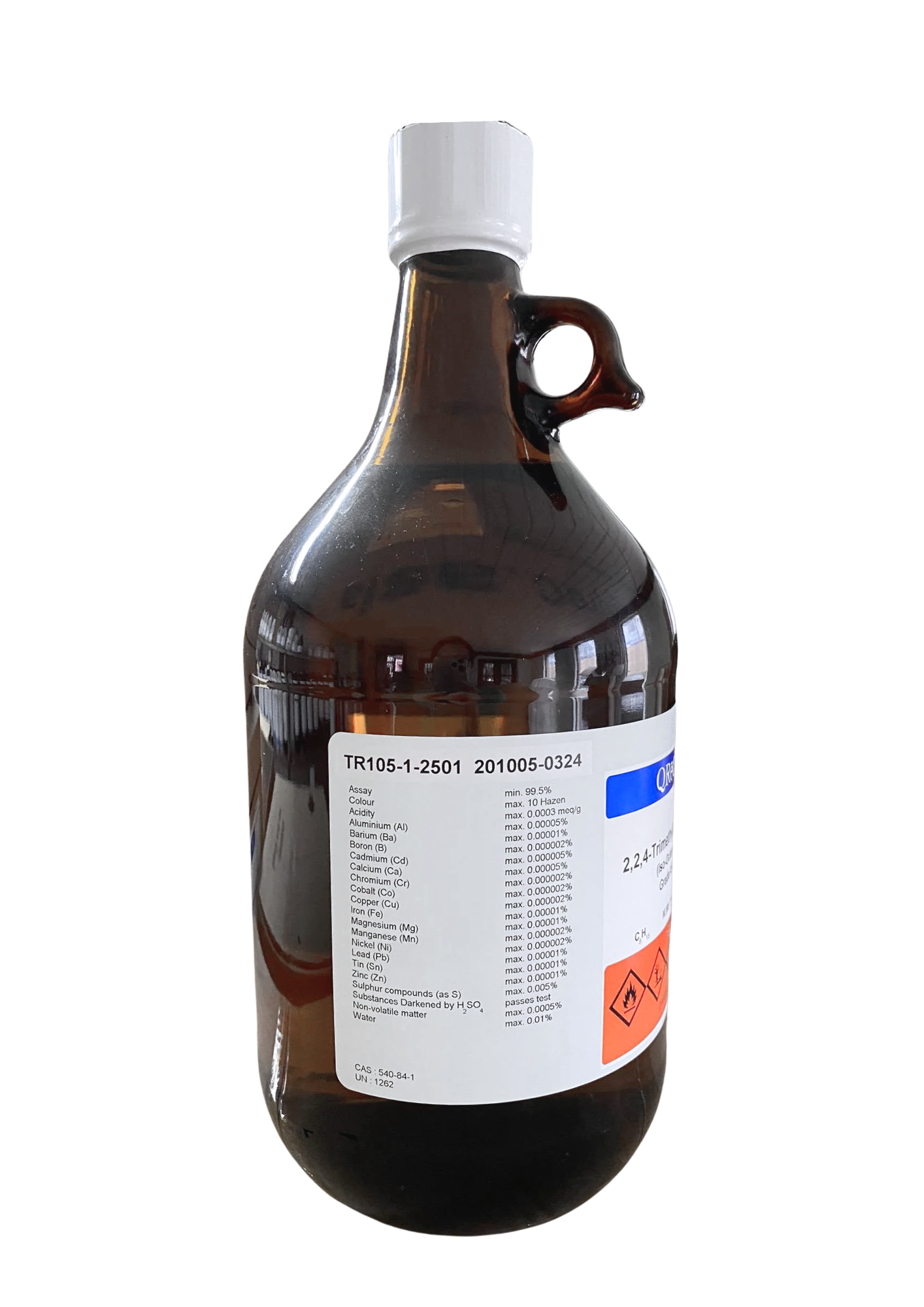
- Grade: Analytical Reagent (AR Grade) featuring a high certified chemical purity of not less than 99.5 percent 2,2,4-trimethylpentane. Manufactured and fractionally distilled under strict QReC global laboratory specifications. Rigorously tested to enforce minimal ppm thresholds of non-volatile residue (strictly below 0.001 percent), moisture content, unsaturated hydrocarbons, free acidity, sulfur compounds, and trace heavy metals. Yields an optically transparent, non-fluorescent non-polar solvent matrix with an exceptionally low ultraviolet cutoff, ensuring high baseline stability in spectroscopic and chromatographic assays. Packaged in a heavy-duty amber glass bottle for maximum chemical purity, static mitigation, and light protection.
- Physical Properties: Clear, colorless, highly mobile liquid with a characteristic faint, gasoline-like hydrocarbon odor. Moderate boiling point (approximately 99 degrees Celsius) and high ambient volatility. Highly flammable liquid and vapor with a very low flash point (down to minus 12 degrees Celsius); vapors are approximately 3.9 times denser than air, migrating along benches and floors toward distant ignition points.
- Solubility: Practically insoluble in water (less than 0.001 grams per 100 milliliters at room temperature; forms an immiscible upper organic layer due to lower density); completely miscible in all proportions with common organic solvents including ethanol, diethyl ether, chloroform, benzene, toluene, dichloromethane, and petroleum ether; high solvency for hydrocarbons, fats, oils, waxes, and natural resins.
- Key Use: Universally utilized as the definitive primary reference fuel standard with an assigned Octane Number of exactly 100 for knock-rating validation and anti-knock performance testing of aviation and motor gasolines in petrochemical testing laboratories. Extensively applied as an optical non-polar solvent in Ultraviolet-Visible (UV-Vis) spectrophotometry and fluorometry due to high optical transmission and low background absorption across analytical wavelengths. Heavily used as an extraction solvent in trace pesticide residue analysis (such as organochlorines and PCBs) from water, soil, food, and agricultural commodities. Serves as a non-polar eluent component in Normal-Phase High-Performance Liquid Chromatography (NP-HPLC) and as a carrier matrix in Gas Chromatography (GC and GC-MS). Functions as an inert reaction medium in polymerizations and organometallic chemical synthesis.
Safety & Hazards (Critical, Highly Flammable, Aspiration Hazard & Aquatic Toxicity)
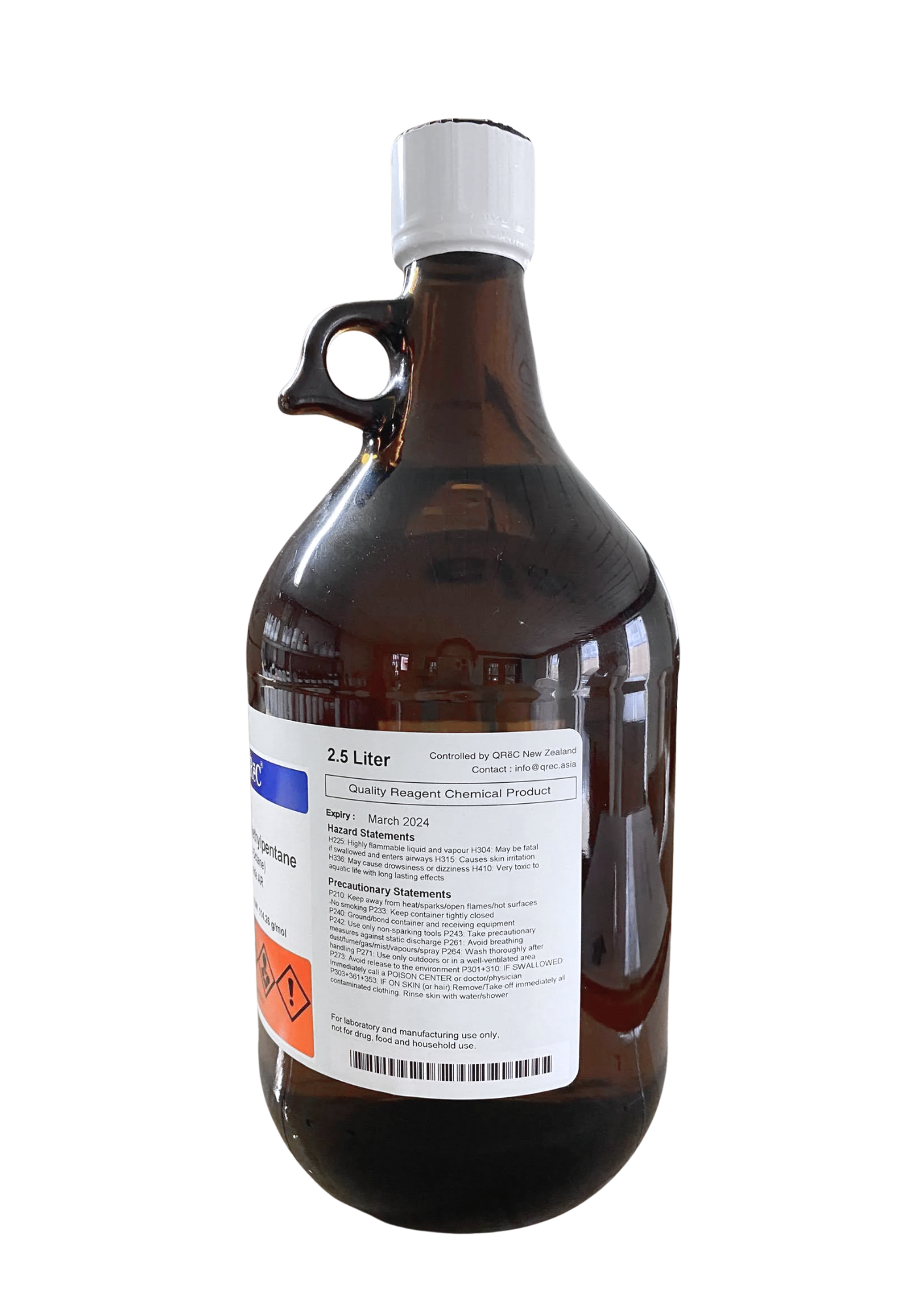
- Classification: Highly flammable liquid and vapor. May be fatal if swallowed and enters airways. Causes skin irritation. May cause drowsiness or dizziness. Very toxic to aquatic life with long lasting effects.
- Health Risks: Direct ocular exposure triggers transient stinging, conjunctival redness, and lacrimation. Dermal contact strips natural cutaneous lipids, causing dryness, erythema, localized scaling, and contact dermatitis. Acute vapor inhalation depresses the central nervous system, inducing dizziness, headache, nausea, disorientation, central fatigue, and loss of consciousness at elevated concentrations. Critical Aspiration Hazard: Ingestion carries an immediate risk of aspiration into the tracheobronchial tract and pulmonary parenchyma, causing life-threatening chemical pneumonitis, pulmonary edema, alveolar hemorrhage, and rapid asphyxiation.
- First Aid Measures: Immediately flush affected eyes or skin with an abundant stream of clean flowing water for at least 15 minutes while stripping contaminated clothing. In case of vapor inhalation, rapidly relocate the victim to fresh air. If accidentally swallowed, do NOT induce vomiting (to prevent catastrophic chemical aspiration into the pulmonary system); thoroughly rinse mouth with water, and seek immediate, urgent emergency medical attention.
Handling & Storage
- Storage: Highly Flammable Liquid and Severe Aquatic Pollutant. Very low flash point (minus 12 degrees Celsius) presents severe fire and static ignition hazards under normal ambient laboratory conditions. Must be preserved in its original, tightly closed QReC amber glass bottle inside an approved flammable liquid safety cabinet. Store in a cool, dry, dark, and well-ventilated dedicated chemical store at controlled temperatures (preferably below 25 degrees Celsius), sheltered from direct sunlight and thermal sources. Keep strictly segregated from open flames, sparks, hot surfaces, static electrical discharge, strong mineral acids, and strong oxidizing agents.
- Precautions: Full specialized PPE is mandatory, including heavy solvent-resistant nitrile or fluorocarbon gloves, splash-proof safety goggles, and an anti-static lab coat. “Mandatory Handling Protocol: Dispense, transfer, and execute all extractions exclusively and strictly within a certified, properly functioning laboratory fume hood to prevent vapor accumulation and inhalation.” Ground and bond dispensing equipment to prevent static discharge. Never discharge solvent residues or washings into municipal drainage systems.