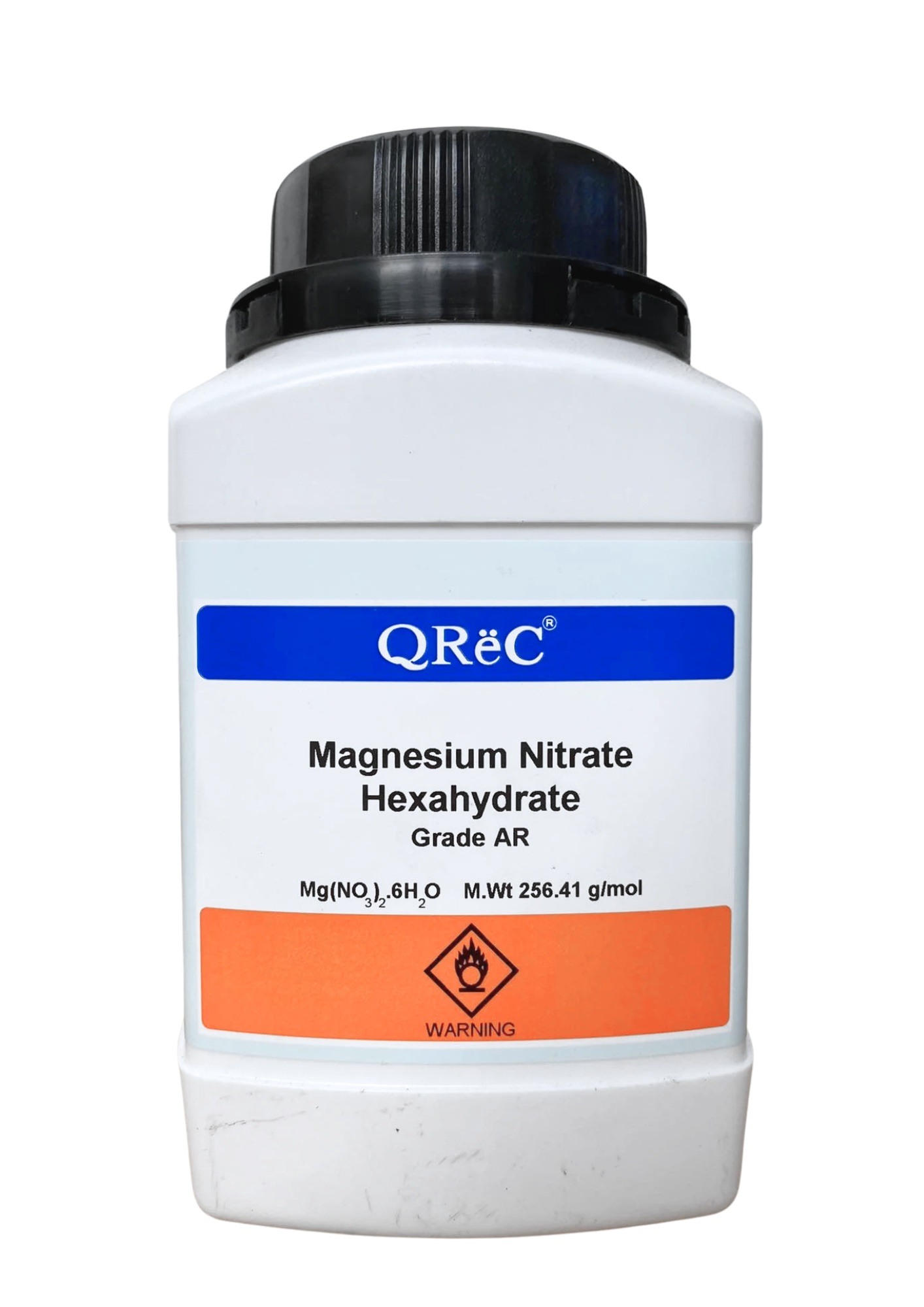
Magnesium nitrate hexahydrate 99.5% or Dimagnesium dinitrate hexahydrate or Nitric acid magnesium salt hexahydrate
Product Overview & Quality
- Product Name: Magnesium nitrate hexahydrate 99.5% or Dimagnesium dinitrate hexahydrate or Nitric acid magnesium salt hexahydrate
- Brand: QReC (Product Code: QR-M1021-1-0500)
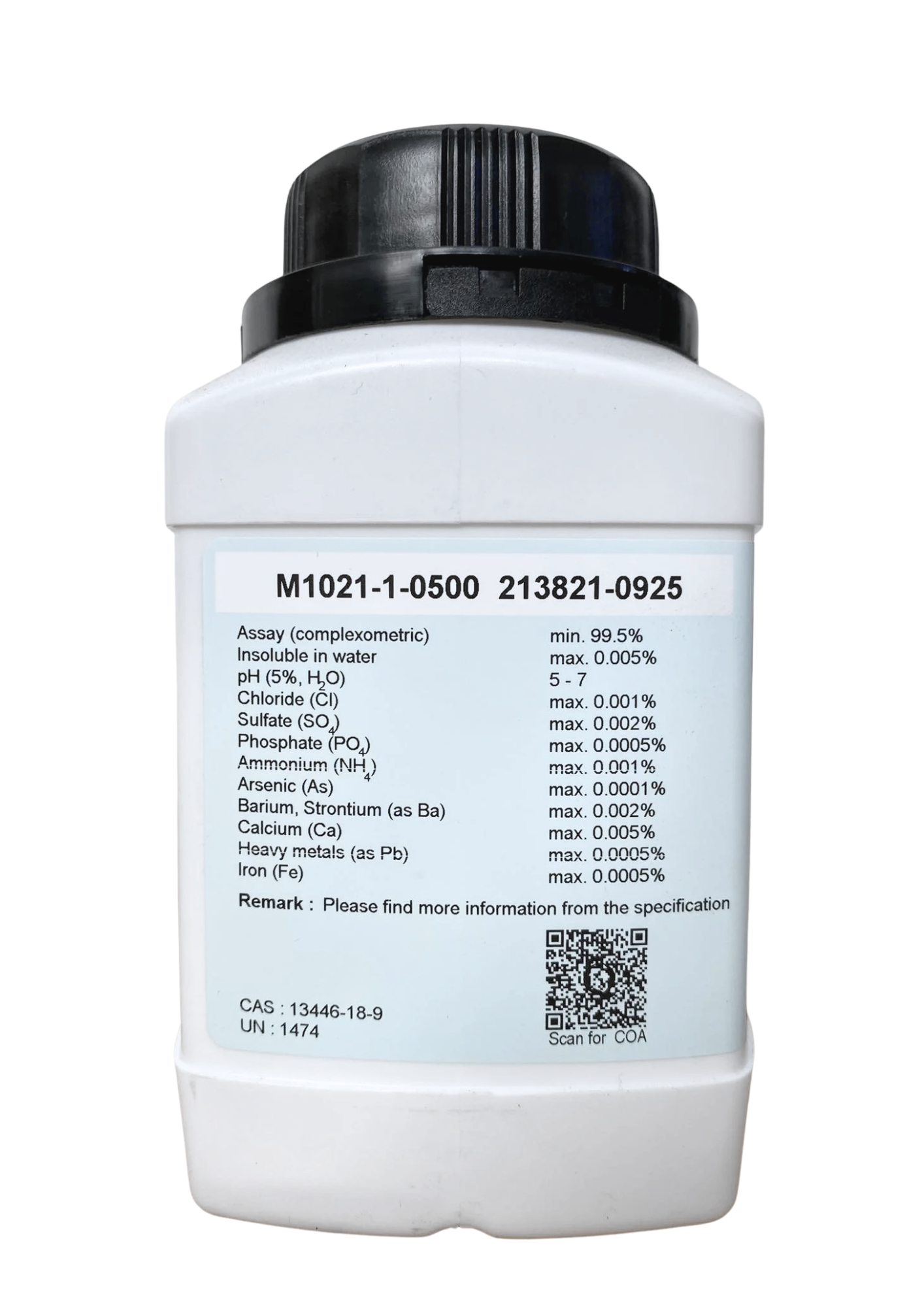
- Grade: Analytical Reagent High Purity Grade (AR Grade) featuring a certified chemical assay of not less than 99.5 percent. Manufactured and multi-crystallized under strict QReC global laboratory specifications, maintaining stoichiometric hexahydrate crystalline integrity. Rigorously tested to enforce minimal water-insoluble matter (strictly below 0.005 percent), along with ultra-low ppm limits of chloride, sulfate, phosphate, ammonium, and trace heavy metals (such as iron, lead, copper, arsenic, zinc, calcium, potassium, and sodium). Delivers dry, uniform crystals dissolving completely in water to yield crystal-clear, neutral solutions free of sediment or turbidity. Packaged in a heavy-duty, moisture-barrier polymer container equipped with an airtight seal to prevent ambient deliquescence.
- Physical Properties: Colorless translucent crystals or white crystalline powder. Odorless. Highly deliquescent, rapidly absorbing atmospheric moisture to liquefy into solution. Non-combustible solid itself, but functions as an inorganic oxidizing agent capable of accelerating the combustion of flammable materials. Thermally decomposes at high temperatures, liberating toxic nitrogen dioxide fumes and oxygen gas. Aqueous solutions are practically neutral to slightly acidic (pH approximately 5.0 to 7.0 at room temperature).
- Solubility: Readily and highly soluble in water (approximately 125 grams per 100 milliliters at 20 degrees Celsius; dissolution is a pronounced endothermic process absorbing heat, with solubility escalating dramatically in boiling water); freely soluble in ethanol, methanol, and aqueous ammonia solutions.
- Key Use: Universally utilized as an essential matrix modifier paired with palladium nitrate in Graphite Furnace Atomic Absorption Spectrometry (GFAAS) for determining trace heavy metals and volatile elements (such as lead, cadmium, arsenic, and selenium), stabilizing target analytes during the thermal pyrolysis stage. Extensively applied as a bioavailable, chloride-free source of magnesium and nitrate in plant tissue culture media formulations and agronomic plant nutrition research. Serves as an effective chemical dehydrating agent in extractive distillation for concentrating aqueous nitric acid in chemical processing research. Widely used as a high-purity inorganic precursor for synthesizing magnesium oxide (MgO) nanoparticles, magnesium aluminate spinels, and advanced dielectric ceramics via sol-gel pathways. Functions as a synthetic reagent and oxidation catalyst in organic synthesis.
Safety & Hazards (Oxidizer, Skin & Severe Eye Irritation)
- Classification: May intensify fire; oxidizer (Oxidizing Solid Category 3). Causes serious eye irritation. Causes skin irritation. May cause respiratory irritation.
- Health Risks: Direct ocular contact triggers acute stinging pain, conjunctival redness, corneal irritation, and lacrimation. Prolonged or repeated dermal contact can strip skin moisture, resulting in erythema, dryness, or localized contact irritation. Inhalation of particulate dust irritates the mucous membranes of the respiratory tract, causing sneezing, coughing, and throat dryness. Ingestion of large quantities provokes gastrointestinal irritation, abdominal cramping, nausea, vomiting, diarrhea, lethargy, and potential systemic methemoglobinemia characteristic of excessive nitrate exposure.
- First Aid Measures: Immediately flush affected eyes with an abundant stream of clean flowing water for at least 15 minutes while stripping contaminated clothing; remove contact lenses promptly. Wash exposed skin thoroughly with soap and water. In case of dust inhalation, rapidly relocate the victim to fresh air. If accidentally swallowed, rinse mouth thoroughly, administer water in moderate amounts, and seek prompt medical attention.
Handling & Storage
- Storage: Oxidizing and Highly Deliquescent Solid. Atmospheric exposure leads to rapid liquefaction, and contact with combustible matter poses fire hazards. Must be preserved in its original, tightly closed QReC container. Store in a clean, strictly dry, cool, and well-ventilated dedicated chemical store at controlled temperatures (below 25 to 30 degrees Celsius), sheltered from atmospheric moisture, thermal sources, and direct sunlight. Keep strictly segregated from organic chemicals, flammable solvents, strong reducing agents, finely powdered metals, sulfur, phosphorus, and combustible materials.
- Precautions: Standard specialized PPE is mandatory, including protective nitrile gloves, splash-proof safety goggles, a certified particulate dust mask, and a protective lab coat. Re-seal container cap tightly immediately after sampling to prevent deliquescent caking. Minimize dust generation during weighing and dispensing.