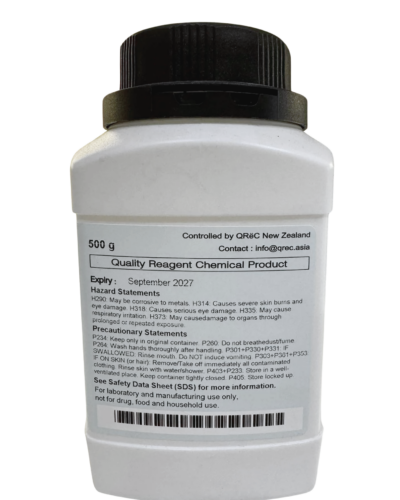
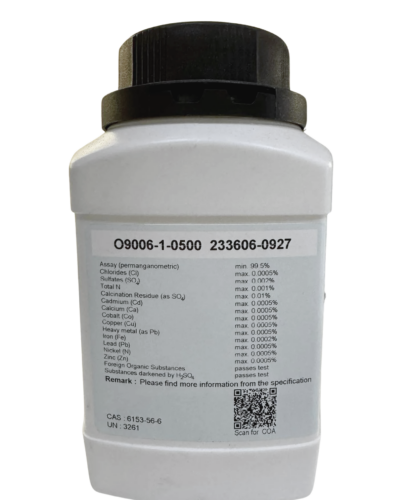
Ethanedioic acid dihydrate or Dicarboxylic acid dihydrate
Product Overview & Quality
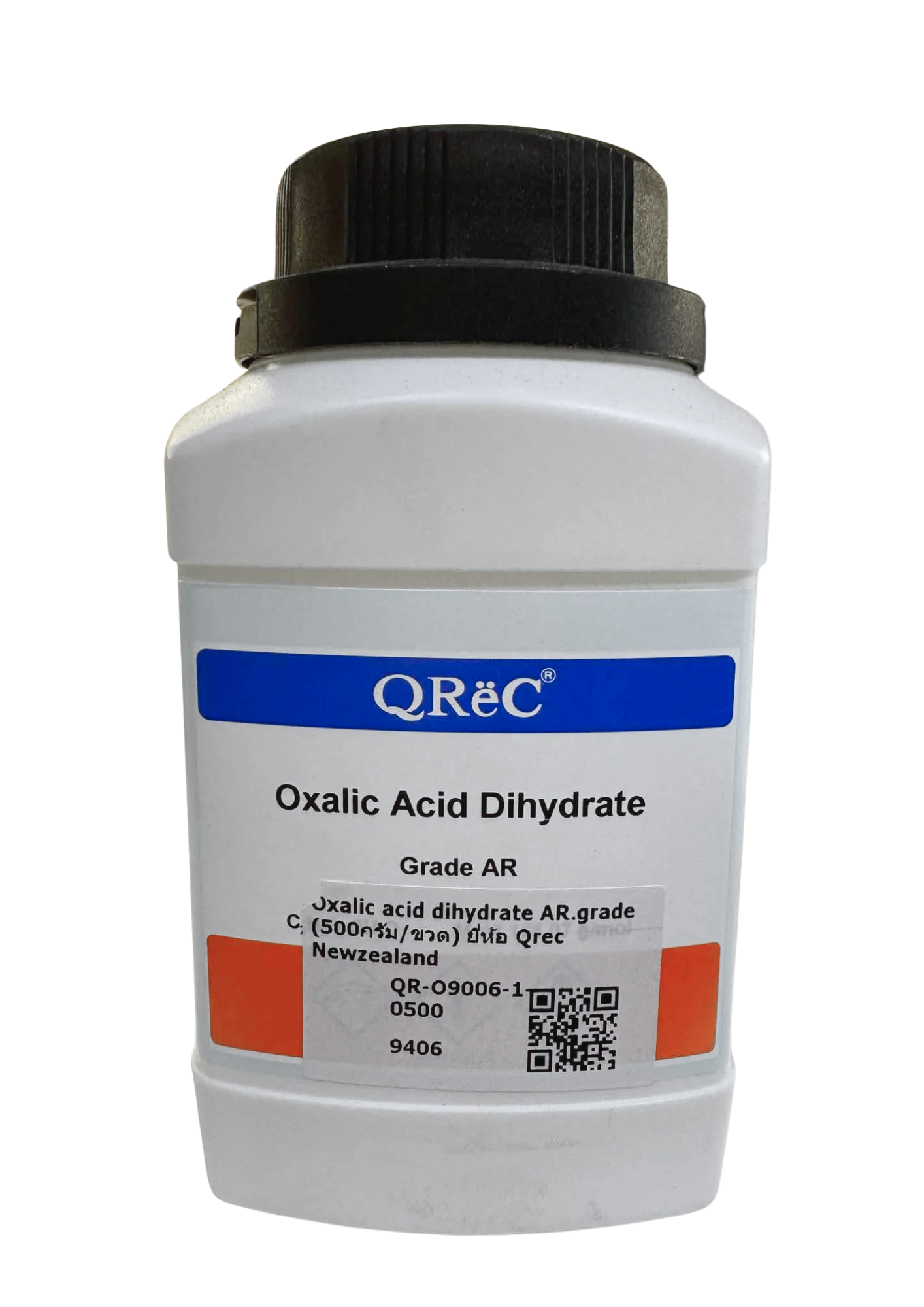
- Product Name: Oxalic acid dihydrate 99.5% or Ethanedioic acid dihydrate or Dicarboxylic acid dihydrat
- Brand: QReC (Product Code: QR-O9006-1-1000)
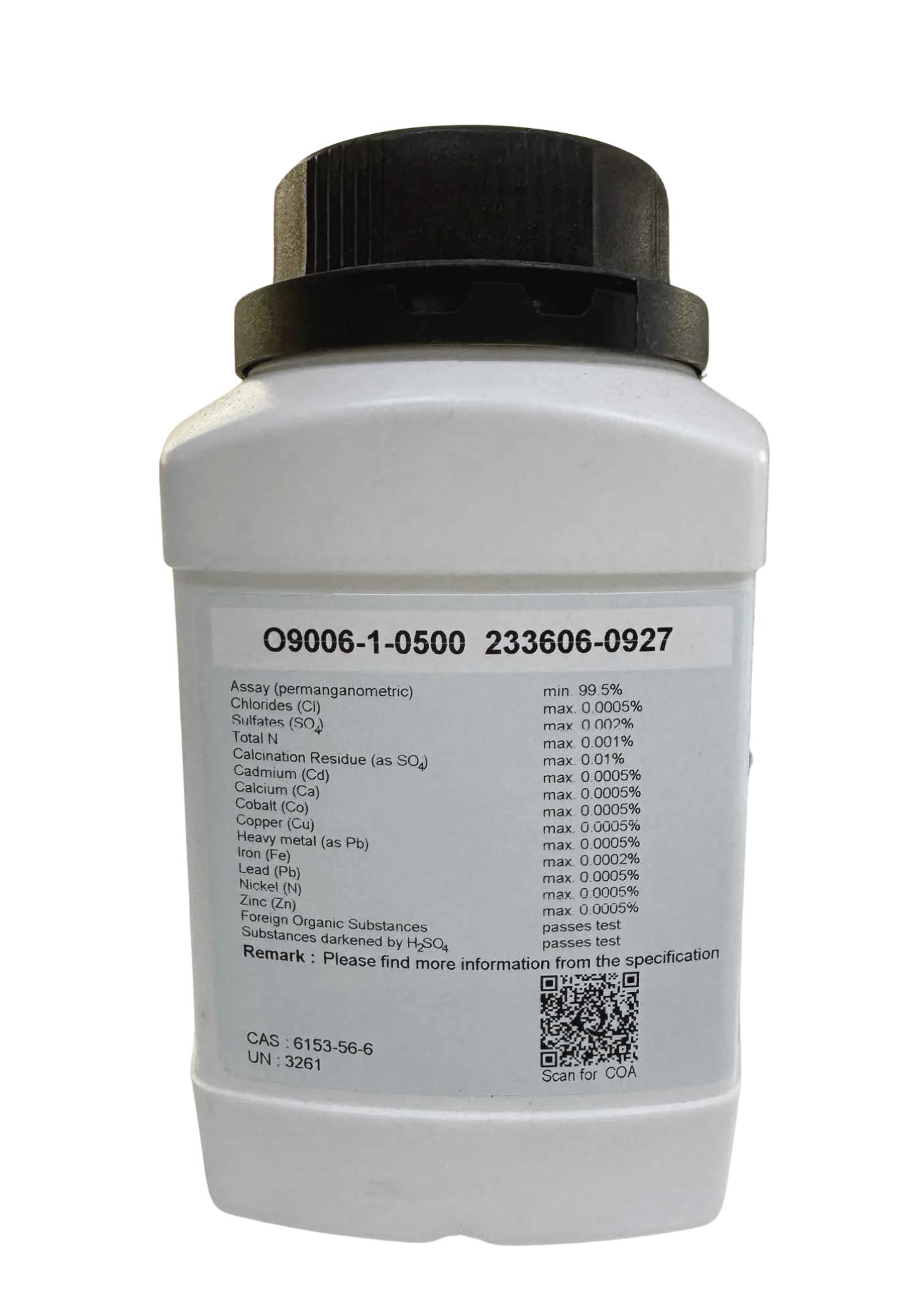
- Grade: Analytical Reagent High Purity Grade (AR Grade) featuring an exceptional certified chemical assay of not less than 99.5 percent in a 1,000 g (1 kg) package. Manufactured and multi-recrystallized under strict QReC global laboratory specifications without anti-caking conditioning agents, maintaining stoichiometric dihydrate crystalline hydration. Strictly analyzed to enforce an ultra-low residue on ignition (strictly below 0.01 percent), alongside minimal ppm limits of chloride, sulfate, total nitrogen, and trace heavy metals (such as iron, lead, copper, zinc, calcium, and magnesium). Uniform, dry crystalline prisms dissolve cleanly and completely in water to yield crystal-clear, sediment-free acidic solutions. Packaged in a heavy-duty, chemical-resistant polymer container equipped with a secure double hermetic closure.
- Physical Properties: Colorless transparent crystals, crystalline prisms, or fine white crystalline powder. Odorless with an intensely sour, acidic taste. Thermodynamically stable in ambient air; loses water of crystallization above 100 degrees Celsius and sublimes at approximately 157 degrees Celsius. Combustible solid under high thermal stress. Aqueous solutions are strongly acidic for an organic acid (pH approximately 1.0 to 1.5 for a 5 percent aqueous solution at room temperature) and exhibit corrosive properties toward metals and tissues.
- Solubility: Moderately to readily soluble in water at room temperature (approximately 9 to 10 grams per 100 milliliters at 20 degrees Celsius; solubility escalates dramatically with temperature, exceeding 100 grams per 100 milliliters in boiling water); freely soluble in ethanol; moderately soluble in diethyl ether and glycerol; practically insoluble in benzene and chloroform.
- Key Use: Universally utilized as a high-precision Primary Standard in volumetric analysis for the standardization of standard alkaline titrants (such as sodium hydroxide) and as the definitive primary standard in redox permanganometry for standardizing potassium permanganate volumetric solutions. Heavily applied as an exceptional chelating and rust-removal reagent (derusting agent), dissolving insoluble ferric oxide encrustations into highly soluble trioxalatoferrate coordination complexes. Extensively employed as a precipitating reagent for the quantitative separation and gravimetric determination of rare earth elements (lanthanides) and calcium. Serves as an effective organic reducing and bleaching agent in organic synthesis and industrial textile/wood processing research. Used as an analytical reagent in environmental testing, metallurgical surface finishing, and marble restoration.
Safety & Hazards (Harmful Ingestion/Skin Contact, Serious Eye Damage & Nephrotoxicity)
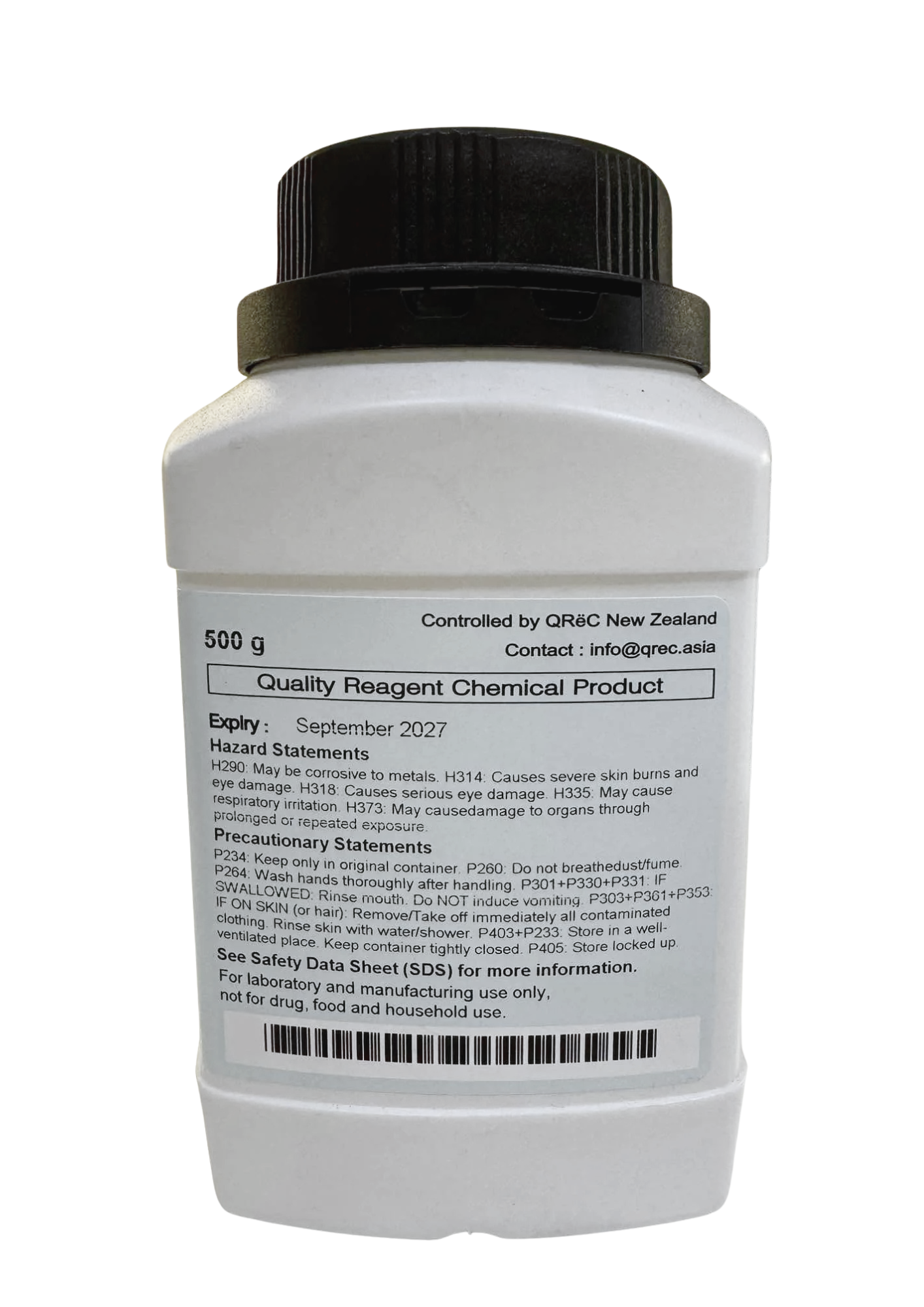
- Classification: Harmful if swallowed (Acute Toxicity Oral Category 4). Harmful in contact with skin (Acute Toxicity Dermal Category 4). Causes serious eye damage (Eye Damage Category 1). Causes skin irritation. May cause respiratory irritation.
- Health Risks: Direct ocular contact triggers rapid corneal ulceration, intense burning pain, conjunctival edema, and risk of permanent blindness. Dermal exposure produces localized chemical burns, erythema, peeling, numbness, and readily absorbs systemically through the skin. Inhalation of particulate dust aggressively irritates the respiratory mucosa, inducing coughing, sneezing, choking, epistaxis, and chronic bronchitis. Critical Systemic Nephrotoxicity: Absorbed oxalate anions bind systemic calcium cations, precipitating insoluble calcium oxalate crystals within the renal tubules, precipitating acute tubular necrosis, severe hypocalcemia, tetany, convulsions, cardiac arrhythmias, and acute renal failure. Ingestion induces caustic burning of the mouth, esophagus, and stomach, accompanied by hematemesis, severe abdominal pain, collapse, and metabolic shock.
- First Aid Measures: Immediately flush affected eyes with an abundant stream of clean flowing water for at least 15 to 20 minutes while stripping contaminated clothing; remove contact lenses promptly and seek immediate emergency ophthalmological care. Wash exposed skin thoroughly with soap and water for at least 15 minutes. In case of dust inhalation, rapidly relocate the victim to fresh air. If accidentally swallowed, do NOT induce vomiting; thoroughly rinse mouth, immediately administer calcium lactate, calcium gluconate, milk, or lime water (to precipitate insoluble calcium oxalate in the gastrointestinal lumen and block systemic absorption), and seek immediate emergency medical resuscitation.
Handling & Storage
- Storage: Corrosive Organic Acid and Specific Nephrotoxin. Must be preserved in its original, tightly closed QReC container. Store in a clean, strictly dry, cool, and well-ventilated dedicated chemical store at controlled temperatures (below 25 to 30 degrees Celsius), sheltered from atmospheric humidity and direct sunlight. Keep strictly segregated from strong oxidizing agents (such as peroxides and chlorates), strong alkalis, silver compounds, and mercury compounds (formation of shock-sensitive, explosive metal oxalates can occur).
- Precautions: Full specialized PPE is mandatory, including protective nitrile gloves, splash-proof safety goggles, a certified particulate dust respirator, and a protective lab coat. Perform dispensing, weighing, and solution preparation inside a certified laboratory fume hood to prevent acid dust inhalation. Re-seal container cap tightly immediately after sampling. Neutralize all acidic waste solutions prior to disposal; never discharge concentrated oxalates directly into municipal sewers.