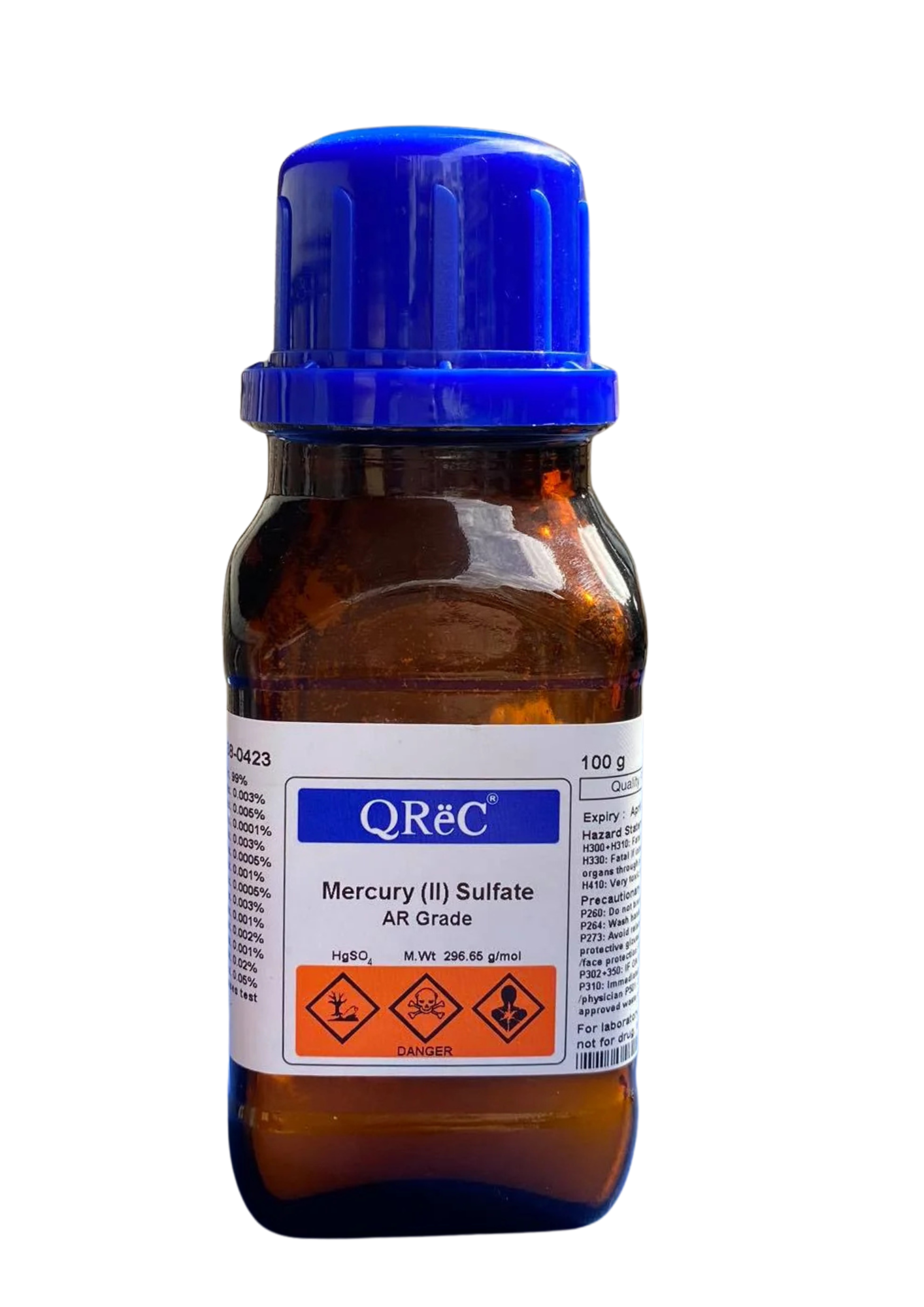
Mercury (II) sulfate or Mercuric sulfate
Product Overview & Quality
- Product Name: Mercury (II) sulfate or Mercuric sulfate
- Brand: QReC (Product Code: QR-M2038-1-0100)
- Grade: Analytical Reagent (AR Grade) featuring a certified chemical purity of not less than 98 to 99 percent. Manufactured and multi-refined under strict QReC global laboratory specifications. Rigorously analyzed to enforce exceptionally low ppm thresholds of chlorides, nitrates, iron, other mercurous salts, and foreign heavy metals. Consistently fine crystalline matrix dissolves cleanly and completely in dilute sulfuric acid without leaving insoluble particulate residues, ensuring maximum analytical fidelity in water quality testing. Packaged in a heavy-duty amber glass bottle for light protection and strict hazardous containment.
- Physical Properties: White, fine crystalline powder or small white granules. Odorless. Slightly light-sensitive upon extended exposure to direct ambient light. Non-combustible alone, but decomposes under extreme thermal conditions to release toxic mercury vapor and sulfur oxide gases.
- Solubility: Slightly soluble in cold water, slowly undergoing hydrolysis to form an insoluble yellow basic sulfate (Mercuric subsulfate); completely and readily soluble in dilute sulfuric acid or dilute nitric acid solutions.
- Key Use: Heavily utilized as the definitive analytical masking reagent in Chemical Oxygen Demand (COD) determination in wastewater and surface water testing, binding chloride ions into stable mercuric chloride complexes to eliminate chloride interference from potassium dichromate digestion. Extensively applied as an efficient catalyst in the digestion step of the Kjeldahl method for total organic nitrogen and crude protein determination. Used in formulating specialized chemical reagents, including Deniges reagent for the qualitative identification of aliphatic ketones, citric acid, and tartaric acid. Functions as an electrophilic catalyst in organic synthesis for the catalytic hydration of alkynes, and serves in advanced electrochemical and coordination chemistry investigations.
Safety & Hazards (Critical, Fatal Toxicity & Heavy Metal)
- Classification: Fatal if swallowed. Fatal in contact with skin. Fatal if inhaled. Causes damage to organs (Kidneys, Central Nervous System, Gastrointestinal tract) through prolonged or repeated exposure. Very toxic to aquatic life with long lasting effects.
- Health Risks: Mercury compounds are rapidly absorbed through the gastrointestinal tract, dermal contact, and respiratory inhalation. Eye contact causes severe irritation, chemical conjunctivitis, and stinging pain. Dermal absorption leads to systemic toxicity, dermatitis, and tissue necrosis. Inhalation of particulate dust severely damages mucous membranes, inducing acute pulmonary edema, chemical bronchitis, and acute mercurial pneumonitis. Ingestion triggers corrosive burns in the gastrointestinal tract, violent abdominal cramps, bloody diarrhea, and rapid acute renal tubular necrosis. Chronic systemic accumulation irreversibly destroys the central nervous system, causing tremors (erethism), memory deficits, emotional instability, ataxia, and fatality.
- First Aid Measures: Immediately flush affected eyes or skin with an abundant stream of clean running water for at least 15 to 20 minutes while stripping contaminated clothing. In case of dust inhalation, rapidly transfer the victim to fresh air. If accidentally swallowed, do NOT induce vomiting; thoroughly rinse mouth, administer water, and seek immediate, urgent emergency medical attention, alerting clinical staff to acute inorganic mercury poisoning for appropriate chelation therapy.
Handling & Storage
- Storage: Extremely Toxic Heavy Metal Compound. Must be preserved in its original, tightly sealed QReC amber glass container placed on secondary chemical containment trays. Store in a dedicated, securely locked toxic chemical cabinet with strictly authorized access. Keep in a cool, dry, dark, and well-ventilated dedicated chemical store at controlled temperatures (preferably below 25 to 30 degrees Celsius). Keep strictly segregated from direct sunlight, thermal sources, strong acids, strong oxidizers, reducing agents, active metals, and organic materials.
- Precautions: Full specialized hazardous PPE is mandatory, including heavy nitrile chemical-resistant gloves, splash-proof safety goggles, a high-efficiency particulate respirator (HEPA/P100), and a protective lab coat. Weighing, dispensing, and reagent preparation must be performed exclusively and strictly within a certified laboratory fume hood. Never discharge mercury-containing residues or COD post-digestion wastes into municipal drains; collect exclusively in dedicated heavy-metal hazardous waste containers for licensed hazardous treatment.