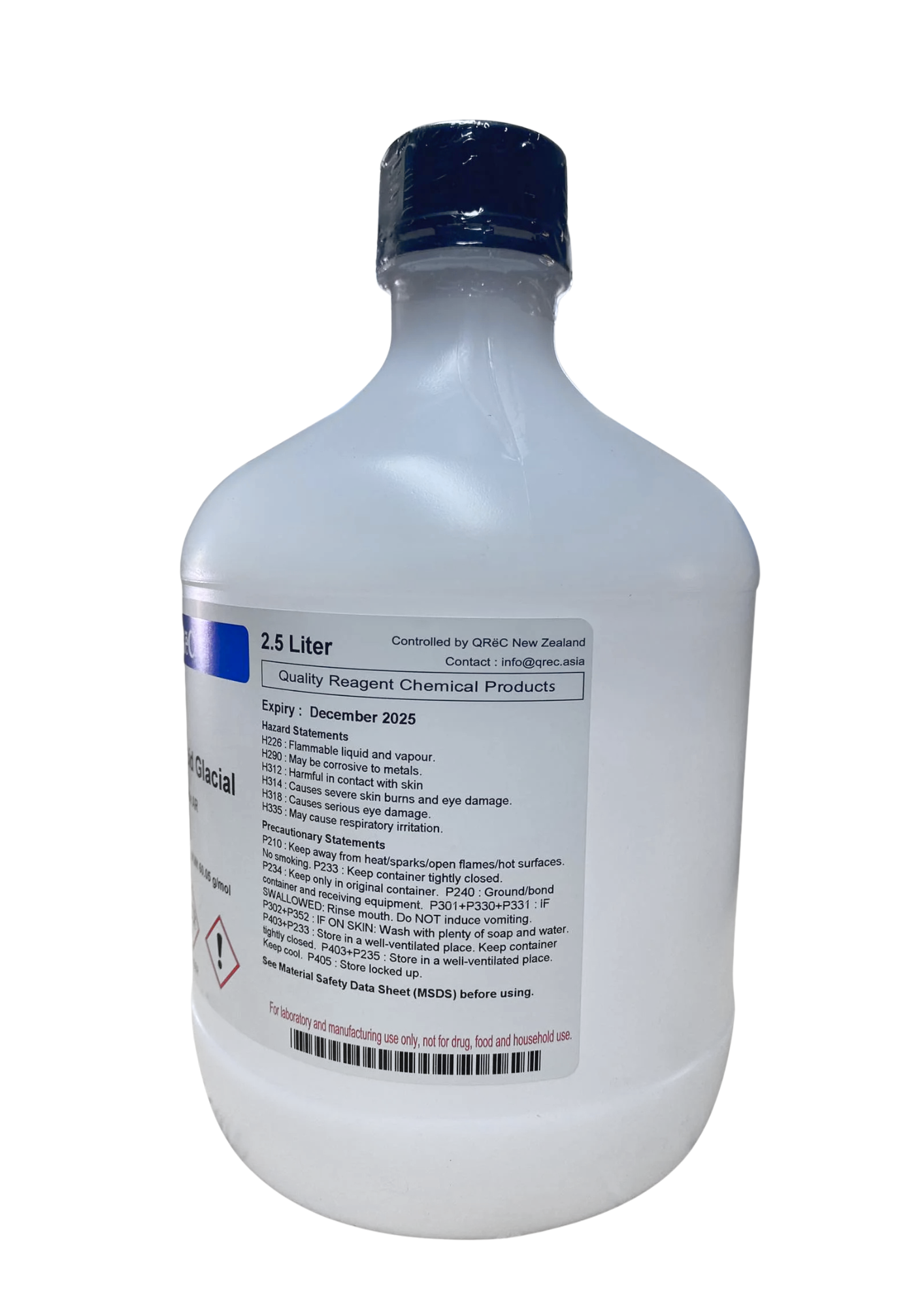
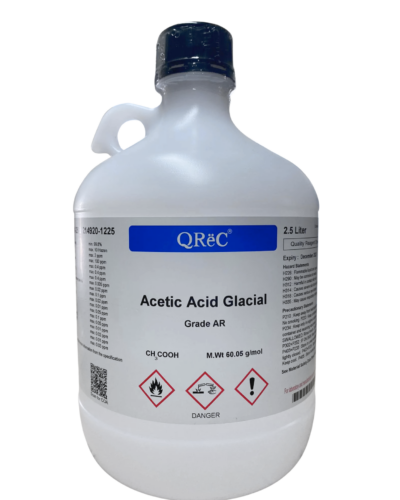
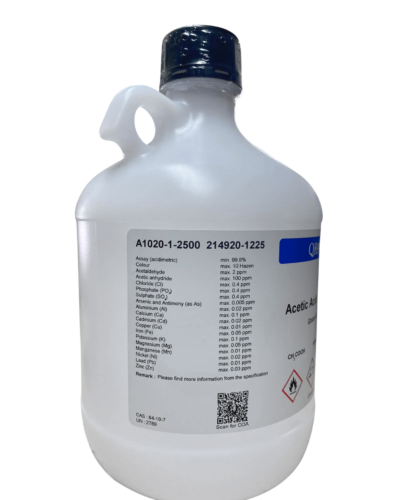
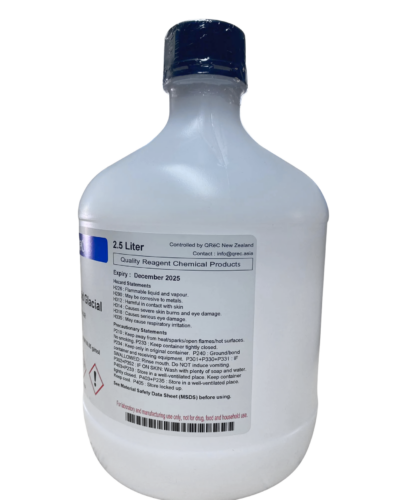
Acetic acid glacial 99.8% or Glacial ethanoic acid or Concentrated acetic acid
Product Overview & Quality
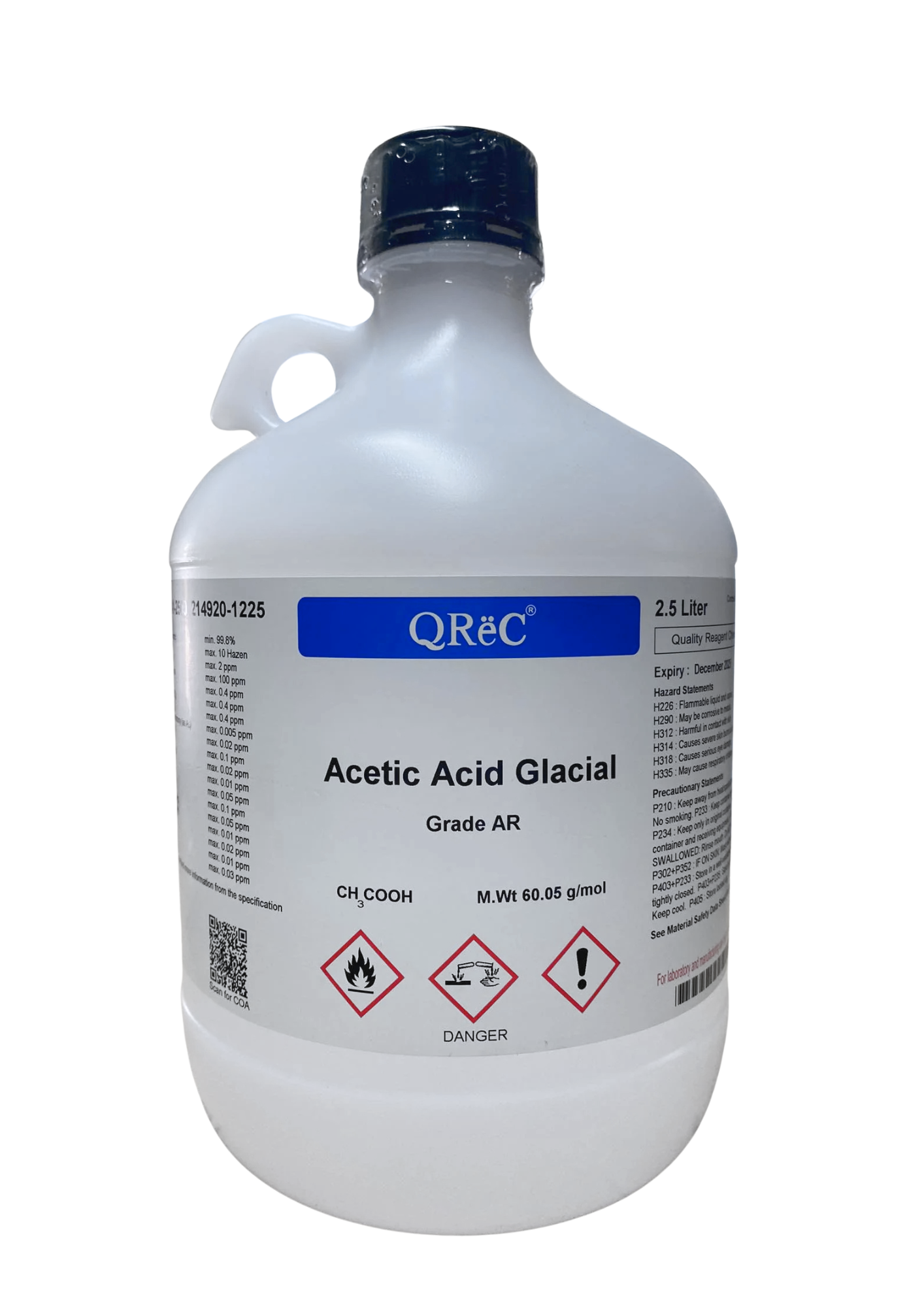
- Product Name: Acetic acid glacial 99.8% or Glacial ethanoic acid or Concentrated acetic acid
- Brand: QReC (Product Code: QR-A1020-1-2500)
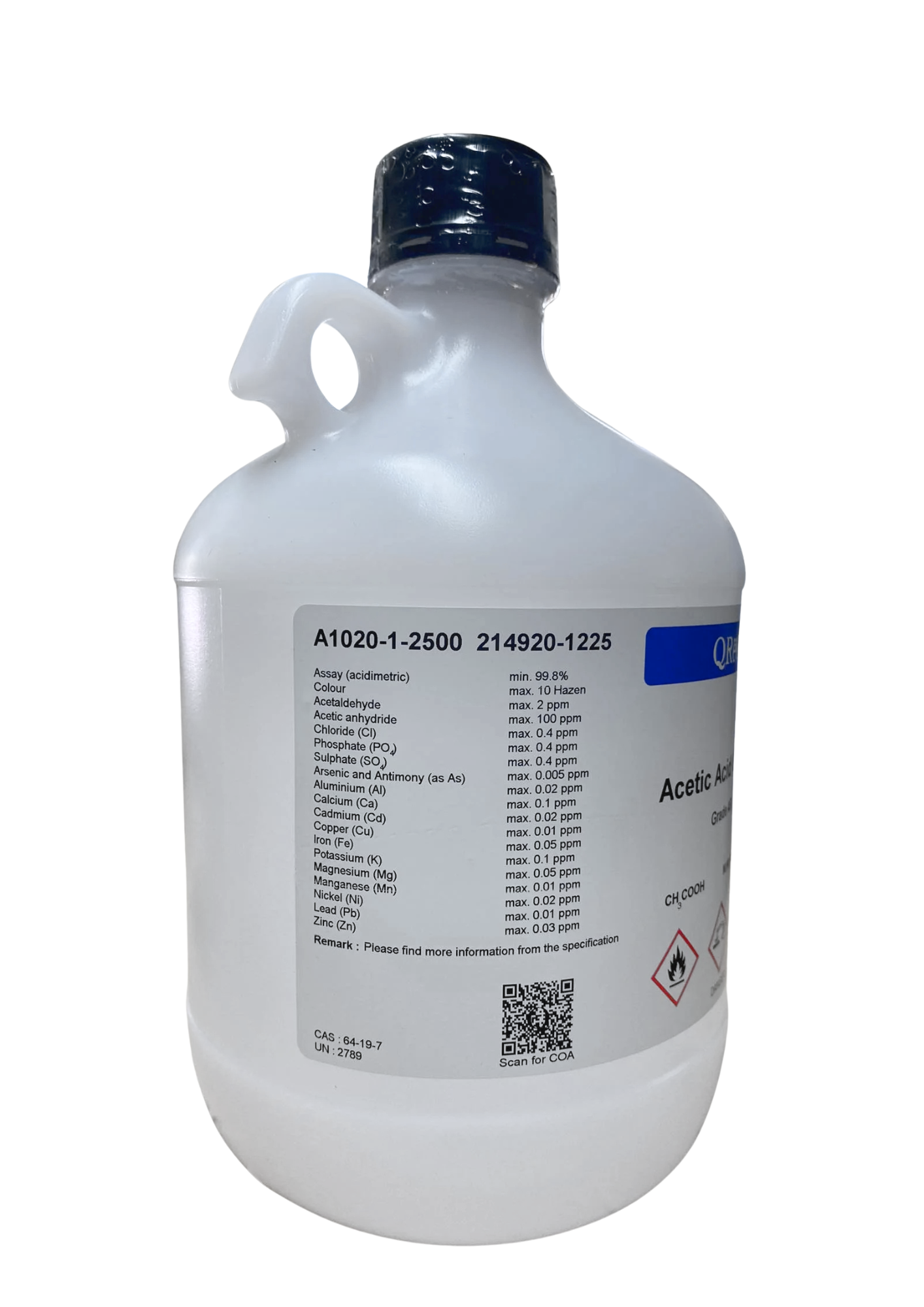
- Grade: Analytical Reagent (AR Grade) featuring a high certified chemical purity of 99.8 percent or higher. Manufactured and refined under strict QReC global laboratory standards. Rigorously regulated to maintain exceptionally low ppm thresholds of non-volatile residue, moisture content (strictly below 0.15 to 0.2 percent), chloride, sulfate, total nitrogen, phosphate, acetic anhydride, and trace heavy metals (such as iron, lead, copper, and arsenic). Excellent ultraviolet transmission characteristics ensure baseline stability in spectrophotometric and chromatographic testing. Packaged in a heavy-duty, chemically resistant specialized polymer bottle designed to accommodate freezing-expansion volume changes without cracking.
- Physical Properties: Clear, colorless, highly mobile liquid with a suffocating, sharp, pungent vinegary odor. Characterized by a freezing point of approximately 16.6 degrees Celsius (solidifies into ice-like crystalline masses under cooler room conditions). Flammable liquid and vapor with a flash point of approximately 39 degrees Celsius. Strongly corrosive to biological tissues and reactive metals.
- Solubility: Completely miscible in all proportions with water, lower aliphatic alcohols (ethanol, methanol), glycerol, diethyl ether, and chloroform (dilution with water releases moderate exothermic heat); practically insoluble in carbon disulfide.
- Key Use: Heavily utilized as an essential polar protic solvent and acidic medium in non-aqueous acid-base titrations to quantify weakly basic active pharmaceutical ingredients, organic amines, and amino acids. Universally applied to formulate acetate buffer solutions across extensive physiological and analytical pH ranges for biochemical and enzymatic testing. Extensively used in cytology and histology as a rapid tissue-penetrating fixative agent (notably in Carnoy and Bouin solutions) to preserve nucleoproteins and chromosomes. Widely employed as an acidic mobile phase modifier in High-Performance Liquid Chromatography (HPLC) and LC-MS to suppress peak tailing and enhance ionization resolution. Routinely used as an acetylation reagent and synthetic precursor in organic chemical synthesis.
Safety & Hazards (Critical, Flammable & Severe Corrosive)
- Classification: Flammable liquid and vapor. Causes severe skin burns and eye damage. Causes serious eye damage. May be corrosive to metals. Harmful if swallowed or inhaled.
- Health Risks: Vapors violently attack the ocular mucosa, inducing acute tearing, conjunctival erythema, and blepharospasm. Direct eye contact triggers instantaneous, deep corneal burns, opacification, and permanent vision destruction. Dermal exposure produces deep, penetrating coagulative chemical burns, necrotic blistering, severe ulceration, and intractable pain. Inhalation of concentrated vapors aggressively corrodes the respiratory tract, causing coughing, choking, dyspnea, laryngospasms, chemical bronchitis, and life-threatening pulmonary edema. Ingestion causes destructive caustic erosion of the oral cavity, esophagus, and stomach, accompanied by intense gastrointestinal hemorrhaging, perforation, and acute metabolic acidosis.
- First Aid Measures: Immediately flush affected eyes or skin with an abundant stream of clean flowing water for at least 15 to 20 minutes while stripping contaminated clothing. In case of vapor inhalation, rapidly relocate the victim to fresh air. If accidentally swallowed, do NOT induce vomiting; thoroughly rinse mouth, administer water in moderate amounts if conscious, and seek immediate, urgent emergency medical attention.
Handling & Storage
- Storage: Corrosive and Flammable Organic Acid. Solidifies below 16.6 degrees Celsius into crystalline masses without compromising purity (thaw slowly at 20 to 25 degrees Celsius or in a warm water bath; avoid open flame heating). Must be preserved in its original, tightly sealed QReC container placed in an upright orientation. Store in an approved acid and corrosive safety cabinet in a cool, dry, and excellently ventilated chemical store at controlled temperatures (ideally between 17 and 25 degrees Celsius to prevent freezing). Keep strictly segregated from open flames, sparks, hot surfaces, strong mineral acids (such as nitric and perchloric acids), strong bases, and powerful oxidizing agents (such as potassium permanganate and hydrogen peroxide).
- Precautions: Full specialized PPE is mandatory, including heavy acid-resistant gloves (butyl or neoprene), splash-proof safety goggles paired with a full-face shield, and an impervious protective lab coat. Handle, dispense, and dilute exclusively and strictly within a certified, properly functioning laboratory fume hood to prevent vapor inhalation and eliminate flammable vapor accumulation.