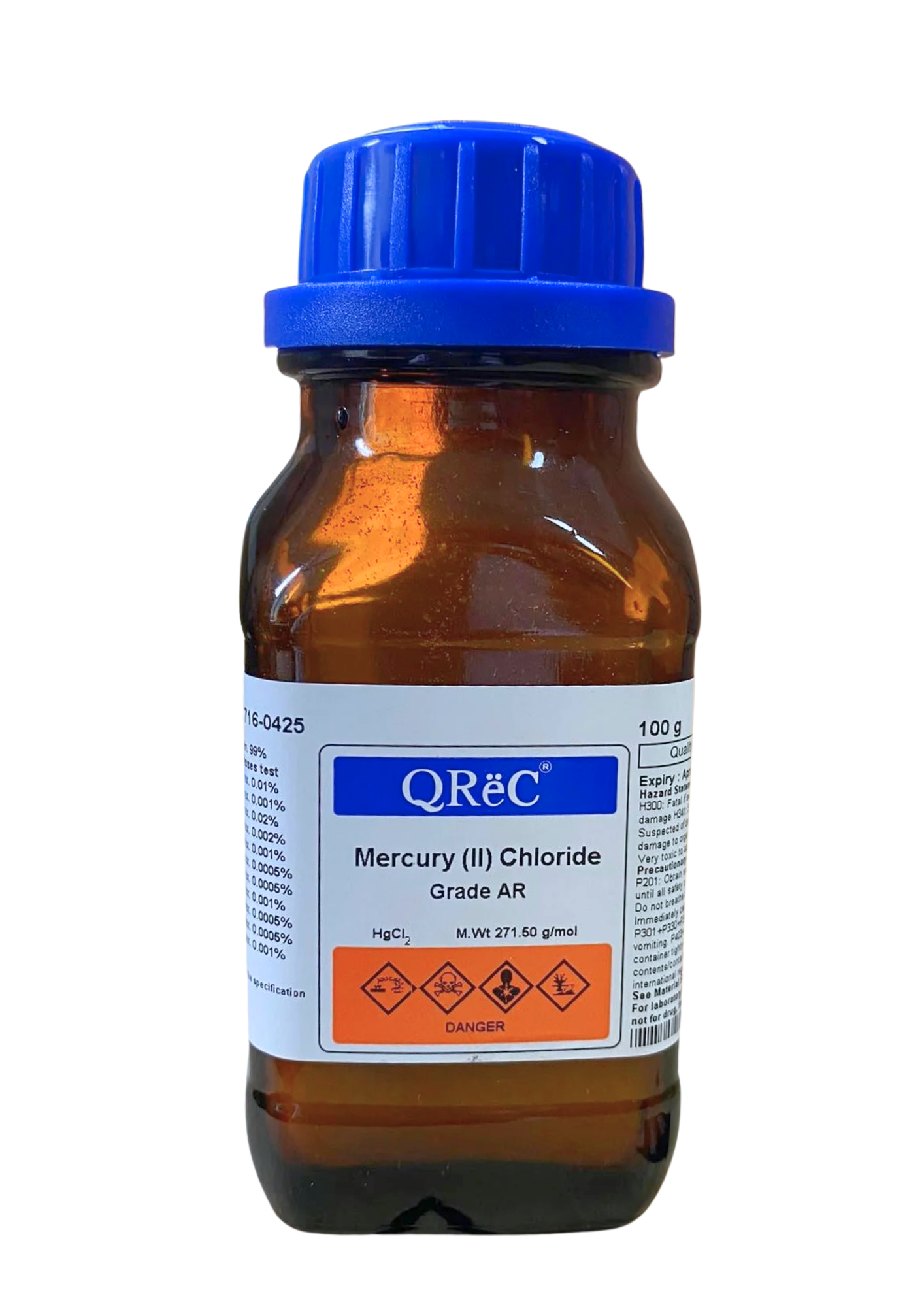
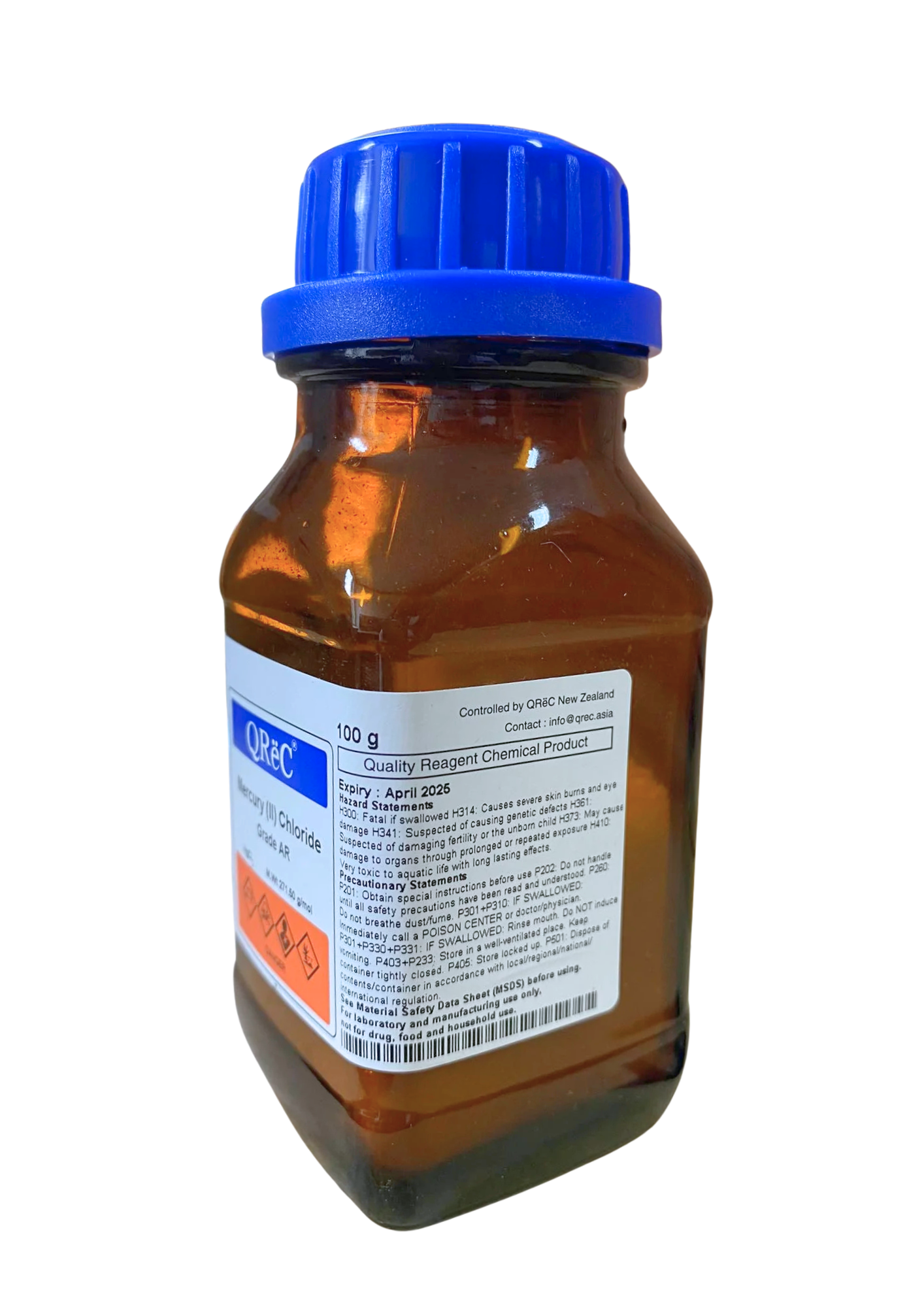
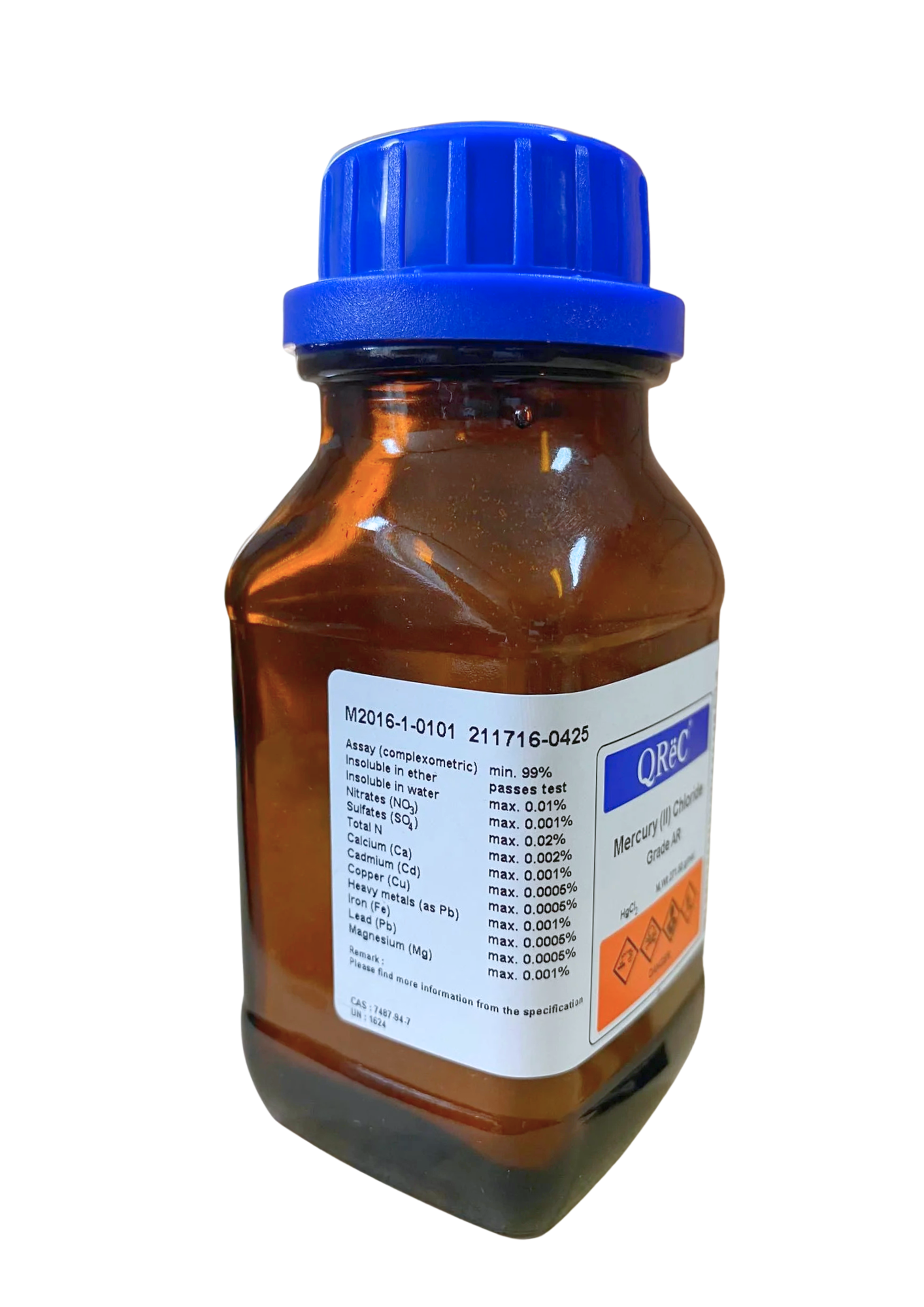
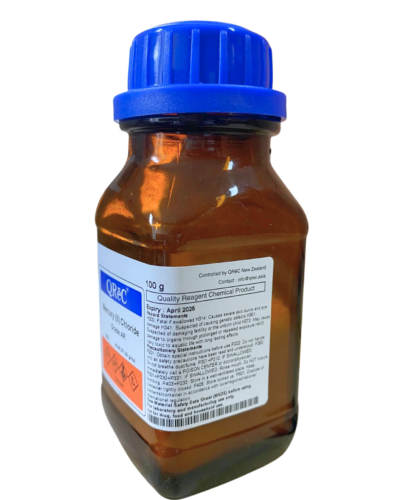
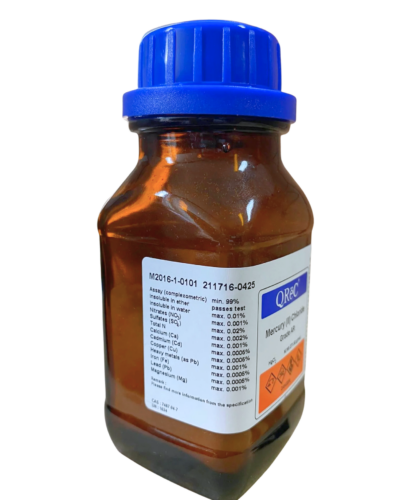
Mercuric chloride or Corrosive sublimate or Mercury dichloride or Mercuric dichloride
Product Overview & Quality
- Product Name: Mercury (II) chloride 99% or Mercuric chloride or Corrosive sublimate or Mercury bichloride or Mercury dichloride
- Brand: QReC (Product Code: QR-M2016-1-0101)
- Grade: Analytical Reagent High Purity Grade (AR Grade / ACS Grade) featuring a certified chemical assay of not less than 99.0 percent in a 100 g regulated laboratory container. Purified and multi-crystallized under strict QReC global laboratory specifications without anti-caking additives. Water-insoluble matter is tightly restricted below 0.01 percent, and diethyl ether-insoluble matter is held below 0.01 percent. Non-volatile residue after sublimation is strictly limited below 0.02 percent. Trace impurities of mercurous chloride (mercury I chloride), iron, calcium, magnesium, and foreign heavy metals are controlled at minimal parts-per-million levels. Dry, uniform white crystalline prisms dissolve cleanly in water and organic solvents without yielding turbidity. Packaged in a heavy-duty, light-protective, chemical-resistant container equipped with an airtight double-seal tamper-evident safety closure.
- Physical Properties: Colorless transparent prismatic crystals, white crystalline masses, or fine white powder. Odorless with an acrid, metallic, highly astringent taste (fatal poison – strictly never taste). Thermodynamically stable in sealed containers; slowly sublimates at room temperature and volatilizes rapidly upon heating. Melting point is approximately 276 to 277 degrees Celsius; boiling/sublimation point is approximately 302 to 304 degrees Celsius. Non-combustible inorganic salt. Aqueous solutions are distinctly acidic (pH approximately 3.2 to 4.7 for a 5 percent aqueous solution at room temperature) due to slight hydrolysis.
- Solubility: Moderately soluble in water at room temperature (approximately 6.5 to 7.4 grams per 100 milliliters at 20 degrees Celsius; solubility increases dramatically in boiling water, exceeding 50 to 60 grams per 100 milliliters); freely soluble in ethanol, methanol, diethyl ether, glycerol, and ethyl acetate.
- Key Use: Universally utilized as a premier chemical reagent for preparing metal amalgams (most notably aluminium amalgam and zinc amalgam) used as selective, chemoselective reducing agents in complex organic and pharmaceutical synthesis. Extensively applied in analytical wet chemistry as an oxidizing titrant component in the determination of iron (II) ores, where it scavenges excess tin (II) chloride without oxidizing ferrous ions prior to redox titration. Heavily employed as an essential fixative component in histological and cytological fixative mixtures (such as Zenker’s fluid, Helly’s fluid, and B-5 fixative) to achieve superior cellular detail, nuclear preservation, and brilliant trichrome staining. Serves as a potent surface disinfectant and biocide for surface-sterilizing refractory explants in plant tissue culture workflows. Used as a specialized catalyst in organic reactions and a chemical intermediate in organomercurial research.
Safety & Hazards (Fatal Toxic, Severe Corrosive, Nephrotoxin, Mutagen & Aquatic Hazard)
- Classification: Fatal if swallowed (Acute Toxicity Oral Category 1/2). Fatal in contact with skin (Acute Toxicity Dermal Category 1/2). Causes severe skin burns and eye damage (Skin Corrosion Category 1B / Serious Eye Damage Category 1). Suspected of causing genetic defects (Germ Cell Mutagenicity Category 2). May damage the unborn child (Reproductive Toxicity Category 1B). Causes damage to organs (Kidneys, Central Nervous System, Brain) through prolonged or repeated exposure (Specific Target Organ Toxicity – Repeated Exposure Category 1). Very toxic to aquatic life with long lasting effects (Aquatic Acute/Chronic Category 1).
- Health Risks: Direct ocular contact causes catastrophic chemical burns, irreversible corneal ulceration, and total blindness. Dermal contact induces acute caustic burns, blistering, necrosis, and rapid systemic percutaneous absorption of fatal doses of inorganic mercury into the bloodstream. Inhalation of sublimated vapor or dust attacks the mucous membranes of the respiratory tract, provoking corrosive tracheobronchitis, chemical pneumonitis, pulmonary edema, and respiratory arrest. Critical Chronic Systemic Poisoning: Mercury compounds induce severe nephrotoxicity (acute tubular necrosis and renal failure) and profound central nervous system destruction, characterized by tremors (mercurial tremor), ataxia, erethism, memory loss, depression, and severe neuropathies. Acute ingestion of even milligram quantities causes severe necrosis and perforation of the gastrointestinal mucosa, burning oral pain, vomiting of blood, abdominal cramps, melena, circulatory collapse, and fatal renal shutdown.
- First Aid Measures: Immediately flush affected eyes with an abundant stream of clean flowing water for at least 20 minutes while stripping contaminated clothing; remove contact lenses promptly and seek immediate emergency ophthalmological care. Wash exposed skin with copious running water and soap for at least 20 minutes. In case of inhalation, relocate the victim to fresh air; administer oxygen if dyspneic and transport to an emergency medical facility immediately. If accidentally swallowed, do NOT induce vomiting due to corrosive perforation risks; thoroughly rinse mouth, immediately administer raw egg whites beaten with water or large volumes of milk (to precipitate mercury ions as unabsorbable proteinates), and transport to an intensive care medical facility immediately (systemic chelation therapy with BAL/dimercaprol or DMSA is critical).
Handling & Storage
- Storage: Regulated Fatal Poison, Severe Corrosive, and Sublimating Metal Salt. Must be preserved in its original, tightly closed QReC container stored within a dedicated, securely locked poison cabinet. Store in a clean, strictly dry, cool, and well-ventilated dedicated chemical store at controlled temperatures (below 25 degrees Celsius), sheltered from atmospheric moisture and direct solar radiation. Keep strictly segregated from reactive metal powders (such as aluminium, zinc, copper, and iron), reducing agents, strong caustic alkalis, ammonia, sulfides, and organic materials.
- Precautions: Full specialized chemical PPE is mandatory, including double-layered heavy chemical-resistant gloves, splash-proof safety goggles paired with a full-face shield, a certified particulate and mercury-vapor respirator, and a chemical-resistant apron. “Mandatory Safety Protocol: Dispense, weigh, and handle mercury (II) chloride exclusively and strictly inside a certified, properly functioning laboratory fume hood. Avoid any dust generation or inhalation.” Keep a specialized mercury spill kit readily accessible. Never discharge mercury-containing wastes or rinse waters into municipal sewers; strictly segregate and collect in dedicated hazardous mercury heavy-metal waste streams.