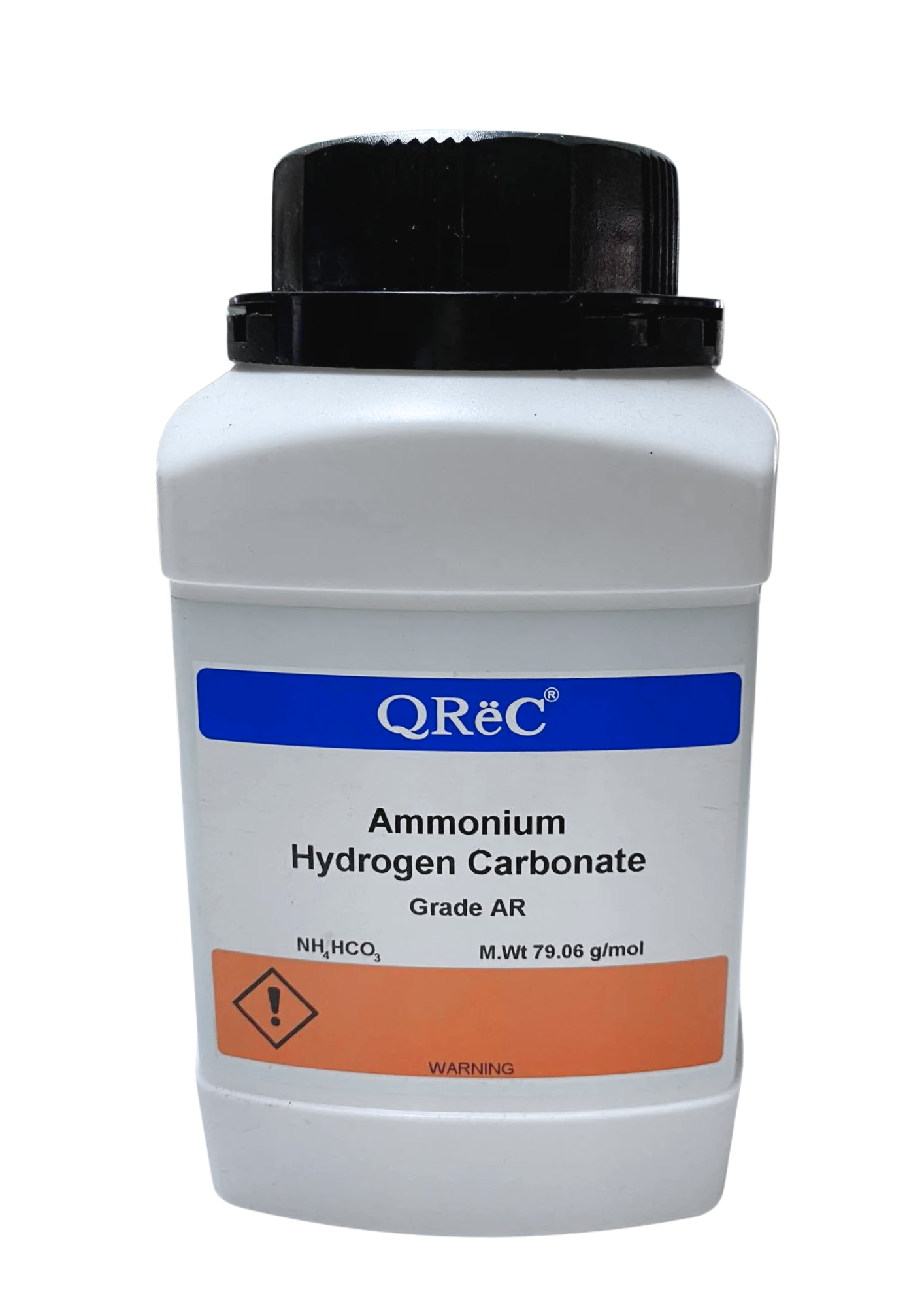
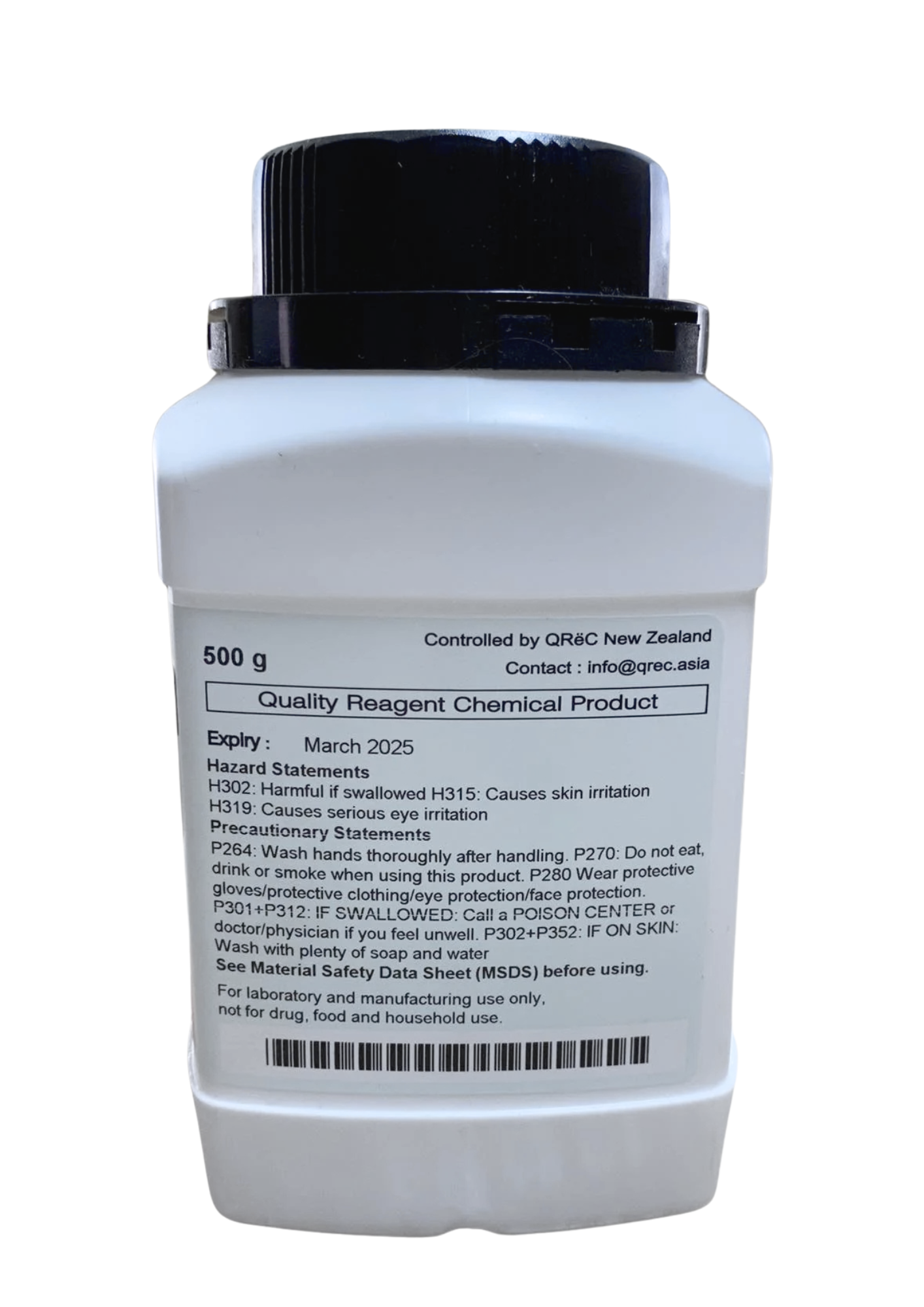
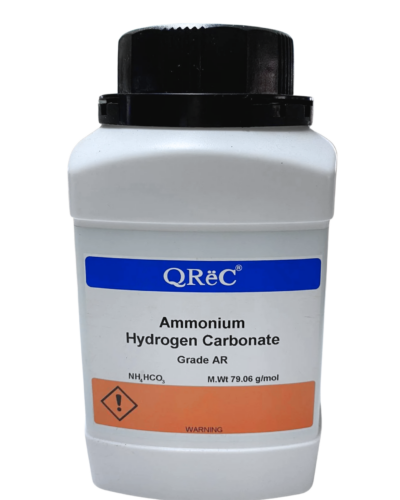
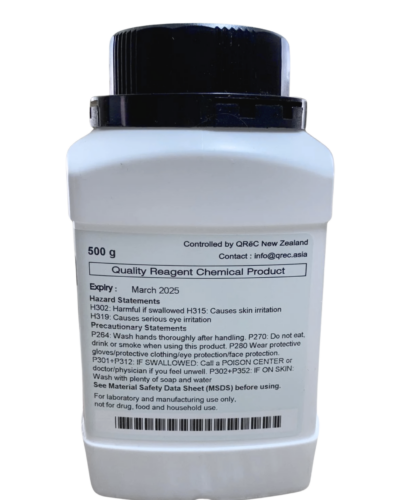
Ammonium hydrogen carbonate or Ammonium bicarbonate or Ammonium acid carbonate
Product Overview & Quality
- Product Name: Ammonium hydrogen carbonate or Ammonium bicarbonate or Ammonium acid carbonate
- Brand: QReC (Product Code: QR-A5077-1-0500)
- Grade: Analytical Reagent (AR Grade) featuring a certified chemical purity of not less than 99 percent. Manufactured and refined under strict QReC global laboratory standards. Rigorously tested to enforce ultra-low ppm thresholds of chloride, sulfate, phosphate, non-volatile residue, and trace heavy metals (such as iron, lead, copper, arsenic, and zinc). Dry, uniform crystal profile dissolves cleanly and completely in water, yielding transparent, particulate-free solutions. Packaged in a heavy-duty, chemical-resistant polymer container engineered with a secure hermetic seal to prevent sublimative mass loss and ambient humidity ingress.
- Physical Properties: White crystalline powder or colorless crystals. Faint, characteristic ammoniacal odor. Slowly decomposes and volatilizes at room temperature, and dissociates rapidly above 60 degrees Celsius into gaseous ammonia, carbon dioxide, and water vapor, leaving zero solid residue. Aqueous solutions are mildly basic (pH approximately 7.8 to 8.2 for an aqueous solution). Non-combustible.
- Solubility: Readily soluble in water (approximately 17 to 22 grams per 100 milliliters at 20 degrees Celsius; dissolution is endothermic, noticeably chilling the solution); practically insoluble in ethanol, acetone, and diethyl ether.
- Key Use: Heavily utilized as the definitive volatile mobile phase buffer salt in Liquid Chromatography-Mass Spectrometry (LC-MS / LC-MS-MS) workflows, maintaining mildly alkaline pH conditions (pH 7.5 to 8.5) while volatilizing completely within the electrospray ionization (ESI) chamber, eliminating salt crusting, source contamination, and ionization suppression. Universally employed as the standard buffer in bottom-up proteomics for in-gel and in-solution tryptic digestion of proteins to maintain optimal trypsin enzymatic activity. Widely used as a volatile sublimable lyoprotectant buffer in freeze-drying (lyophilization) protocols for proteins, peptides, and pharmaceutical formulations. Serves as an effective precipitating and pH-regulating agent in nanomaterial synthesis, advanced inorganic chemistry, and specialty purification schemes.
Safety & Hazards (Harmful & Irritant)
- Classification: Harmful if swallowed. Causes skin irritation. Causes serious eye irritation. May cause respiratory irritation.
- Health Risks: Direct ocular exposure triggers stinging discomfort, redness, and lacrimation. Dermal contact may produce transient mild erythema and dryness. Inhalation of particulate dust or released ammonia vapors irritates the mucous membranes of the respiratory tract, causing coughing, sneezing, and throat irritation. Ingestion produces gastric irritation, nausea, vomiting, abdominal discomfort, and gas bloating due to carbon dioxide effervescence within the stomach.
- First Aid Measures: Immediately flush affected eyes or skin with plenty of continuous flowing clean water for at least 15 minutes while stripping contaminated clothing. In case of inhalation, relocate the individual to fresh air promptly. If accidentally swallowed, thoroughly rinse mouth with water, drink water in moderate amounts, and seek medical advice if discomfort persists.
Handling & Storage
- Storage: Thermally Sensitive and Volatile Buffer Salt. Elevated ambient temperatures accelerate decomposition into ammonia and carbon dioxide gases, creating potential container pressurization. Must be preserved in its original, tightly closed QReC container. Store in a cool, dry, and well-ventilated dedicated chemical store at controlled temperatures (preferably between 15 and 25 degrees Celsius), sheltered from direct sunlight and thermal sources. Keep strictly segregated from strong mineral acids (which provoke violent effervescence) and strong bases (which aggressively liberate pungent ammonia gas).
- Precautions: Standard laboratory PPE is mandatory, including protective chemical gloves, safety glasses, and a lab coat. Open container caps slowly and directed away from the face to vent any accumulated vapor pressure. Re-seal container tightly immediately after sampling to prevent sublimative loss and preserve buffer fidelity.