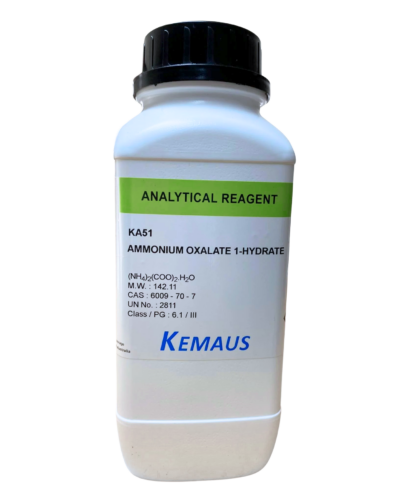
Ammonium oxalate monohydrate
Product Overview & Quality
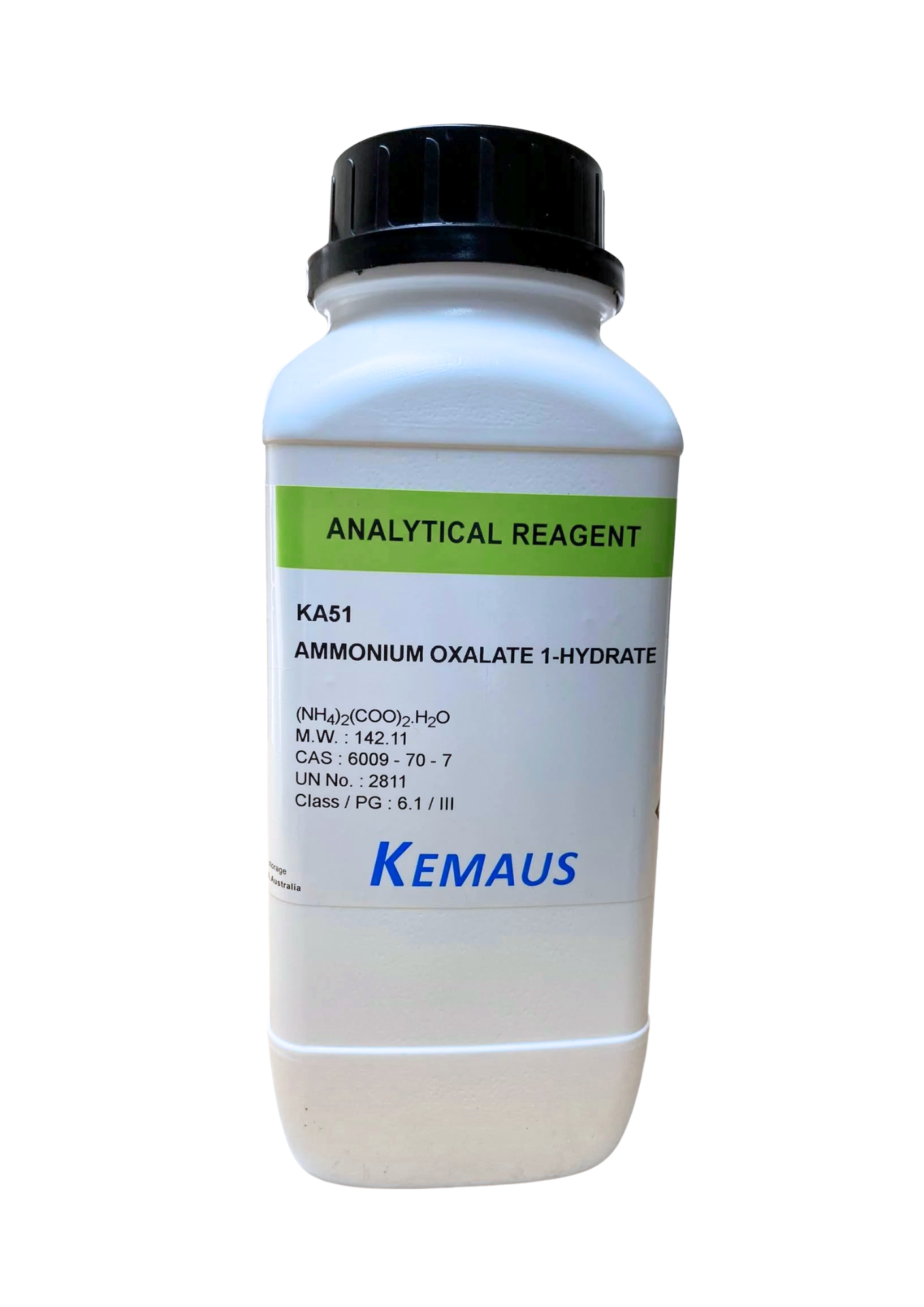
- Product Name: Ammonium oxalate monohydrate
- Brand: Kemaus (Product Code: KA-051)
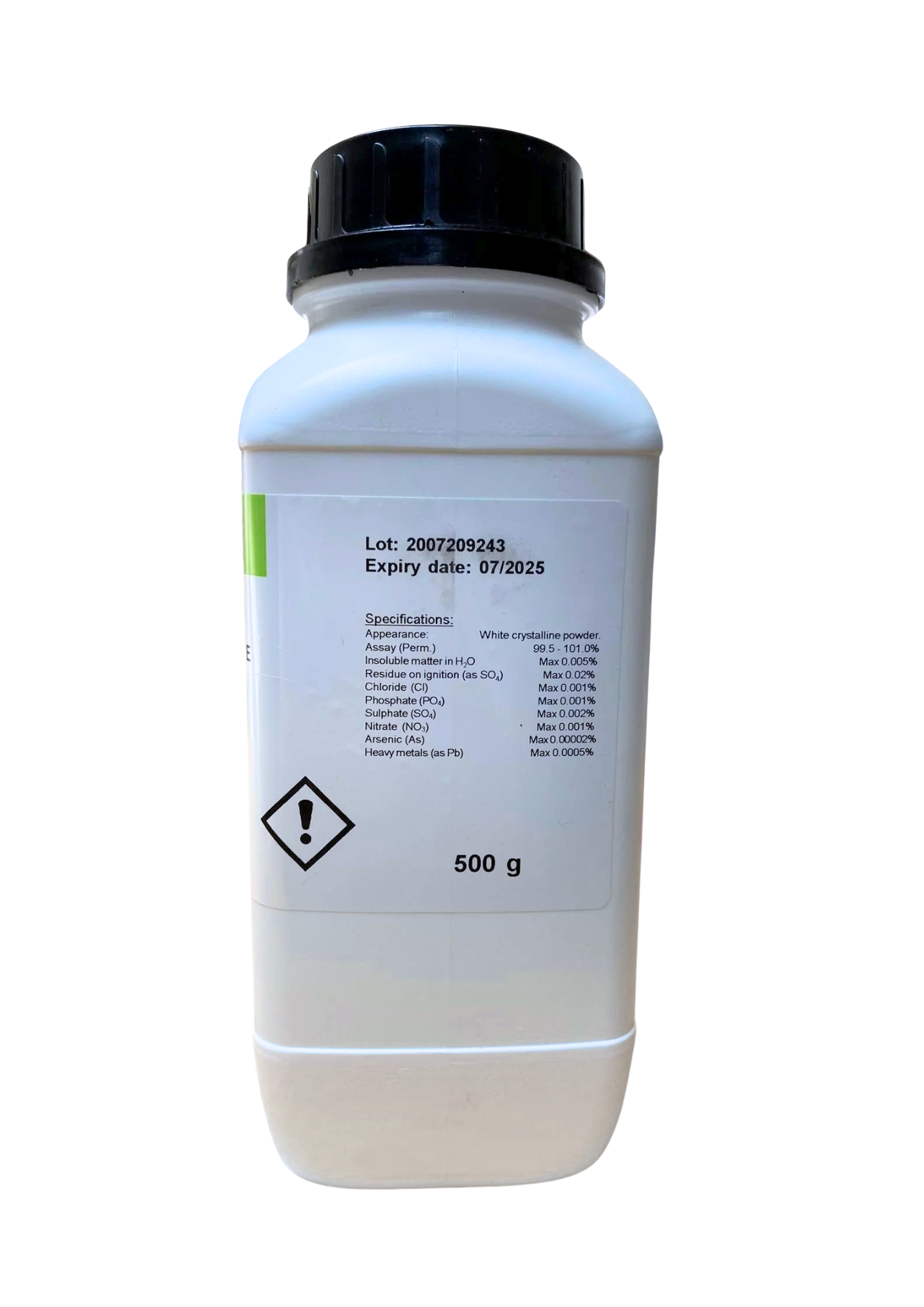
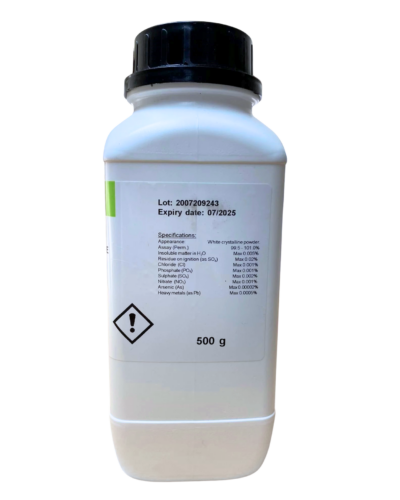
- Grade: Analytical Reagent (AR Grade) with a premium purity of 99.5 percent or higher. Manufactured and checked under strict Kemaus laboratory standards, ensuring exceptionally low trace contamination of chlorides, sulfates, and heavy metals. This guarantees high precision and absolute clarity in quantitative analysis.
- Physical Properties: Odorless, white crystalline powder or colorless crystals.
- Solubility: Soluble in water (solubility increases substantially in hot water); insoluble in alcohol. Yields a mildly acidic aqueous solution.
- Key Use: Heavily utilized as a primary precipitating reagent for the isolation and quantitative determination of calcium, lead, and rare-earth metal ions in gravimetric analysis. Commonly used in specialized analytical chemistry protocols for studying ionic precipitation and buffer baselines. Also applied in metallurgical research for metal surface processing, and used in biomedical R&D to study blood anticoagulant mechanisms in laboratory models.
Safety & Hazards (Critical)
- Classification: Harmful if swallowed. Harmful in contact with skin. Causes serious eye irritation. Causes skin irritation.
- Health Risks: Direct eye contact triggers serious stinging irritation, watering, and localized redness. Skin contact results in irritation and the material can be absorbed through intact skin with toxic risks. Ingestion causes acute oxalate poisoning, heavily irritating gastrointestinal tissues and binding with systemic calcium, which can lead to severe renal or kidney damage.
- First Aid Measures: Flush affected eyes or skin immediately with plenty of flowing water for at least 15 minutes. If swallowed, rinse mouth thoroughly with water and seek immediate medical attention.
Handling & Storage
- Storage: Store in the original, tightly sealed Kemaus container. Keep in a cool, dry, and well-ventilated dedicated chemical storage area at stable room temperature (below 30 degrees Celsius). Keep strictly away from strong acids, strong oxidizing agents, and excessive heat.
- Precautions: Wear standard personal protective equipment (PPE), including laboratory chemical gloves, safety glasses, and a fine particulate dust respirator. Prevent dust cloud formation and avoid inhalation of airborne particles during routine handling.