
Boric acid (Hydrogen borate)
Product Overview & Quality
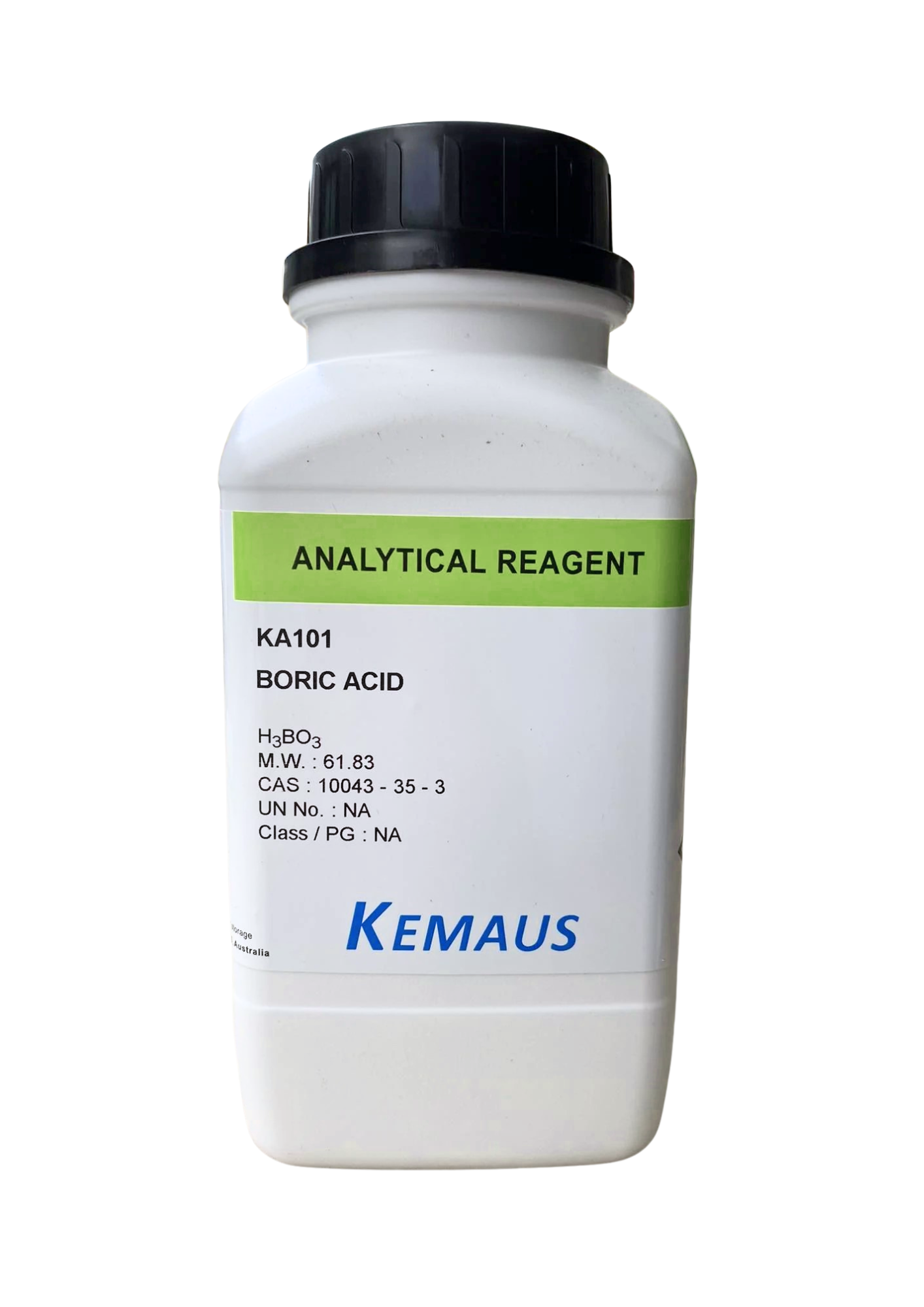
- Product Name: Boric acid (Hydrogen borate)
- Brand: Kemaus (Product Code: KA-101)
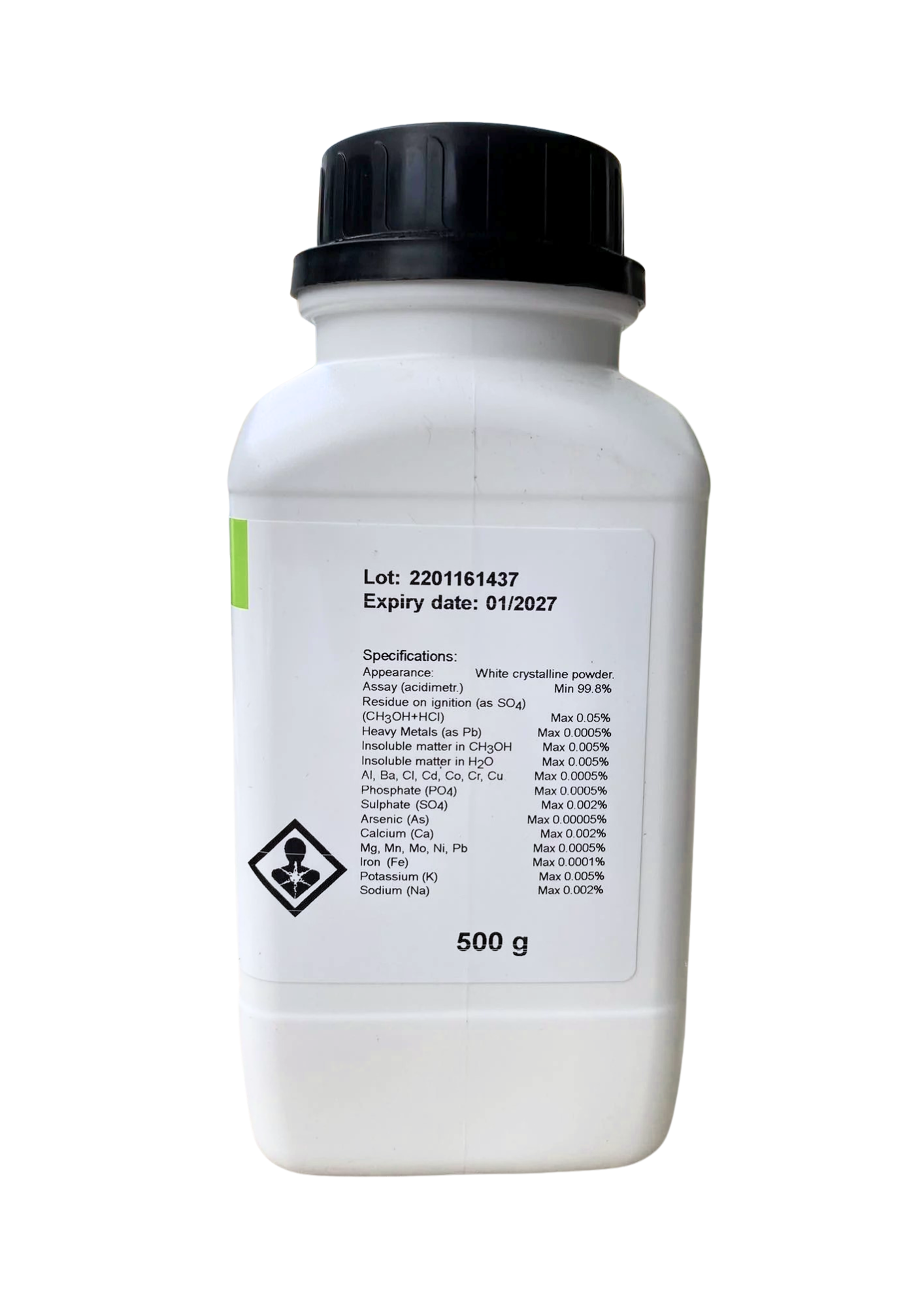
- Grade: Analytical Reagent (AR Grade) with an exceptional premium purity of 99.8 percent or higher. Meticulously manufactured and verified under Kemaus strict laboratory quality control standards. It guarantees ultra-low trace contamination of chlorides, sulfates, phosphates, and heavy metals, ensuring maximum accuracy and precision for sensitive analytical baselines.
- Physical Properties: Odorless, fine white crystalline powder or colorless crystalline flakes with a slightly unctuous feel.
- Solubility: Moderately soluble in water (solubility increases significantly in hot water); readily soluble in alcohol and glycerin. Yields a mildly acidic aqueous solution.
- Key Use: Widely utilized for preparing standard laboratory buffer solutions, particularly borate buffers to stabilize weakly alkaline chemical environments. Heavily applied as a high-purity precursor for synthesizing specialized borate derivatives and fabricating technical borosilicate glass in materials science research. Also functions as a reliable reference standard and control reagent in academic, industrial, and clinical testing laboratories.
Safety & Hazards (Critical)
- Classification: May damage fertility or the unborn child (Reproductive Toxicity). Causes serious eye irritation.
- Health Risks: Direct eye contact with dust triggers minor to moderate stinging irritation, watering, and temporary redness. Inhalation of fine airborne dust particles may irritate the upper respiratory tract, inducing coughing. Prolonged, repeated, or significant exposure over time carries cumulative risks that may harm human reproductive systems.
- First Aid Measures: Flush eyes or skin immediately with plenty of flowing water for at least 15 minutes. Seek medical evaluation if irritation develops or persists.
Handling & Storage
- Storage: Store in the original, tightly sealed Kemaus container. Keep in a cool, strictly dry, and well-ventilated space at stable room temperature (below 30 degrees Celsius). Extremely stable under normal environmental storage conditions, but shield from targeted high humidity to prevent chemical caking.
- Precautions: Wear standard personal protective equipment (PPE), including laboratory chemical gloves, safety glasses, and a fine particulate dust respirator. Avoid generating large airborne dust clouds during routine handling.