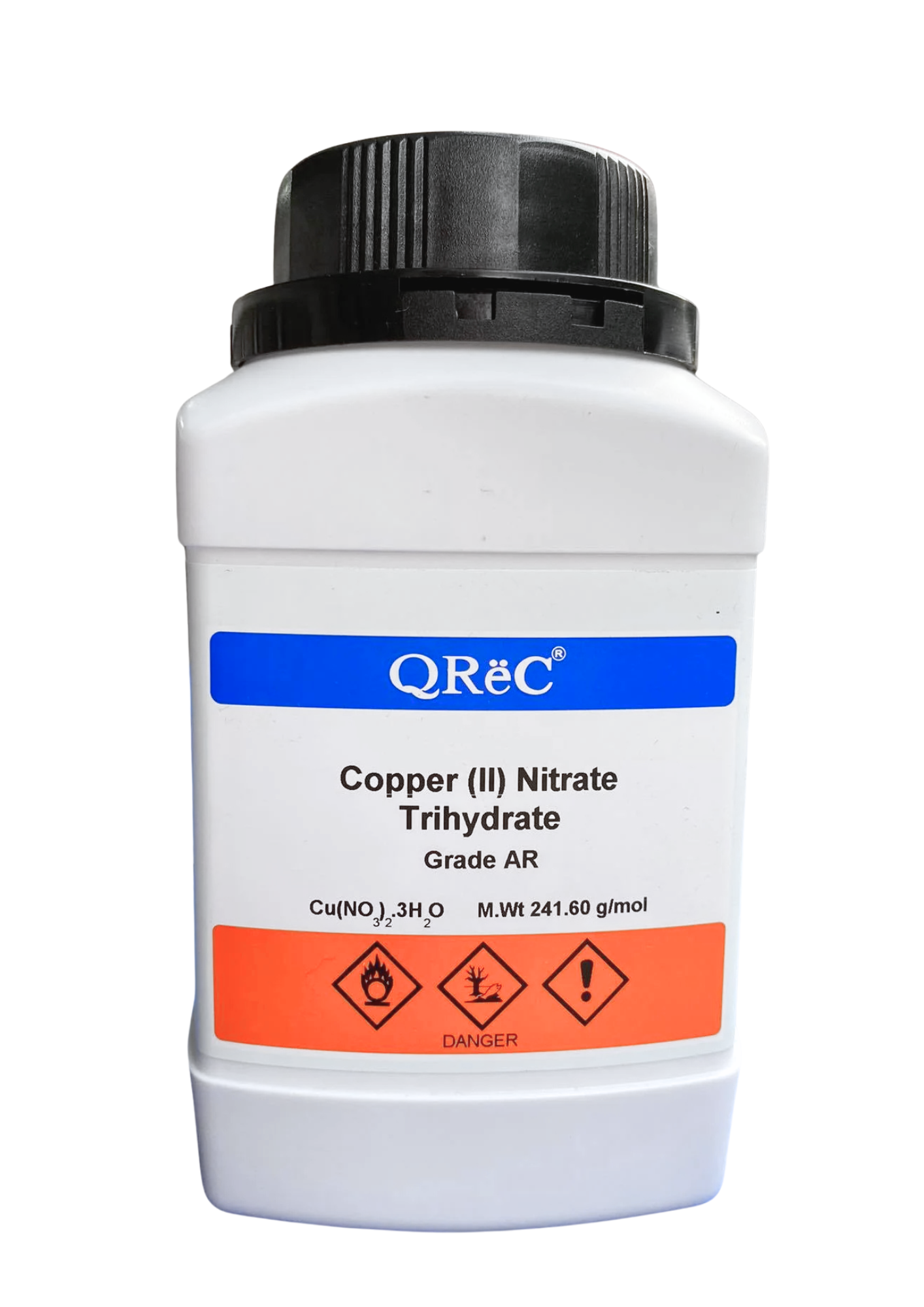
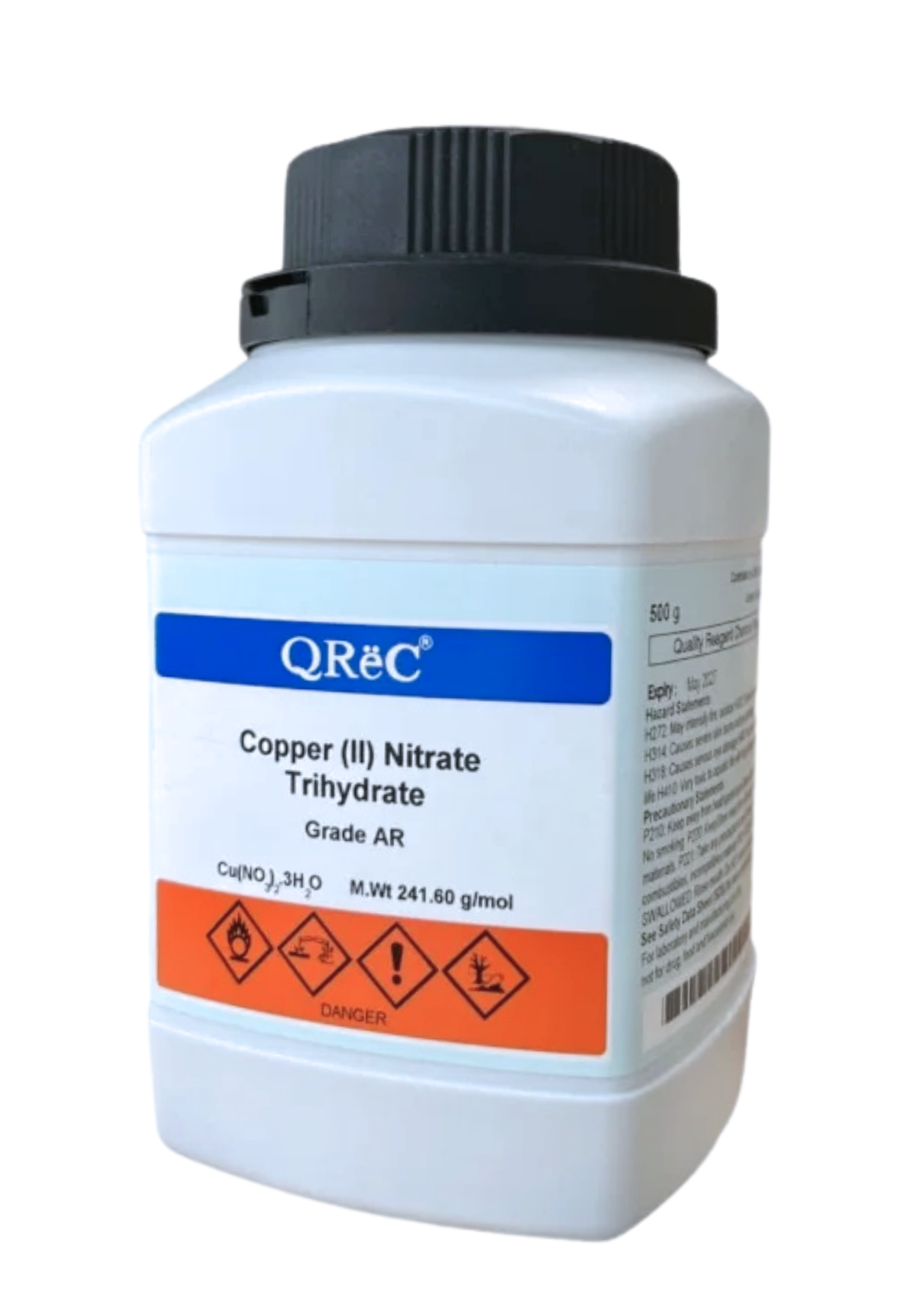
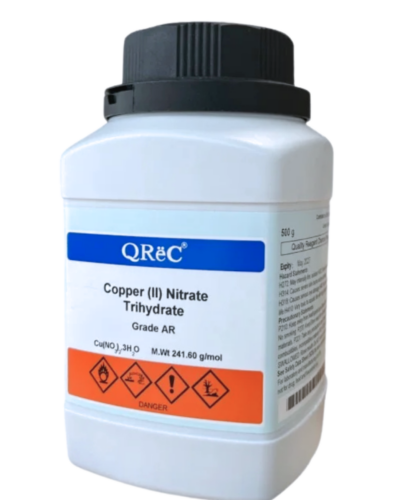
Copper (II) nitrate trihydrate 99.5% or Cupric nitrate trihydrate or Dicopper dinitrate trihydrate or Nitric acid copper (II) salt trihydrate
Product Overview & Quality
- Product Name: Copper (II) nitrate trihydrate 99.5% or Cupric nitrate trihydrate or Dicopper dinitrate trihydrate or Nitric acid copper (II) salt trihydrate
- Brand: QReC (Product Code: QR-C5064-1-0500)
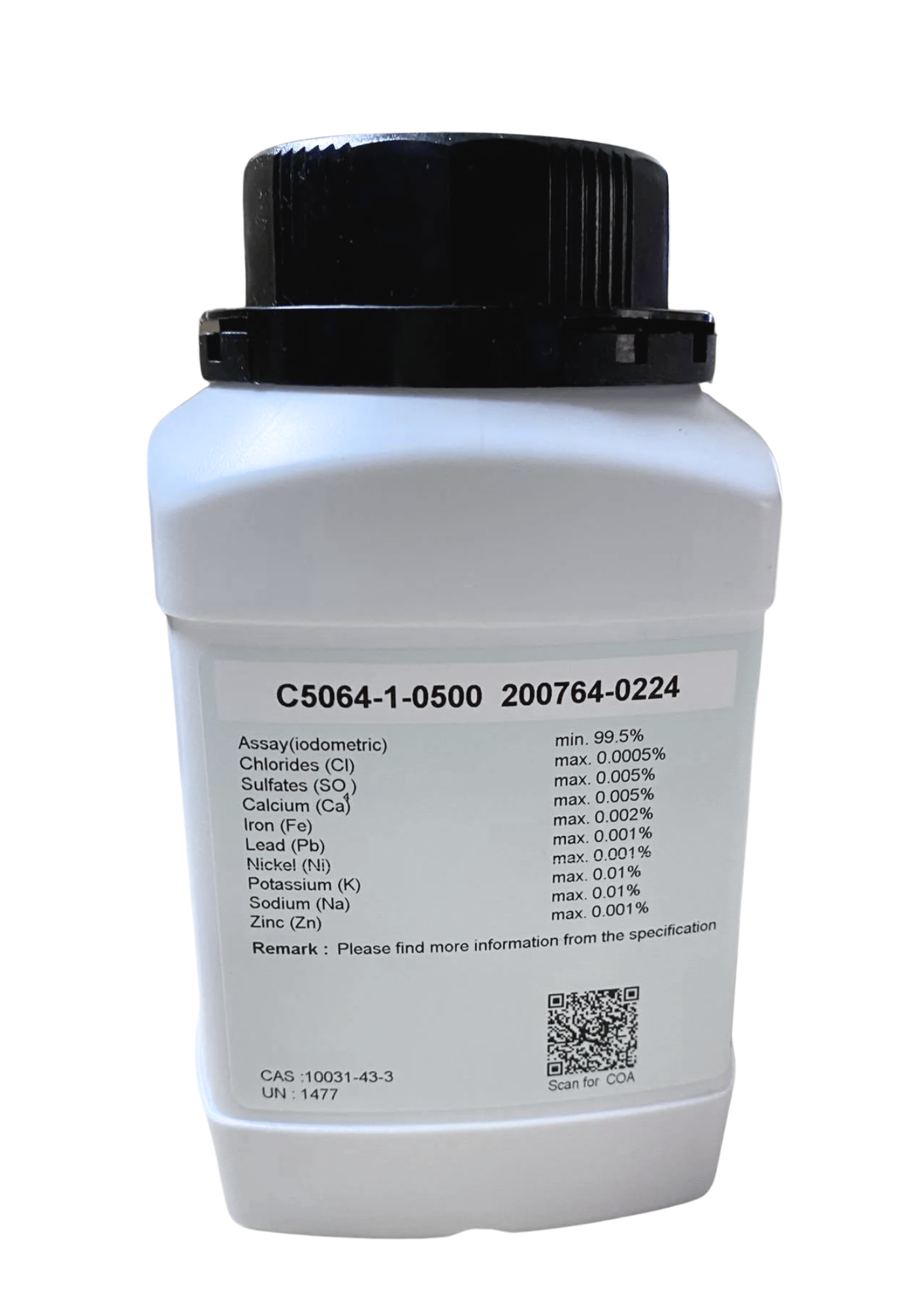
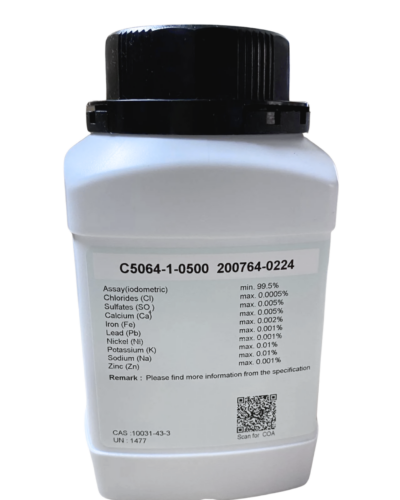
- Grade: Analytical Reagent High Purity Grade (AR Grade) featuring an exceptional certified chemical assay of not less than 99.5 percent. Manufactured and multi-crystallized under strict QReC global laboratory specifications, maintaining stoichiometric trihydrate hydration. Rigorously tested to enforce minimal water-insoluble matter (strictly below 0.005 percent), alongside ultra-low ppm limits of chloride, sulfate, ammonium, calcium, magnesium, potassium, sodium, and extraneous heavy metals (such as iron, lead, zinc, nickel, and arsenic). Displays uniform, dry azure-blue crystals dissolving completely in water to yield clear, particulate-free bright blue solutions. Packaged in a heavy-duty, corrosion-resistant polymer container equipped with an airtight seal to prevent deliquescence.
- Physical Properties: Deep azure-blue crystals, blue crystalline granules, or deliquescent prismatic needles. Odorless. Highly deliquescent, rapidly absorbing atmospheric moisture to liquefy. Melting point is approximately 114 degrees Celsius. Non-combustible solid itself, but functions as a potent inorganic oxidizing agent (Category 2) capable of violently accelerating the combustion of flammable matter. Aqueous solutions are acidic (pH approximately 3.0 to 4.0 for a 5 percent aqueous solution at room temperature) and exhibit corrosive properties toward metals and biological tissues.
- Solubility: Readily and highly soluble in water (approximately 135 to 140 grams per 100 milliliters at 20 degrees Celsius, increasing significantly in boiling water); freely soluble in ethanol, methanol, acetone, dioxane, and concentrated aqueous ammonia (forming an intense deep royal blue tetraamminecopper complex).
- Key Use: Universally utilized as a high-purity inorganic precursor for preparing supported copper catalysts used in hydrogenation, dehydrogenation, and industrial methanol synthesis. Extensively applied in materials science for synthesizing cupric oxide (CuO) nanoparticles, high-temperature superconducting cuprates (HTS), and electro-ceramic materials via sol-gel and thermal calcination pathways. Heavily used as a versatile, mild nitrating and oxidizing reagent in synthetic organic chemistry, notably when impregnated on silica gel or montmorillonite clay (Menke conditions) for the selective nitration of aromatic substrates. Serves as a chemical patination and surface-treatment agent for imparting decorative brown, bronze, and antique green verdigris coatings onto brass and copper architectural elements. Functions as an analytical reference standard and calibration reagent for copper quantification via Atomic Absorption Spectrometry (AAS) and wet chemical testing.
Safety & Hazards (Oxidizer, Corrosive Skin/Eye Damage & Severe Aquatic Hazard)
- Classification: May intensify fire; oxidizer (Oxidizing Solid Category 2). Harmful if swallowed. Causes severe skin burns and eye damage. Causes serious eye damage. Very toxic to aquatic life with long lasting effects.
- Health Risks: Aqueous matrices are acidic and oxidizing. Direct ocular contact triggers rapid chemical ulceration, severe pain, conjunctival edema, corneal clouding, and risk of permanent blindness. Dermal exposure causes localized caustic stinging, chemical burns, blistering, deep tissue ulceration, and peeling. Inhalation of particulate dust or mists aggressively irritates the respiratory tract, causing sneezing, coughing, choking, dyspnea, and ulceration of the nasal septum. Ingestion produces violent corrosive gastroenteritis, burning oral pain, characteristic blue-green vomitus, hematemesis, severe abdominal cramping, circulatory collapse, hemolytic anemia, acute tubular necrosis, and hepatic failure from acute copper toxicity.
- First Aid Measures: Immediately flush affected eyes with an abundant stream of clean flowing water for at least 15 to 20 minutes while stripping contaminated clothing; remove contact lenses promptly and seek immediate emergency medical care. Wash exposed skin thoroughly with soap and water for at least 15 minutes. In case of dust inhalation, rapidly relocate the victim to fresh air. If accidentally swallowed, do NOT induce vomiting; thoroughly rinse mouth, administer moderate quantities of water or milk, and seek immediate, urgent emergency medical attention.
Handling & Storage
- Storage: Dangerous Oxidizer, Corrosive, Deliquescent Solid, and Severe Aquatic Pollutant. Ambient atmospheric exposure triggers rapid liquefaction, and contact with combustible materials presents acute fire hazards. Must be preserved in its original, tightly closed QReC container placed in secondary containment within a dedicated chemical storage cabinet. Store in a clean, strictly dry, cool, and well-ventilated dedicated chemical store at controlled temperatures (below 25 to 30 degrees Celsius), sheltered from atmospheric humidity and direct sunlight. Keep strictly segregated from organic chemicals, flammable solvents, strong reducing agents, finely powdered metals, sulfur, phosphorus, strong alkalis, and combustible materials.
- Precautions: Comprehensive specialized PPE is mandatory, including chemical-resistant nitrile gloves, splash-proof safety goggles, a certified particulate dust respirator, and an impermeable lab apron/coat. Perform weighing, powder handling, and solution compounding inside a certified laboratory fume hood. Re-seal container cap tightly immediately after sampling. Never discharge copper-containing rinsates or wastewater into municipal sewers; collect exclusively in dedicated heavy-metal hazardous waste streams for certified chemical neutralization and disposal.