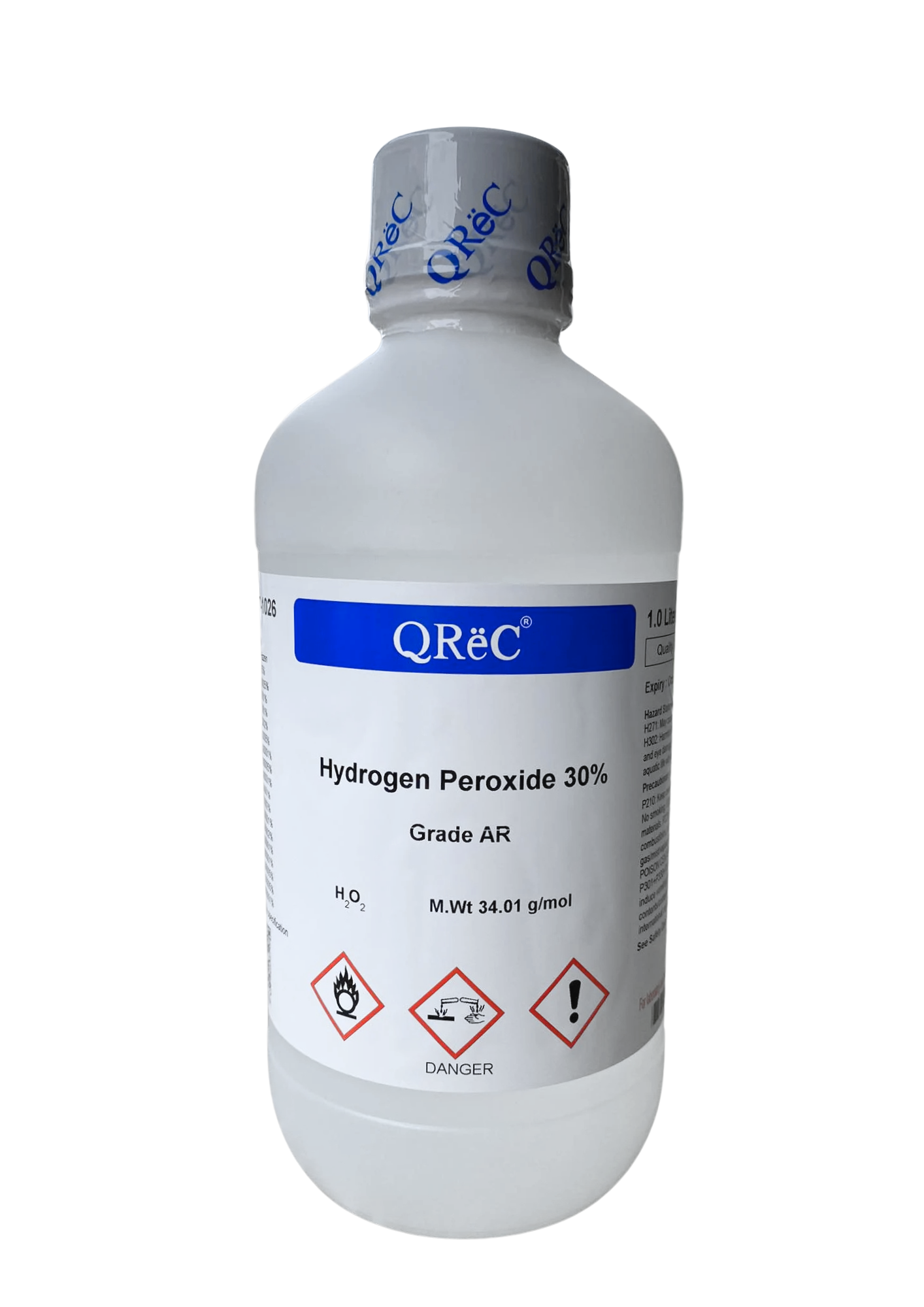
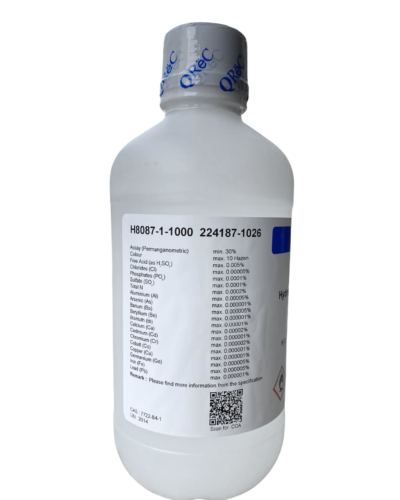
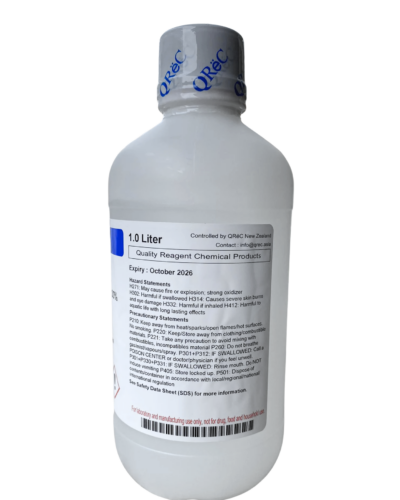
Hydrogen peroxide 30% or Hydrogen dioxide
Product Overview & Quality
- Product Name: Hydrogen peroxide 30% or Hydrogen dioxide
- Brand: QReC (Product Code: QR-H8087-1-2500)
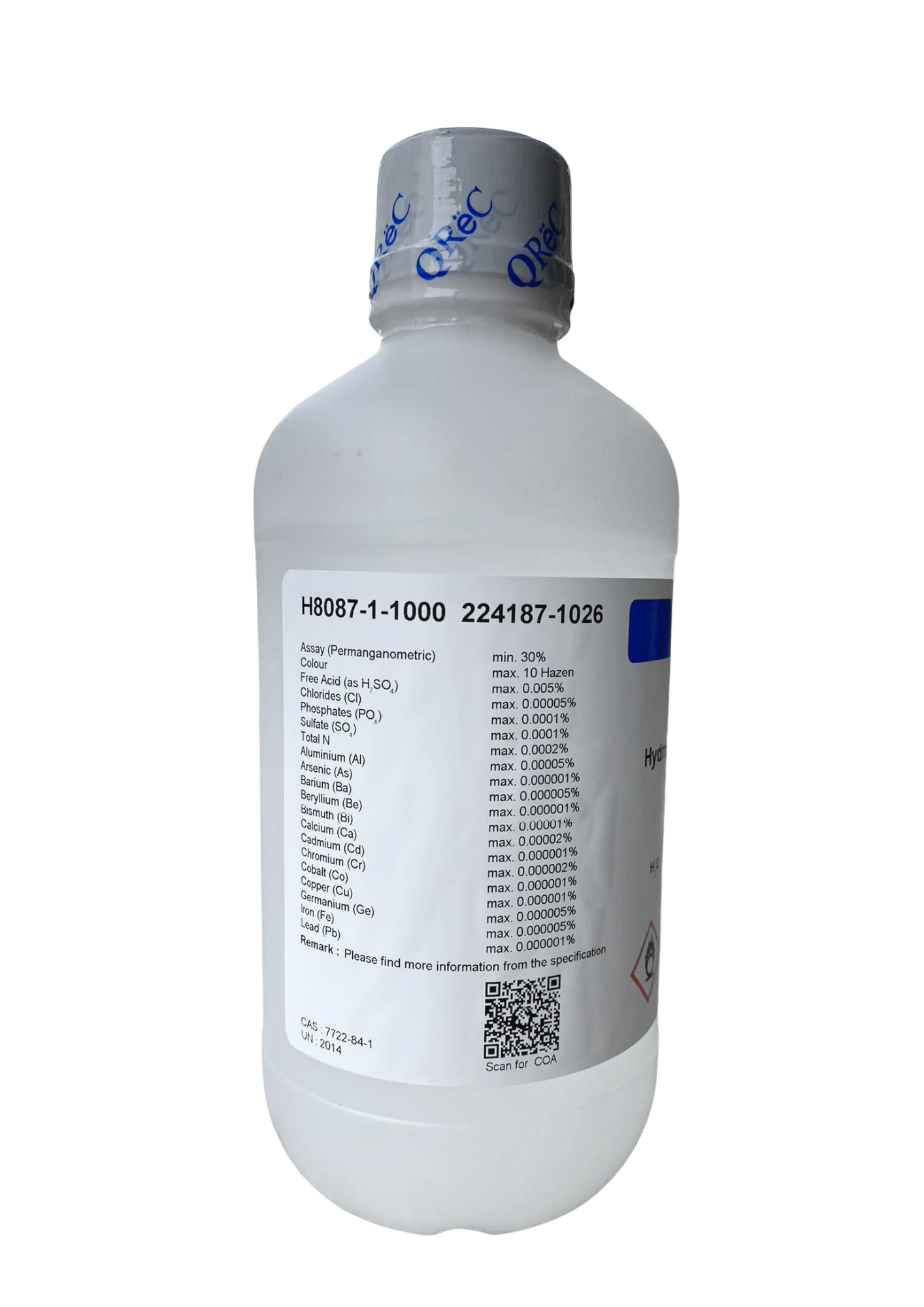
- Grade: Analytical Reagent (AR Grade) with a certified concentration of not less than 30 percent (weight/weight). Produced and tested in strict accordance with QReC global laboratory standards. Tightly monitored to maintain ultra-low ppm levels of heavy metals (such as iron, copper, lead, and nickel), free acids, non-volatile matter, chloride, sulfate, and phosphate, effectively preventing autocatalytic decomposition. Packaged in a heavy-duty, opaque plastic container equipped with a specialized vented safety cap to safely alleviate internal oxygen pressure build-up.
- Physical Properties: Clear, colorless liquid with a slightly higher viscosity than water and a faint, pungent, irritating odor. Non-combustible in itself, but acts as a powerful oxidizer that intensifies fire in combustible materials.
- Solubility: Completely miscible with water in all proportions; soluble in polar organic solvents such as alcohols and ethers under strictly controlled conditions.
- Key Use: Heavily utilized as a primary oxidizing agent in wet digestion and sample mineralization procedures, often combined with concentrated nitric acid or sulfuric acid for trace metal analysis via advanced analytical instrumentation. Widely applied in organic synthesis for targeted epoxidation and oxidation pathways. Routinely used as an effective bleaching and de-staining agent in chemical, biochemical, and textile research laboratories. Employed in microbiology for bacterial catalase enzymatic characterization and utilized in laboratory-scale wastewater treatment via advanced oxidation processes (Fenton oxidation).
Safety & Hazards (Critical & Strong Oxidizer)
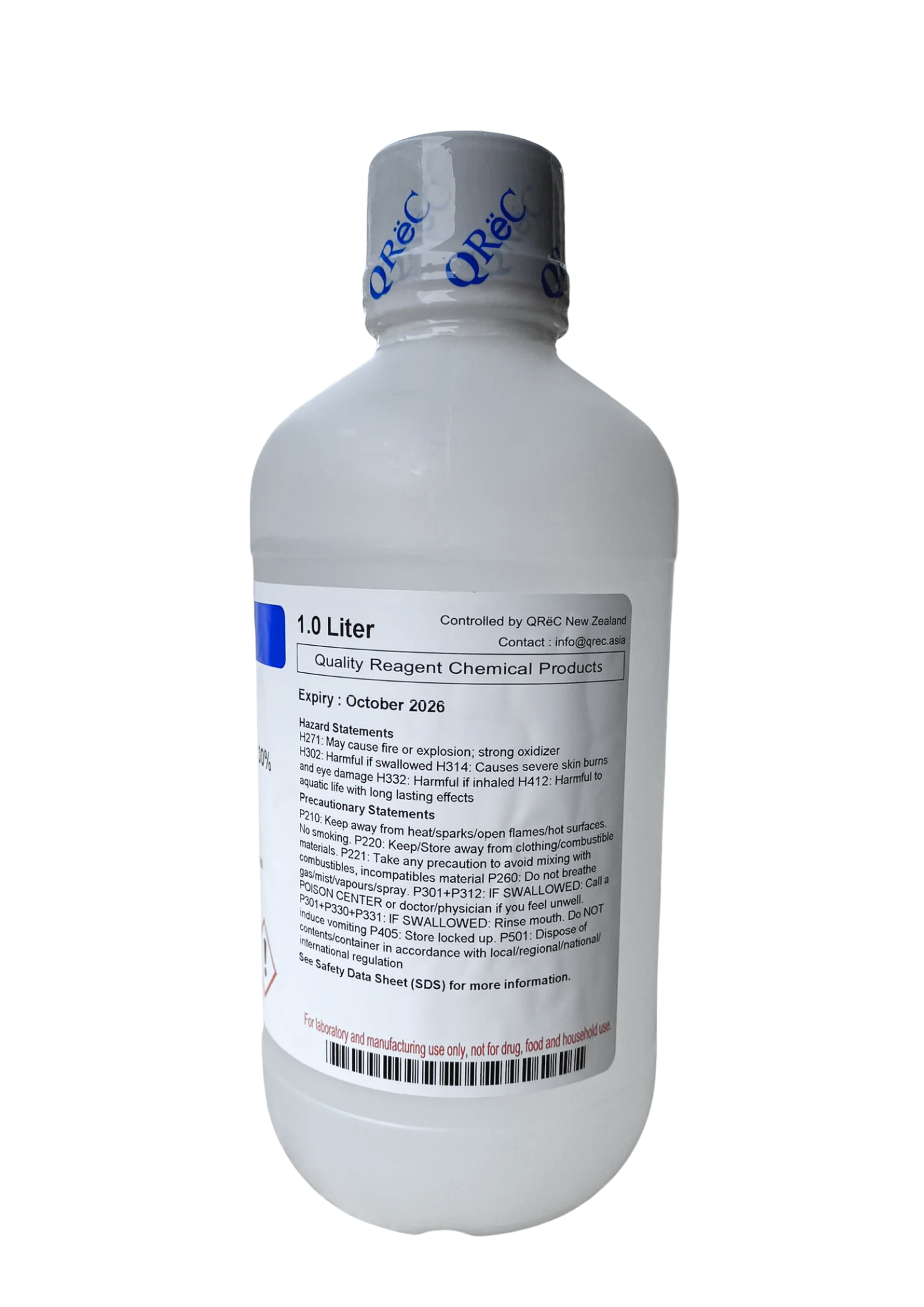
- Classification: Oxidizing liquid. Harmful if swallowed. Harmful if inhaled. Causes severe skin burns and eye damage. Causes serious eye damage. Harmful to aquatic life.
- Health Risks: Direct ocular exposure causes immediate, severe chemical burns, corneal opacification, and irreversible blindness. Dermal contact produces immediate skin whitening (bleaching necrosis) along with severe burning pain and deep chemical ulceration. Inhalation of vapors or aerosols severely irritates the respiratory tract, leading to coughing, dyspnea, chemical pneumonitis, and pulmonary edema. Ingestion causes violent corrosive damage to the gastrointestinal tract, accompanied by rapid internal oxygen gas release that risks catastrophic gastric perforation.
- First Aid Measures: Flush affected eyes or skin immediately with abundant flowing water for at least 15 minutes while stripping contaminated garments. In case of inhalation, move the victim to fresh air. If swallowed, do NOT induce vomiting; rinse mouth, administer water if conscious, and seek immediate, urgent emergency medical attention.
Handling & Storage
- Storage: Strong Oxidizer, Light– and Heat-Sensitive Formulation. Readily decomposes into water and oxygen gas upon exposure to thermal sources, sunlight, or particulate contaminants. Must be stored in its original, vented QReC container in an upright position. Keep in a dedicated, dark, cool, and well-ventilated chemical store at controlled temperatures (ideally below 25 degrees Celsius). Keep completely isolated from combustible materials, organic solvents, powdered metals, strong bases, strong acids, reducing agents, and catalytic impurities.
- Precautions: Comprehensive specialized PPE is mandatory, including heavy chemical-resistant gloves, splash-proof goggles or a full face shield, and a protective laboratory coat. Never return unused chemical aliquots back into the original stock container to eliminate contamination-induced pressurized decomposition hazards.