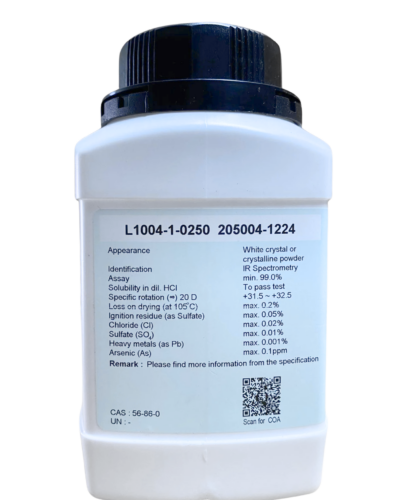
(2S)-2-Aminopentanedioic acid or L-2-Aminoglutaric acid or L-glutamate
Product Overview & Quality
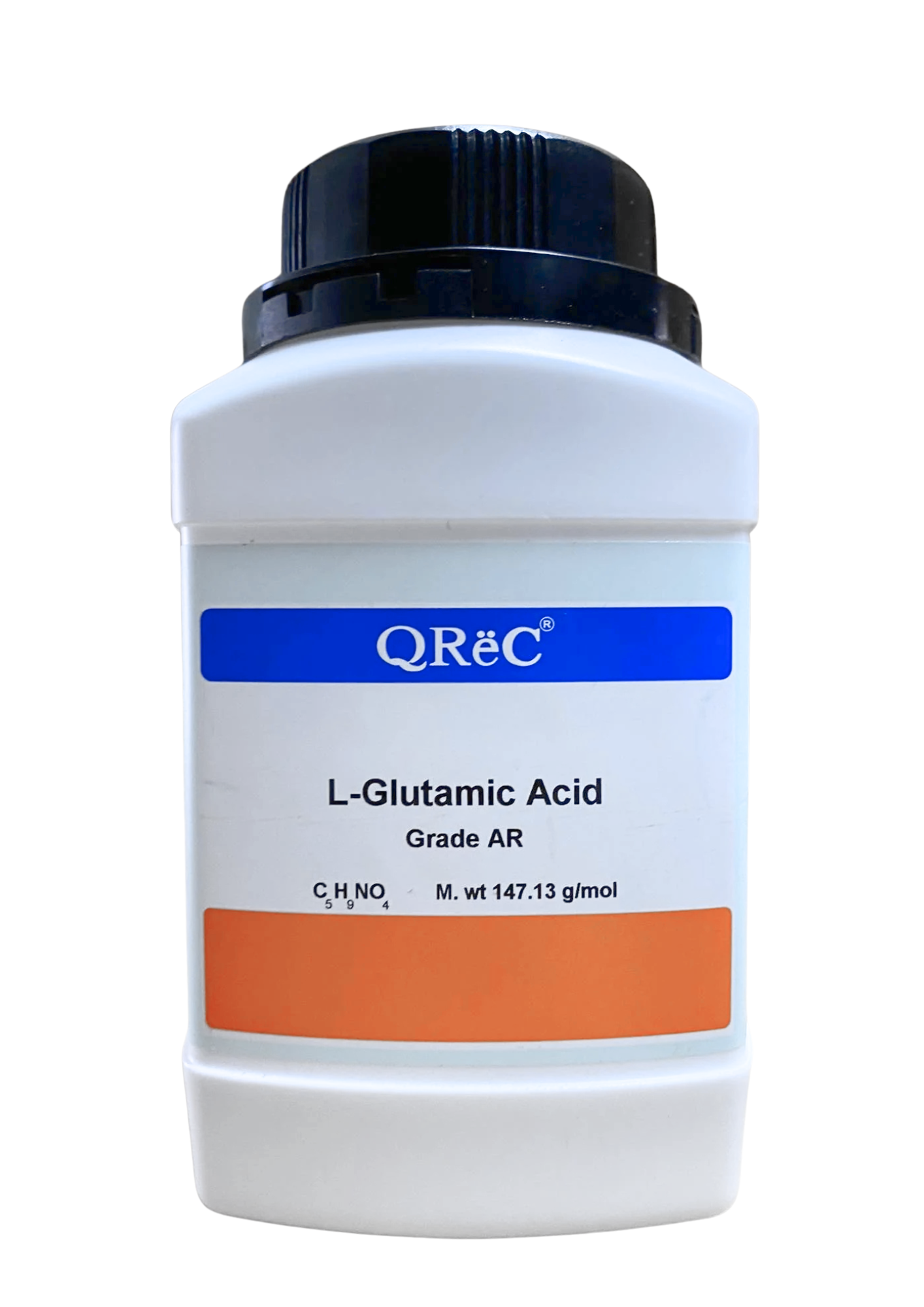
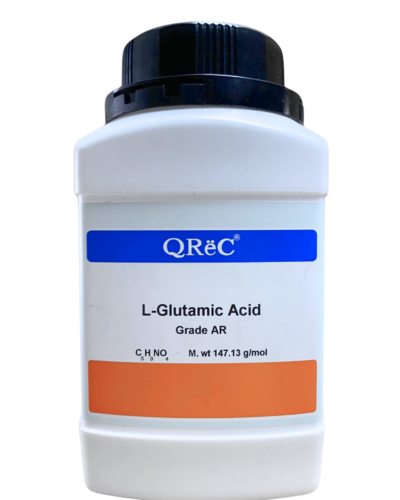
- Product Name: L-Glutamic acid 99% or (2S)-2-Aminopentanedioic acid or L-2-Aminoglutaric acid or L-Glutamate
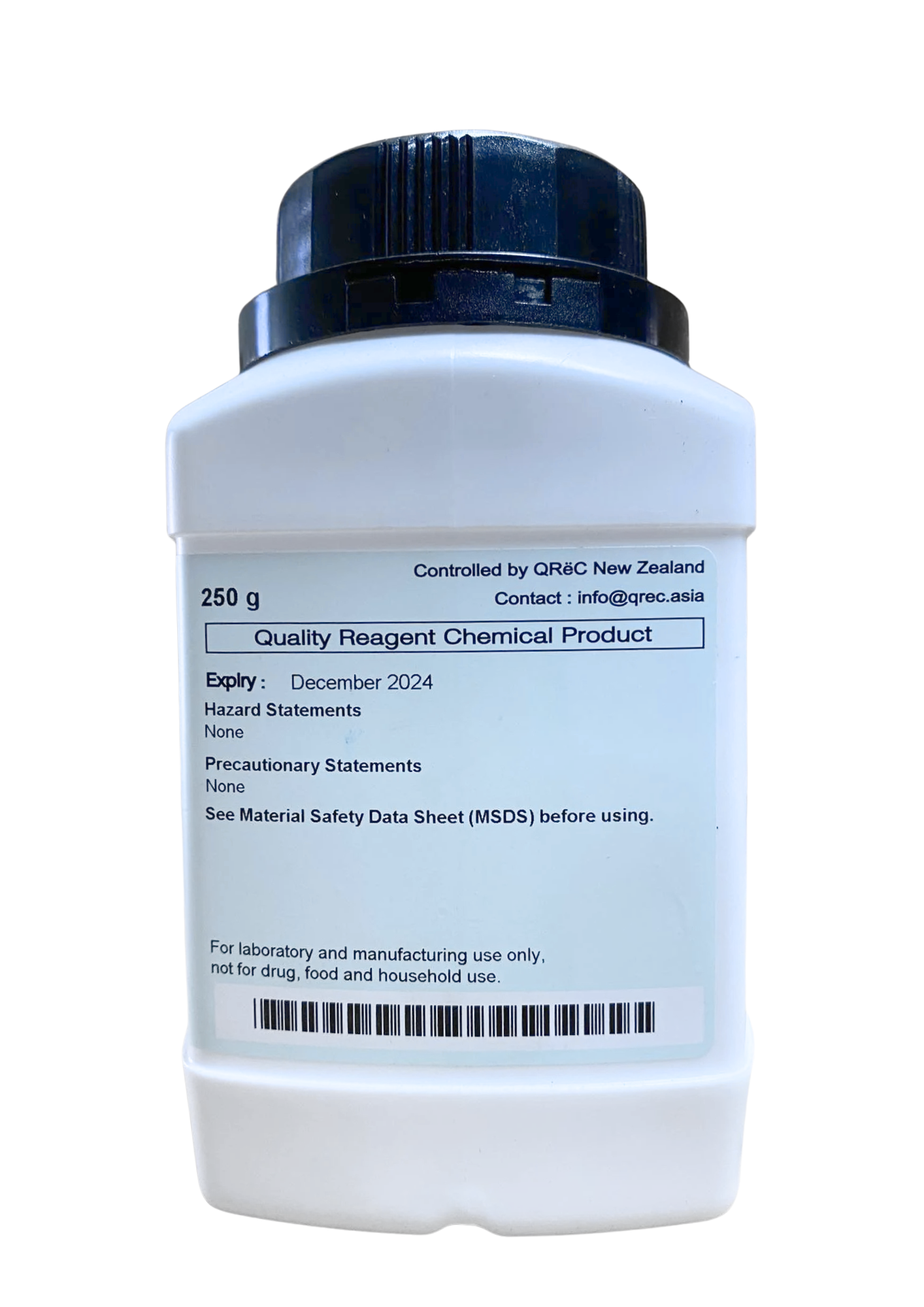
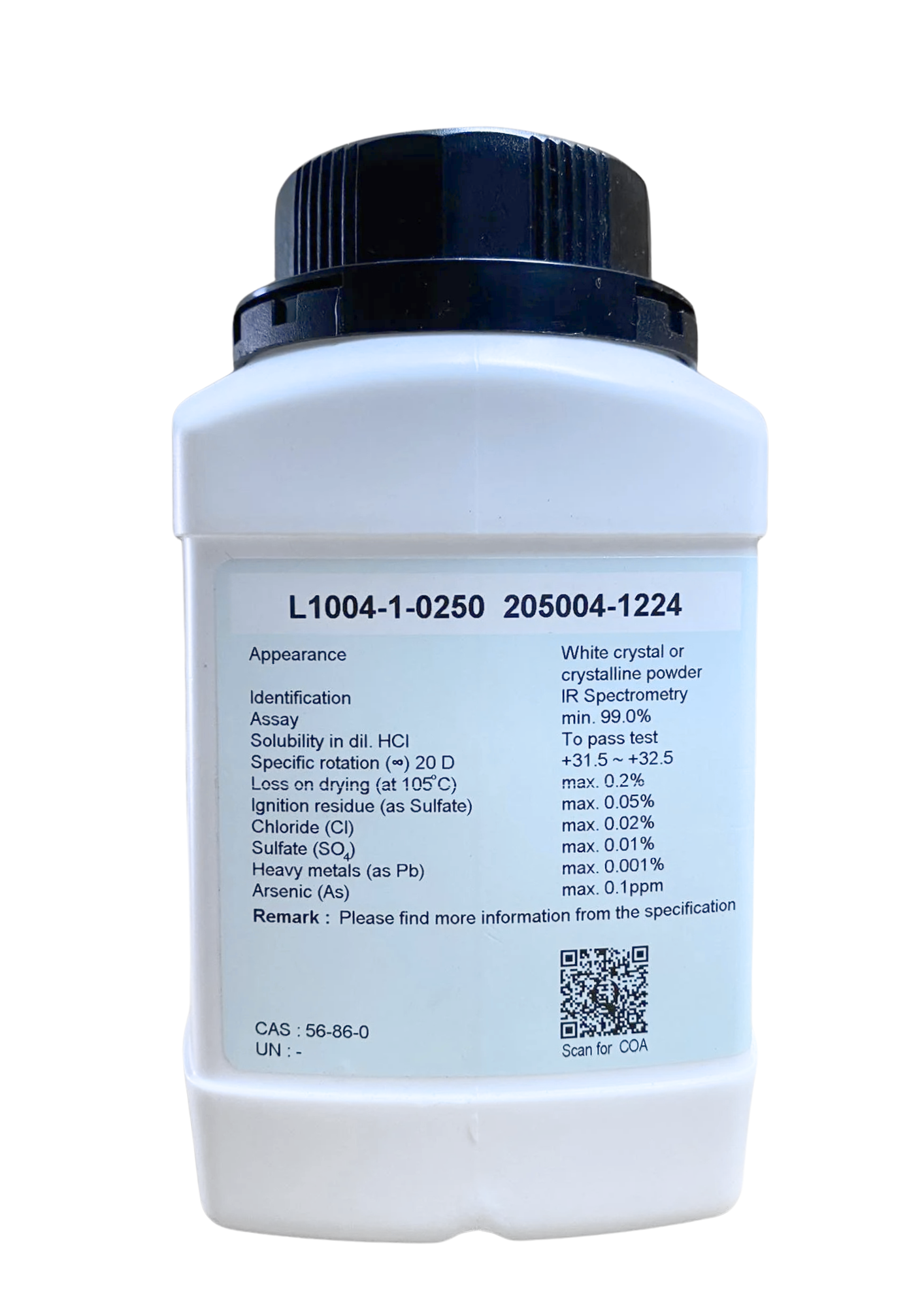
- Brand: QReC (Product Code: QR-L1004-1-0250)
- Grade: Analytical Reagent and High Purity Biochemistry Grade (AR Grade / Biochemistry Grade) featuring an exceptional certified chemical assay of not less than 99.0 percent in a 250 g laboratory container. Produced via fermentation and refined under strict QReC global laboratory specifications without anti-caking conditioning additives. Specific optical rotation is tightly validated between plus 31.5 and plus 32.5 degrees (measured in 6 M hydrochloric acid at 20 degrees Celsius). Loss on drying is held below 0.2 percent, with sulfated ash (residue on ignition) controlled below 0.1 percent. Trace impurities of chloride, sulfate, ammonium, and heavy metals (such as iron, lead, and arsenic) are rigorously maintained at ultra-low parts-per-million levels. Certified DNase and RNase-free, guaranteeing non-destructive performance in sensitive molecular biology and cell culture media workflows. Dissolves cleanly in dilute acids or alkalis to yield clear, particulate-free solutions. Packaged in a heavy-duty, moisture-barrier polymer container equipped with an airtight double hermetic seal.
- Physical Properties: White crystalline powder or colorless crystals. Odorless with a faint acidic and characteristic umami taste. Thermodynamically stable in air under ambient laboratory conditions; non-hygroscopic solid. High melting and decomposition point of approximately 199 to 205 degrees Celsius (undergoes internal dehydration into pyroglutamic acid upon prolonged high thermal stress). Non-combustible solid under normal conditions. Aqueous suspensions are weakly acidic (pH approximately 3.0 to 3.5 for a saturated aqueous solution at room temperature).
- Solubility: Sparingly soluble in cold water (approximately 0.85 to 0.86 grams per 100 milliliters at 25 degrees Celsius; solubility increases substantially in boiling water, exceeding 14 grams per 100 milliliters); readily and freely soluble in dilute mineral acids (such as dilute hydrochloric acid) and aqueous alkali hydroxide solutions (such as dilute sodium hydroxide, forming soluble glutamate salts); practically insoluble in ethanol, diethyl ether, and acetone.
- Key Use: Universally utilized as an essential bioavailable amino acid supplement in compounding defined cell culture media and plant tissue culture formulations to support in vitro cell proliferation, polypeptide biosynthesis, and cellular nitrogen assimilation. Extensively applied in biochemical, neurobiological, and pharmacological research as the quintessential primary excitatory neurotransmitter in the mammalian central nervous system. Heavily employed as an essential metabolic precursor for the enzymatic and synthetic pathways producing glutathione, gamma-aminobutyric acid (GABA), and custom peptide oligomers in biotechnology. Serves as an analytical reference standard for calibrating High-Performance Liquid Chromatography (HPLC), Liquid Chromatography-Mass Spectrometry (LC-MS), and automated amino acid analyzers. Functions as a biodegradable metal-chelating ligand and biochemical buffer in enzymatic and microbiological studies.
Safety & Hazards
- Classification: Non-hazardous substance under standard international GHS criteria in routine laboratory handling. Exceptionally low acute toxicity profile; non-corrosive, non-volatile, and non-flammable solid. Particulate dust may exert mild mechanical irritation to ocular, dermal, and upper respiratory tissues.
- Health Risks: Direct ocular contact causes transient mechanical stinging, conjunctival redness, and tearing. Prolonged dermal contact can cause minor dryness or superficial skin irritation. Inhalation of airborne dust irritates the mucous membranes of the respiratory tract, inducing coughing and sneezing. Ingestion of excessive quantities may provoke transient gastrointestinal fullness or mild nausea.
- First Aid Measures: Flush affected eyes thoroughly with clean running water for at least 10 to 15 minutes while stripping contaminated clothing; remove contact lenses promptly and seek medical advice if irritation persists. Wash exposed skin with soap and water. In case of dust inhalation, relocate the individual to fresh air. If accidentally swallowed in substantial amounts, rinse mouth thoroughly, administer water in moderate amounts, and seek medical attention if discomfort persists.
Handling & Storage
- Storage: Stable Analytical Biochemical Amino Acid. Must be preserved in its original, tightly closed QReC container. Store in a clean, strictly dry, cool, and well-ventilated dedicated chemical store at controlled temperatures (below 25 to 30 degrees Celsius), sheltered from atmospheric moisture and direct sunlight. Keep strictly segregated from strong oxidizing agents and concentrated caustic alkalis.
- Precautions: Standard laboratory PPE is mandatory, including protective gloves, safety glasses, and a protective lab coat. “Technical Dissolution Protocol: Due to the slow dissolution kinetics of free L-glutamic acid in cold water, rapid preparation of concentrated aqueous stock solutions is achieved by titrating with dilute sodium hydroxide until the neutral, highly soluble glutamate salt is formed.” Re-seal container cap tightly immediately after sampling. Minimize dust generation during weighing and dispensing.