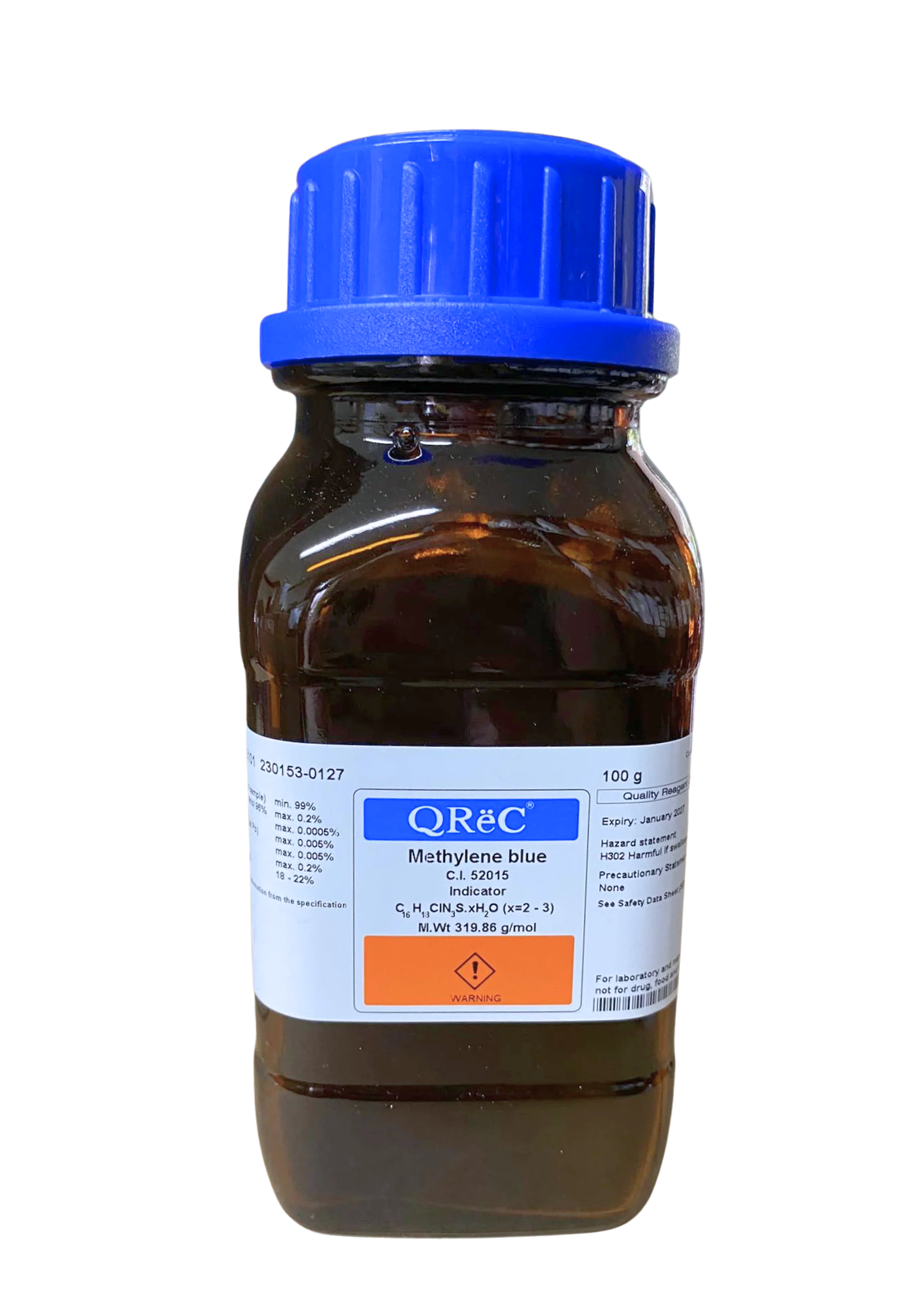
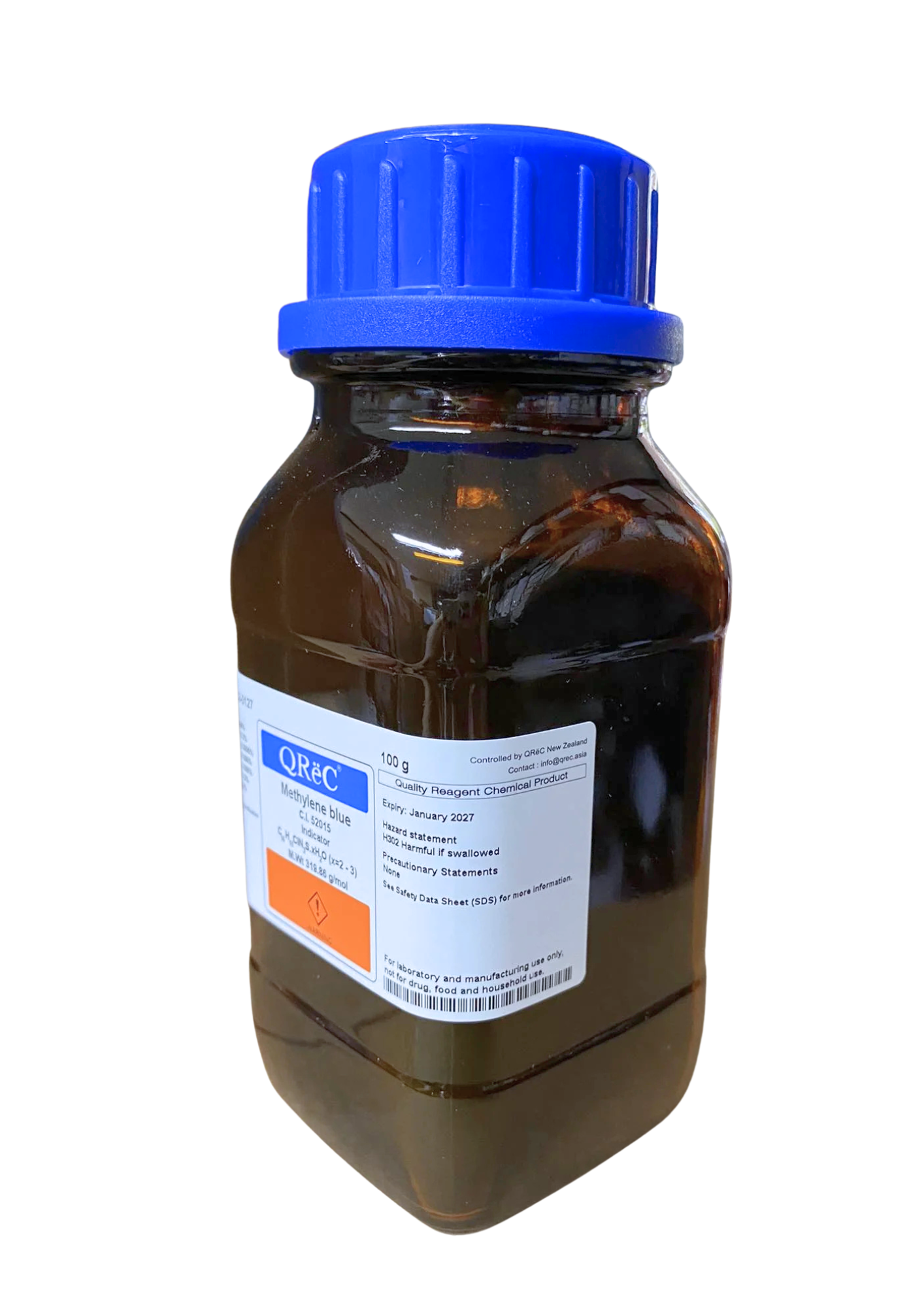
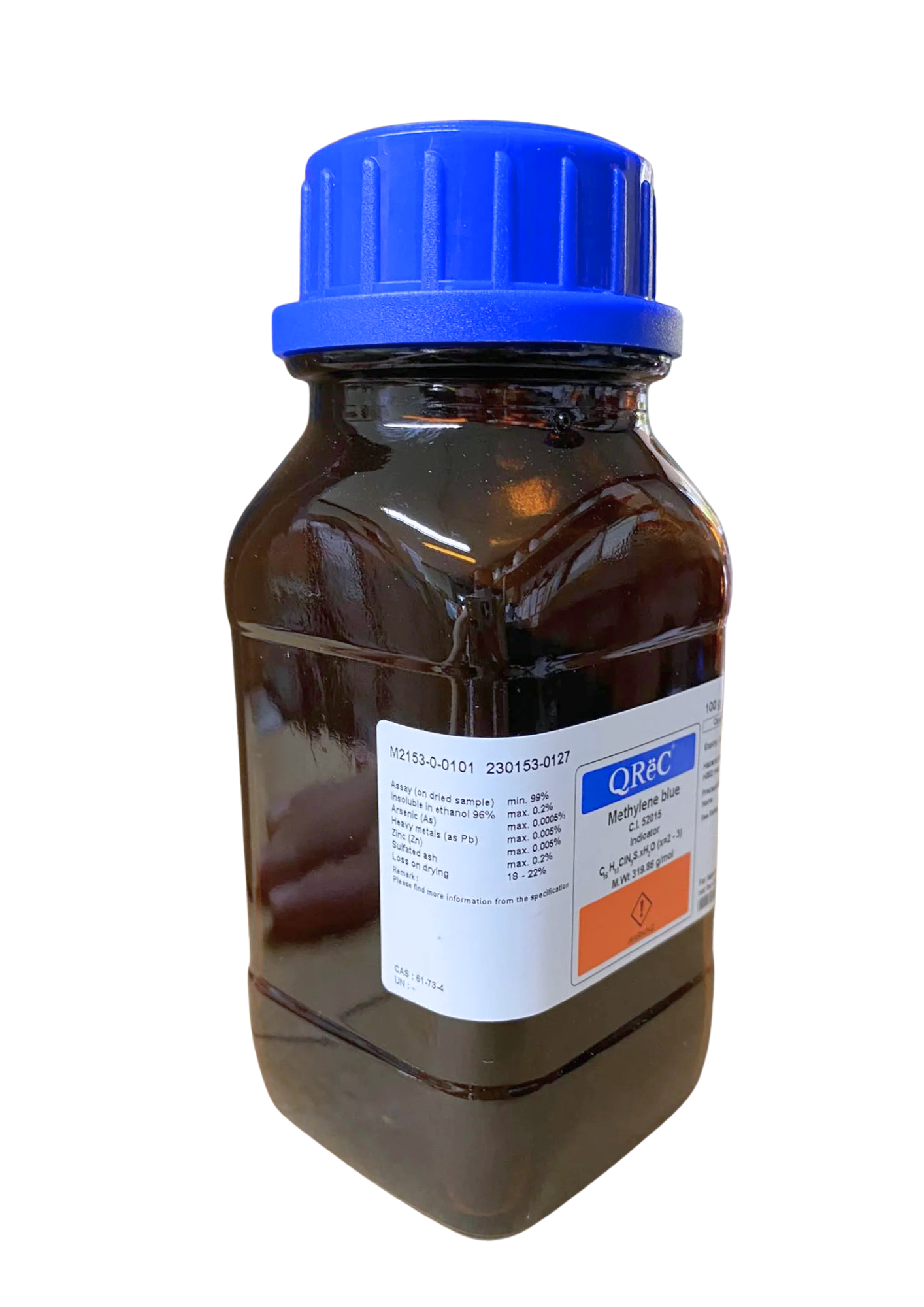
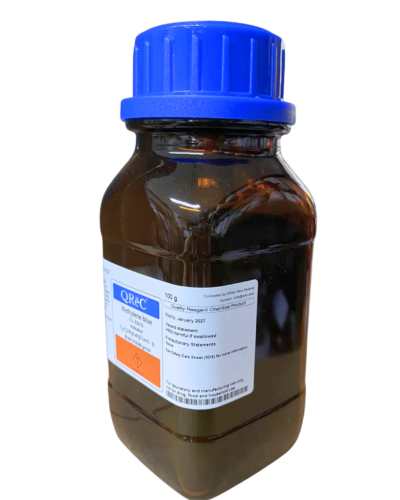
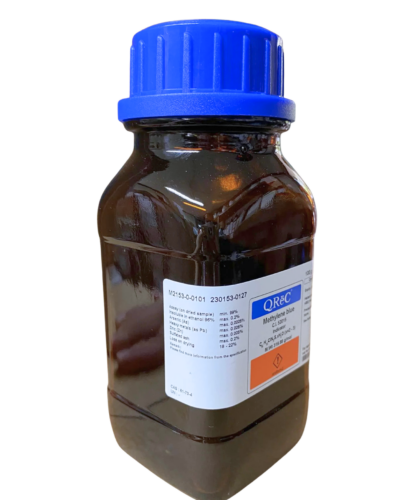
Methylthioninium chloride or Basic Blue 9 or 3,7-Bis(dimethylamino)phenothiazin-5-ium chloride
Product Overview & Quality
- Product Name: Methylene blue 99% or Methylthioninium chloride or Basic Blue 9 or 3,7-Bis(dimethylamino)phenothiazin-5-ium chloride
- Brand: QReC (Product Code: QR-M2153-0-0101)
- Grade: Analytical Reagent, Biological Stain, and Redox Indicator Grade (AR Grade) featuring a certified dye content of not less than 99.0 percent (calculated on dry basis) in a 100 g laboratory package. Synthesized, purified, and crystallized under strict QReC global laboratory specifications to ensure optimal staining contrast and redox kinetics. Specific absorbance maximum is tightly controlled within 663 to 667 nm in dilute aqueous medium. Loss on drying at 105 degrees Celsius is controlled within 8.0 to 15.0 percent (accommodating its natural crystalline hydration state). Residue on ignition (sulfated ash) is restricted below 0.25 percent. Trace heavy-metal impurities (such as iron, lead, copper, zinc, and arsenic) are maintained at ultra-low ppm levels. Dissolves cleanly in water and ethanol without leaving insoluble residues. Packaged in a chemical-resistant, light-protective amber container equipped with a hermetic seal.
- Physical Properties: Dark green to dark blue-green crystalline powder or lustrous flakes with a bronze-copper metallic luster. Odorless. Thermodynamically stable in dry air under ambient conditions; non-volatile solid. Solutions in water and alcohols exhibit an intense, deep azure-blue coloration. Functions as a quintessential reversible redox indicator; upon chemical or biological reduction, the blue chromophore converts into the colorless leuco-form (Leucomethylene blue), which readily re-oxidizes back to the vibrant blue state in the presence of oxygen or oxidizing agents.
- Solubility: Readily soluble in water (approximately 3.0 to 4.0 grams per 100 milliliters at 20 degrees Celsius, yielding an intensely deep blue solution); soluble in ethanol, chloroform, and glycerol; practically insoluble in diethyl ether and xylene.
- Key Use: Universally utilized as a classical cationic biological stain for highlighting cellular nuclei, nucleic acids (DNA/RNA), metachromatic granules, and bacterial morphology in diagnostic microscopy, histology, and cytology. Extensively applied in microbial biotechnology for assessing yeast cell viability (the classic methylene blue staining test), where living cells enzymatically reduce the dye to its colorless leuco-form, whereas non-viable cells stain intense blue due to lost metabolic activity. Heavily employed in agricultural dairy testing for the Methylene Blue Reduction Test (MBRT) to grade raw milk freshness and quantify microbial bacterial load based on color decolourization time. Functions as a reliable visual redox indicator in titrimetric analysis and classic pedagogical chemical demonstrations (such as the “Blue Bottle” reaction). Widely used as a standard probing adsorbate (Methylene Blue Adsorption Value) in environmental research to characterize surface area and adsorption capacity of activated carbons, clays, and porous nanomaterials.
Safety & Hazards (Harmful if Swallowed, Persistent Staining & Irritant)
- Classification: Harmful if swallowed (Acute Toxicity Oral Category 4). Causes mild skin and eye irritation.
- Health Risks: Direct ocular contact causes transient mechanical stinging, conjunctival injection, lacrimation, and intense blue staining of ocular surfaces. Dermal contact may cause mild dryness, superficial contact irritation, and persistent deep blue skin and fingernail discoloration. Inhalation of particulate dust irritates the mucous membranes of the respiratory tract, inducing coughing, sneezing, and throat irritation. Ingestion causes gastrointestinal irritation, burning oral and epigastric discomfort, nausea, vomiting, abdominal pain, diarrhea, headache, hyperhidrosis, and imparts a distinct green-to-blue coloration to urine and feces.
- First Aid Measures: Immediately flush affected eyes with an abundant stream of clean flowing water for at least 15 minutes while stripping contaminated clothing; remove contact lenses promptly and seek medical attention if irritation persists. Wash exposed skin thoroughly with soap and warm water (stubborn stains can be facilitated with dilute ethanol). In case of dust inhalation, relocate the individual to fresh air. If accidentally swallowed, do NOT induce vomiting; thoroughly rinse mouth, administer water in moderate amounts to dilute, and seek prompt medical advice.
Handling & Storage
- Storage: Light-Sensitive, Moisture-Sensitive Biological Stain with Extreme Dyeing Power. Must be preserved in its original, tightly closed QReC light-protective container. Store in a clean, strictly dry, cool, and well-ventilated dedicated chemical store at controlled temperatures (below 25 to 30 degrees Celsius), sheltered from atmospheric moisture and direct solar radiation. Keep strictly segregated from strong oxidizing agents (such as perchlorates, permanganates, and nitric acid), strong reducing agents (which bleach the blue coloration), and concentrated alkalis.
- Precautions: Standard laboratory PPE is mandatory, including protective nitrile gloves, splash-proof safety goggles, a certified particulate dust mask, and a protective lab coat. “Handling Precaution: Methylene blue is an exceptionally potent colorant; microscopic airborne dust or spillage will instantly produce stubborn dark blue stains upon contact with moisture. Always dispense over containment trays or bench protector paper.” Re-seal container cap tightly immediately after sampling. Minimize dust generation during weighing and dispensing.