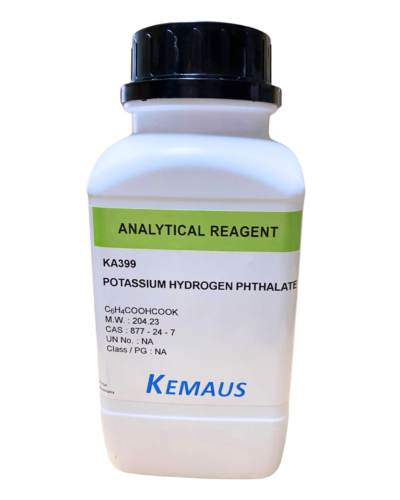

Potassium hydrogen phthalate (KHP)
Product Overview & Quality
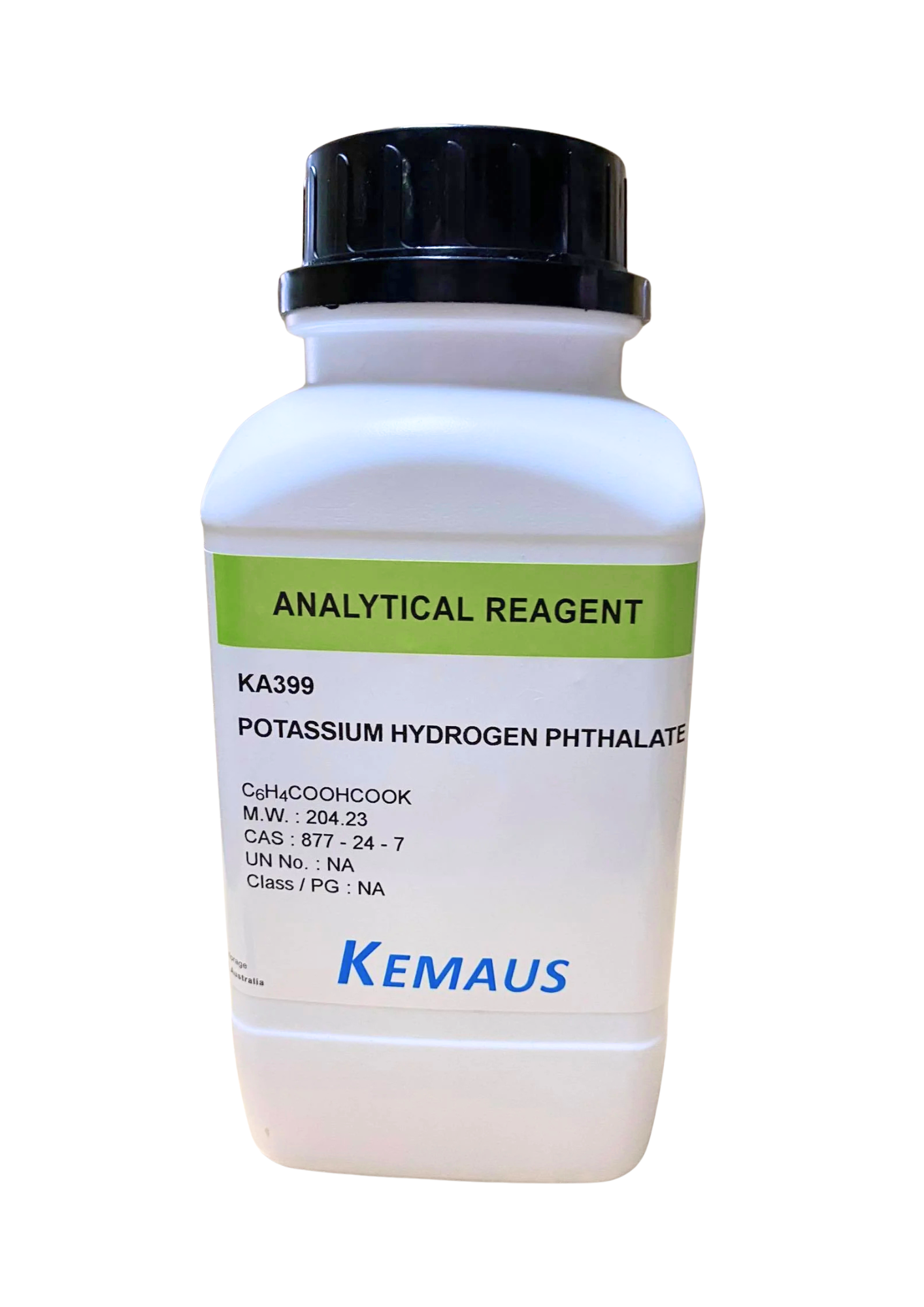
- Product Name: Potassium hydrogen phthalate (KHP)
- Brand: Kemaus (Product Code: KA-399)
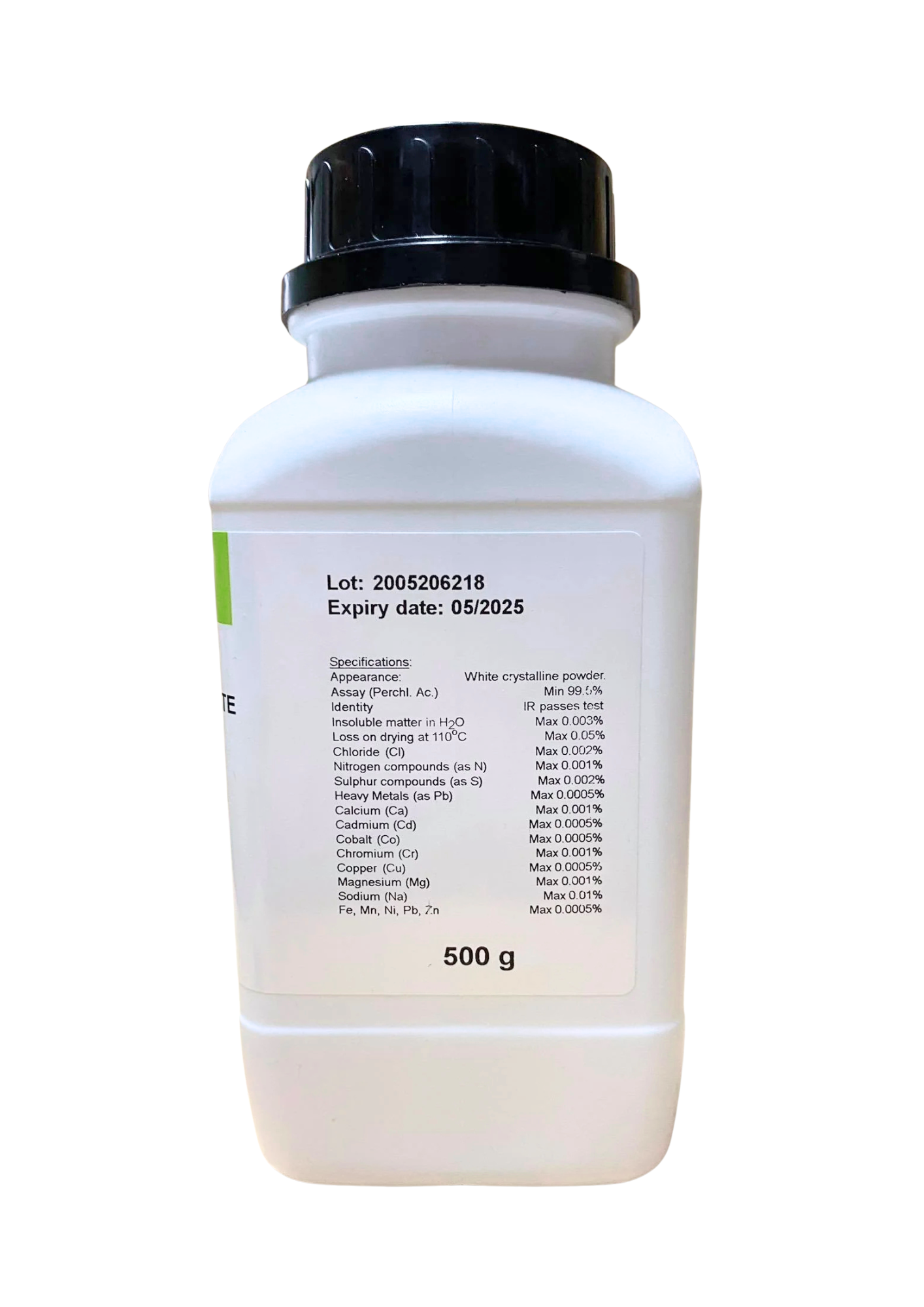
- Grade: Analytical Reagent (AR Grade) with premium purity of 99.5 percent or higher. Rigorously manufactured under Kemaus strict laboratory standards. It processes outstanding chemical stability, is non-hygroscopic under regular ambient conditions, and can be easily dried to a constant weight, making it a premier and highly reliable Primary Standard in quantitative chemistry.
- Physical Properties: Odorless, colorless crystals or fine white crystalline powder.
- Solubility: Soluble in water; slightly soluble in alcohol. Yields a mildly acidic aqueous solution.
- Key Use: Heavily utilized as a primary standard reagent for the accurate determination and standardization of strong alkaline volumetric solutions (such as Sodium hydroxide) in acid-base titrations. Commonly used to prepare premium reference buffer solutions for calibrating laboratory pH meters, particularly at pH 4.0 baseline. Also serves as a reliable standard reference material in Total Organic Carbon (TOC) analysis.
Safety & Hazards
- Classification: Not classified as a hazardous substance according to GHS regulations. Acts as a mild physical and mechanical dust irritant to tissues.
- Health Risks: Direct eye or skin contact with dust may cause temporary minor irritation or short-term redness. Inhalation of fine dust particles may cause mild coughing or minor upper respiratory tract discomfort.
- First Aid Measures: Flush eyes or skin immediately with plenty of flowing water for at least 15 minutes. Seek medical advice if irritation develops or persists.
Handling & Storage
- Storage: Store in the original, tightly sealed Kemaus container. Keep in a cool, dry, and well-ventilated space at stable room temperature (below 30 degrees Celsius). Highly stable in standard environmental conditions, but shield from targeted moisture exposure.
- Precautions: Wear standard personal protective equipment (PPE), including laboratory gloves, safety glasses, and a particulate dust mask. Avoid generating large airborne dust clouds during handling.