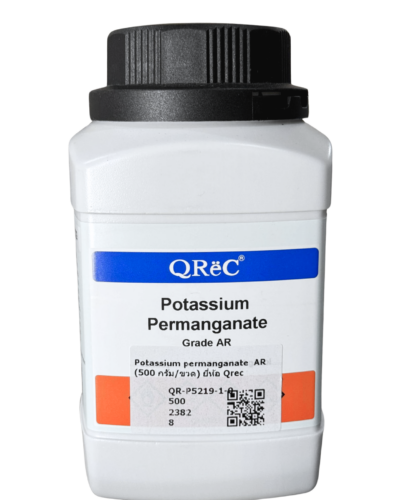
Potassium permanganate or Potassium manganate (VII)
Product Overview & Quality
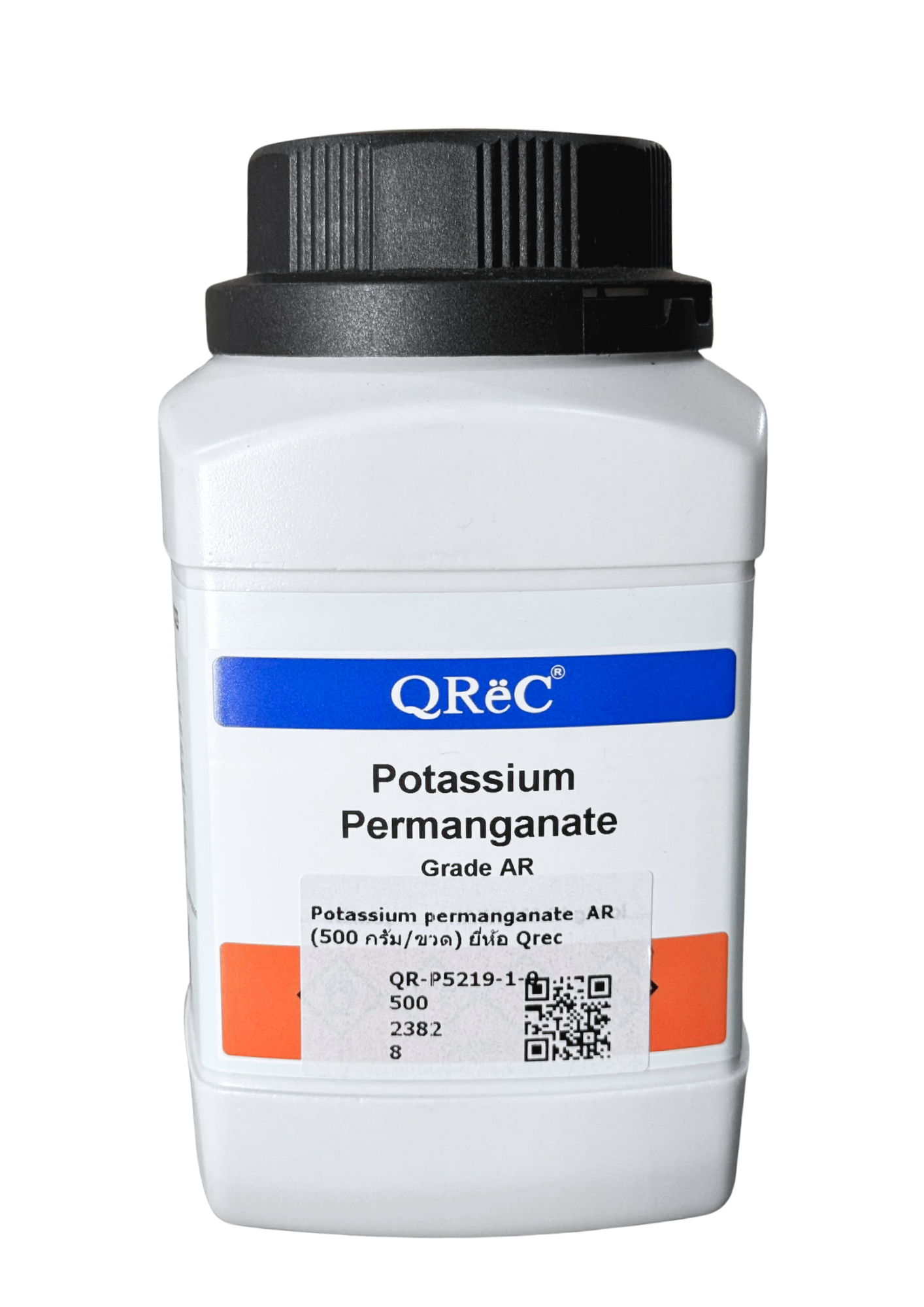
- Product Name: Potassium permanganate or Potassium manganate (VII)
- Brand: QReC (Product Code: QR-P5219-1-0500)
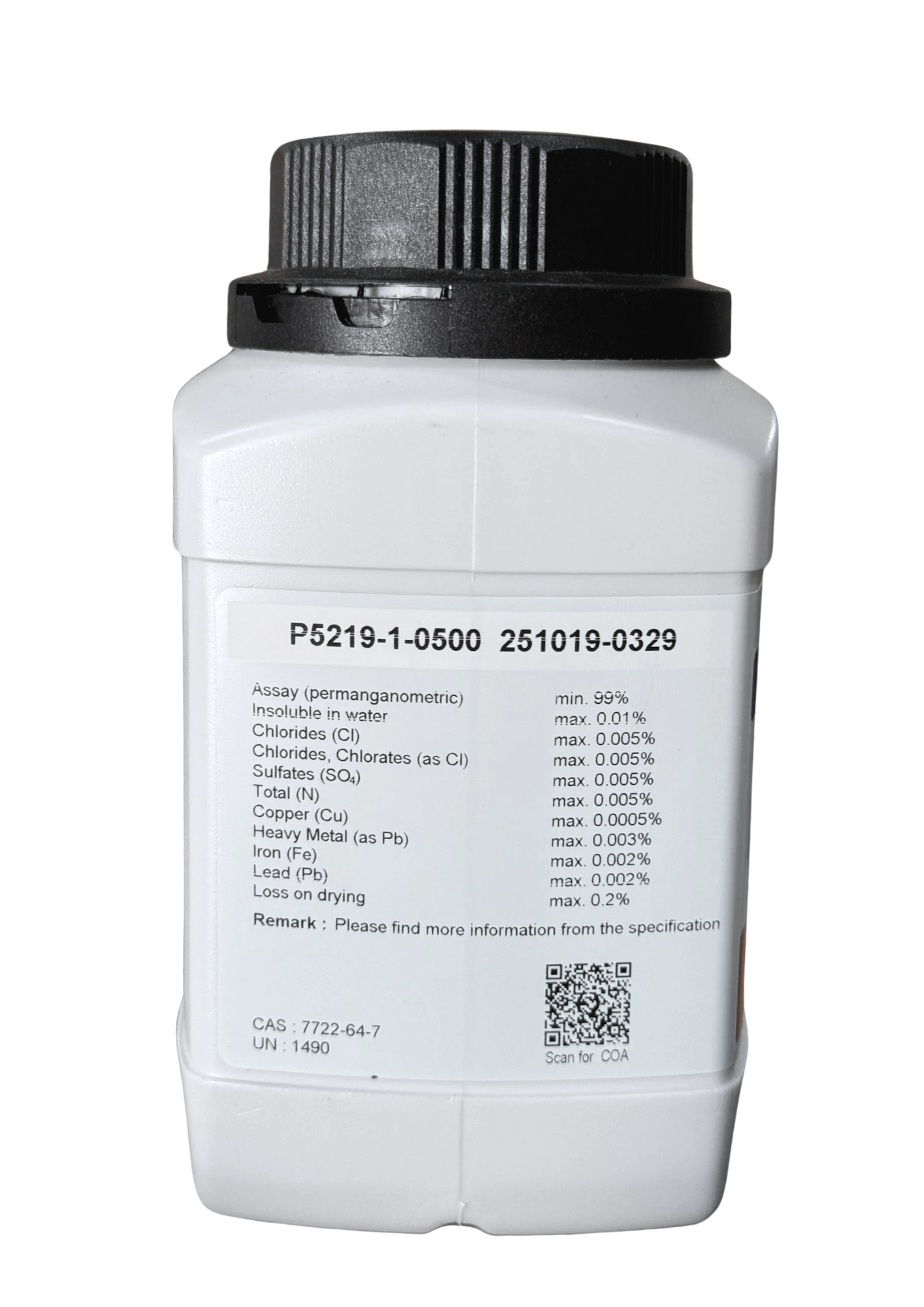
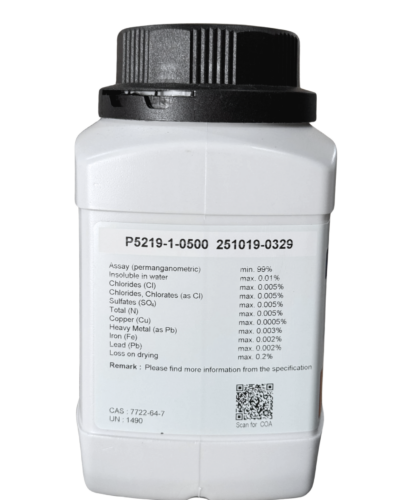
- Grade: Analytical Reagent (AR Grade) featuring a certified chemical purity of not less than 99 percent. Manufactured and multi-refined under strict QReC global laboratory standards. Rigorously analyzed to maintain ultra-low ppm thresholds of chlorides, chlorates, sulfates, water-insoluble matter, total nitrogen, and trace heavy metals (such as iron, lead, and copper). Dry, uniform crystal profile dissolves cleanly into water without insoluble manganese dioxide precipitation, providing high quantitative precision in redox workflows. Packaged in a heavy-duty, chemically resistant container engineered for light protection and strict hazardous containment.
- Physical Properties: Dark purple to bronze-black needle-like crystals with a metallic sheen. Odorless. Dissolves in water to produce an intense, deep magenta-pink solution. Non-combustible alone, but acts as a powerful oxidizer that drastically accelerates the combustion of flammable substances.
- Solubility: Freely soluble in water (solubility increases substantially with rising temperature); soluble in dilute sulfuric acid, methanol, and acetone (organic solutions may undergo gradual oxidation).
- Key Use: Heavily utilized as the definitive volumetric standard titrant in redox titrations (Permanganometry) for quantifying ferrous iron, hydrogen peroxide, calcium, oxalates, and reducing sugars; functions as an inherent self-indicator (endpoint transition from colorless to permanent faint pink). Universally applied in environmental water analysis to measure the Permanganate Index (KMnO4 consumption), evaluating the chemical burden of dissolved organic matter in potable water and wastewater. Extensively applied as a potent oxidizing reagent in organic synthesis, notably converting alkenes to vicinal diols or alkylbenzenes to benzoic acids. Used to formulate fresh Baeyer reagent for qualitative detection of carbon-carbon unsaturation (color discharges to produce brown manganese dioxide precipitate). Serves as a specialized laboratory disinfectant and oxidative cleaning agent.
Safety & Hazards (Critical, Strong Oxidizer, Corrosive & Aquatic Toxic)
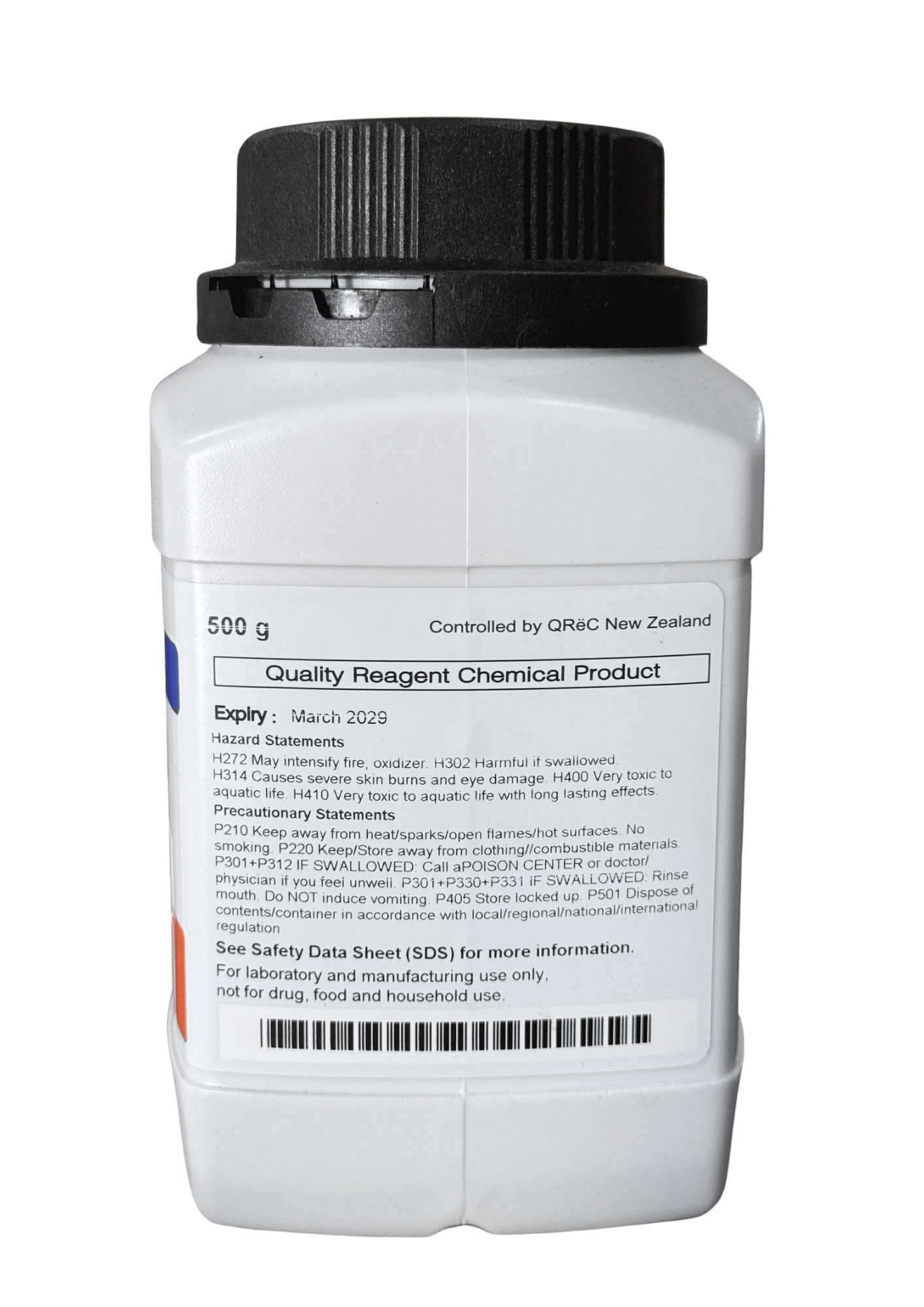
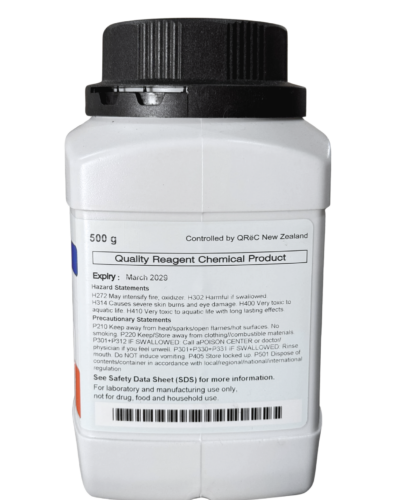
- Classification: May intensify fire; oxidizer. Harmful if swallowed. Causes severe skin burns and eye damage. Causes serious eye damage. Suspected of damaging fertility or the unborn child. Very toxic to aquatic life with long lasting effects.
- Health Risks: Direct eye contact causes catastrophic corrosive destruction of the conjunctiva and cornea, resulting in severe pain, corneal opacification, and permanent blindness. Dermal exposure produces deep chemical burns, necrotic blistering, and forms persistent, indelible brown manganese dioxide stains on the skin. Inhalation of particulate dust severely irritates and corrodes the respiratory tract, inducing coughing, chest tightness, dyspnea, and potentially fatal pulmonary edema. Ingestion induces severe caustic perforation of the mouth, throat, esophagus, and gastrointestinal tract, accompanied by intense abdominal pain, brown vomit, circulatory shock, and systemic organ failure.
- Special Reactive Hazard: Spontaneously ignites or reacts explosively upon intimate contact with easily oxidizable materials, such as glycerol, glycols, alcohols, and concentrated sulfuric acid (which forms explosive manganese heptoxide).
- First Aid Measures: Immediately flush affected eyes or skin with an abundant stream of clean running water for at least 15 to 20 minutes while stripping contaminated clothing. In case of dust inhalation, rapidly transfer the victim to fresh air. If accidentally swallowed, do NOT induce vomiting; thoroughly rinse mouth, administer water if conscious, and seek immediate, urgent emergency medical attention.
Handling & Storage
- Storage: Powerful Oxidizer, Highly Reactive, and Regulated Chemical. Must be preserved in its original, tightly closed QReC container placed on inert secondary containment trays. Store in a cool, dry, dark, and well-ventilated dedicated chemical store at stable room temperature (below 30 degrees Celsius), sheltered from humidity and direct solar radiation. Keep strictly isolated from combustible materials, organic solvents, glycerol, oils, reducing agents, sparks, open flames, and concentrated mineral acids.
- Precautions: Standard specialized PPE is mandatory, including chemical-resistant nitrile gloves, splash-proof safety goggles, and a protective lab coat. Weigh and dispense carefully to prevent airborne dust generation. Use clean, non-combustible spatulas free of oil or grease. Never discharge permanganate solutions directly into municipal drains; neutralize with an appropriate reducing agent (such as sodium bisulfite) prior to certified waste handling.