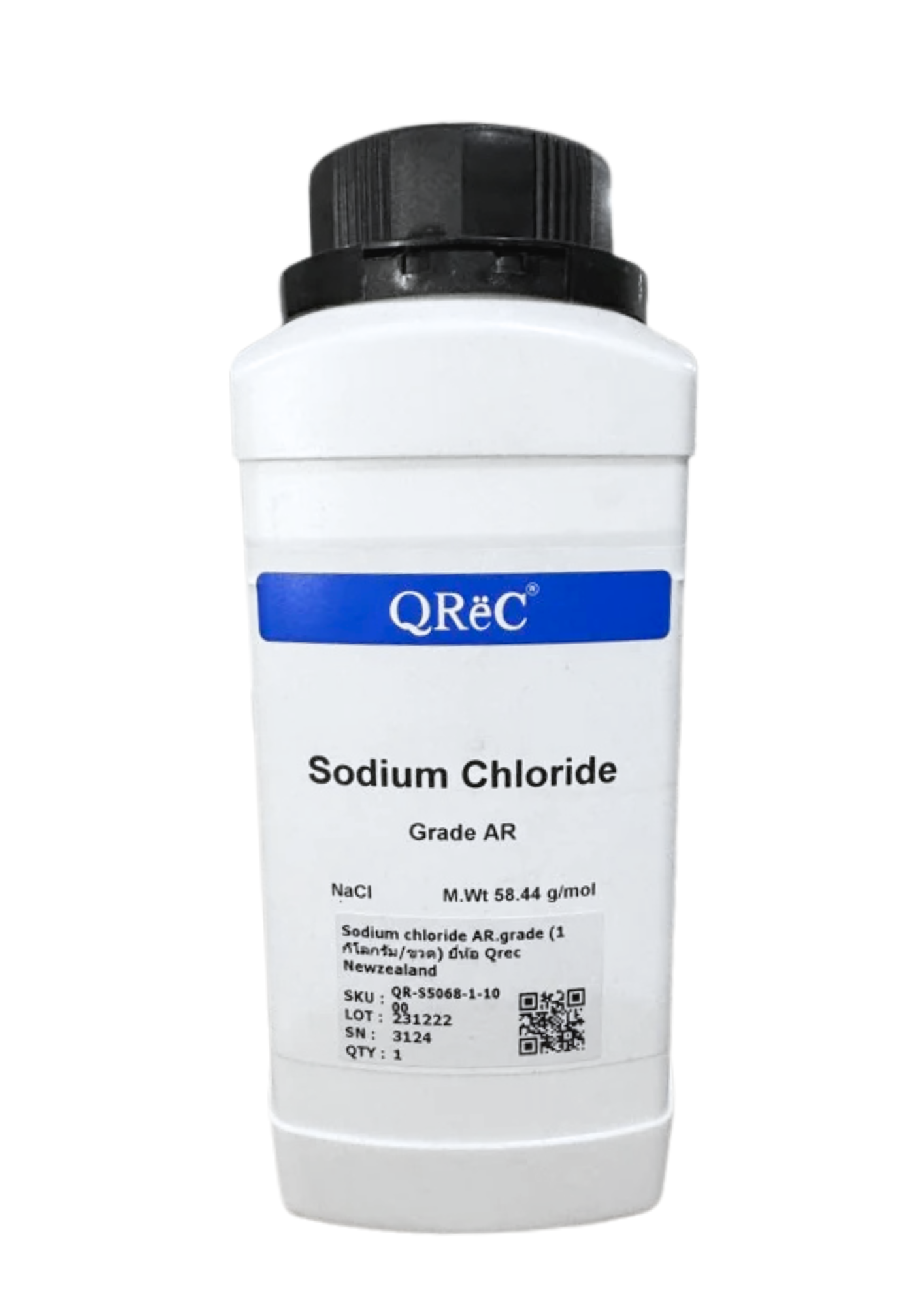
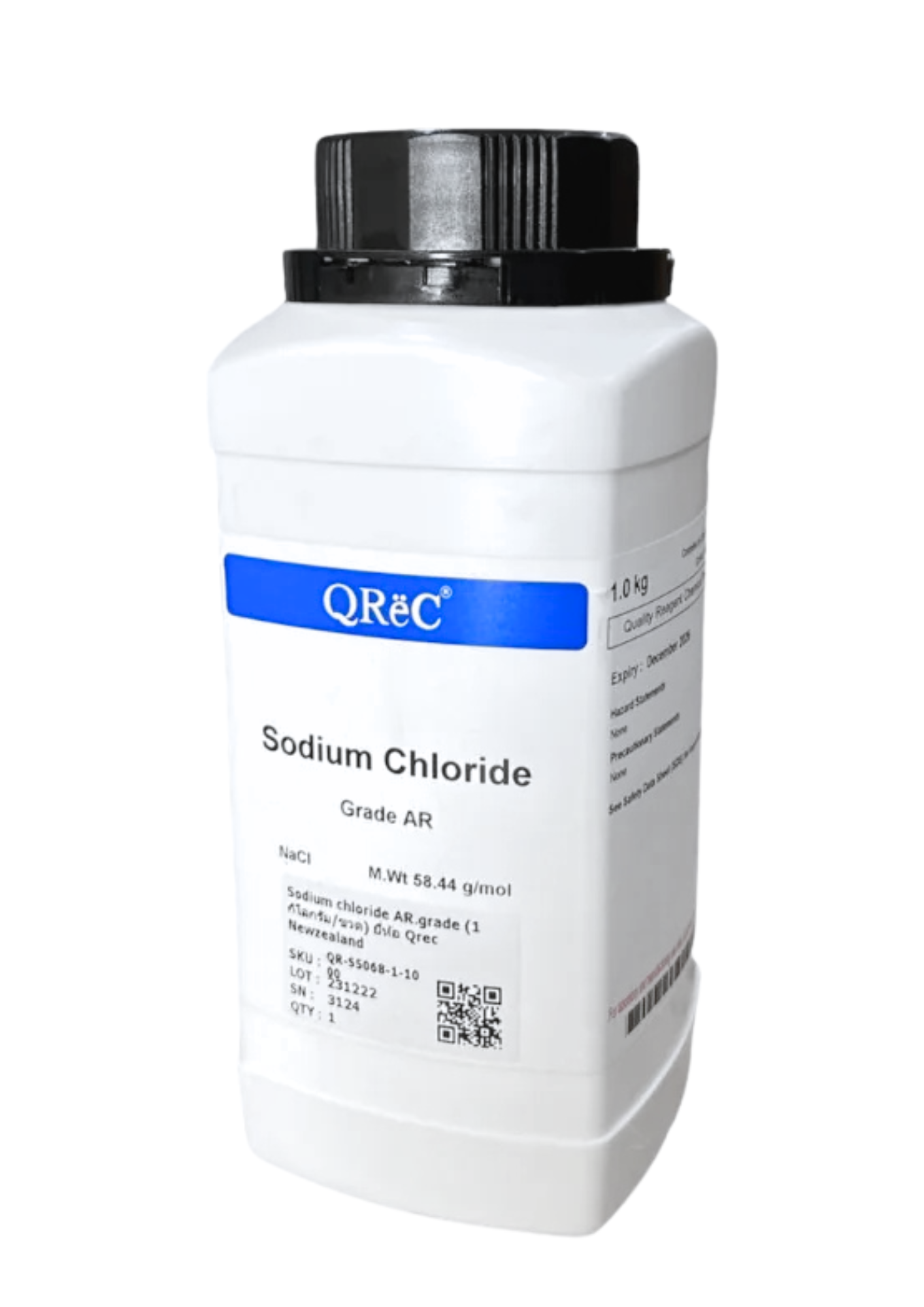
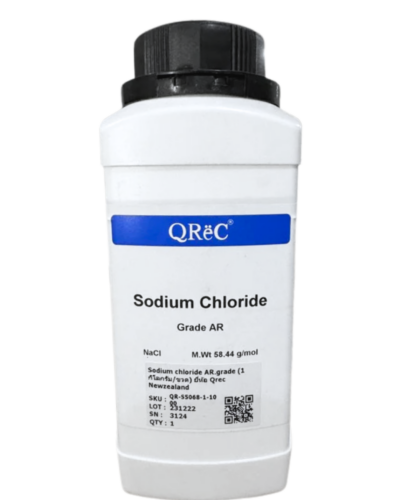
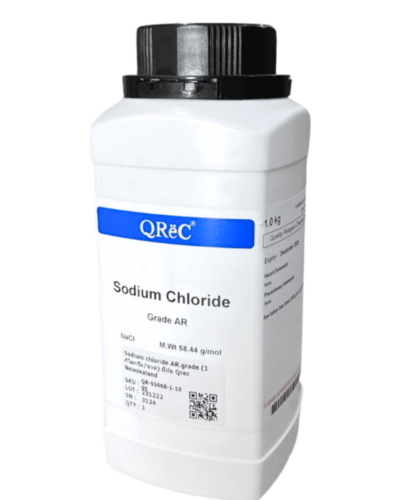
Sodium chloride 99.8% or Table salt or Halite or Common salt
Product Overview & Quality
- Product Name: Sodium chloride 99.8% or Table salt or Halite or Common salt
- Brand: QReC (Product Code: QR-S5068-1-1000)
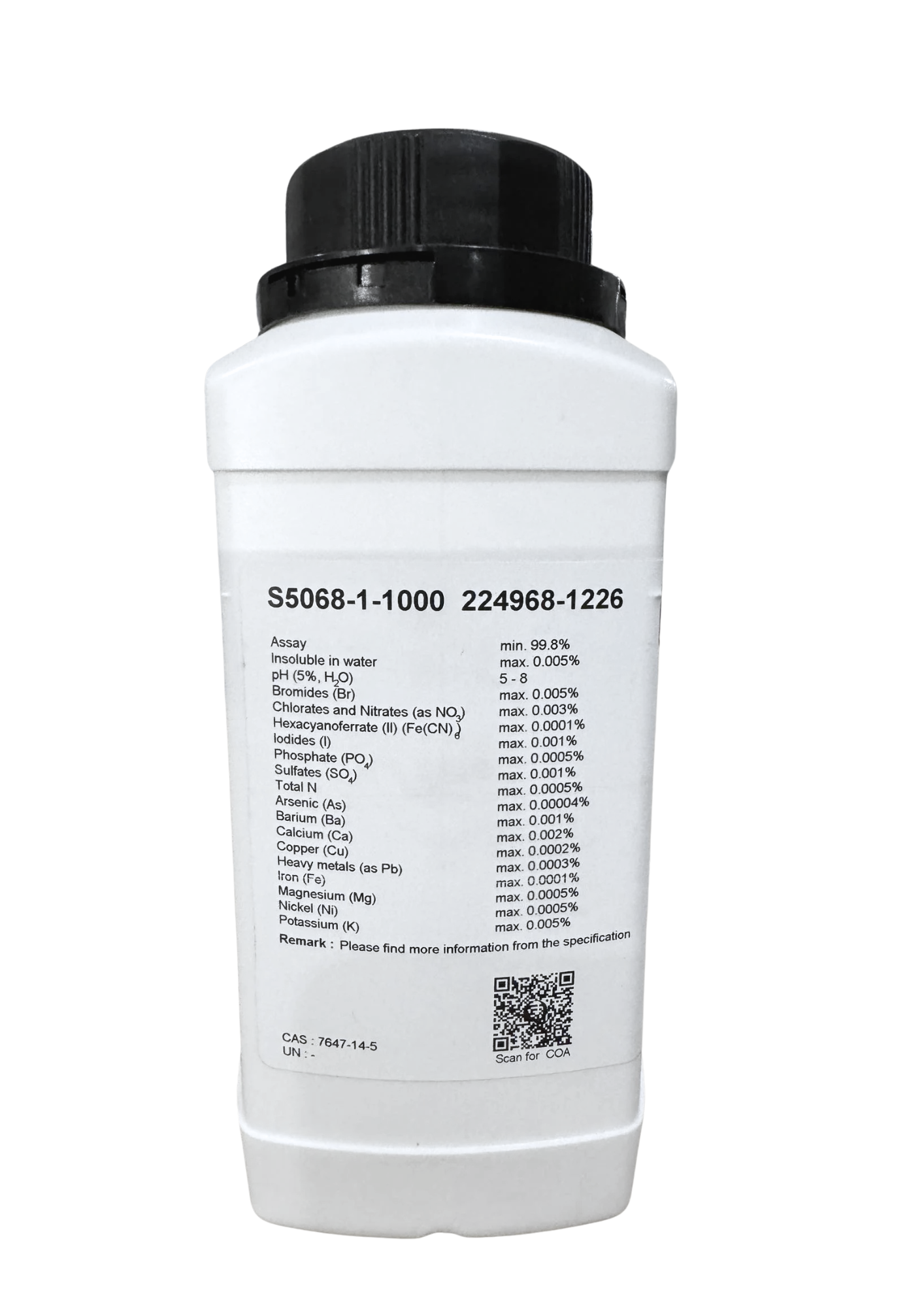
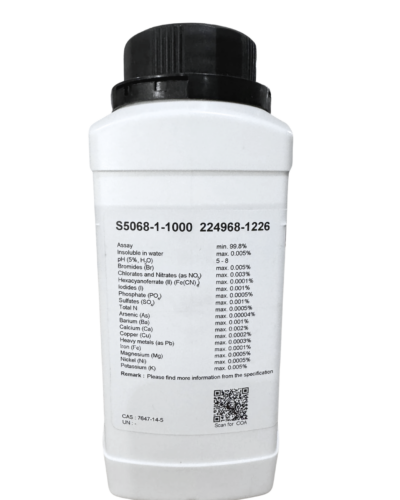
- Grade: Analytical Reagent High Purity Grade (AR Grade) featuring an exceptional certified chemical assay of not less than 99.8 percent. Manufactured and multi-recrystallized under strict QReC global laboratory specifications without the addition of anti-caking agents, free-flow conditioning additives, or iodizing agents. Rigorously tested to enforce ultra-low ppm limits of moisture content, water-insoluble matter, bromide, iodide, sulfate, nitrate, phosphate, carbonate, calcium, magnesium, barium, and trace heavy metals (such as iron, lead, copper, arsenic, and zinc). Conforms to certified DNase, RNase, and Protease-free specifications, ensuring absolute biochemical inertness in nucleic acid and cellular manipulation workflows. Dry, uniform cubic crystals dissolve rapidly and completely in water, producing crystal-clear, sediment-free neutral solutions. Packaged in a heavy-duty, moisture-barrier polymer container equipped with a hermetic seal.
- Physical Properties: Colorless cubic crystals, crystalline granules, or fine white crystalline powder. Odorless with a characteristic clean, saline taste. Thermodynamically stable under ambient conditions; slightly hygroscopic in environments exceeding 75 percent relative humidity. Aqueous solutions are practically neutral (pH approximately 6.0 to 8.0 at room temperature). Non-combustible and non-corrosive solid.
- Solubility: Readily and highly soluble in water (approximately 35.8 to 36.0 grams per 100 milliliters at 20 degrees Celsius; solubility exhibits negligible temperature dependence, increasing only marginally to approximately 39 grams in boiling water); freely soluble in glycerol; slightly soluble in ethanol; insoluble in concentrated hydrochloric acid (undergoing common-ion precipitation).
- Key Use: Universally utilized as the primary osmotic agent for formulating physiological saline solutions (0.9 percent Normal Saline Solution: NSS), Phosphate-Buffered Saline (PBS), and Tris-Buffered Saline (TBS) to maintain biological osmolarity and physiological cell membrane integrity in cell biology, immunology, and tissue culture. Extensively applied as a core electrolyte and nutrient salt in formulating microbial culture media, notably Luria-Bertani (LB broth and LB agar) for propagating recombinant Escherichia coli in molecular cloning. Heavily used in nucleic acid isolation and purification protocols, where sodium cations neutralize negatively charged phosphodiester backbones, facilitating efficient DNA and RNA precipitation upon ethanol or isopropanol addition. Serves as a standard ionic strength modifier in protein purification and ion-exchange chromatography (salting-out and salt gradient elution). Functions as an analytical reference standard and primary titrant in precipitation argentometric titrations (such as Mohr and Fajans methods) for quantifying chloride ions and salinity in food and environmental testing.
Safety & Hazards
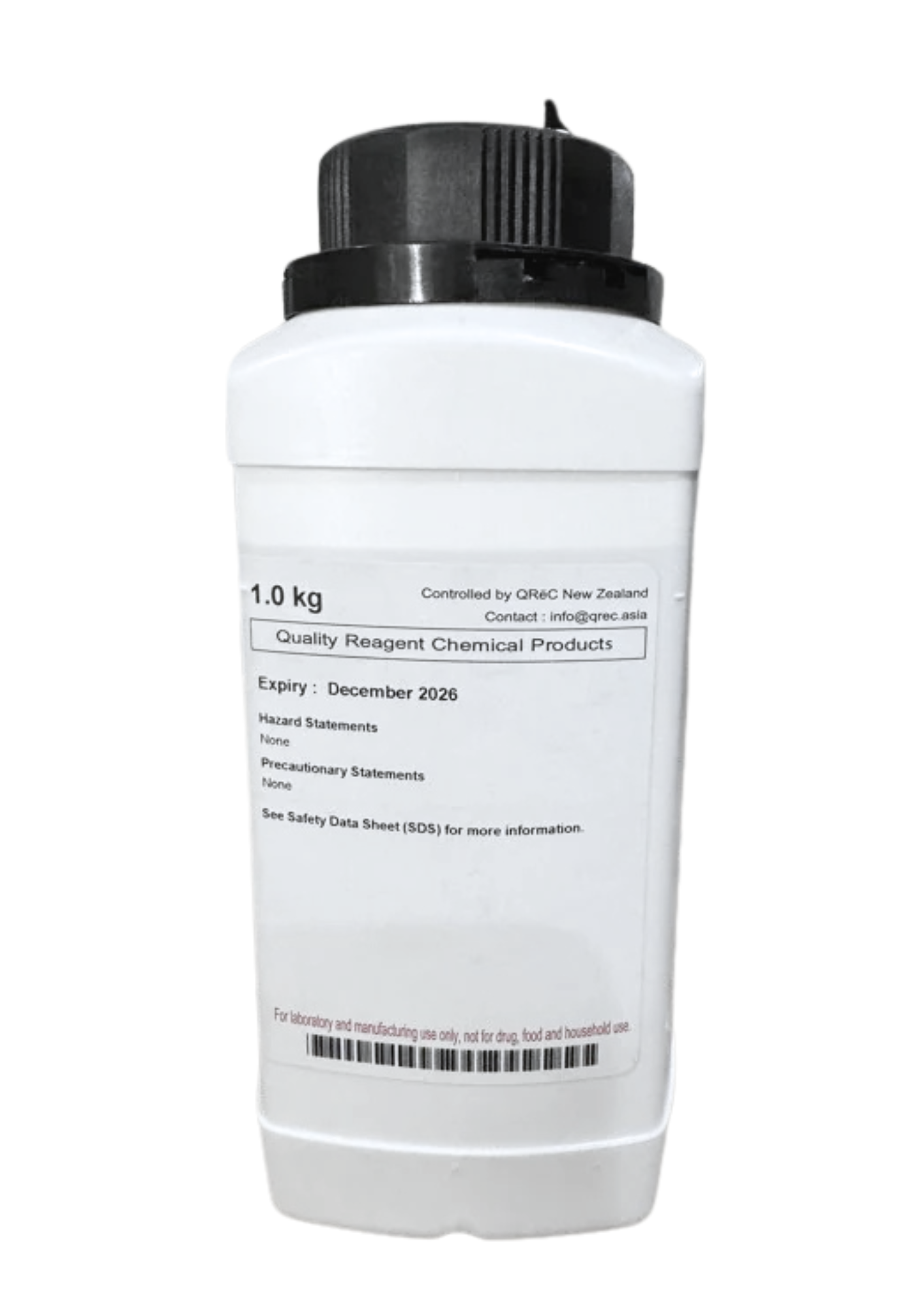
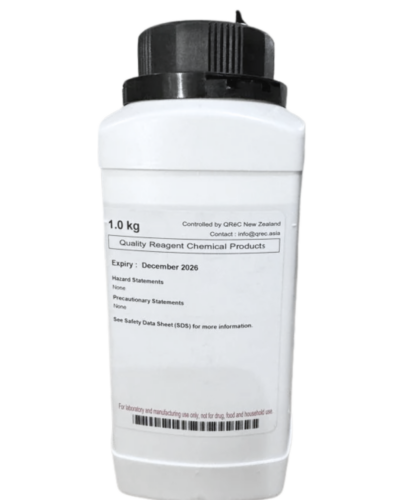
- Classification: Non-hazardous substance under standard GHS criteria in typical laboratory usage. Exceptionally low acute toxicity profile; particulate dust may exert mild mechanical irritation to ocular and dermal surfaces.
- Health Risks: Direct ocular contact may cause transient mechanical stinging, conjunctival redness, or lacrimation. Contact with intact skin is completely non-hazardous, though mild stinging may occur across broken epidermal surfaces or open wounds. Inhalation of particulate dust can cause minor sneezing, coughing, or nasal dryness. Ingestion of typical amounts is non-toxic; ingestion of massive quantities may provoke intense thirst, nausea, vomiting, abdominal cramping, transient hypertension, and systemic hypernatremia.
- First Aid Measures: Flush affected eyes thoroughly with clean running water for at least 10 to 15 minutes. Wash exposed skin with soap and water. In case of dust inhalation, relocate the individual to fresh air. If accidentally swallowed in excessive amounts, rinse mouth, drink abundant quantities of fresh water, and seek medical advice if discomfort persists.
Handling & Storage
- Storage: High-Purity Analytical Salt. Free of anti-caking agents; unsealed exposure to high atmospheric humidity promotes surface moisture absorption and particle consolidation into hardened clumps. Must be preserved in its original, tightly closed QReC container. Store in a clean, strictly dry, cool, and well-ventilated dedicated chemical store at stable room temperature (below 25 to 30 degrees Celsius), sheltered from atmospheric humidity and direct sunlight. Keep strictly segregated from concentrated mineral acids (such as concentrated sulfuric acid, which triggers exothermic reactions liberating toxic hydrogen chloride gas), strong oxidizing agents, and soluble silver salts.
- Precautions: Standard laboratory PPE is mandatory, including protective gloves, safety glasses, and a protective lab coat. Re-seal container cap tightly immediately after sampling to prevent ambient caking. Minimize dust generation during weighing and dispensing.