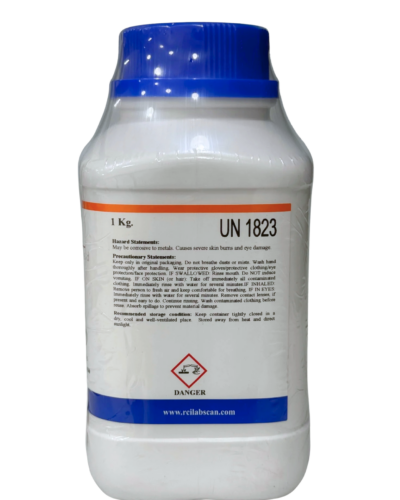

Sodium hydroxide micropearls or Caustic soda
Product Overview & Quality
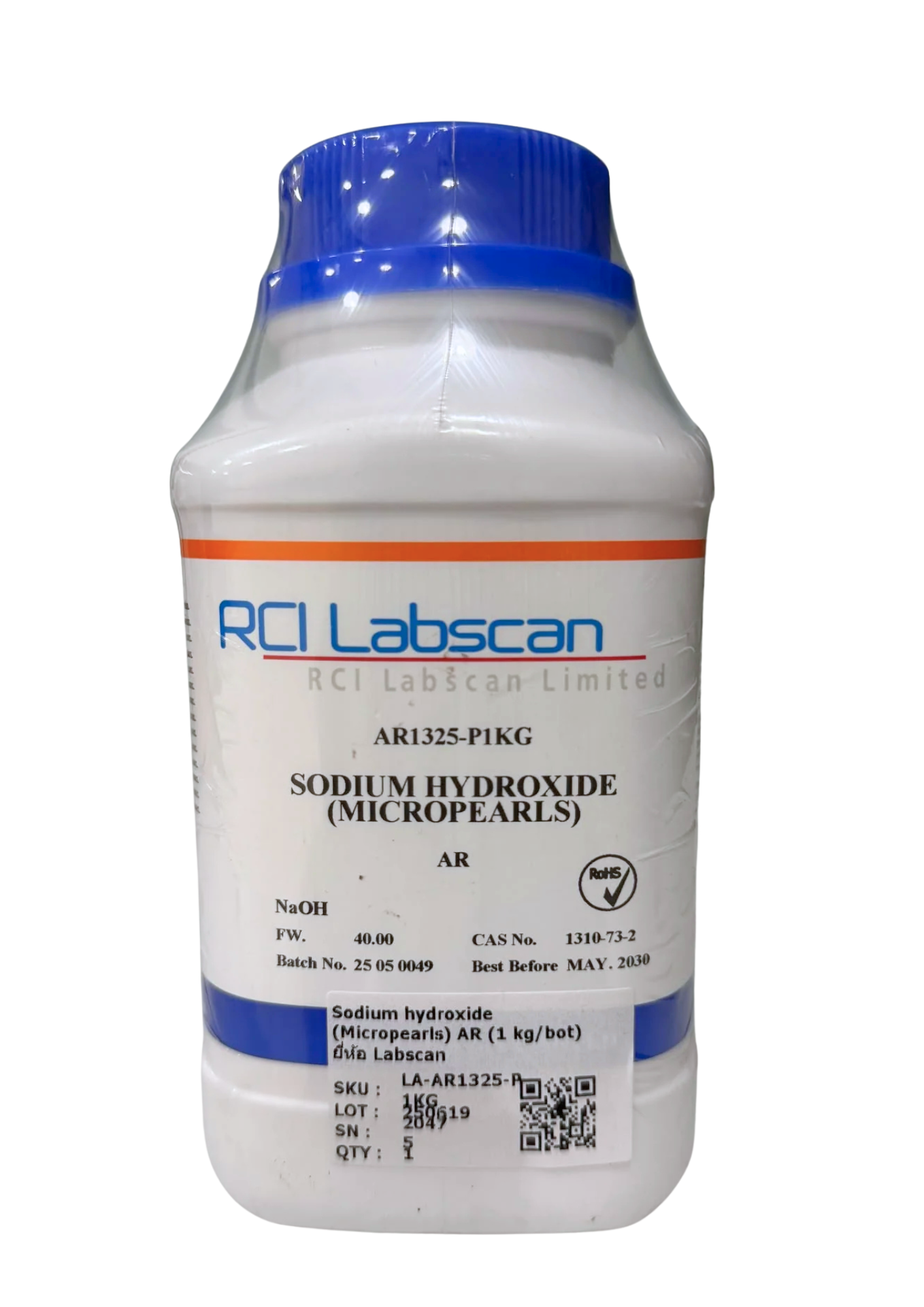
- Product Name: Sodium hydroxide micropearls or Caustic soda or Sodium hydrate
- Brand: RCI LABSCAN (Product Code: LA-AR1325-P1KG)
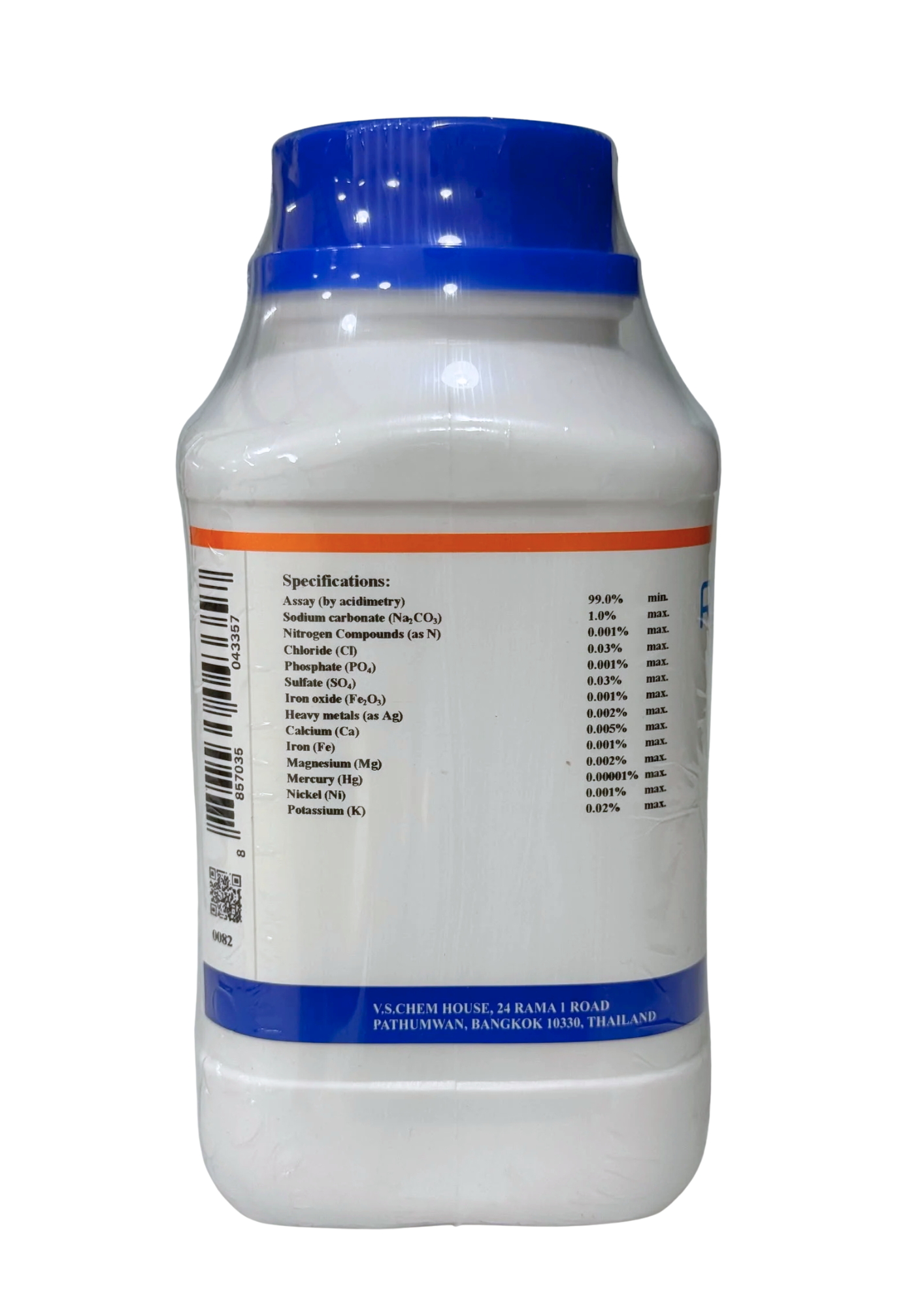
- Grade: Analytical Reagent (AR Grade) featuring a certified premium chemical purity of 99 percent or higher. Meticulously manufactured and quality-controlled under RCI LABSCAN strict global laboratory specifications to guarantee exceptionally low parameters of sodium carbonate, chlorides, sulfates, phosphates, and trace heavy metals (such as iron or nickel). Engineered specifically in a premium “micropearls” spherical solid configuration; this specialized uniform small bead format completely prevents chemical dust fluidization during weighing, flows smoothly for exact volumetric tracking, and resists caking far better than standard industrial flakes, allowing instant, clean dissolution.
- Physical Properties: Odorless, white, highly deliquescent spherical micro-beads. It possesses an extremely potent corrosive basic profile that aggressively attacks metals, living tissues, and silicate glassware upon dissolution.
- Solubility & Dissolution Energy: Highly soluble in water and ethanol, liberating massive exothermic chemical thermal energy during aqueous solvation. Critical Safety Rule: Always dissolve by adding micropearls slowly into water with continuous stirring; never add water directly onto solid chemical piles to prevent violent boiling and alkaline splattering.
- Key Use: Heavily utilized as the primary chemical foundation to formulate precise volumetric basic standard solutions (such as 0.1N or 1.0M Sodium hydroxide) for high-precision acid-base titration matrices. Commonly applied as a precise pH regulator to elevate pH levels and maintain alkaline stability in chemical buffers or industrial sample streams. Used extensively as a core reagent in saponification assays, metal hydroxide precipitation schemes, and sample digestion setups in analytical testing and research workflows.
Safety & Hazards (Critical & Strongly Corrosive)
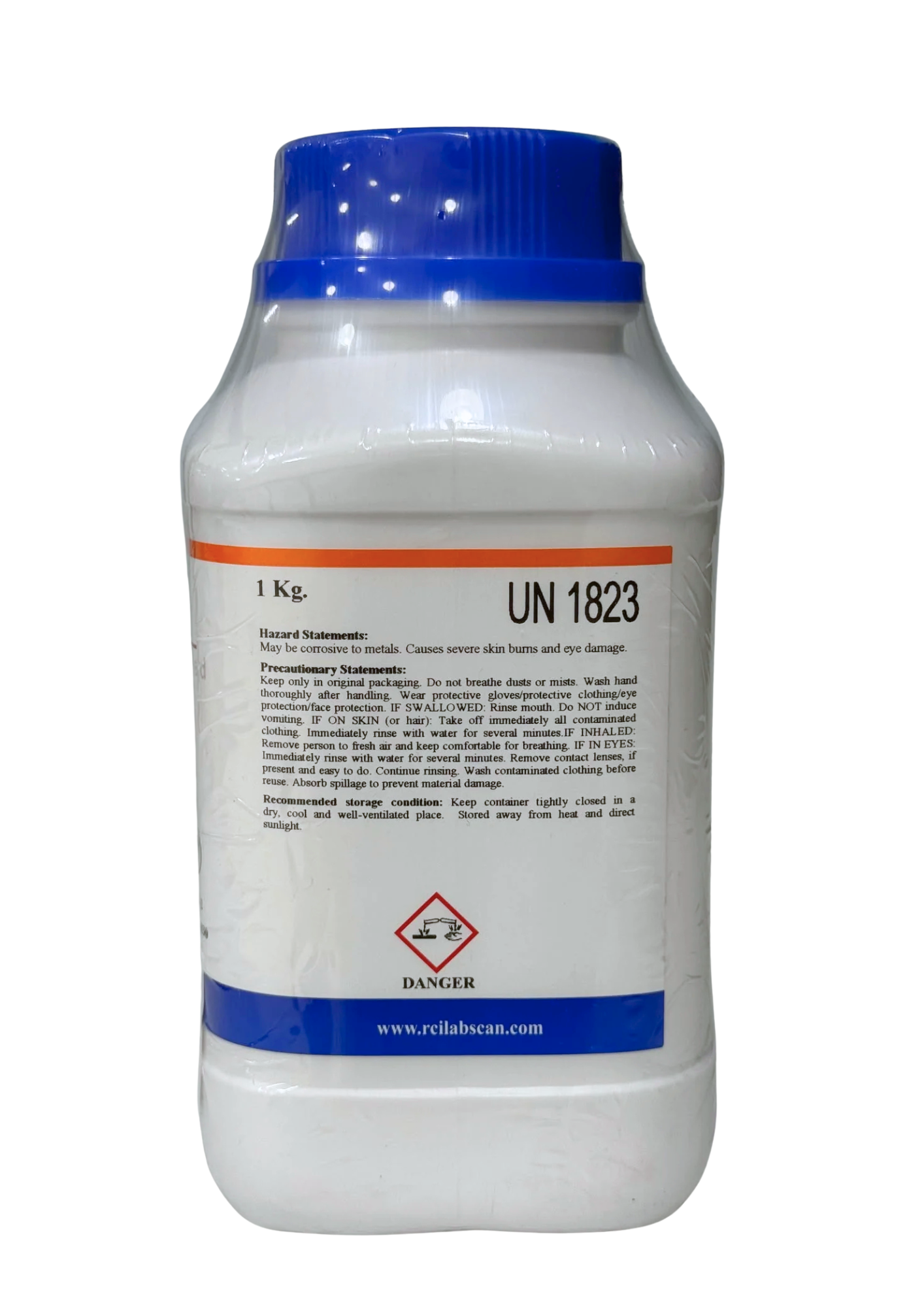
- Classification: May be corrosive to metals. Causes severe skin burns and eye damage. Causes serious eye damage. Harmful to aquatic life.
- Health Risks: Direct dermal contact induces an immediate “slippery, soapy” sensation due to rapid liquefaction necrosis of tissue proteins and fats, causing deep chemical burns and tissue destruction. Direct eye contact triggers immediate corneal scarring and catastrophic permanent blindness. Inhalation of airborne chemical dust or generated mists aggressively damages respiratory membranes, causing violent choking, coughing, or lung distress. Ingestion causes catastrophic corrosive destruction to gastrointestinal membranes and fatal stomach perforation.
- First Aid Measures: In case of contact, immediately flush affected eyes or skin with a continuous stream of flowing water for at least 15 minutes while removing contaminated garments. Seek urgent medical emergency evaluation immediately.
Handling & Storage
- Storage: Highly Corrosive Strong Base and Intensely Hygroscopic Solid. Solid beads rapidly absorb atmospheric water vapor and carbon dioxide upon open exposure, causing liquefaction into alkaline fluids and degrading into sodium carbonate mixtures. Must be stored in its original, moisture-resistant, tightly sealed RCI LABSCAN plastic container inside a dedicated dry corrosive safety cabinet. Keep in a cool, strictly dry zone at stable room temperature (below 30 degrees Celsius). Keep completely isolated and separated from strong acids, flammable chemicals, ambient moisture, and active metals (such as aluminum, zinc, or tin—contact with these metals liberates highly explosive flammable hydrogen gas).
- Precautions: Comprehensive specialized PPE is mandatory, including thick alkali-resistant chemical gloves, splash-proof chemical goggles, a full protective face shield, and a particulate respirator mask. Handle efficiently and secure the container cap tightly immediately after extraction to eliminate moisture exposure inside the stock jar.