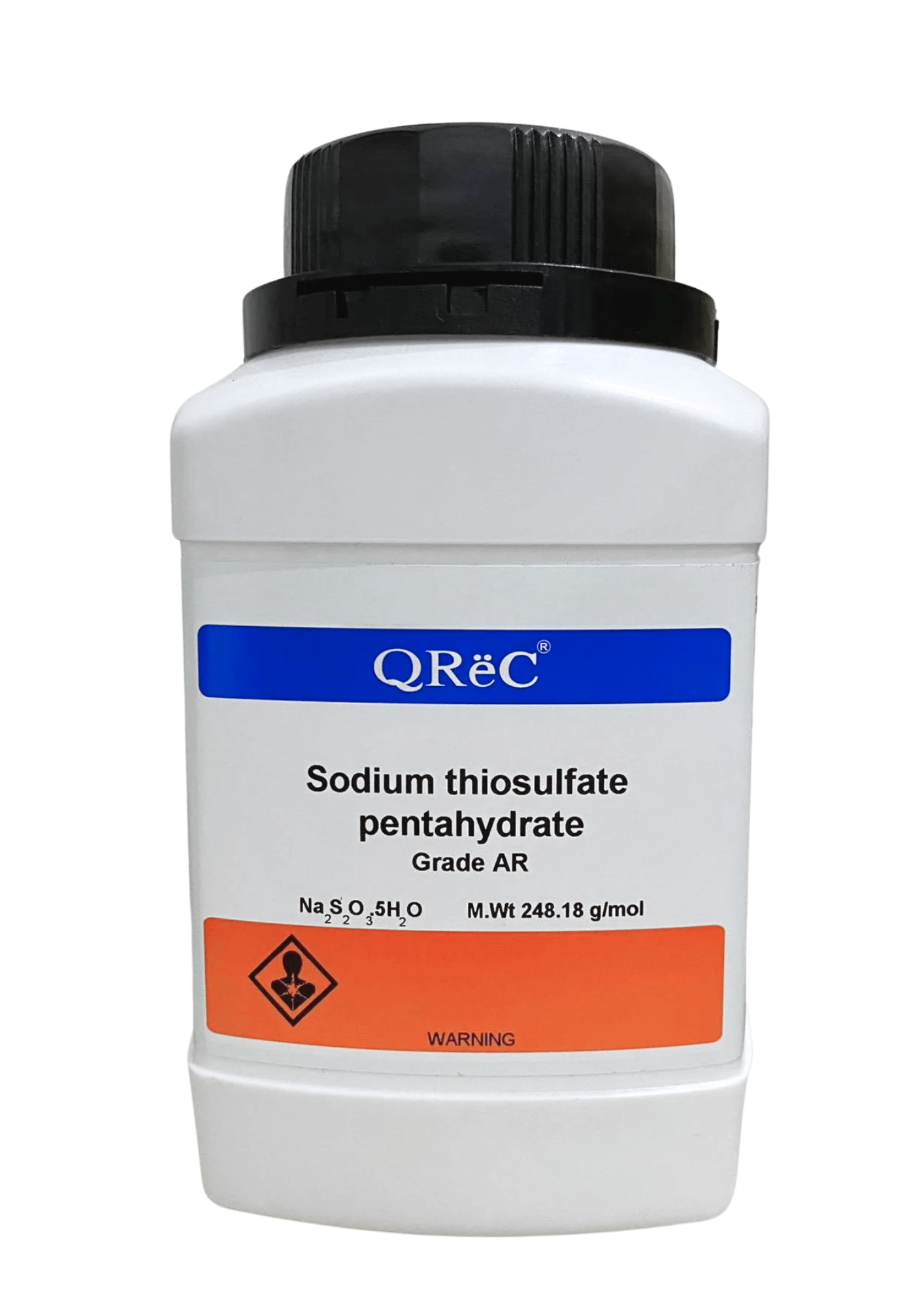
Sodium thiosulfate pentahydrate or Hypo
Product Overview & Quality
- Product Name: Sodium thiosulfate pentahydrate or Hypo or Sodium hyposulfite
- Brand: QReC (Product Code: QR-S5316-1-0500)
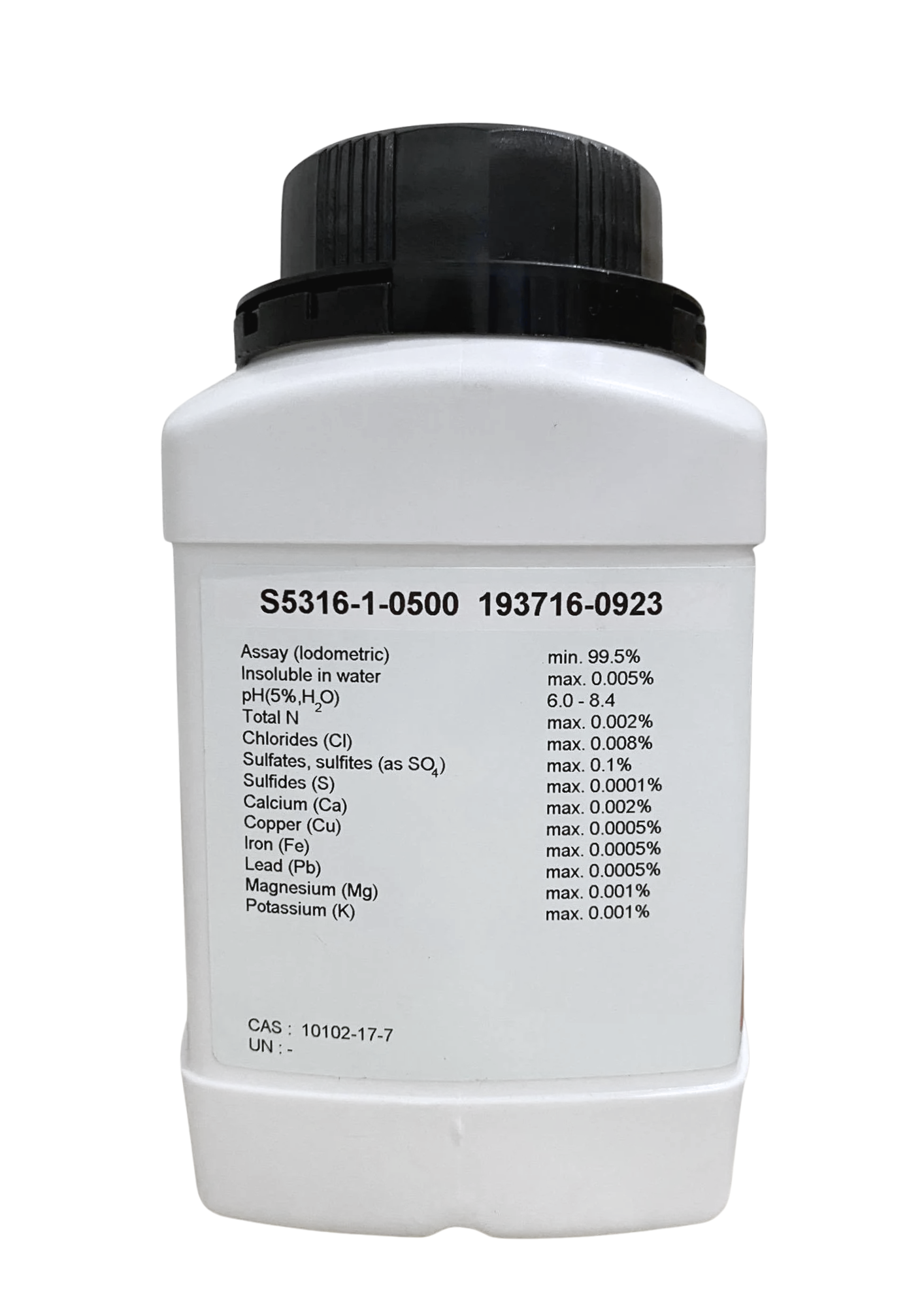
- Grade: Analytical Reagent (AR Grade) featuring a high certified chemical purity of 99.5 percent or higher. Produced and quality-controlled in accordance with strict international laboratory standards of QReC. Tightly regulated to ensure exceptionally low ppm thresholds of insoluble matter, chlorides, sulfates, sulfides, nitrogen compounds, and heavy metals (such as lead and iron). The pristine transparent crystals dissolve rapidly and completely without turbidity, providing reliable quantitative precision for analytical solutions.
- Physical Properties: Odorless, colorless, translucent monoclinic crystals or white crystalline granules. Slightly efflorescent in dry, warm air; structurally stable under standard atmospheric conditions.
- Solubility: Highly soluble in water (approximately 70 grams per 100 milliliters at room temperature; increases substantially in warm water), absorbing heat upon dissolution and resulting in an endothermic cooling effect. Practically insoluble in ethanol.
- Key Use: Heavily utilized as the core analytical reducing agent for formulating volumetric standard solutions in iodometric titrations (determining dissolved oxygen via the Winkler method, residual chlorine, peroxides, and diverse oxidizing analytes). Widely applied as a neutralizer and dechlorinating agent in environmental water testing and microbiological sample preservation. Extensively employed as a photographic fixing agent to dissolve unexposed silver halides, and serves as an effective complexing ligand in metallurgical and precious metal extraction procedures.
Safety & Hazards
- Classification: Non-hazardous substance under standard GHS criteria. Exhibits very low acute toxicity, but direct contact with particulate matter may induce mild mechanical irritation.
- Health Risks: Direct eye contact may cause mild transient stinging, watering, and conjunctival redness. Prolonged dermal contact can cause localized dryness or slight irritation in sensitive individuals. Inhalation of particulate dust may cause transient nasal or upper respiratory tract irritation, accompanied by sneezing or coughing. Ingestion of large quantities may lead to gastrointestinal distress, nausea, vomiting, or diarrhea.
- Hazardous Decomposition: Contact with strong mineral acids triggers chemical decomposition, releasing suffocating and toxic sulfur dioxide gas along with elemental sulfur precipitation.
- First Aid Measures: Flush eyes or affected skin with flowing clean water for at least 15 minutes. In case of inhalation, relocate to a well-ventilated area with fresh air. If accidentally swallowed in large amounts, rinse mouth and drink ample water. Seek medical advice if irritation persists.
Handling & Storage
- Storage: Heat-sensitive and Acid-incompatible. High ambient heat can cause crystals to effloresce or dissolve in their own water of crystallization. Must be preserved in its original, tightly sealed QReC laboratory container. Store in a cool, dry, and well-ventilated chemical store at stable room temperature (below 30 degrees Celsius), sheltered from direct sunlight and excessive humidity. Keep strictly segregated from strong mineral acids, halogens, and powerful oxidizing agents.
- Precautions: Standard laboratory PPE is recommended, including disposable nitrile gloves, protective safety eyewear, and a lab coat. Keep container tightly capped immediately after dispensing to preserve crystal hydration equilibrium.