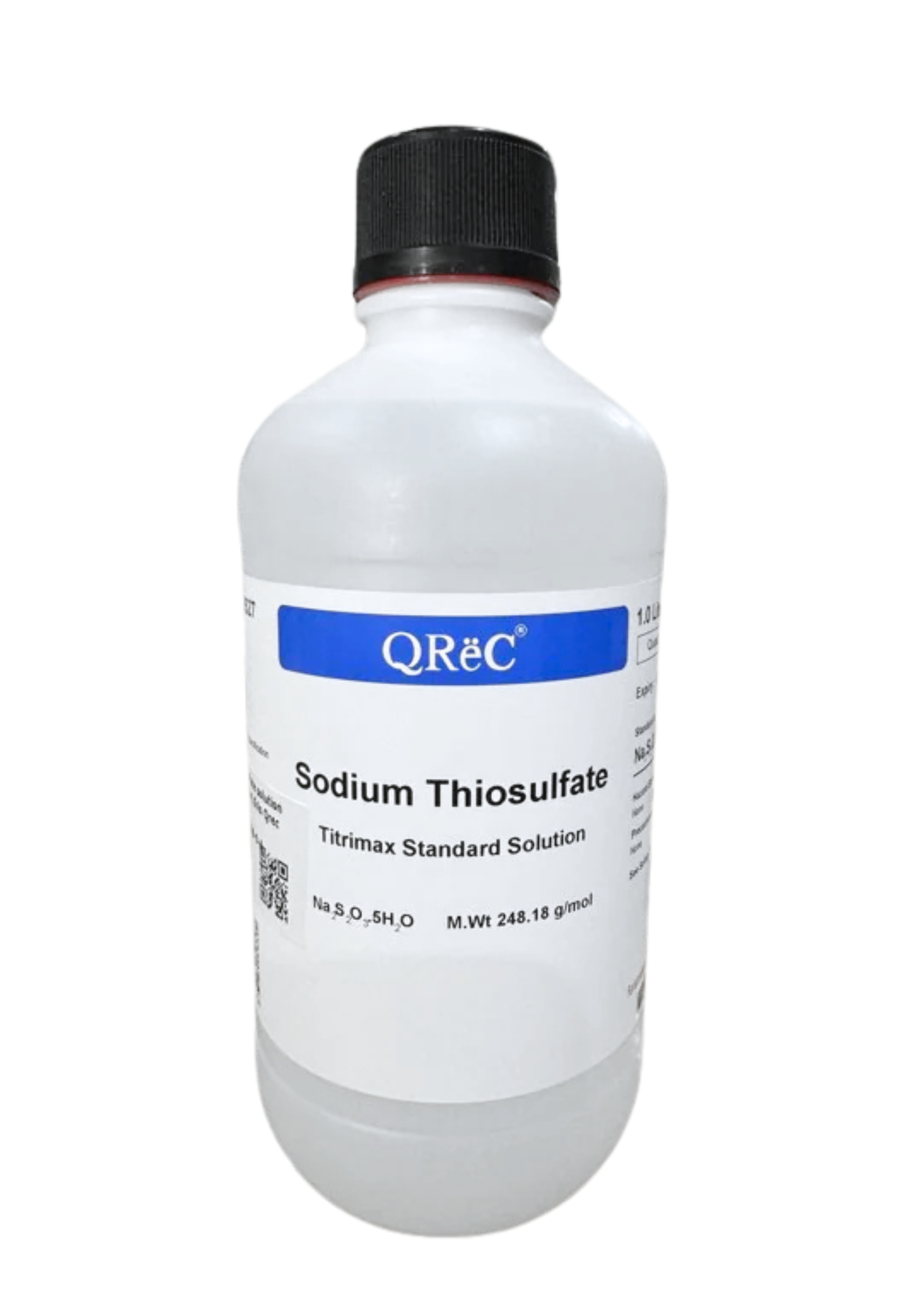
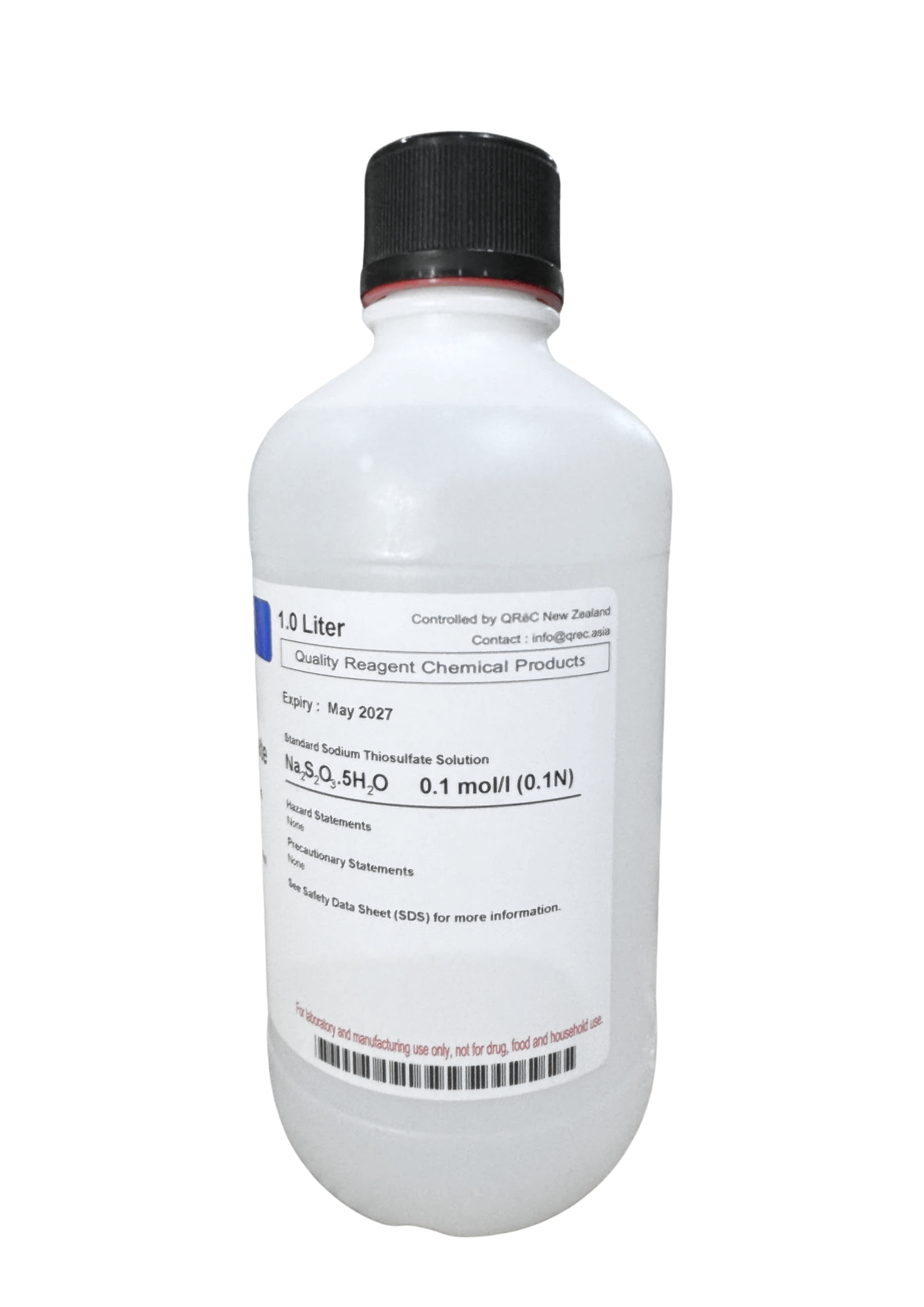
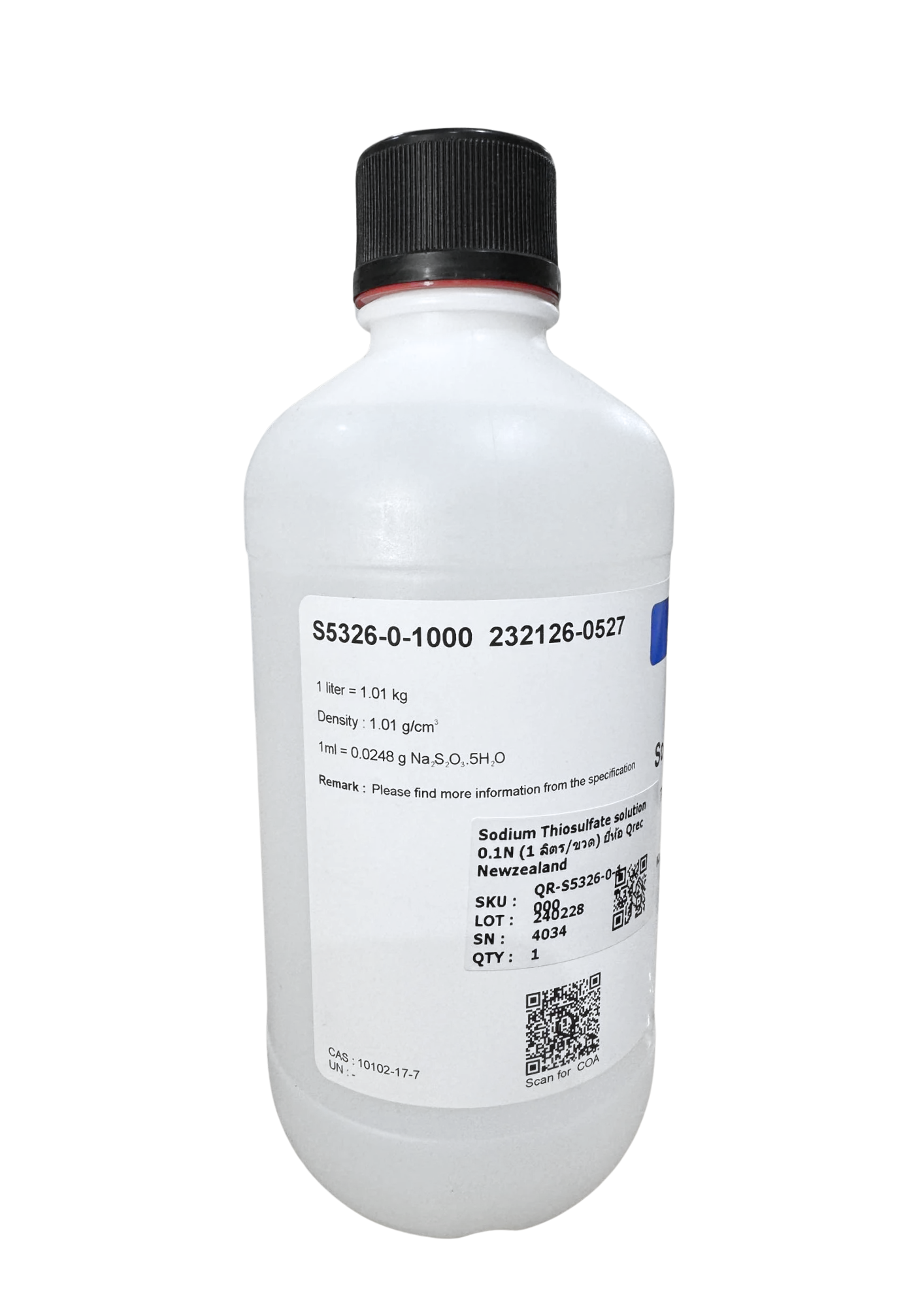
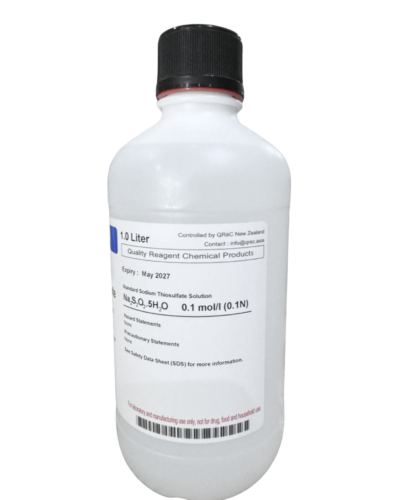
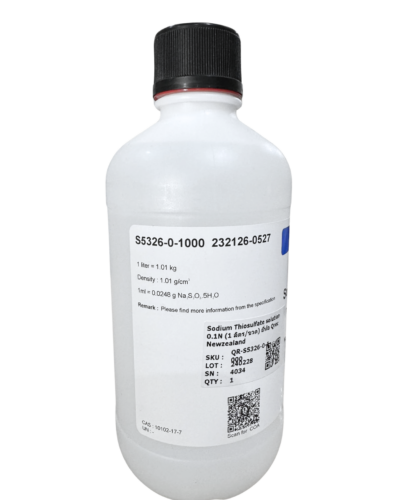
Sodium thiosulfate solution 0.1N (0.1 mol/L) or Standard volumetric sodium thiosulfate solution
Product Overview & Quality
- Product Name: Sodium thiosulfate solution 0.1N (0.1 mol/L) or Standard volumetric sodium thiosulfate solution
- Brand: QReC (Product Code: QR-S5326-0-1000)
- Grade: Certified Volumetric Standard Solution (AR Grade) prepared from high-purity analytical reagent sodium thiosulfate and high-purity deionized water boiled to eliminate carbon dioxide and oxygen. Stabilized against bacterial degradation and photochemical decomposition. Standardized and calibrated under strict QReC global laboratory specifications at a controlled reference temperature of 20 degrees Celsius. Directly traceable to certified Primary Standard Reference Materials from the National Institute of Standards and Technology (NIST Traceable). Features a verified normality factor strictly maintained within 0.999 to 1.001, printed on the batch certificate and label. Delivers immediate, ready-to-use accuracy, eliminating preliminary dissolution, boiling, microbial stabilization, and secondary restandardization steps. Packaged in a heavy-duty, light-protective polymer container.
- Physical Properties: Clear, colorless liquid. Odorless. Practically neutral to weakly alkaline aqueous solution. Non-flammable and non-corrosive.
- Solubility: Completely miscible in all proportions with water.
- Key Use: Universally utilized as the standard titrant in iodometric quantitative titrations (paired with starch indicator) for quantifying various oxidizing agents. Standard reagent in environmental and water quality testing for measuring Dissolved Oxygen (DO) via the classic Winkler titration method. Extensively applied in food quality control and lipid analysis to determine Peroxide Value (PV) and Iodine Value (IV) in fats, oils, and foodstuffs. Routinely used to evaluate total and available free chlorine in municipal water, wastewater, and industrial bleach sanitizers. Serves as a neutral dechlorinating agent and quenching reagent for halogen-driven chemical processes.
Safety & Hazards
- Classification: Non-hazardous substance under standard GHS criteria at 0.1N concentration in routine laboratory usage. Low toxicity profile; liquid contact or mist may cause mild mechanical or transient irritation.
- Health Risks: Direct eye contact may cause minor transient stinging, conjunctival redness, or tearing. Prolonged skin contact may cause mild dryness or slight irritation in sensitive individuals. Inhalation of generated aerosols may produce minor sneezing or respiratory tickling. Ingestion of large quantities may provoke transient gastrointestinal upset, mild nausea, or diarrhea.
- First Aid Measures: Flush affected eyes with clean running water for at least 10 to 15 minutes. Wash exposed skin with soap and water. In case of mist inhalation, relocate to fresh air. If accidentally swallowed in substantial amounts, rinse mouth thoroughly, drink water, and seek medical advice if discomfort persists.
Handling & Storage
- Storage: Calibrated Standard Volumetric Solution. Sensitive to light exposure, atmospheric oxidation, and microbial degradation, which can precipitate sulfur and cause titer drift. Must be preserved in its original, tightly closed light-protective QReC container. Store in a clean, cool, dark, and well-ventilated dedicated chemical store at controlled temperatures (between 15 and 25 degrees Celsius), sheltered from direct solar radiation. Keep strictly segregated from strong mineral acids (which immediately precipitate elemental sulfur and release sulfur dioxide gas) and strong oxidizing agents.
- Precautions: Standard laboratory PPE is mandatory, including protective chemical gloves, safety glasses, and a lab coat. “Critical Volumetric Rule: Never pour unused portions of the solution from beakers or burettes back into the primary container to avoid cross-contamination and preserve the certified titer factor.” Re-seal cap tightly immediately after dispensing.