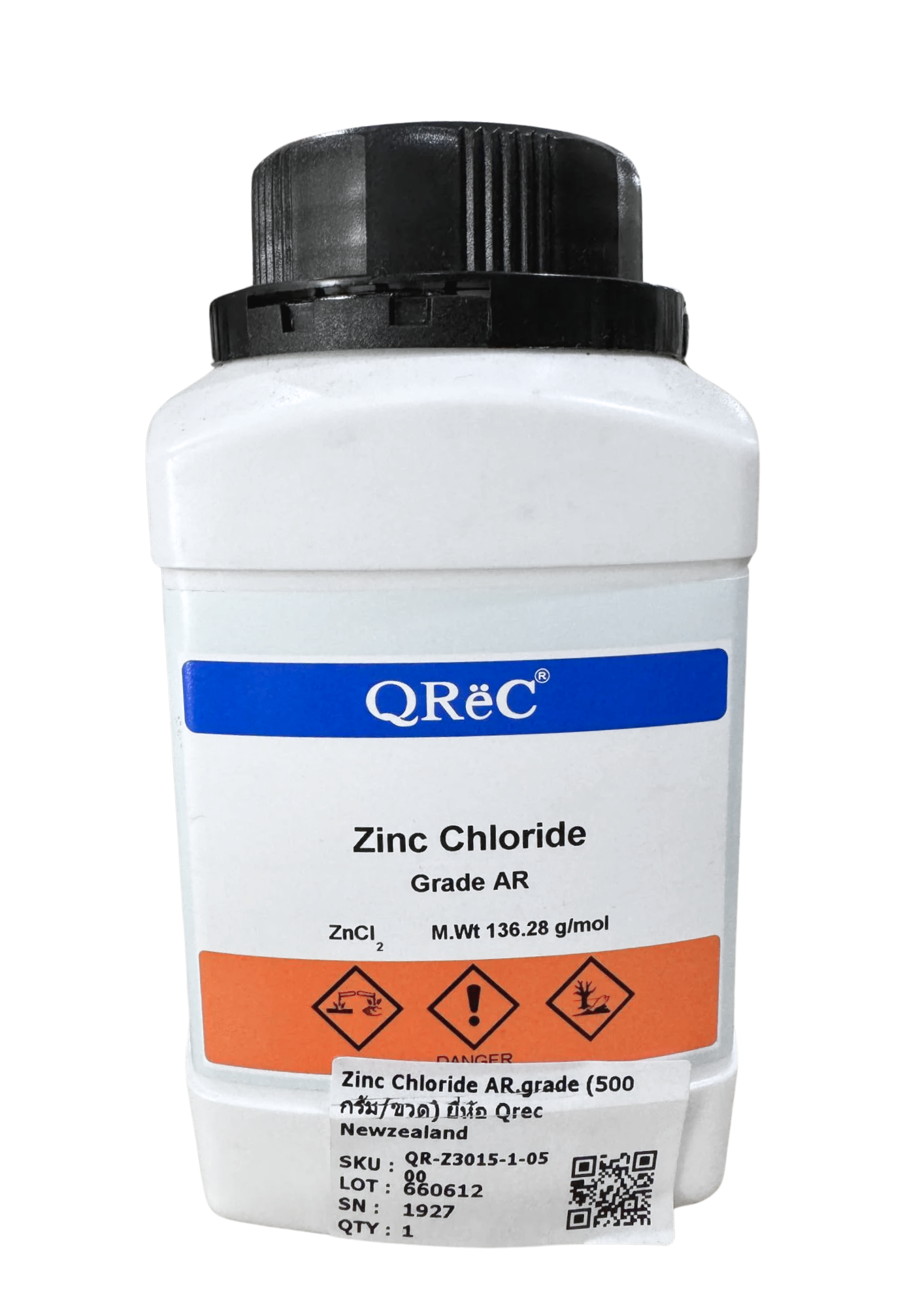
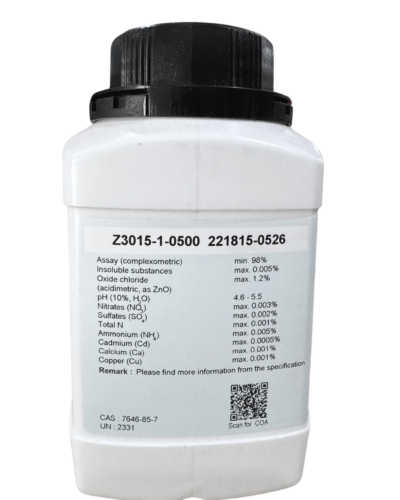
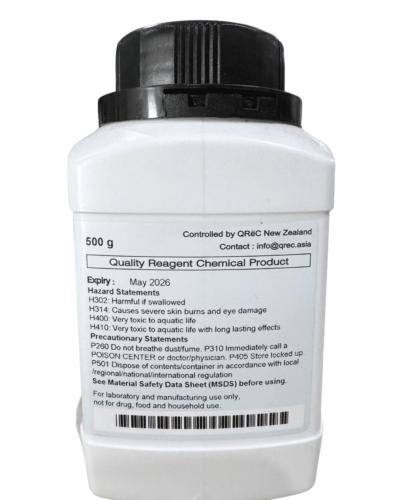
Zinc chloride 98% or Zinc dichloride
Product Overview & Quality
- Product Name: Zinc chloride 98% or Zinc dichloride
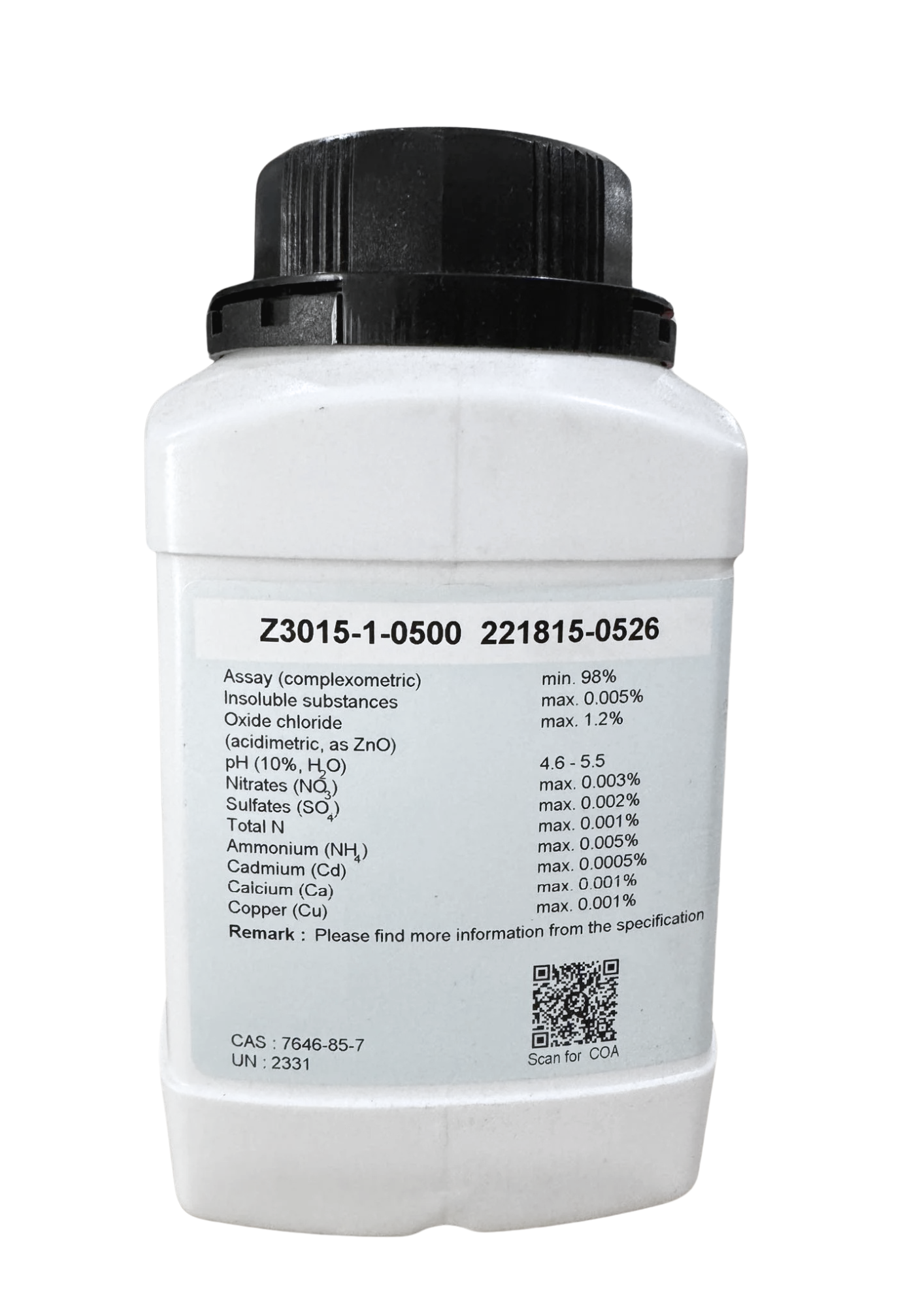
- Brand: QReC (Product Code: QR-Z3015-1-0500)
- Grade: Analytical Reagent (AR Grade) featuring a certified chemical assay of 98 percent or higher. Manufactured and quality-verified under strict QReC global laboratory specifications. Rigorously analyzed to maintain ultra-low ppm thresholds of sulfates, oxychlorides, total nitrogen, acid-insoluble matter, and trace heavy metals (such as iron, lead, copper, cadmium, calcium, and magnesium). Delivers high stoichiometric purity and forms clear, sediment-free aqueous solutions. Packaged in a heavy-duty, chemically resistant plastic container with a high-integrity hermetic seal to prevent ambient moisture absorption.
- Physical Properties: White crystalline solid, granules, or fused masses. Odorless. Highly deliquescent, rapidly absorbing moisture from the air to form a dense liquid solution. Aqueous solutions are strongly acidic due to hydrolysis and exert aggressive corrosive effects on biological tissue and metals.
- Solubility: Extremely soluble in water (highly exothermic dissolution process); freely soluble in ethanol, methanol, acetone, diethyl ether, and glycerol.
- Key Use: Heavily utilized in formulating Lucas reagent (combined with concentrated hydrochloric acid) for classifying and differentiating primary, secondary, and tertiary alcohols in organic analytical chemistry. Extensively applied as a versatile Lewis acid catalyst in organic synthesis, notably in Friedel-Crafts alkylation and acylation, Fischer indole synthesis, and condensation reactions. Acts as an effective dehydrating agent in specialized organic transformations. Widely used in electroplating baths, electrochemical electrolyte formulations, and serves as an important soldering flux and surface treatment agent in metallurgical research.
Safety & Hazards (Critical, Corrosive & Aquatic Toxic)
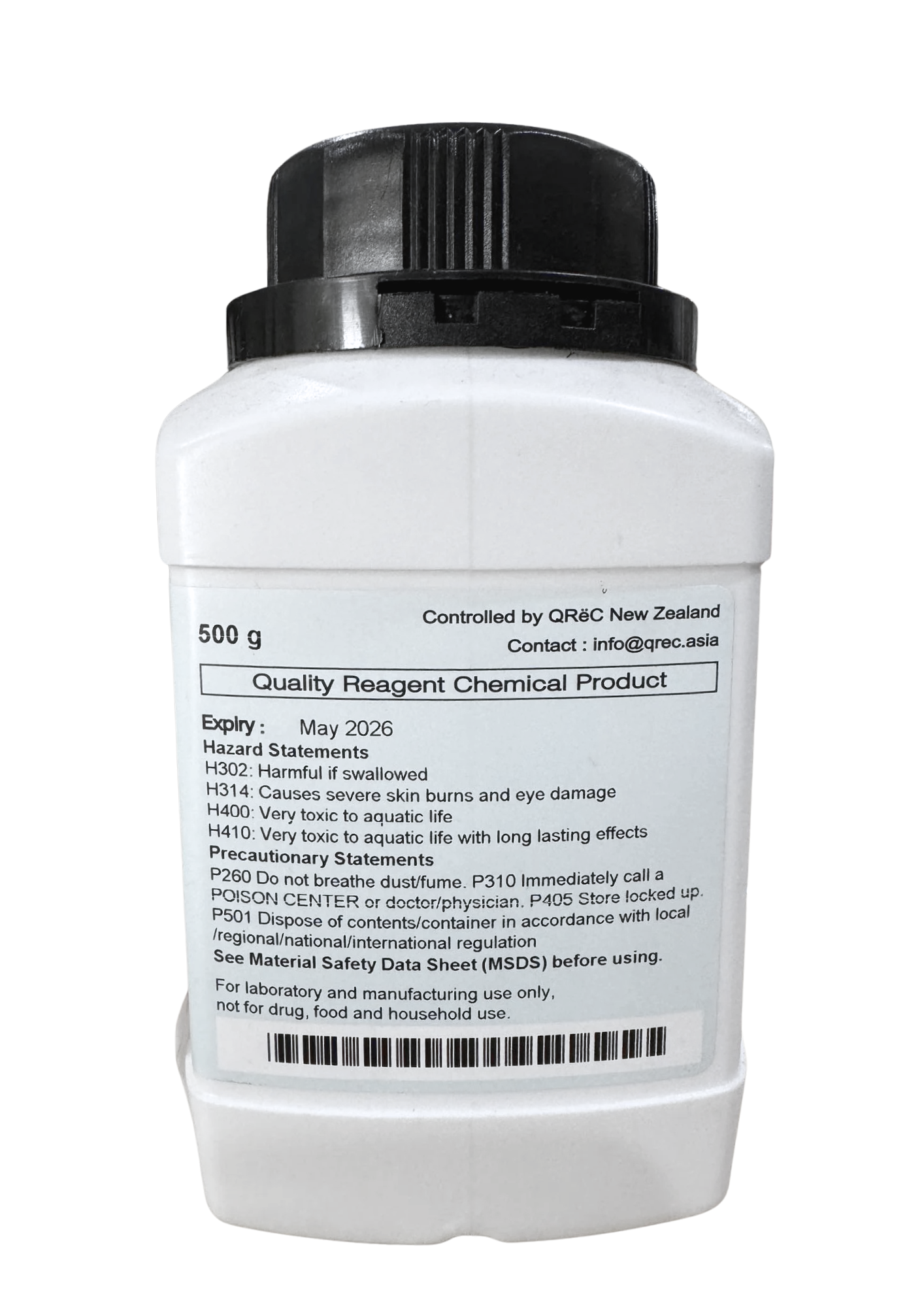
- Classification: Causes severe skin burns and eye damage. Causes serious eye damage. Harmful if swallowed. May cause respiratory irritation. Very toxic to aquatic life with long lasting effects.
- Health Risks: Direct eye contact causes immediate, destructive chemical burns, corneal ulceration, and permanent blindness. Dermal exposure produces deep caustic burns, severe erythema, blister formation, and tissue necrosis. Inhalation of particulate dust or thermal fumes violently irritates and corrodes the respiratory tract, inducing coughing, chest tightness, dyspnea, chemical pneumonitis, pulmonary edema, and potential metal fume fever symptoms. Ingestion triggers corrosive destruction of the oral mucosa, esophagus, and stomach, causing severe abdominal pain, hematemesis, and potential gastrointestinal perforation.
- First Aid Measures: Immediately flush affected eyes or skin with an abundant stream of clean running water for at least 15 to 20 minutes while stripping contaminated clothing. In case of dust inhalation, rapidly relocate the victim to fresh air. If accidentally swallowed, do NOT induce vomiting; thoroughly rinse mouth, administer water if conscious, and seek immediate, urgent emergency medical attention.
Handling & Storage
- Storage: Highly Deliquescent and Corrosive Salt. Readily liquefies upon atmospheric exposure and hydrolyzes to form insoluble zinc oxychloride. Must be stored in its original, tightly closed QReC container. Keep in a strictly dry, cool, and well-ventilated dedicated chemical store at stable room temperature (below 30 degrees Celsius), sheltered from humidity and direct sunlight. Keep strictly isolated from atmospheric moisture, water, strong alkalis, strong oxidizers, and reactive metals.
- Precautions: Standard specialized PPE is mandatory, including heavy chemical-resistant gloves, splash-proof safety goggles, and a protective lab coat. Weigh and dispense inside a properly functioning laboratory fume hood to avoid inhaling corrosive dust. Re-seal container tightly immediately after use to protect against moisture degradation.