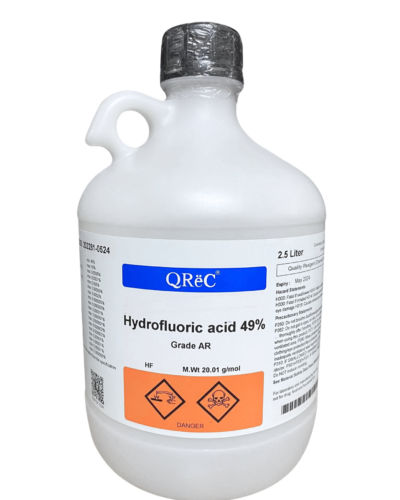
Hydrofluoric acid 49% or Aqueous hydrogen fluoride
Product Overview & Quality
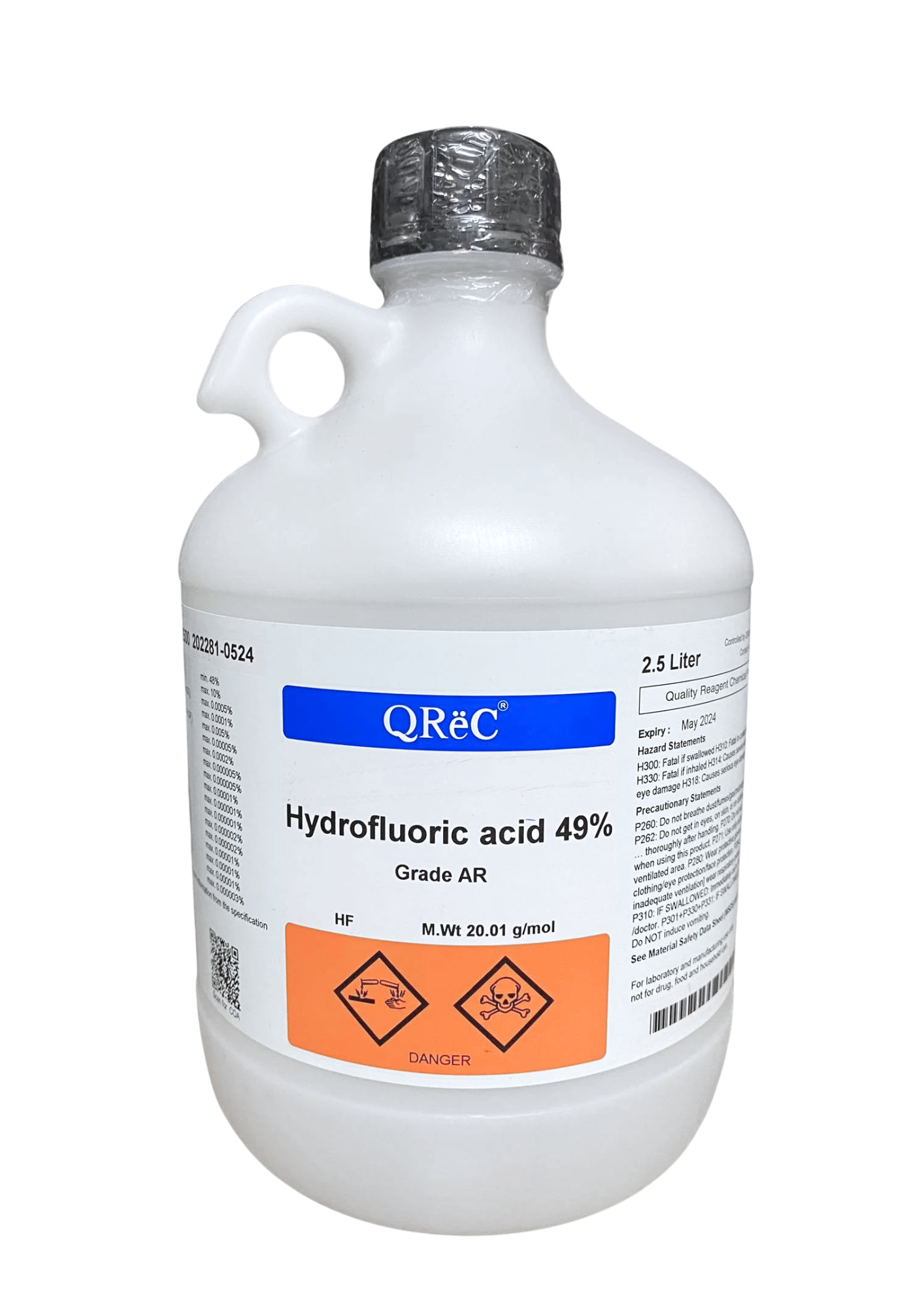
- Product Name: Hydrofluoric acid 49% or Aqueous hydrogen fluoride
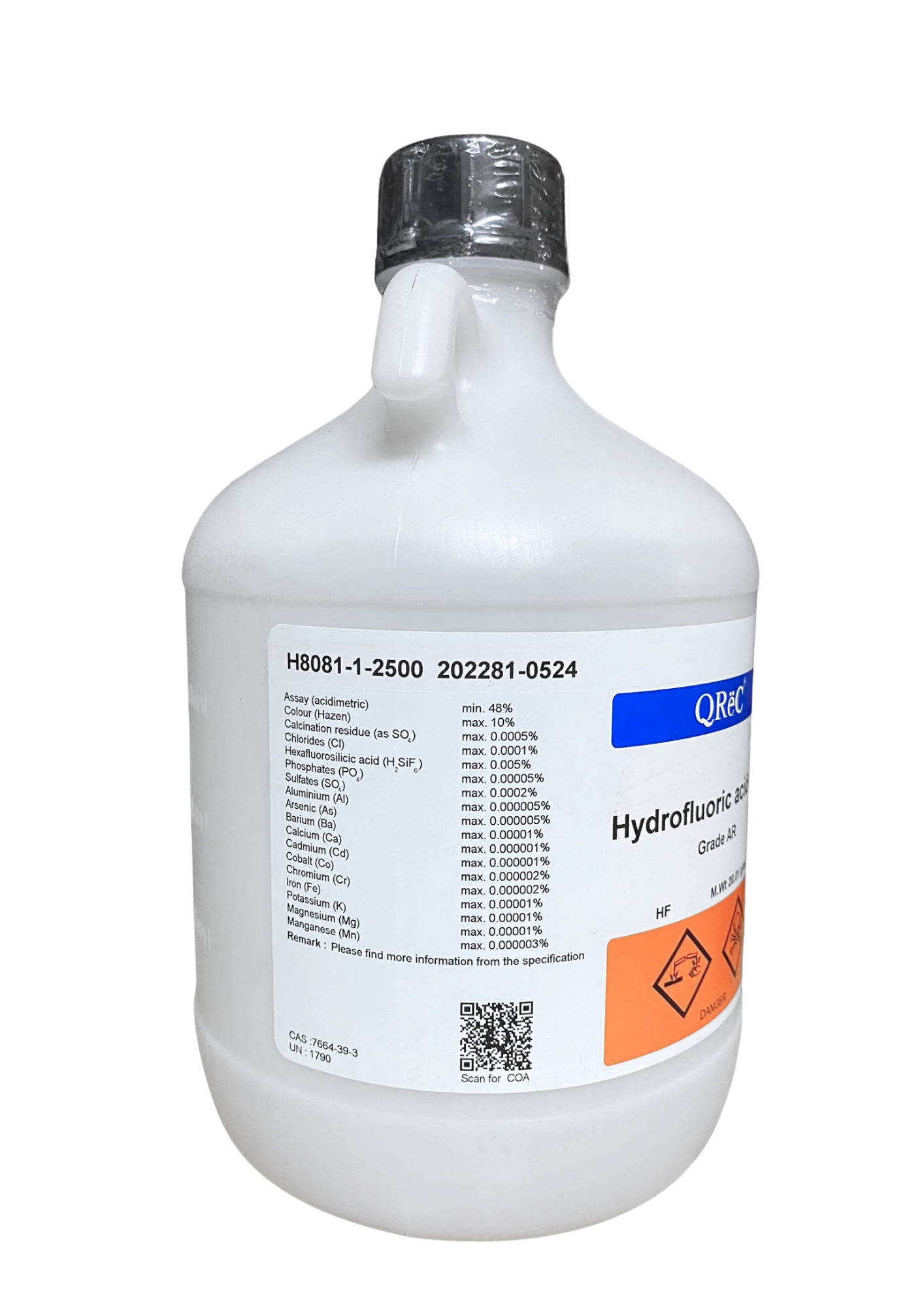
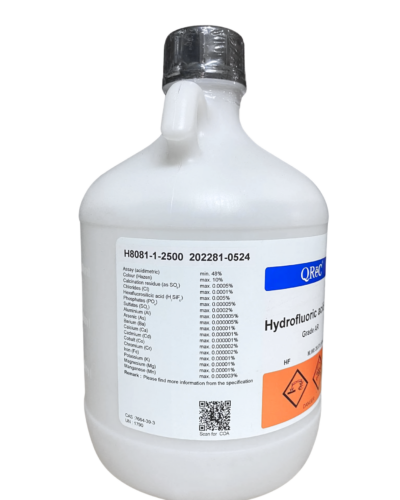
- Brand: QReC (Product Code: QR-H8081-1-2500)
- Grade: Analytical Reagent (AR Grade) featuring a certified nominal assay range of 48 to 51 percent (weight/weight). Produced and quality-monitored under strict QReC global laboratory specifications. Rigorously analyzed to enforce minimal ppm thresholds of fluorosilicate, chloride, sulfate, phosphate, ignition residue, and trace heavy metals (such as iron, lead, silver, and copper). Delivers an exceptionally pure, particle-free acid matrix with reliable quantitative digestion performance. Packaged exclusively in a specialized heavy-duty high-density polyethylene (HDPE) or fluoropolymer container; strictly never packaged in glass.
- Physical Properties: Clear, colorless, highly mobile liquid that releases visible pungent, highly irritating fumes in moist air. Extremely corrosive to minerals, biological tissues, and specifically dissolves silica and silicate glass.
- Solubility: Completely miscible in all proportions with water, generating an exothermic reaction upon dilution.
- Key Use: Heavily utilized as the definitive digestion acid for decomposing geological samples, rocks, minerals, soils, glass, ceramics, and refractory silicate matrices, dissolving silica into volatile or soluble species for trace elemental quantification via AAS, ICP-OES, and ICP-MS. Extensively applied in semiconductor and microelectronics fabrication for precision silicon wafer etching and stripping silicon dioxide surface layers. Widely used for surface frosting, etching, and cleaning of glass and quartz substrates. Routinely employed in specialized metal pickling (titanium and stainless steel) and serves as an important fluorinating precursor in advanced inorganic and organic syntheses.
Safety & Hazards (Critical, Fatal Toxic & Extreme Tissue Corrosive)
- Classification: Fatal if swallowed. Fatal in contact with skin. Fatal if inhaled. Causes severe skin burns and eye damage. Causes serious eye damage.
- Health Risks: One of the most insidious and dangerous chemicals in scientific handling. Dermal contact may not produce immediate pain or erythema (especially at moderate concentrations), delaying recognition while fluoride ions penetrate deeply into subcutaneous tissues. Once systemic, fluoride aggressively binds physiological calcium and magnesium, causing acute, catastrophic hypocalcemia and hypomagnesemia, leading to myocardial irritability, fatal cardiac arrhythmias, bone demineralization, and death. Exposure to as little as 1 to 2 percent of body surface area can be lethal. Direct eye contact destroys the cornea instantaneously, causing irreversible blindness. Inhalation of corrosive vapors induces acute laryngospasms, severe pulmonary edema, and respiratory collapse.
- Specific Antidote Protocol: Immediately flush skin under flowing water for 1 to 2 minutes while discarding contaminated clothes. Immediately apply and continuously massage 2.5 percent calcium gluconate gel into the affected area to bind fluoride ions and prevent deep tissue and systemic calcium depletion. Seek urgent, emergency hospital care immediately, explicitly alerting clinicians to hydrofluoric acid poisoning.
Handling & Storage
- Storage: Acutely Toxic, Extremely Corrosive, and Incompatible with Glass. “Never store or dispense using glass, quartz, ceramic, or reactive metal apparatus as the acid aggressively dissolves silica.” Must be kept in its original, tightly closed QReC chemical-resistant plastic container placed on secondary plastic containment trays. Store in a cool, dry, excellently ventilated, and securely locked dedicated hazardous chemical cabinet at controlled temperatures (below 25 degrees Celsius). Keep strictly segregated from direct sunlight, heat sources, glass materials, strong bases, strong acids, and oxidizers.
- Precautions: Full specialized hazardous PPE is mandatory, including heavy neoprene or double nitrile chemical gloves, a full-face safety shield paired with splash goggles, and an impervious chemical apron. A fresh, unexpired tube of calcium gluconate gel must be physically present at the workstation prior to handling. Handle strictly and exclusively within a certified, properly functioning laboratory fume hood.