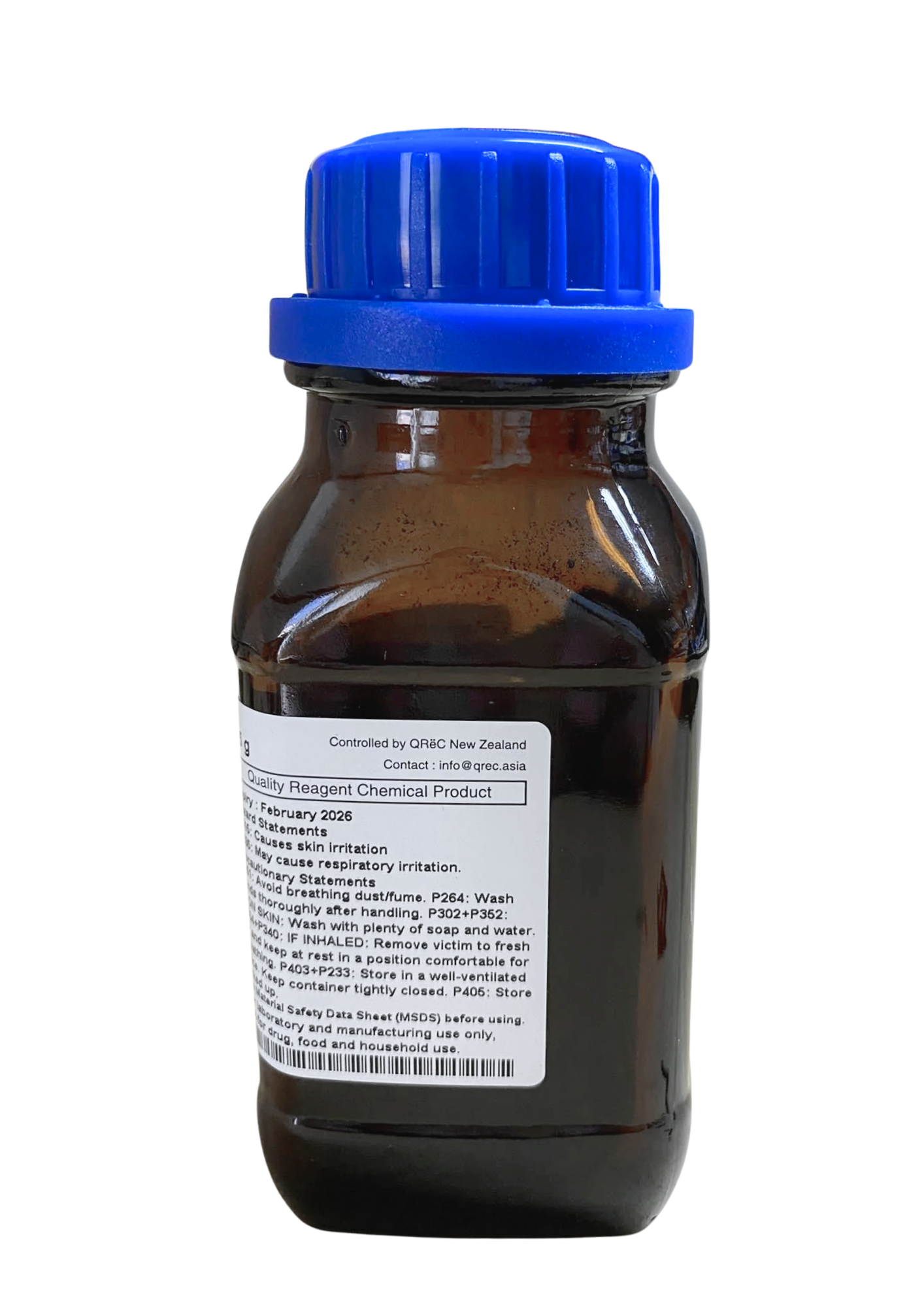
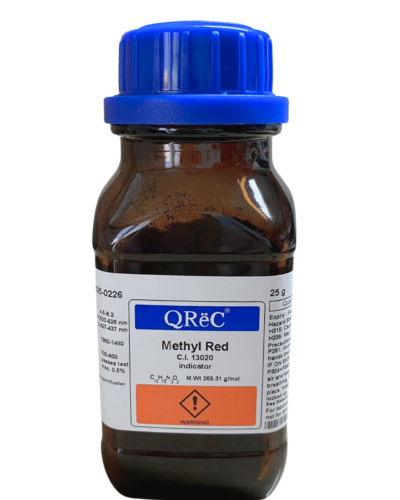
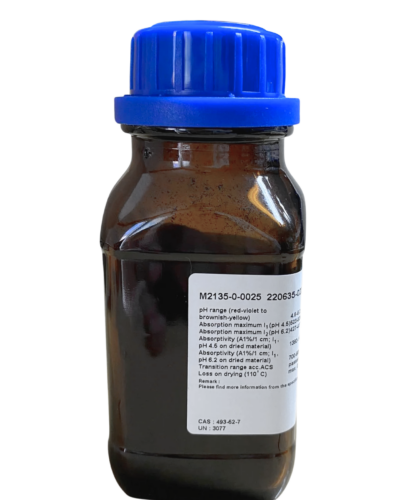
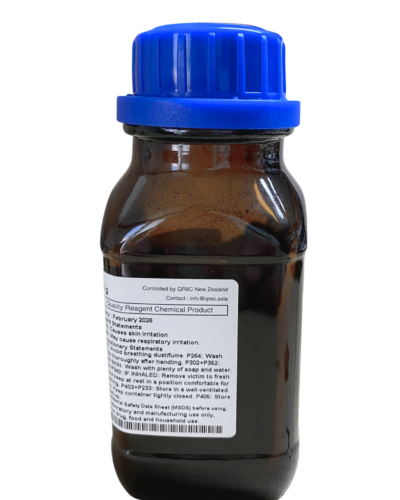
Methyl red indicator or C.I. Acid Red 2 or 2-(4-Dimethylaminophenylazo)benzoic acid
Product Overview & Quality
- Product Name: Methyl red indicator or C.I. Acid Red 2 or 2-(4-Dimethylaminophenylazo)benzoic acid
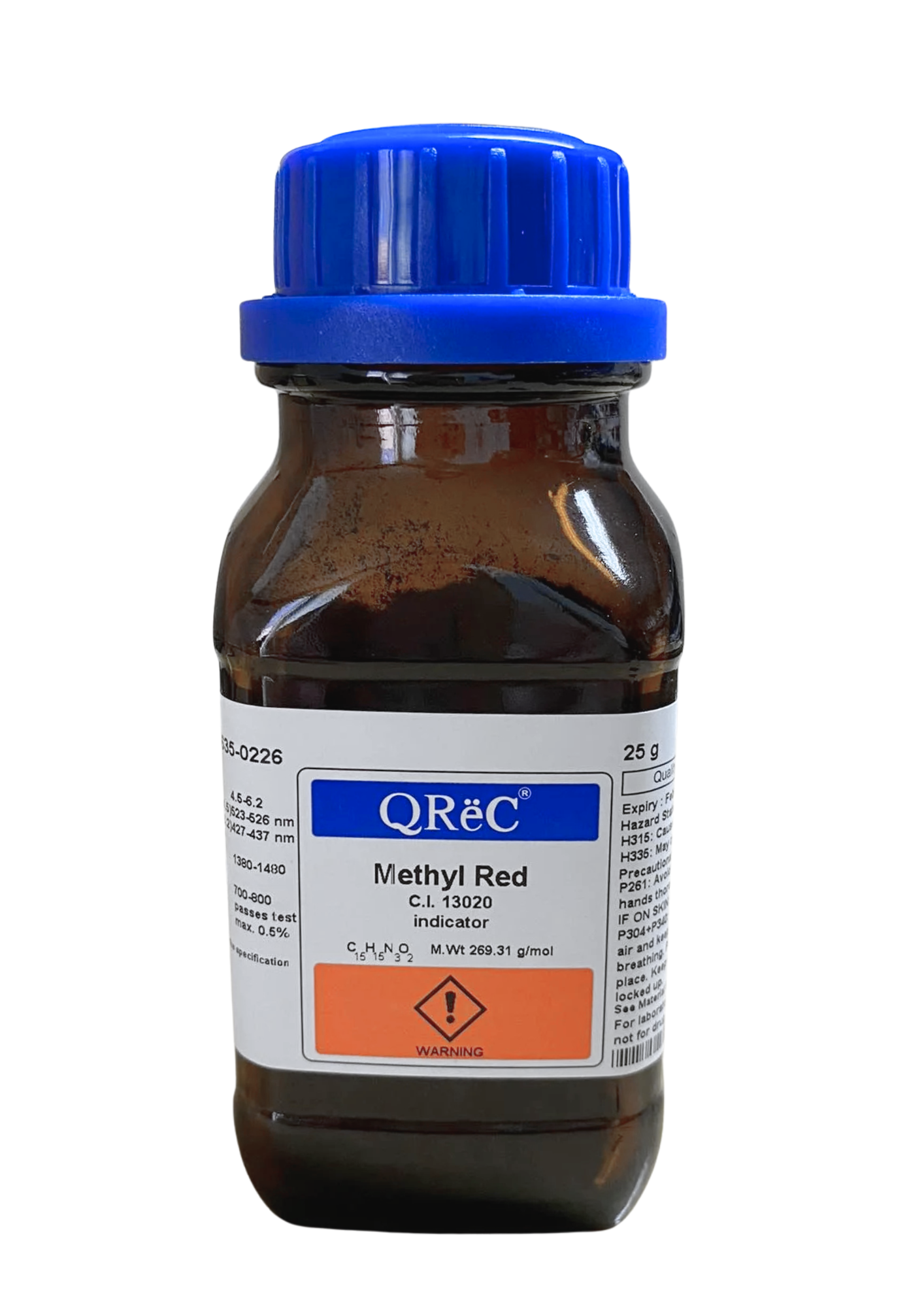
- Brand: QReC (Product Code: QR-M2135-0-0025)
- Grade: Analytical Indicator Grade (AR Grade) conforming to rigorous QReC international laboratory specifications. Tightly regulated to ensure ultra-low ppm thresholds of heavy metals, sulfated ash, loss on drying, and ethanol-insoluble matter. Features certified visual transition sharpness, guaranteeing an immediate, unambiguous color shift at the precise equivalence point without chromatic dragging. Packaged in a protective amber glass bottle designed for long-term chemical stability and ultraviolet radiation shielding.
- Physical Properties: Dark red, reddish-violet, or reddish-brown crystalline powder. Odorless. Virtually insoluble in cold water as dry crystals, but freely soluble in ethanol. Stable under standard ambient temperature and pressure.
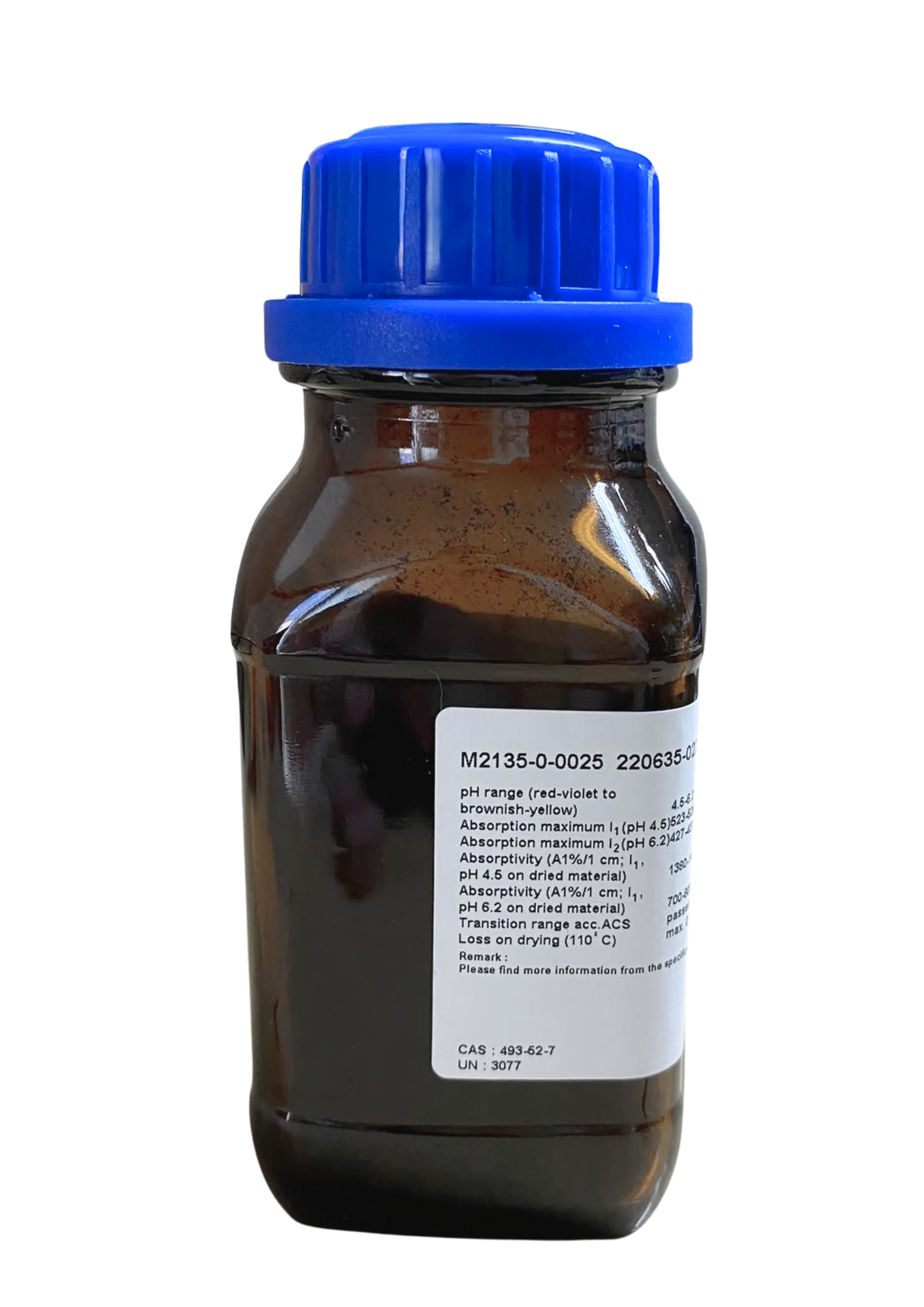
- Color Transition Interval (pH Range): Operates across a defined pH transition range of 4.4 to 6.2. Exhibits a distinct, vivid red hue in acidic solutions (below pH 4.4), transitions through orange, and turns to a clear, bright yellow in weakly acidic, neutral, and alkaline environments (above pH 6.2).
- Solubility: Readily soluble in ethanol, methanol, glacial acetic acid, and dilute aqueous alkali hydroxide solutions; practically insoluble in pure water. (Standard working indicator solution is typically prepared by dissolving 0.1 gram of powder in 100 milliliters of 60 percent or 95 percent ethanol).
- Key Use: Heavily utilized as the primary visual indicator in strong acid – weak base titrations, notably for the volumetric determination of ammonia, sodium carbonate, and the final distillate titration step in the Kjeldahl method for total nitrogen and crude protein. Extensively applied in diagnostic microbiology for the Methyl Red Test (MR Test, an essential component of the IMViC battery) to differentiate enteric bacterial species of the family Enterobacteriaceae (e.g., distinguishing mixed-acid fermenting Escherichia coli which tests MR-positive yielding red color, from Enterobacter aerogenes which tests MR-negative yielding yellow color). Frequently combined with bromocresol green to prepare sharp mixed indicators, and used for general pH monitoring in biochemical buffer preparations.
Safety & Hazards
- Classification: Non-hazardous substance under standard GHS criteria in normal laboratory quantities. Presents minimal acute toxicity; particulate dust may cause mechanical eye, skin, and upper respiratory tract irritation.
- Health Risks: Direct eye contact causes mild stinging, conjunctival redness, and tearing. Dermal contact may cause localized mild irritation and leaves an intense, persistent reddish or orange dye stain on the skin. Inhalation of particulate dye dust irritates mucous membranes of the nasal passages and throat, producing sneezing or coughing. Ingestion of excessive quantities may provoke transient gastrointestinal upset or nausea.
- First Aid Measures: Flush exposed eyes or skin immediately with abundant flowing water for at least 15 minutes; wash skin thoroughly with soap and water to remove stubborn dye residues. In case of dust inhalation, relocate the individual to fresh air. If accidentally swallowed, rinse mouth thoroughly with water, drink water, and seek medical advice if discomfort persists.
Handling & Storage
- Storage: Light-Sensitive Azo Dye Formulation. Extended exposure to intense light or ultraviolet radiation degrades the chromophore structure. Must be preserved in its original, tightly sealed QReC amber glass container. Store in a cool, dry, dark, and well-ventilated chemical store at controlled temperatures (below 25 to 30 degrees Celsius), sheltered from direct sunlight and excessive moisture. Keep strictly segregated from strong oxidizing agents.
- Precautions: Standard laboratory PPE is mandatory, including protective gloves, safety glasses, and a protective lab coat. Avoid generating airborne dust during weighing and dispensing, as concentrated micro-particles readily create persistent chromatic stains on equipment, skin, and garments. Tighten the bottle cap securely immediately after sampling.