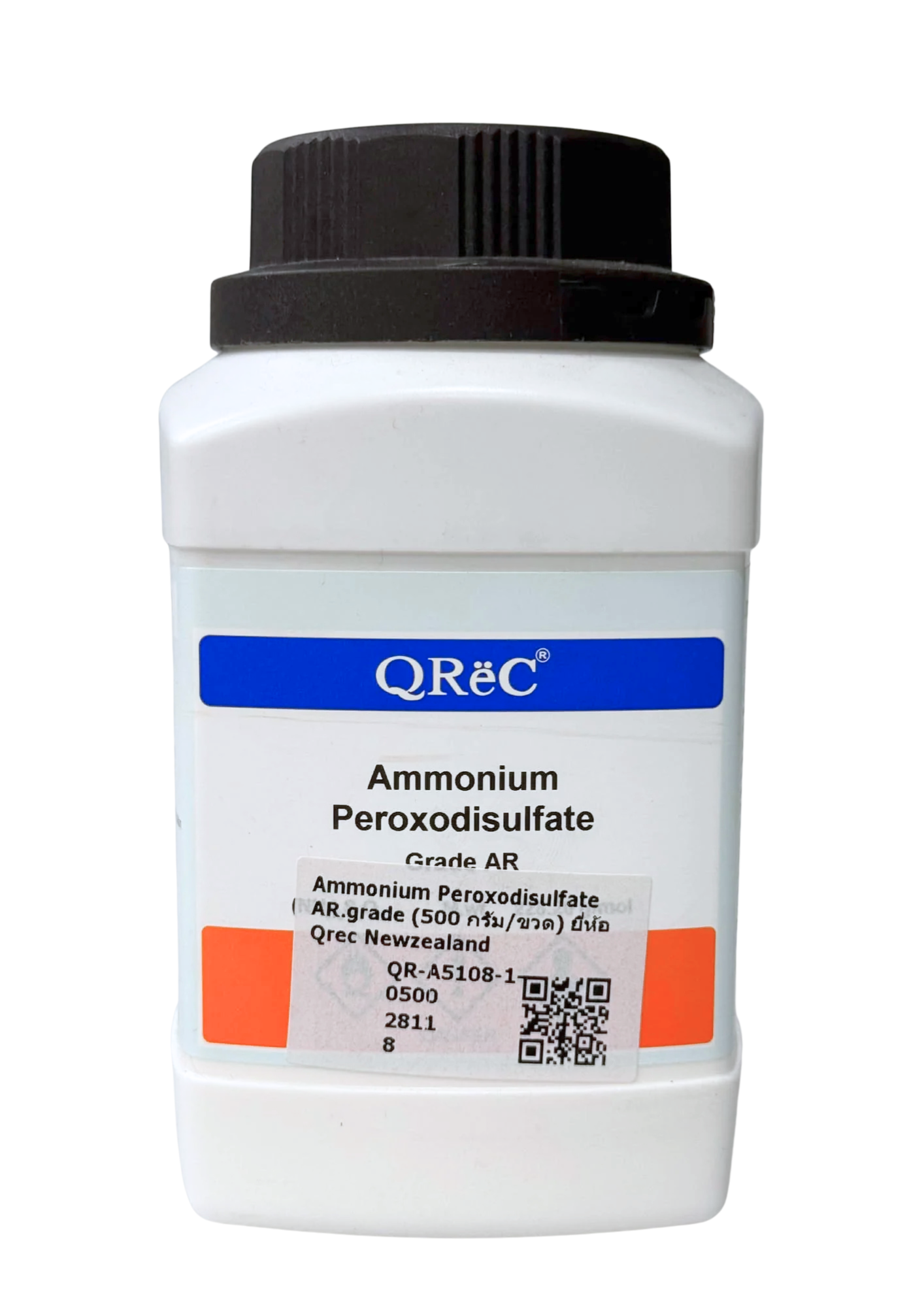
Ammonium peroxydisulfate or Diammonium peroxydisulfate or APS
Product Overview & Quality
- Product Name: Ammonium persulfate 98% or Ammonium peroxydisulfate or Diammonium peroxydisulfate or APS
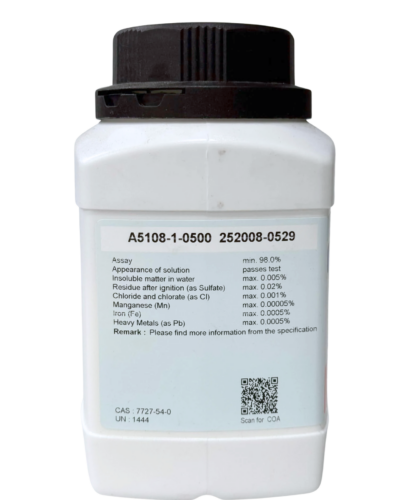
- Brand: QReC (Product Code: QR-A5108-1-0500)
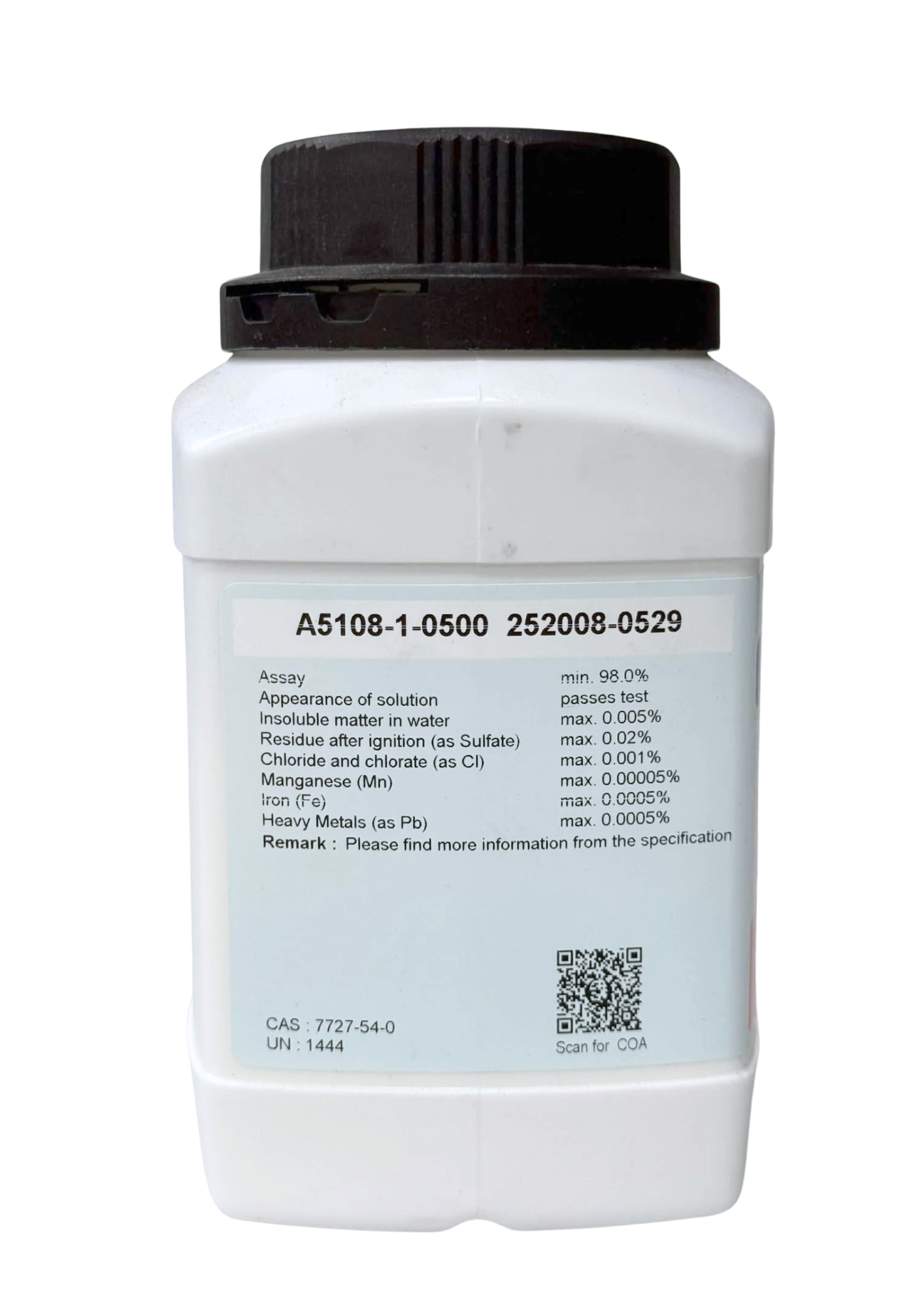
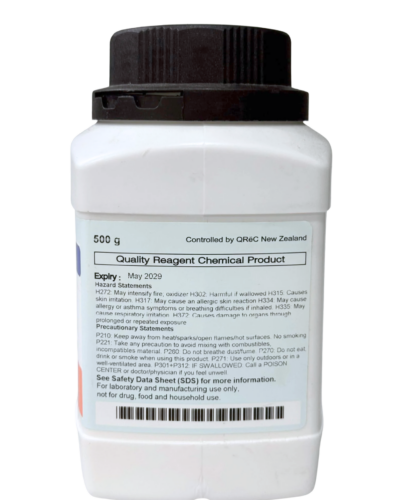
- Grade: Analytical Reagent and Molecular Biology Grade (AR Grade) featuring an exceptional certified chemical assay of not less than 98.0 percent in a 500 g laboratory container. Crystallized, purified, and dried under strict QReC global laboratory specifications without anti-caking conditioning additives. Enforces stringent active oxygen content requirements. Water-insoluble matter is tightly restricted below 0.005 percent, with sulfated ash (residue on ignition) held below 0.05 percent. Trace chloride, chlorate, manganese, and foreign heavy metals (such as iron, lead, copper, zinc, and arsenic) are maintained at minimal parts-per-million levels. Certified DNase and RNase-free, ensuring zero biocatalytic degradation in protein and nucleic acid electrophoretic analysis. Uniform, dry crystalline prisms dissolve cleanly and rapidly in water to yield crystal-clear, sediment-free solutions. Packaged in a heavy-duty, moisture-barrier polymer container fitted with an airtight double hermetic seal.
- Physical Properties: Colorless transparent monoclinic crystals or fine white crystalline powder. Odorless with an astringent, acidic-saline taste. Slightly hygroscopic in ambient air; undergoes slow hydrolytic decomposition upon exposure to atmospheric moisture, releasing traces of oxygen and ozone. Non-combustible inorganic solid, but functions as a powerful oxidizing agent (Oxidizing Solids Category 3) that dramatically accelerates combustion of flammable and organic materials. Aqueous solutions undergo continuous spontaneous hydrolytic decomposition over time. Aqueous solutions are strongly acidic (pH approximately 3.0 to 4.0 for a 5 percent aqueous solution at room temperature).
- Solubility: Readily and highly soluble in water (approximately 55 to 60 grams per 100 milliliters at 20 degrees Celsius, increasing to approximately 80 grams per 100 milliliters at 40 degrees Celsius; dissolution in water is an endothermic process that causes an immediate, noticeable drop in solution temperature); slightly soluble in ethanol; incompatible with organic solvents due to severe oxidation hazards.
- Key Use: Universally utilized as the quintessential free-radical chemical initiator (paired catalytically with TEMED) for driving the vinyl addition polymerization and cross-linking of acrylamide and N,N’-methylenebisacrylamide in casting polyacrylamide gels (SDS-PAGE and Native-PAGE) for protein and nucleic acid resolution in molecular biology, biochemistry, and proteomics. Extensively applied as a high-performance chemical etchant in printed circuit board (PCB) micro-fabrication for the selective, clean dissolution and etching of metallic copper traces. Heavily employed as an analytical oxidizer in volumetric and instrumental testing, notably for converting manganese (II) to permanganate and chromium (III) to dichromate prior to titrimetric assays. Serves as a versatile free-radical catalyst in industrial emulsion polymerization of specialty resins, acrylic polymers, and synthetic rubbers. Used as a laboratory glassware cleaning reagent for degrading tenacious organic surface residues and as a bleaching agent in specialized chemical processing.
Safety & Hazards (Oxidizer, Severe Respiratory & Skin Sensitizer, Harmful if Swallowed)
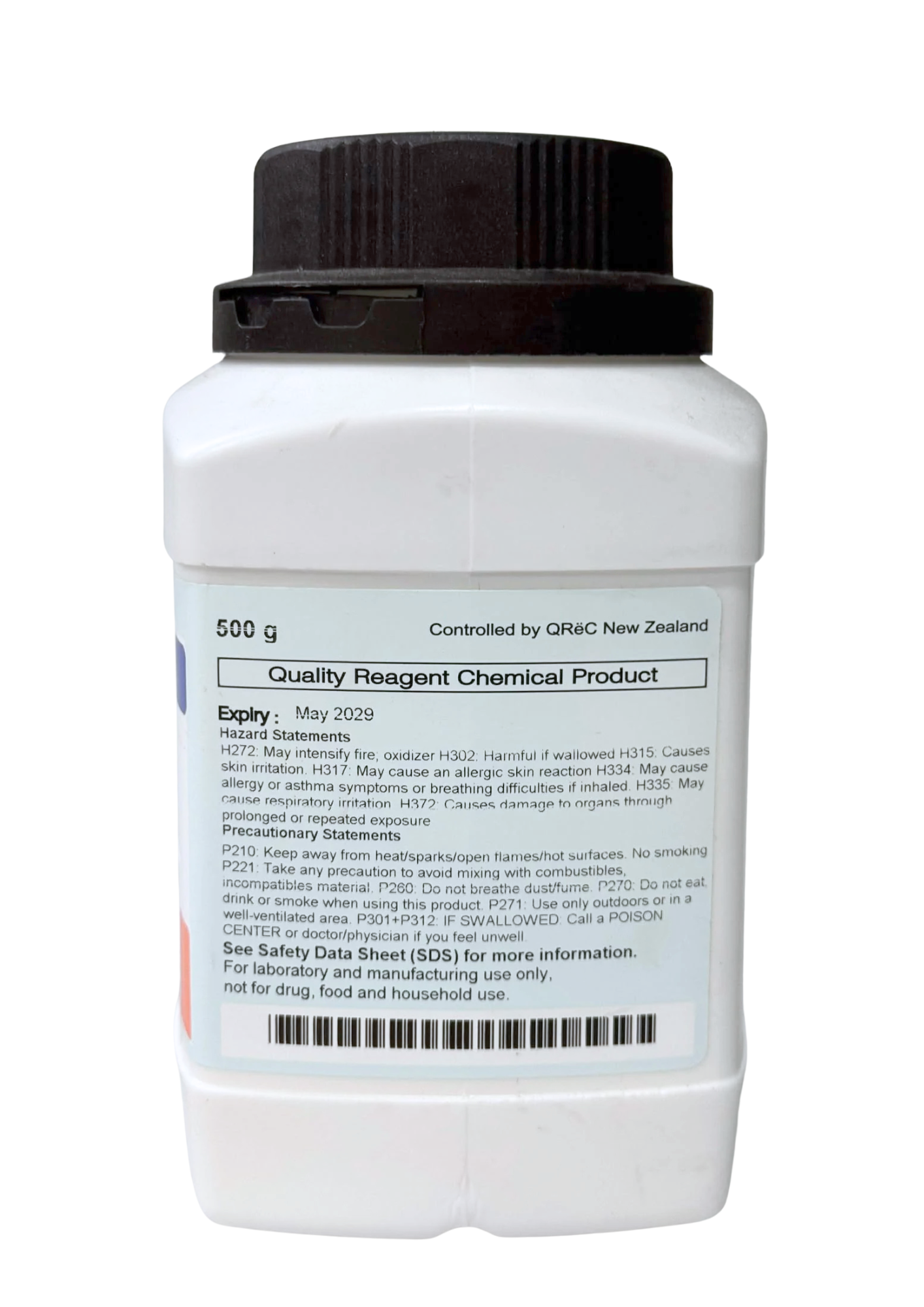
- Classification: May intensify fire; oxidizer (Oxidizing Solids Category 3). Harmful if swallowed (Acute Toxicity Oral Category 4). Causes skin irritation (Skin Irritation Category 2). Causes serious eye irritation (Eye Irritation Category 2). May cause allergy or asthma symptoms or breathing difficulties if inhaled (Respiratory Sensitisation Category 1). May cause an allergic skin reaction (Skin Sensitisation Category 1). May cause respiratory irritation (STOT SE 3).
- Health Risks: Direct ocular contact triggers severe chemical stinging, conjunctival erythema, corneal irritation, edema, and lacrimation. Dermal contact produces localized erythema, stinging, dryness, and peeling. Critical Sensitization Hazard: Inhalation of dust or repeated dermal exposure can trigger profound immunological sensitization, inducing intractable contact dermatitis, occupational asthma, wheezing, and acute bronchospasm. Inhalation of particulate dust irritates the mucous membranes of the respiratory tract, inducing severe coughing, sneezing, choking, and dyspnea. Ingestion causes acute gastrointestinal irritation, burning oral and epigastric discomfort, vomiting, abdominal pain, diarrhea, and systemic metabolic disturbance.
- First Aid Measures: Immediately flush affected eyes with an abundant stream of clean flowing water for at least 15 minutes while stripping contaminated clothing; remove contact lenses promptly and seek immediate ophthalmological attention. Wash exposed skin thoroughly with soap and water for at least 15 minutes. In case of dust inhalation, rapidly relocate the victim to fresh air; keep warm and in a comfortable sitting position to facilitate breathing, and seek immediate emergency medical care if wheezing or respiratory distress develops. If accidentally swallowed, do NOT induce vomiting; thoroughly rinse mouth, administer water in moderate amounts to dilute, and transport to an emergency medical facility immediately.
Handling & Storage
- Storage: Moisture-Sensitive, Strong Oxidizer and Respiratory Sensitizer. Elevated temperatures, moisture, and combustible contamination induce accelerated decomposition and severe fire risks. Must be preserved in its original, tightly closed QReC container. Store in a clean, strictly dry, cool, and well-ventilated dedicated chemical store at controlled temperatures (below 25 degrees Celsius), sheltered from atmospheric moisture, open flames, sparks, and direct sunlight. “Critical Segregation Mandate: Store strictly segregated from combustible materials, flammable organic solvents, reactive metal powders, strong reducing agents, concentrated mineral acids, and strong caustic alkalis (contact may cause spontaneous fire or violent decomposition).”
- Precautions: Full protective PPE is mandatory, including protective nitrile gloves, splash-proof safety goggles, a certified particulate dust respirator, and a protective lab coat. “Technical Electrophoresis Protocol: Aqueous APS stock solutions are inherently unstable and undergo continuous spontaneous hydrolysis; always prepare freshly on the day of use, or aliquot a 10 percent w/v stock solution into small microcentrifuge tubes and store frozen at minus 20 degrees Celsius for no longer than 1 to 2 weeks to guarantee rapid, reproducible gel polymerization.” Re-seal container cap tightly immediately after sampling. Minimize dust generation during weighing and dispensing.