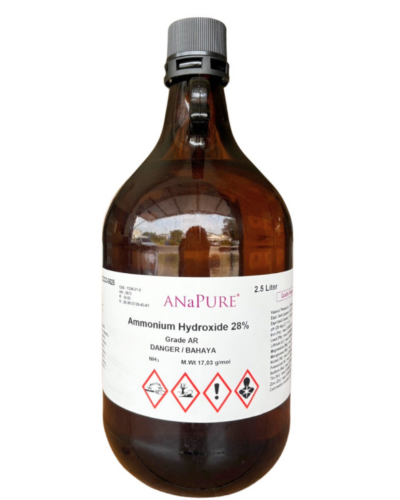
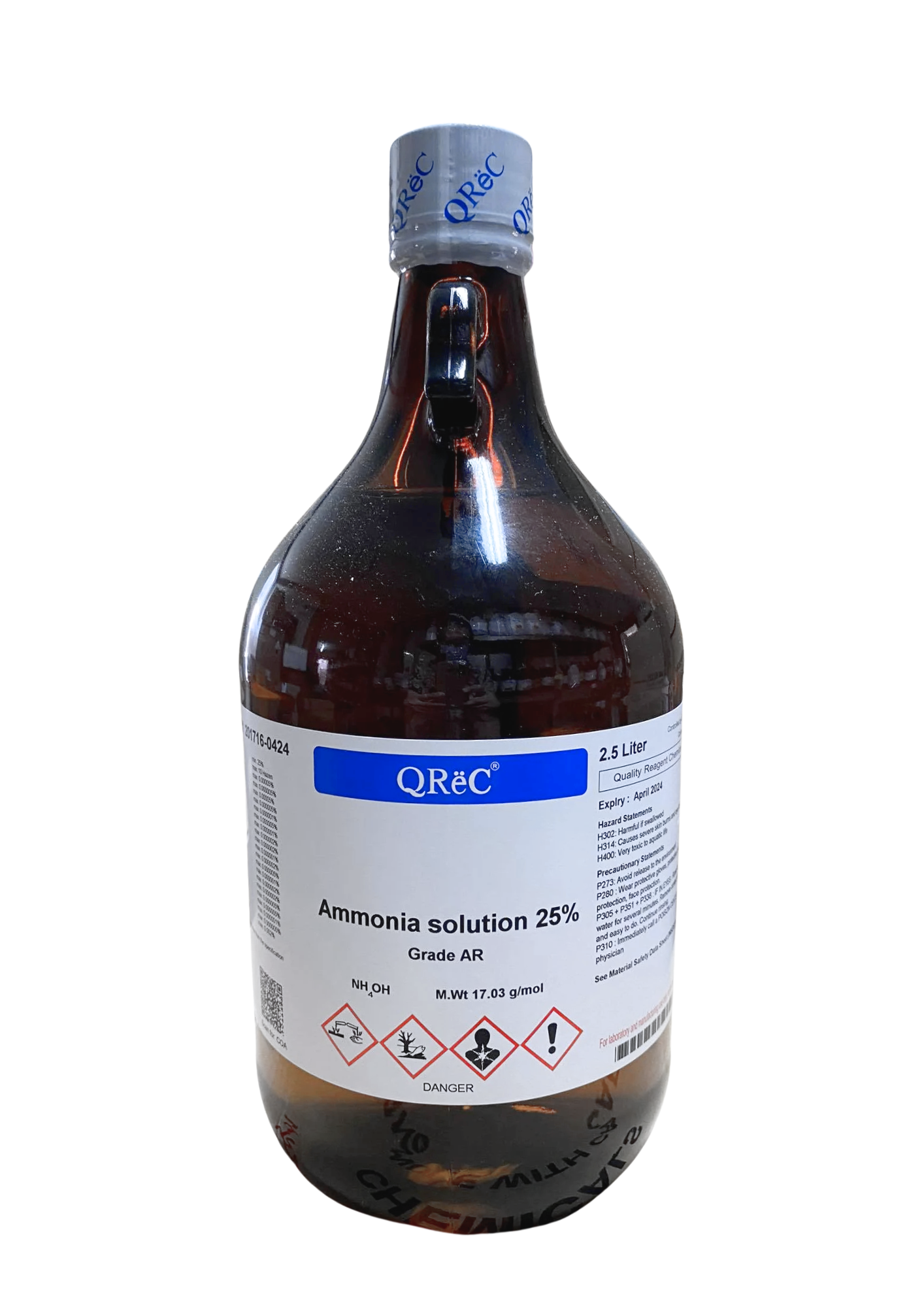
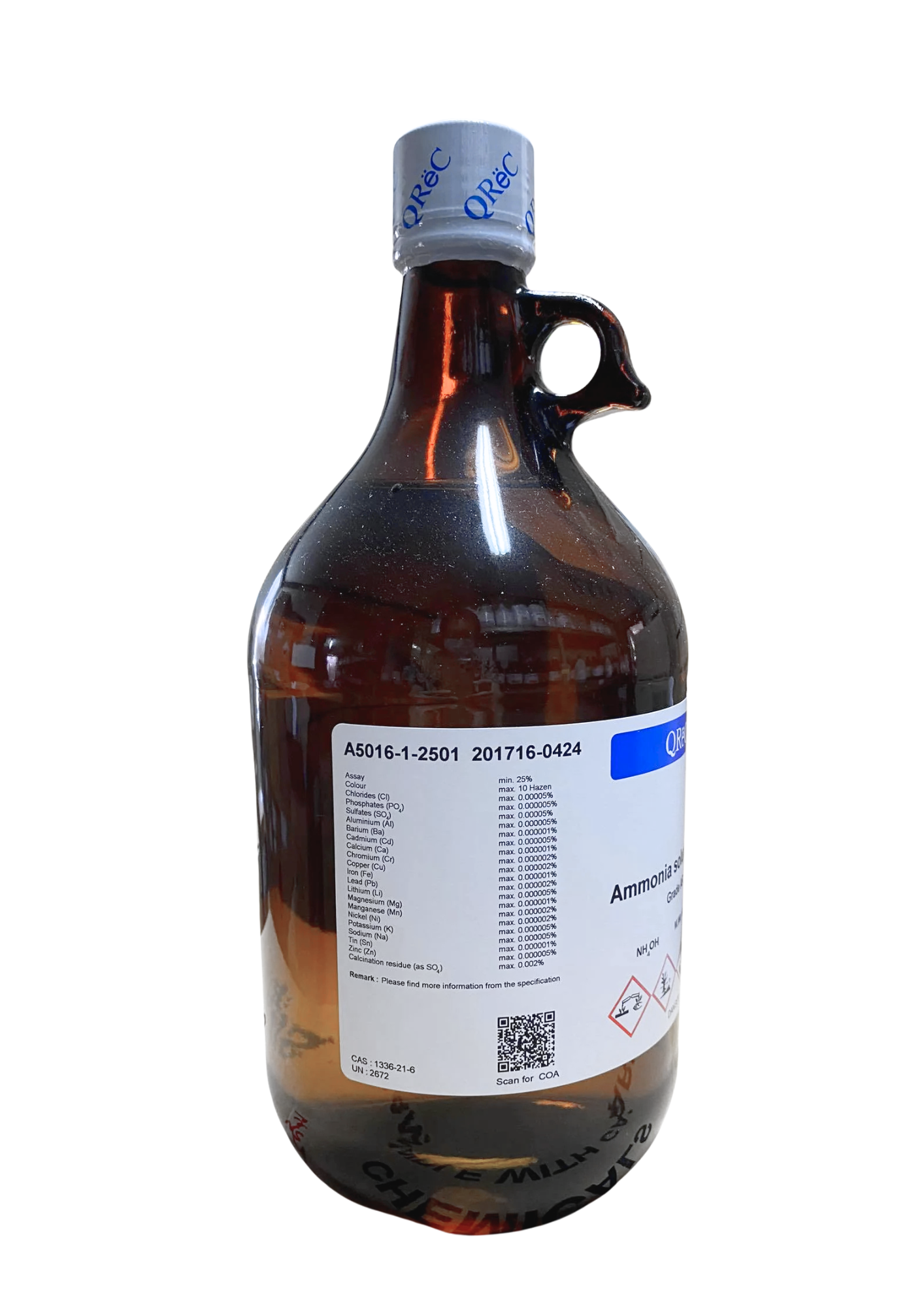
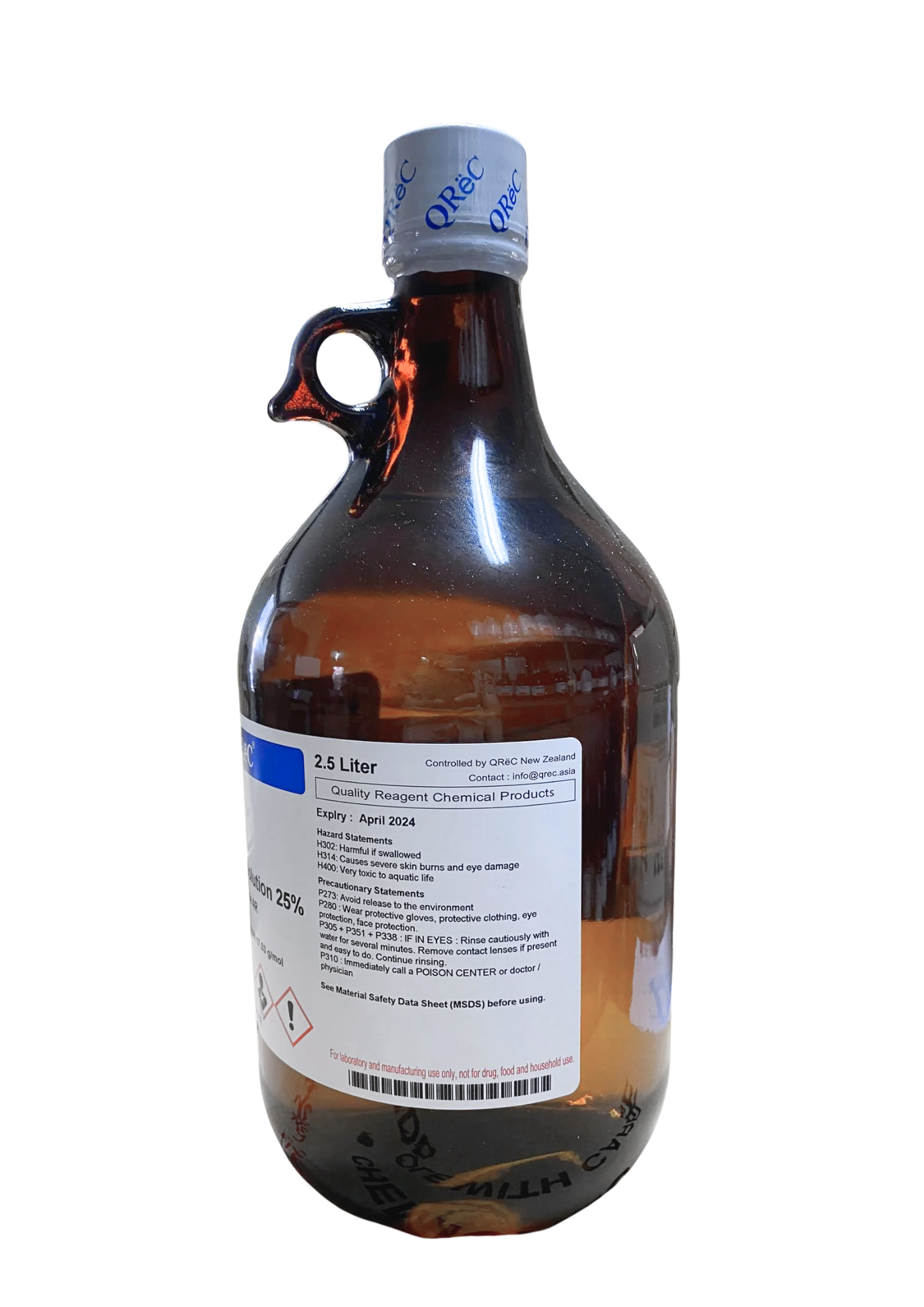
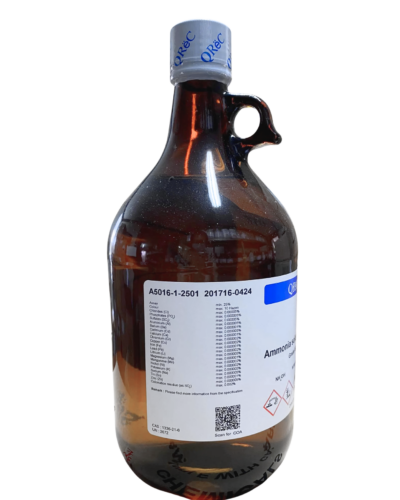
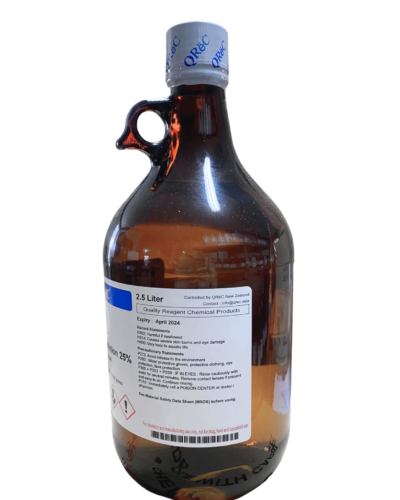
Ammonia solution 25% or Ammonium hydroxide or Aqueous ammonia
Product Overview & Quality
- Product Name: Ammonia solution 25% or Ammonium hydroxide or Aqueous ammonia
- Brand: QReC (Product Code: QR-A5016-1-2501)
- Grade: Analytical Reagent (AR Grade) featuring a certified nominal assay of not less than 25 percent ammonia (weight/weight). Produced and quality-verified under strict QReC global laboratory standards. Rigorously regulated to maintain exceptionally low ppm thresholds of non-volatile residue, chloride, sulfate, phosphate, carbonate, and trace heavy metals (such as iron, lead, copper, and zinc). This pristine, particle-free profile ensures superior baseline reliability and prevents unwanted side reactions in complexometric assays. Packaged in a heavy-duty, chemically resistant specialized polymer container engineered to withstand high vapor pressure and corrosive alkaline media.
- Physical Properties: Clear, colorless liquid with a suffocating, intensely pungent, characteristic ammoniacal odor. Rapidly releases volatile ammonia gas upon exposure to air. Strongly alkaline liquid with aggressive corrosive action on biological tissues and metals.
- Solubility: Completely miscible in all proportions with water; freely miscible with polar organic solvents such as lower alcohols.
- Key Use: Widely utilized as an effective alkaline pH adjustment agent and a primary component in preparing standard ammonium buffer systems for chemical and biochemical assays. Extensively applied as a classic complexing ligand in quantitative inorganic analysis to complex and determine transition metal ions (such as copper, nickel, zinc, and silver). Commonly employed as a selective precipitating reagent for separating metal hydroxides (such as iron and aluminum) in gravimetric analysis. Routinely used in organic synthesis for ammonolysis reactions, preparing Tollens reagent for aldehyde screening, and functions as an effective degreasing cleaning solution for laboratory glassware.
Safety & Hazards (Critical, Corrosive & Toxic)
- Classification: Causes severe skin burns and eye damage. Causes serious eye damage. May cause respiratory irritation. Harmful if swallowed. Very toxic to aquatic life.
- Health Risks: Ammonia vapors cause immediate ocular tearing, coughing, and severe mucous membrane irritation. Direct eye contact triggers rapid, deep penetrating chemical burns, corneal opacification, and permanent blindness. Dermal exposure produces severe chemical burns, blister necrosis, and deep tissue damage. Inhalation of concentrated vapors induces severe laryngospasms, bronchospasms, chemical pneumonitis, and fatal pulmonary edema. Ingestion causes destructive caustic erosion of the oral cavity, esophagus, and stomach.
- First Aid Measures: Immediately flush affected eyes or skin with an abundant stream of clean running water for at least 15 to 20 minutes while stripping contaminated garments. In case of inhalation, rapidly relocate the victim to fresh air. If accidentally swallowed, do NOT induce vomiting; thoroughly rinse mouth, administer water if conscious, and seek immediate, urgent emergency medical attention.
Handling & Storage
- Storage: Corrosive, High Vapor Pressure Alkaline Solution. Readily builds internal gas pressure under elevated ambient temperatures. Must be stored in its original, tightly closed QReC container maintained in an upright orientation. Keep in a dedicated, cool, dry, and excellently ventilated chemical store at controlled temperatures (preferably below 25 degrees Celsius), sheltered from direct sunlight. Keep strictly segregated from strong mineral acids, strong oxidizers, halogens (such as chlorine, bromine, and iodine), and heavy metal salts.
- Precautions: Comprehensive specialized PPE is mandatory, including heavy chemical-resistant gloves, splash-proof goggles or a full face shield, and a protective laboratory coat. Handle exclusively and strictly within a certified, properly functioning laboratory fume hood. Loosen container cap slowly and carefully away from the face to vent internal vapor pressure before dispensing.